DIY Termite Treatmentvs Professional:An Honest Comparison
DIY termite treatment vs professional: why sprays fail on the colony and pros succeed. Compare cost, results and warranty — get a free on-site quote.
If you’ve spotted mud tubes on a stump or soft, hollow-sounding skirting boards, the temptation to reach for a DIY termite treatment from the hardware store is understandable. Across Australia, from Cairns to Melbourne, termites attack hundreds of thousands of homes each year, and the instinct to act fast — and cheaply — is strong. But acting fast and acting effectively are two very different things.
Put simply, DIY termite treatment is the use of retail sprays, foams, dusts or bait products by a homeowner to kill or deter termites without engaging a licensed pest control technician. It can kill the termites you can see, but it almost never eliminates the underground colony — and for Australia’s subterranean termites, the colony is the whole problem. This guide gives you an honest, side-by-side comparison so you can make a decision that protects your home, your wallet and your resale value.
- DIY products kill visible termites but rarely reach the nest or the queen, so activity almost always returns.
- Repellent retail sprays often make things worse by scattering termites into other parts of the home.
- Professional treatment uses APVMA-approved, non-repellent termiticides and AS 3660-compliant barriers backed by a warranty.
- DIY kits cost $50–$150; professional treatment typically costs $2,000–$5,000 — a fraction of uninsured structural repairs.
- Annual professional inspections remain essential whether you treat yourself or hire a technician.
Why DIY Termite Treatment Is a Bigger Gamble in Australia
Australia hosts some of the most destructive termite species on earth, and our climate and housing styles give them near-ideal conditions. That combination makes half-measures genuinely risky here — the stakes are higher than in most other countries.
The main culprit, Coptotermes acinaciformis, is found in every mainland state and is responsible for the bulk of serious structural damage nationwide. It nests underground or in tree stumps and forages through concealed mud tunnels that can extend 50 metres or more from the nest. Other significant species include Schedorhinotermes, Nasutitermes and Heterotermes, each with different behaviour and different treatment requirements.
Housing style matters too. Queenslanders on stumps offer subfloor access but also abundant timber contact points. Slab-on-ground brick veneer homes — common in newer estates across Sydney, Melbourne and Perth — hide termite entry behind weep holes, slab edges and garden beds built up against walls. Warm, humid conditions in Queensland and northern New South Wales keep termites active nearly year-round, while southern states see intense pressure through spring and summer. In every region, the colony you can’t see is the one doing the damage.
Warning Signs You May Have Termites
The most common signs of termite activity are subtle, and by the time they’re obvious the colony is usually well established. Check your home — inside, outside and in the subfloor or roof void — for the following indicators.
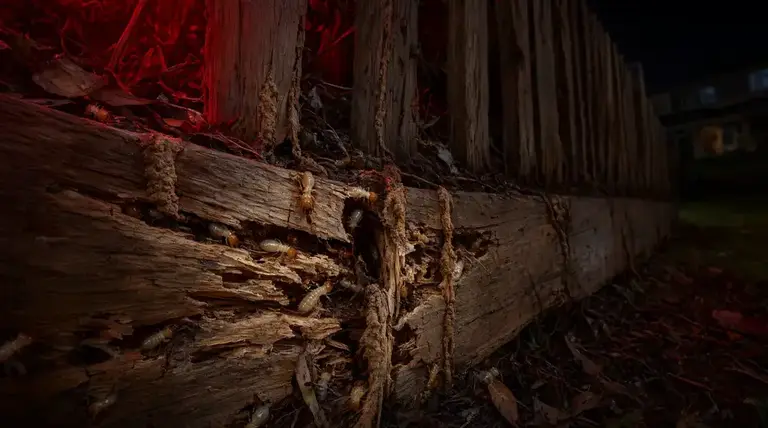
- Mud tubes or leads — pencil-width earthen tunnels on stumps, piers, slab edges or walls, built by termites to travel between soil and timber.
- Hollow-sounding timber — skirting boards, door frames or flooring that sound papery or empty when tapped.
- Sagging floors or doors that jam — distorted frames and softened timber are often advanced signs.
- Blistering or bubbling paint — can indicate termites feeding just behind a painted surface, mimicking water damage.
- Discarded wings near windowsills — left behind by flying alates after a swarm, typically on warm, humid evenings.
- Clicking or rustling sounds in walls — soldier termites bang their heads against tunnels when the colony is disturbed.
- Frass or fine sawdust-like material — small pellets near timber, more common with drywood species in coastal Queensland.
For a fuller checklist with photos and descriptions, read our guide to 10 Warning Signs of Termites in Australian Homes. If you find live termites, don’t disturb them or spray them — call a licensed technician first so the colony can be properly assessed and treated at the source.
DIY Termite Treatment vs Professional: An Honest Comparison
DIY termite treatment can kill the few termites you can see, but professional treatment eliminates the colony and protects the whole structure — that’s the fundamental difference. Everything else in this comparison flows from that one fact.
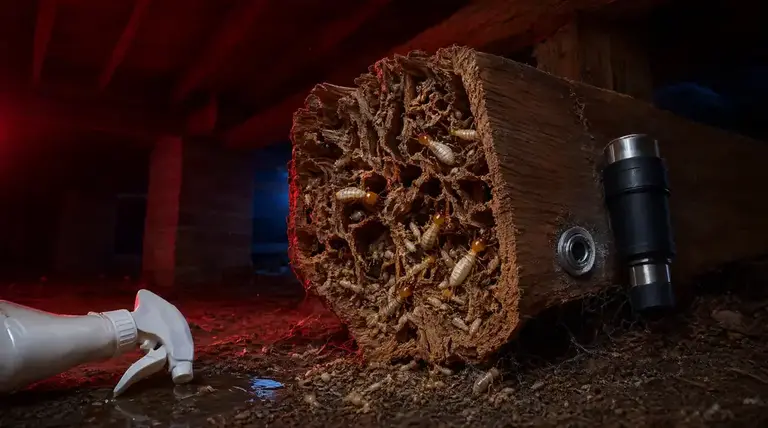
Retail products have real limits. Most hardware-store sprays are repellent, so instead of killing the colony they cause termites to abandon the treated area and re-route into another part of the home — often somewhere harder to detect. Surface treatments don’t reach a nest that may be metres underground or inside a tree 40 metres away. And without moisture meters, thermal imaging and a trained eye, a homeowner simply can’t see the full extent of the activity.
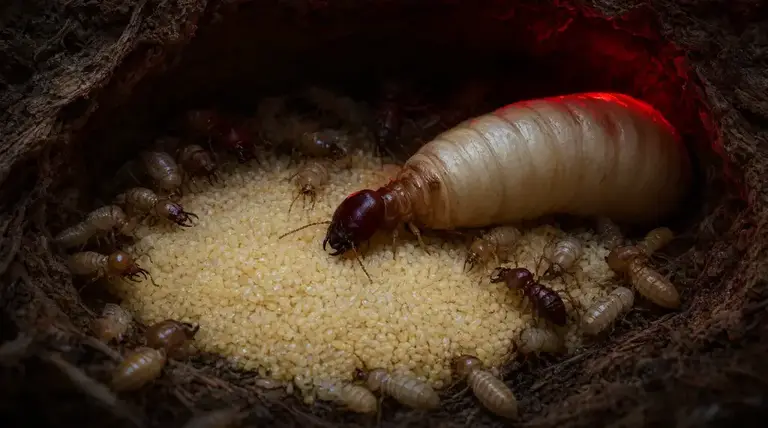
Licensed technicians, by contrast, use APVMA-approved, non-repellent termiticides such as fipronil-based products, applied so foragers unknowingly carry a lethal dose back to the colony and the queen. They install baiting systems or full treated zones to Australian Standard AS 3660, identify the species (a cautious Schedorhinotermes colony needs a very different strategy to an aggressive Coptotermes), address conducive conditions like poor drainage and timber-to-ground contact, and back the work with a documented warranty and treatment certificate.
| Factor | DIY | Professional |
|---|---|---|
| Kills the colony | Rarely — foragers only | Yes — targets nest and queen |
| Access to professional chemicals | No | Yes — non-repellent termiticides |
| AS 3660-compliant barrier | No | Yes — trenched, drilled, calibrated |
| Detection equipment | None | Thermal imaging, moisture meters, movement detection |
| Species identification | No | Yes — strategy matched to species |
| Warranty and documentation | None | Yes — durable notice and certificate |
| Risk of spreading activity | High | Low |
There are also risks beyond simply failing. Misapplied termiticides can create untreated gaps that funnel termites straight into the home, and using a product outside its APVMA label conditions is a compliance issue in itself. An undocumented DIY treatment can raise red flags for buyers and building inspectors when you sell. Perhaps worst of all, a DIY “fix” can lull you into skipping regular inspections while a colony quietly keeps feeding behind the walls. For a full breakdown of what a compliant system involves, see our explainer on What Is a Termite Barrier and How Does It Protect Your Home?
What Does Termite Treatment Cost in Australia?
Across the Australian market, DIY products typically retail for $50–$150 upfront, while the industry generally charges $2,000–$5,000 for professional termite treatment on an average home — but the comparison only makes sense against the cost of failure. Structural repairs from an unresolved colony commonly run into the tens of thousands of dollars at market rates, and standard home insurance policies do not cover termite damage.
| Service | Typical market rate (AUD) | What’s included / notes |
|---|---|---|
| DIY retail sprays, foams, baits | $50–$150 | Surface-level knockdown only; no colony control, no warranty |
| Professional termite inspection | $250–$400 | Full inspection with moisture meter and thermal imaging; written report |
| Chemical soil treatment / treated zone | $2,000–$5,000 | Trenching, drilling, calibrated application to AS 3660; warranty |
| Termite baiting and monitoring system | $2,500–$4,500 (plus ongoing monitoring) | Stations around perimeter; colony elimination over time |
| Structural repairs after untreated activity | $10,000–$50,000+ | Not covered by standard home insurance |
These are typical Australian market rates, and they vary with house size, construction type (slab homes often need drilling; subfloor homes need trenching), the species involved and the extent of activity. When you weigh up pest control costs, remember that professional treatment is an investment in the whole asset — not just a reaction to the termites you happened to notice. Full details are on our Termite Treatment & Barrier Systems page.
It’s worth knowing that Aussie Pest Strike typically comes in well under these market rates while still delivering the full AS 3660-compliant treatment and warranty. For an exact quote tailored to your property, give us a call on [aps_phone] today.
When Are Termites Most Active in Australia?
Termites are active year-round in most of Australia, but foraging, swarming and colony expansion peak in the warmer, wetter months from October through to March. Northern Australia sees near-constant pressure, while southern regions have a distinct seasonal surge.
Jan
Feb
Mar
Apr
May
Jun
Jul
Aug
Sep
Oct
Nov
Dec
Typical termite activity pattern across Australia: activity climbs sharply from spring and peaks through summer, when heat and rainfall drive swarming and colony expansion. Winter lows reflect southern conditions — colonies in Queensland and the NT remain highly active year-round.
The practical takeaway: don’t wait for summer to act. Colonies feed every day of the year, and the cooler months — when activity seems quiet — are often when hidden damage continues unnoticed. Annual Termite Inspections & Reports are recommended under Australian Standard AS 3660 regardless of season. Our article on Termite Inspection: What It Includes and Why It Matters explains exactly what a proper inspection covers.
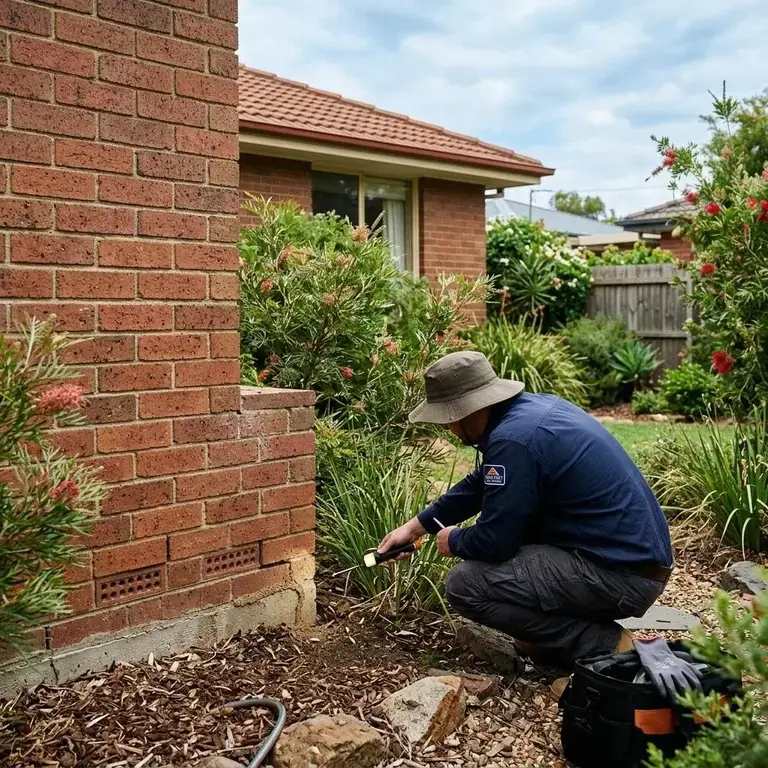
The jobs that worry me most are the ones where the owner’s already had a go themselves. They spray the tube, the termites vanish from that spot, and six months later we find them in the roof trusses instead. If you leave the colony alone and give us a clean look at it, we can usually shut the whole thing down properly.
If you’ve found live termites or damage in your home, skip the DIY termite treatment and book a professional inspection first. Don’t disturb the activity, don’t spray it, and don’t seal anything up. A licensed technician will identify the species, map the extent of the colony and recommend a compliant treatment — chemical barrier, baiting system or both — backed by a warranty. Chemical treatments should always be applied by licensed technicians in line with APVMA label directions.
Frequently Asked Questions
What is DIY termite treatment and how does it differ from professional treatment?
DIY termite treatment means using retail sprays, foams, dusts or bait products from the hardware store to kill or deter termites yourself. It can kill the termites you can see, but it rarely reaches the underground nest or the queen, so activity usually returns. Professional treatment uses APVMA-approved, non-repellent termiticides and AS 3660-compliant barriers to eliminate the colony and protect the whole structure.
Why can retail termite sprays make an infestation worse?
Most hardware-store sprays are repellent rather than lethal to the colony. Instead of killing the nest, they cause termites to abandon the treated area and re-route into another part of the home, often somewhere harder to detect. Misapplied products can also create untreated gaps that funnel termites straight into the house, so a quick spray frequently spreads the problem rather than solving it.
What does professional termite treatment include that DIY cannot?
Licensed technicians use non-repellent termiticides such as fipronil-based products, applied so foragers carry a lethal dose back to the colony and the queen. The practical next step is to note the signs, inspect the relevant area carefully, and seek property-specific advice if the issue continues.
How much does DIY termite treatment cost compared with professional treatment?
DIY termite products are a small one-off purchase, while professional treatments cost considerably more because they include inspection, product application, and follow-up visits. The trade-off is coverage: professionals treat the whole structure and soil, whereas DIY options usually target limited areas. For widespread or recurring activity, professional treatment is generally more cost-effective over time.
Which termite species are behind most damage in Australian homes?
Coptotermes acinaciformis is the main culprit, found in every mainland state and responsible for the bulk of serious structural damage nationwide. It nests underground or in tree stumps and forages through concealed mud tunnels extending 50 metres or more. Other significant species include Schedorhinotermes, Nasutitermes and Heterotermes, each with different behaviour requiring different treatment strategies.
How do Australian housing styles affect termite risk and treatment?
Queenslanders on stumps offer subfloor access but also abundant timber contact points. Construction type also shapes treatment: slab homes often need drilling, while subfloor homes need trenching. The practical next step is to note the signs, inspect the relevant area carefully, and seek property-specific advice if the issue continues.
Can a DIY termite treatment affect my home's resale value?
Yes. Professional treatment comes with documented evidence of compliant work, which supports confidence during inspections and transactions. The practical next step is to note the signs, inspect the relevant area carefully, and seek property-specific advice if the issue continues.
Do I still need annual professional inspections if I treat termites myself?
Yes. Annual professional inspections remain essential whether you treat yourself or hire a technician. A DIY fix can lull you into skipping regular checks while a colony quietly keeps feeding behind the walls. Inspections use moisture meters, thermal imaging and trained eyes to detect activity homeowners cannot see, catching problems before they become structural.
I've already tried DIY termite products — how do I arrange proper help now?
If you have sprayed or applied retail products and suspect activity remains, avoid disturbing any live termites you find, as this helps a technician assess and treat the colony at its source. Aussie Pest Strike can inspect your property, identify the species involved and recommend an AS 3660-compliant treatment suited to your home's construction. Contact them to book an assessment and get a quote tailored to your situation.
How do I get a quote for professional termite treatment from Aussie Pest Strike?
The best next step after reading about your options is a property-specific assessment, because costs vary with house size, construction type, the species involved and the extent of activity. Aussie Pest Strike provides quotes tailored to your property and typically comes in well under typical market rates while delivering full AS 3660-compliant treatment and documentation. Reach out by phone to discuss your home and arrange an inspection.
Sources & further reading
Found Something
Dangerous?
Don’t touch it. Don’t spray it. Keep kids and pets clear, take a photo from a safe distance, and call us — or book a free inspection and we’ll come to you.
02 7235 0050