Are Termites Activein Winter?Australian Seasonal Guide
Are termites active in winter? Yes — colonies keep feeding year-round in Australian homes. Learn the seasonal facts and book a free winter inspection.
Are termites active in winter? Yes — termites remain active in winter across most of Australia. The question of termites winter behaviour trips up homeowners from Brisbane to Melbourne every year: colonies live in insulated underground nests and warm wall cavities where temperatures stay stable, so they keep feeding on your home even when the weather outside turns cold. The idea that termites “hibernate” is one of the most damaging myths in Australian pest control.
To put it plainly for the record: winter termite activity refers to the continued foraging and feeding of subterranean termite colonies through the cooler months, slowed only slightly in the coldest southern soils and barely at all inside heated Australian homes. This guide explains how winter really affects termites, where they concentrate, why the cooler months are a smart time to inspect and treat, and what it all costs.
- Termites do not die off or hibernate in winter — colonies survive year-round in protected nests and keep feeding inside homes.
- Activity only slows noticeably in the coldest southern pockets (Canberra, alpine Victoria, inland Tasmania); Queensland and northern NSW see near-continuous activity.
- Wall cavities near heaters, hot-water systems and warm, damp subfloors are winter hotspots.
- Winter is an ideal time to book an inspection or install a barrier before the spring swarm season.
- Annual inspections remain the Australian standard recommendation regardless of season.
Why Termites Winter Activity Matters Across Australia
Termites winter activity matters because Australia is one of the most termite-prone countries on earth, and our mild winters rarely get cold enough to stop them. Termites are ectothermic, so their metabolism does slow when soil temperatures drop below about 15°C — but the nest itself buffers temperature, and once termites are inside a home they enjoy stable warmth from insulation, hot-water systems and ducted heating.
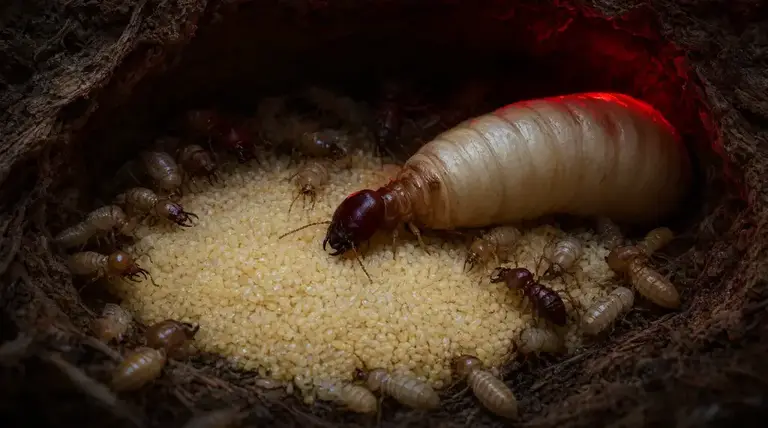
Our housing stock makes this worse. Elevated Queenslanders have shaded, humid subfloors that stay temperate all year. Brick-veneer homes on concrete slabs offer concealed entry points around plumbing penetrations. Post-war weatherboard homes across Melbourne, Adelaide and Sydney suburbs put softwood framing within easy reach of foraging workers. A single colony of Coptotermes — Australia’s most destructive genus — can number in the hundreds of thousands, and a quiet winter is exactly when unnoticed damage compounds.
Myth vs Fact: Winter Termites
Fact: winter does not make Australian homes safe from termites. Colonies stay active year-round, especially inside warm heated buildings; cold weather often pushes them deeper, not away. Check subfloors, slab edges, fences and mulch, fix leaks, remove timber-to-soil contact, and book licensed inspections before hidden damage spreads.
- Myth: Termites die off in winter. Fact: Colonies survive year-round in protected underground nests.
- Myth: You can’t get inspected in winter. Fact: Winter inspections are just as valuable — detection tools work in any season.
- Myth: No swarmers means no termites. Fact: Foraging workers keep eating regardless of season; swarmers are only the visible reproductive flight.
- Myth: Cold cities are termite-free. Fact: Melbourne and Canberra still record regular termite activity.
Warning Signs of Termites in the Cooler Months
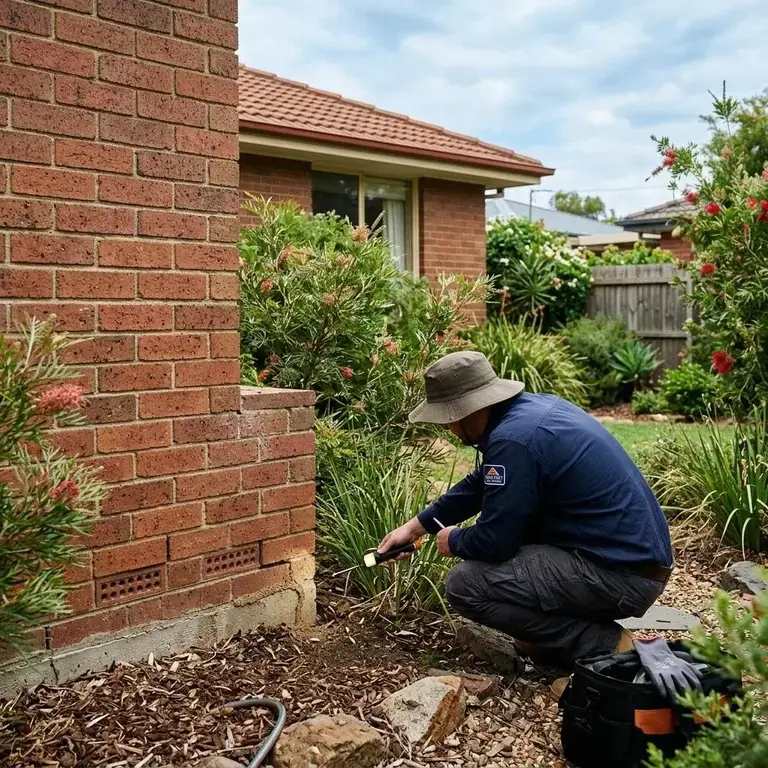
The warning signs of termites are the same in winter as in summer — you’re just less likely to be looking. Because winged swarmers mostly appear in spring and early summer, many owners forget about termites over winter, exactly when a quiet colony can be eating undisturbed. Check for these signs around your home, and read our full guide to the 10 warning signs of termites in Australian homes:
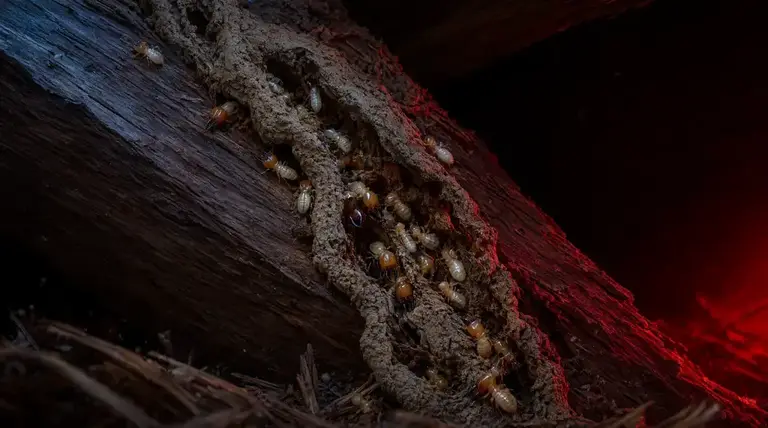
- Mud tubes or leads — pencil-width earthen tunnels on slab edges, stumps, brickwork or subfloor piers.
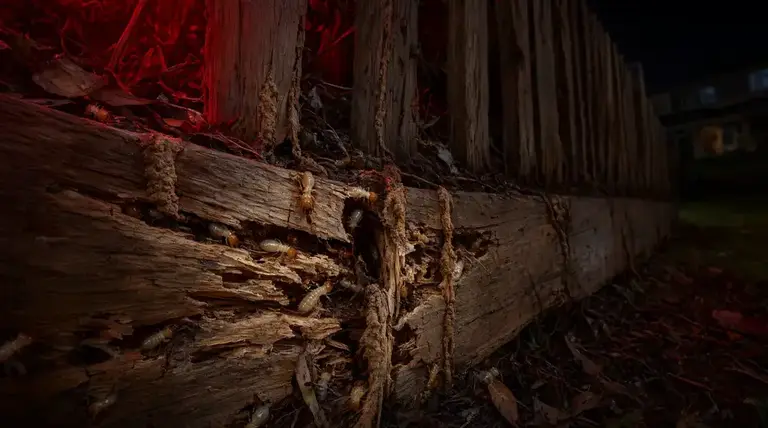
- Hollow-sounding timber — skirting boards, door frames and architraves that sound papery when tapped.
- Soft or crumbling wood — timber that dents easily or flakes away in layers.
- Tight-fitting doors and windows — moisture and damage from termite activity can warp frames.
- Bubbling or cracked paint — often mistaken for water damage on walls near warm, damp areas.
- Frass or fine sawdust — small pellets near skirtings or below damaged timber.
- Clicking sounds in walls — soldier termites banging their heads when the colony is disturbed.
Where Termites Concentrate in Cold Months
In cold months, termites concentrate where warmth, moisture, and wood meet: heated basements, crawl spaces, slab edges, utility penetrations, bathrooms, kitchens, and soil-adjacent framing. Check behind insulation, under sinks, around water heaters, and near foundation cracks; reduce dampness, seal gaps, and schedule inspection if mud tubes or pellets appear.
- Wall cavities near heaters, hot-water units and ovens
- Warm, damp subfloors and bathroom framing
- Slab penetrations where plumbing enters the home
- North-facing walls that catch the winter sun
DIY Checks vs Professional Pest Control in Winter
Homeowners can and should do regular visual checks over winter, but DIY has hard limits: termites work inside walls, subfloors and slab cavities where a torch and a screwdriver simply can’t reach. Licensed technicians use thermal imaging cameras, moisture meters and acoustic detection tools that work year-round regardless of outside temperature — and any chemical treatment must be applied by a licensed pest control professional under APVMA regulations.
| Factor | DIY winter check | Professional service |
|---|---|---|
| Detection reach | Visible surfaces only — misses wall cavities and subfloor galleries | Thermal imaging, moisture meters, acoustic tools find hidden activity |
| Species identification | Difficult — Coptotermes, Schedorhinotermes and Mastotermes need different responses | Technicians identify species and nest likely locations |
| Treatment options | Hardware-store sprays scatter termites without killing the colony | Colony-eliminating dusts, foams, baits and barriers applied by licensed techs |
| Documentation | None — no record for insurance or resale | Written report to Australian Standard AS 3660.2 |
| Typical cost | Free, but false reassurance is expensive | From roughly $250–$450 for an inspection (see below) |
What Winter Termite Services Cost in Australia (2025–26)
Across the Australian pest control industry, termite work typically ranges from a few hundred dollars for an inspection through to several thousand for a full chemical barrier, depending on home size, construction type and region. These are typical market rates — the figures most Australian providers generally charge — rather than any one company’s price list. Winter bookings often come with better technician availability, and installing protection before spring means you’re covered before activity ramps up. Typical 2025–26 industry ranges:
| Service | Typical Australian market rate (AUD) | What’s included/notes |
|---|---|---|
| Termite inspection (standard home) | $250–$450 | Full interior, exterior, roof void and subfloor check with written AS 3660.2 report; thermal imaging often included |
| Inspection (large or multi-storey home) | $450–$650 | Extended inspection time for larger footprints, acreage or complex construction |
| Active infestation treatment (dust/foam/bait) | $800–$2,500 | Colony elimination targeting active workings; follow-up visits usually included |
| Chemical soil barrier (perimeter) | $2,500–$5,500 | Trench-and-treat around slab or piers; price varies with perimeter length and access |
| Baiting and monitoring system | $2,000–$4,000 installed + $300–$600/yr monitoring | In-ground stations around the home; suits homes where trenching isn’t practical |
| Pre-purchase timber pest inspection | $350–$600 | Combined building and pest reports for buyers; essential in termite-prone areas |
For a full breakdown of what an inspection covers, see our article Termite Inspection: What It Includes and Why It Matters, or request a quote through our Termite Inspections & Reports service page.
One thing worth knowing: Aussie Pest Strike typically comes in well under these market rates, so treat the figures above as the industry benchmark rather than what you’ll actually pay. For an exact quote tailored to your home, call us on [aps_phone] and we’ll give you a firm price up front.
Seasonal Termite Activity: Month by Month
Across Australia, termite activity peaks through the warmer months (roughly September to April) and dips — but never stops — through June, July and August. The chart below shows a national average; northern regions stay near the top of the range all year, while southern centres like Melbourne, Canberra and Hobart drive the winter dip. Remember this reflects detectable surface activity — hidden feeding inside heated homes continues regardless.
Jan
Feb
Mar
Apr
May
Jun
Jul
Aug
Sep
Oct
Nov
Dec
Indicative national termite activity by month. Southern soil activity dips in June–August but indoor feeding continues; tropical and subtropical regions stay near peak year-round. Swarming occurs mainly in spring and early summer — the winter dip is precisely when infestations go unnoticed.
Region by region, the pattern varies sharply. In tropical and subtropical zones — Darwin, Cairns, Brisbane and the Gold Coast — winter minimums rarely fall low enough to slow the giant northern termite (Mastotermes darwiniensis) or Coptotermes, so activity is effectively continuous. In temperate Sydney and Perth, foraging eases but doesn’t stop, particularly around warm, moist parts of a home. Only in the coldest southern pockets — the Canberra region, alpine Victoria and inland Tasmania — does soil activity noticeably drop through July and August, and even there indoor colonies keep working. Wherever you live, the safest assumption is that termites are still eating.
Some of the worst damage I’ve opened up was found in July. The owners hadn’t seen a swarmer in months, so they assumed they were in the clear — meanwhile the colony had eaten through half a wall frame behind the hot-water system. Winter isn’t a break from termites; it’s cover for them.
Book a professional termite inspection this winter — before the spring swarm season. If your home has no current protection, use the quieter months to install a chemical barrier or baiting system so you’re covered before activity peaks. Learn more about what a termite barrier is and how it protects your home, or explore our Termite Treatment & Barrier Systems. Where termites winter activity is concerned, waiting until you see swarmers means waiting until damage is well advanced.
Frequently Asked Questions
Are termites active in winter in Australia?
Yes. Termites remain active through winter across most of Australia because their colonies live in insulated underground nests and warm wall cavities where temperatures stay stable. Activity only slows noticeably in the coldest southern pockets such as Canberra, alpine Victoria and inland Tasmania, while Queensland and northern NSW see near-continuous activity. Inside heated homes, feeding continues largely undisturbed regardless of the season.
Do termites hibernate or die off when the weather turns cold?
No. The idea that termites hibernate is one of the most damaging myths in Australian pest control. Colonies survive year-round in protected underground nests and keep feeding inside homes even when outside temperatures drop. Cold weather often pushes them deeper into the soil rather than away from your property, so a quiet winter is exactly when unnoticed damage can compound.
Where do termites concentrate during the colder months?
Termites gather where warmth, moisture and wood meet. Common winter hotspots include wall cavities near heaters, hot-water units and ovens; warm, damp subfloors and bathroom framing; slab penetrations where plumbing enters the home; and north-facing walls that catch the winter sun. Elevated homes with shaded, humid subfloors and brick-veneer homes with concealed plumbing entry points are particularly at risk.
What warning signs of termites should I look for over winter?
The signs are the same as in summer: pencil-width mud tubes or leads on slab edges, stumps, brickwork or subfloor piers; hollow-sounding skirting boards, door frames and architraves; soft or crumbling timber; tight-fitting doors and windows; bubbling or cracked paint near warm, damp areas; frass or fine sawdust pellets; and clicking sounds in walls made by soldier termites when disturbed.
Why is winter a good time to book a termite inspection or treatment?
Winter is an ideal time to arrange an inspection or install a barrier before the spring swarm season begins. Winged swarmers mostly appear in spring and early summer, so many owners forget about termites over winter — precisely when a quiet colony can feed undisturbed. Winter bookings also often come with better technician availability, and detection tools work in any season.
Does cold weather slow termite activity down?
Slightly, but not enough to protect your home. Termites are ectothermic, so their metabolism slows when soil temperatures drop below about 15°C. However, the nest itself buffers temperature, and once termites are inside a home they enjoy stable warmth from insulation, hot-water systems and ducted heating. Southern cities like Melbourne and Canberra still record regular termite activity.
Can I check for termites myself in winter, or do I need a professional?
Homeowners can and should do regular visual checks over winter, looking at visible surfaces for mud tubes, damaged timber and paint bubbling. But DIY has hard limits: termites work inside walls, subfloors and slab cavities that a torch cannot reach. Licensed technicians use thermal imaging cameras, moisture meters and acoustic detection tools that work year-round, and chemical treatments must be applied by licensed professionals under APVMA regulations.
When is termite swarming season in Australia?
Swarming occurs mainly in spring and early summer, which is why many homeowners associate termites with the warmer months. However, the absence of swarmers does not mean your home is safe — foraging workers keep eating regardless of season. Swarmers are only the visible reproductive flight of a colony, while hidden feeding inside heated homes continues throughout winter.
How can Aussie Pest Strike help after I have done my own winter checks around the home?
If your visual checks turn up mud tubes, hollow-sounding timber or other warning signs, Aussie Pest Strike can arrange a professional inspection using thermal imaging, moisture meters and acoustic detection tools that work in any season. A technician can identify the species involved, locate likely nest areas and provide a written report to Australian Standard AS 3660.2, giving you a clear picture beyond what surface checks reveal.
What is a practical next step if I want protection in place before spring swarm season?
Booking a termite inspection or discussing barrier options with Aussie Pest Strike before spring is a sensible move, since winged swarmers appear mainly in spring and early summer. Winter often offers better technician availability, and an inspection produces a written AS 3660.2 report documenting your home's condition. From there you can consider whether active treatment, a chemical soil barrier or a baiting and monitoring system suits your property.
Sources & further reading
Found Something
Dangerous?
Don’t touch it. Don’t spray it. Keep kids and pets clear, take a photo from a safe distance, and call us — or book a free inspection and we’ll come to you.
02 7235 0050