Earwigs: GardenFriend,House Pest
Earwigs garden friend — Are earwigs good or bad? The answer is both: earwigs are useful predators in the garden but a genuine nuisance once they move indoors.
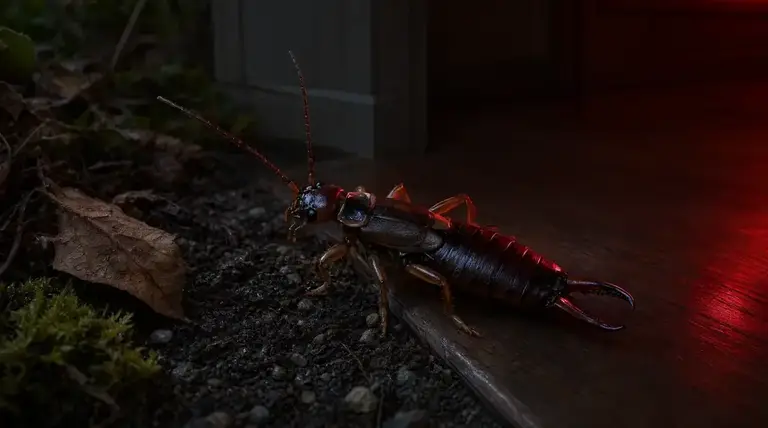
Earwigs are one of the most misunderstood insects in Australian gardens — part helpful predator, part household nuisance. The common European earwig (Forficula auricularia) grows to about 12–15 mm, sports distinctive rear pincers (cerci), and turns up under pot plants, in seedlings and inside damp corners of homes right across Australia.
So are they good or bad? The honest answer is both. Outdoors they prey on aphids, mites and other soft-bodied pests; indoors they signal moisture problems worth fixing. They do not spread disease and rarely pinch skin, but when numbers build up through summer they can become a genuine pest control headache. This guide explains how to tell friend from foe, how to keep them out of the house, and when a professional treatment makes sense.
- Earwigs are beneficial predators in the garden but a nuisance pest once they move indoors.
- They are drawn to moisture and darkness — damp mulch, pot bases, leaking taps and wet subfloors are prime harbourage.
- Numbers peak from late spring through summer (November–February) in most parts of Australia.
- Most problems respond to drying out, exclusion and simple traps; persistent indoor activity may need a targeted perimeter treatment.
- DIY control typically costs under $50, while professional treatments generally range from about $180–$350 AUD.
Why earwigs matter in Australian homes and gardens
They matter in Australia because our climate and housing styles give them everything they need: moisture, shelter and warm summer nights that drive them indoors. They are nocturnal and moisture-loving, sheltering by day under mulch, pavers and pot bases, then wandering through door gaps and weep holes seeking cool, damp refuge on hot, dry nights from December to February.
Housing type plays a big role. Older Queenslanders and homes on stumps often have damp, shaded subfloors that harbour earwigs year-round. Brick veneer homes on slabs offer weep holes and garden beds hard against the wall — a short walk from garden to bathroom. Even well-maintained homes see pressure after heavy summer rain or in gardens that are watered daily. You will usually find them in bathrooms, laundries and around leaking taps.
In the garden the picture is more nuanced. These insects prey on aphids and mites and break down decaying organic matter, quietly helping your ecosystem. But they also chew seedlings, dahlia petals and soft fruit, especially in spring. That dual role is why blanket eradication is rarely the right goal — unlike genuine destroyers such as armyworm, the lawn destroyer spreading across Australia, earwigs earn their keep until their numbers get out of hand.
Warning signs of an earwig problem
The clearest warning sign is finding earwigs indoors repeatedly — particularly in clusters — which points to damp, sheltered harbourage close to the house. A single earwig is normal; regular sightings mean conditions are favouring them. Check for the following:
- Activity in wet areas — bathrooms, laundries, kitchens and around leaking taps, especially overnight or first thing in the morning.
- Chewed seedlings and petals — ragged damage on young plants, dahlias and soft fruit in spring, distinct from the slime-trailed damage of snails.
- Clusters under cover — groups hiding under mulch, timber, pavers, pot bases and garden edging during the day.
- Permanent dampness — soil beside the house that never dries, dripping outdoor taps, poor drainage or a wet subfloor.
- Other moisture pests — earwig activity often overlaps with Portuguese millipedes, the plague pest that thrives in the same damp conditions, and with lawn grubs and curl grubs in over-watered turf.
Myth versus fact about earwigs
The short version: they do not crawl into ears, do not sting and are not venomous — most of the folklore is nonsense. Sorting fact from fiction helps you respond sensibly rather than reaching for the spray at the first sighting.
- Myth: They crawl into your ears at night. Fact: Extremely rare and accidental; they do not seek out ears or burrow into brains.
- Myth: Their pincers deliver a venomous sting. Fact: The cerci can give a harmless nip; there is no venom.
- Myth: They are purely destructive. Fact: They eat aphids, mites and decaying matter, helping control other garden pests.
- Myth: Seeing one means an infestation. Fact: A lone earwig is normal; clusters indoors point to damp, sheltered harbourage.
DIY earwig control versus professional treatment
Most problems respond well to DIY moisture management and exclusion, but persistent indoor activity despite your best efforts is the point where professional pest control earns its keep. Because earwigs are drawn to damp and darkness, control is mostly about drying things out and closing gaps: fix dripping taps, improve drainage, move mulch and pots away from external walls, and seal door thresholds, weep holes and pipe entry points. Rolled damp newspaper or shallow oil traps set in the garden overnight — then emptied each morning — knock numbers down without chemicals.
| Factor | DIY approach | Professional treatment |
|---|---|---|
| Typical cost | $0–$50 (traps, sealant, garden tidy-up) | $180–$350 AUD depending on property size |
| Best for | Occasional sightings, garden-only activity | Repeated indoor clusters, hidden moisture sources |
| Method | Drying out, exclusion, newspaper/oil traps | Targeted perimeter treatment at the wall line by a licensed technician |
| Time to results | 1–4 weeks of consistent effort | Usually noticeable within days |
| Limits | Won’t fix hidden subfloor or wall-cavity moisture | Chemical work should always be done by licensed technicians per APVMA requirements |
Earwig treatment costs in Australia (2025–26)
Across the Australian pest control industry, a standard residential perimeter treatment for earwigs generally sits between $180 and $350 AUD, with larger properties or combined garden pest programs typically quoted higher. What the market charges varies with property size, access (subfloor versus slab) and whether earwigs are treated alone or bundled with other garden pests. The ranges below reflect typical industry-wide figures for 2025–26 — they are a guide to what Australian providers generally charge, not a quote.
| Service | Typical market rate (AUD) | What’s included/notes |
|---|---|---|
| General pest inspection | $0–$150 | Identifies moisture sources, harbourage and entry points; some providers charge, others waive it |
| External perimeter treatment | $180–$280 | Targeted barrier at wall line, weep holes and garden edging; no blanket indoor spraying |
| Subfloor or larger property treatment | $250–$350 | Queenslanders and stump homes with damp subfloors; includes harbourage treatment |
| Lawn Grub & Garden Pest Treatment | $220–$400 | Combined program for beds, lawn and perimeter where multiple garden pests are active |
It’s worth knowing that Aussie Pest Strike typically comes in well under these general market rates, so the figures above are a conservative benchmark rather than what you’d actually pay. For an exact quote tailored to your property, give the team a call on [aps_phone].
Seasonal earwig activity across Australia
Activity peaks from late spring through summer, roughly November to February, when females that overwintered in soil chambers have raised their young. A female lays 20–60 eggs and, unusually for insects, guards them and tends the newly hatched nymphs — which is why controlling harbourage in early spring prevents a much larger population by January.
Jan
Feb
Mar
Apr
May
Jun
Jul
Aug
Sep
Oct
Nov
Dec
Indicative activity pattern for southern Australia: numbers build through spring, peak over December–February as they seek cool, damp indoor refuge on hot nights, then decline as adults die off and eggs overwinter. Tropical northern regions see less winter dip.
Nine times out of ten, an earwig problem indoors is really a moisture problem outdoors. If you treat a garden after months of heavy mulching and daily watering, expect higher numbers than a drier, tidier bed nearby. Fix the damp, seal the gaps, and they usually sort themselves out — the spray is just the backstop.
Start with moisture management and exclusion in early spring — dry out the soil beside the house, pull mulch and pots back from walls, and seal entry points. If earwigs are still turning up inside after two to three weeks of consistent effort, book a professional inspection: a targeted perimeter treatment by a licensed technician will stop them at the wall line without disrupting the beneficial work they do in the garden.
Frequently Asked Questions
Are earwigs good or bad for my garden?
Both, depending on where they are. In the garden, earwigs are beneficial predators that eat aphids, mites and other soft-bodied pests, and they help break down decaying organic matter. However, they also chew seedlings, dahlia petals and soft fruit, especially in spring. Because of this dual role, blanket eradication is rarely the right goal — they earn their keep until their numbers get out of hand.
Why do earwigs come inside my house?
Earwigs are nocturnal and moisture-loving. They shelter by day under mulch, pavers and pot bases, then wander through door gaps and weep holes seeking cool, damp refuge on hot, dry nights from December to February. You will usually find them in bathrooms, laundries and around leaking taps. Repeated indoor sightings, particularly in clusters, point to damp, sheltered harbourage close to the house.
Do earwigs crawl into your ears or sting people?
No — most of the folklore is nonsense. Crawling into ears is extremely rare and accidental; earwigs do not seek out ears or burrow into brains. Their rear pincers (cerci) can give a harmless nip but there is no venom and no sting. Earwigs do not spread disease either, so an occasional sighting is not a health concern.
When is earwig season in Australia?
Activity peaks from late spring through summer, roughly November to February, when females that overwintered in soil chambers have raised their young. A female lays 20–60 eggs and guards them and the newly hatched nymphs, which is why controlling harbourage in early spring prevents a much larger population by January. Tropical northern regions see less of a winter dip than southern Australia.
What are the warning signs of an earwig problem?
The clearest sign is finding earwigs indoors repeatedly, especially in clusters. Also check for activity in wet areas such as bathrooms, laundries and around leaking taps overnight or first thing in the morning; ragged damage on seedlings, dahlias and soft fruit in spring; clusters hiding under mulch, timber, pavers and pot bases by day; permanent dampness beside the house; and other moisture pests like Portuguese millipedes.
How can I control earwigs myself?
Because earwigs are drawn to damp and darkness, DIY control is mostly about drying things out and closing gaps: fix dripping taps, improve drainage, move mulch and pots away from external walls, and seal door thresholds, weep holes and pipe entry points. Rolled damp newspaper or shallow oil traps set in the garden overnight and emptied each morning knock numbers down without chemicals. Expect one to four weeks of consistent effort.
When should I call a professional for earwigs?
If earwigs keep turning up inside after two to three weeks of consistent moisture management and exclusion, book a professional inspection. A licensed technician can apply a targeted perimeter treatment at the wall line, covering weep holes and garden edging without blanket indoor spraying, which stops them at the wall line while preserving their beneficial work in the garden. Results are usually noticeable within days.
How do housing types affect earwig problems?
Housing type plays a big role. Older Queenslanders and homes on stumps often have damp, shaded subfloors that harbour earwigs year-round. Brick veneer homes on slabs offer weep holes and garden beds hard against the wall — a short walk from garden to bathroom. Even well-maintained homes see pressure after heavy summer rain or in gardens watered daily.
What information should I provide when booking help with earwigs?
When contacting Aussie Pest Strike about earwigs, it helps to describe where you are seeing them (bathrooms, laundry, subfloor), how often and whether they appear in clusters, plus any known moisture issues such as leaking taps, poor drainage or a wet subfloor. Mentioning your housing type — Queenslander on stumps versus brick veneer on slab — and recent heavy rain helps the team tailor an inspection and targeted perimeter treatment to your property.
What is the best next step if DIY earwig control has not worked?
If you have spent two to three weeks drying out soil beside the house, pulling mulch and pots back from walls and sealing entry points, and earwigs still turn up indoors, arrange a professional inspection. Aussie Pest Strike can assess hidden moisture sources such as subfloors and wall cavities that DIY methods cannot reach, then carry out a targeted perimeter treatment at the wall line rather than blanket indoor spraying.
Sources & further reading
Found Something
Dangerous?
Don’t touch it. Don’t spray it. Keep kids and pets clear, take a photo from a safe distance, and call us — or book a free inspection and we’ll come to you.
02 7235 0050