Portuguese Millipedes:ThePlague Pest
Portuguese millipedes the — the Portuguese millipede ( Ommatoiulus moreleti ) is an introduced garden pest that swarms into Australian homes in autumn and...
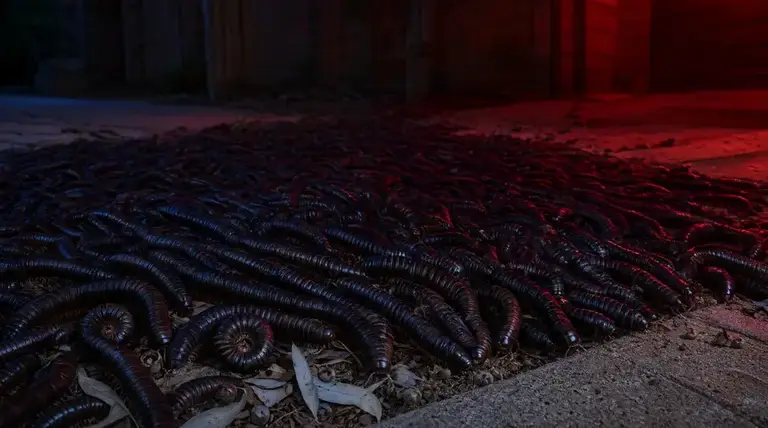
If you have ever walked outside on an autumn evening to find your verandah carpeted in wriggling black millipedes, you have met the pest many homeowners search for simply as “o” — shorthand for Ommatoiulus moreleti, the Portuguese millipede. This introduced invader has become one of the most widespread nuisance pests across southern Australia, swarming into homes in the thousands after rain and leaving stained floors, fouled walls and very frustrated residents in its wake.
The Portuguese millipede is a shiny black, cylindrical garden pest, 20–45 mm long, that does not bite or sting but overwhelms Australian homes by sheer weight of numbers, particularly in autumn and after early summer rain. That is the clean definition of the problem: it is not a dangerous pest, it is a plague pest. Effective control depends on sealing entry points and knocking down the outdoor breeding population — not spraying inside — which is why so many DIY attempts fail year after year.
- Portuguese millipedes (Ommatoiulus moreleti) are an introduced plague pest spread across SA, Victoria, Tasmania, the ACT and parts of WA and NSW.
- They cannot bite or sting, but their yellow defensive secretion stains walls and floors and smells strongly of almonds.
- Peak invasions hit in autumn (March–May), with a smaller spring flush and spikes after heavy rain following dry spells.
- Exclusion — door seals, weep-hole mesh, lighting changes and mulch management — is the first line of defence.
- Heavy annual plagues usually need a professionally applied exterior perimeter barrier timed before the autumn peak.
Why Portuguese millipedes (“o”) plague Australian homes
Portuguese millipedes plague Australian homes because they breed in enormous numbers in suburban gardens and are strongly attracted to light, which draws them onto lit verandahs and under doors after dark. First recorded near Port Lincoln, South Australia, in the 1950s, the species has since spread through SA, Victoria, Tasmania, the ACT and parts of Western Australia and New South Wales — and it is still expanding its range.
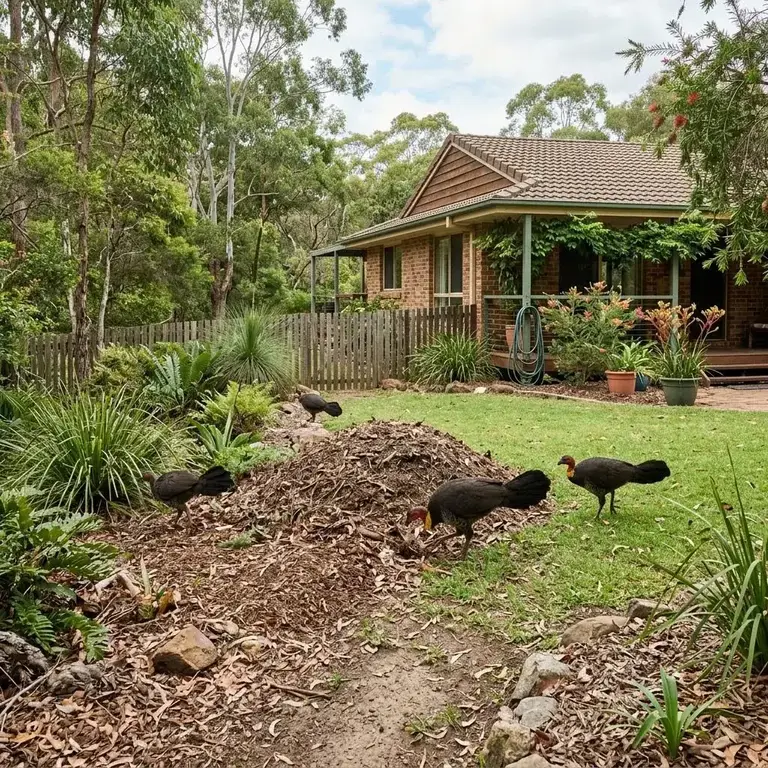
Unlike native millipedes, which tend to stay in bushland and deep leaf litter, the Portuguese millipede thrives in the disturbed, irrigated environments we create around our homes: garden beds, mulch, lawns and compost heaps. Modern Australian housing makes the problem worse. Homes on concrete slabs with garden beds hard against the walls give millipedes a direct path indoors, while older Queenslanders and homes with subfloor voids offer dark, sheltered harbourage. Brick veneer construction with weep holes at slab level is essentially an open door unless those openings are screened.
The scale is what shocks people. A single square metre of infested garden can hold hundreds of individuals, so even a small suburban block can produce overwhelming numbers overnight. When conditions suit them — mild temperatures and moist soil — they migrate en masse, and any building in their path gets swamped.
Peak season and triggers
- Autumn (March–May): the main invasion period, as adults become active and mate.
- Spring: a smaller secondary flush of juveniles.
- Rain after dry spells: heavy rain drives them out of saturated soil and towards buildings, fences and light sources.
Warning signs of a Portuguese millipede problem
The clearest warning sign is live millipedes appearing on paths, walls and doorways at night, especially after rain. Because they hide during the day, infestations often build for weeks before homeowners notice — use this checklist to catch a problem early.
- Night-time swarms on verandahs: dozens or hundreds of shiny black millipedes clustered around lit doorways, windows and garage doors after dark.
- Millipedes under doors and in garages: individuals crawling through the gap beneath external doors, particularly garage roller doors.
- Yellow-brown stains: smears on walls, floors and ceilings where millipedes have been squashed, often with a lingering almond-like odour.
- High garden density: lift a paver, pot or handful of mulch and find clusters of millipedes sheltering beneath.
- Seasonal repetition: the same invasion happens every autumn — a sure sign of an established breeding population in your garden beds and lawn.
- Dead millipedes in light fittings and window tracks: they follow the light and die in fixtures, creating an ongoing clean-up job.
Keeping Portuguese millipedes out of your house
Because millipedes breed outdoors, exclusion is your first line of defence — the goal is to break the path between the garden and the house. Physical barriers, habitat changes and light management together will stop the vast majority of incursions.
- Fit brush or rubber door seals to all external doors, paying special attention to garage roller doors where gaps are largest.
- Seal weep holes with fine stainless mesh and caulk gaps around pipes, vents and window frames.
- Reduce outdoor lighting near entries, or switch to warm-toned LED or yellow globes, which attract far fewer millipedes.
- Pull mulch, leaf litter and dense groundcover back at least 30 cm from walls and slab edges.
Indoors, sweep or vacuum millipedes up rather than crushing them — the yellow defensive fluid stains and smells strongly of almonds. These same exclusion principles also help against other moisture-loving crawlers. Millipedes share damp garden habitat with pests like earwigs — garden friend, house pest, so tidying the perimeter of the house pays off across several pest species at once. Likewise, a healthy, well-managed lawn is less hospitable to a whole range of invaders; if your turf is also struggling, our guide to lawn grubs and curl grubs is worth a read.
DIY vs professional pest control for millipedes
DIY exclusion and habitat work handles mild millipede pressure well, but heavy annual plagues usually need a professionally applied exterior barrier treatment timed before the autumn peak. Spraying skirting boards indoors achieves little, because new millipedes simply keep marching in from the garden. Professional pest control targets the source: a residual band applied to soil, paving edges and the base of external walls intercepts millipedes as they approach, combined with habitat advice to reduce breeding sites. Licensed technicians select and apply APVMA-registered products correctly, which matters for safety around kids, pets and gardens.
| Factor | DIY approach | Professional treatment |
|---|---|---|
| Best for | Light, occasional incursions | Annual plagues and heavy garden populations |
| Typical cost | $20–$80 (seals, mesh, globes) | $180–$450 per visit |
| Where it works | Entry points and lighting | Outdoor breeding zones plus perimeter barrier |
| Longevity | Ongoing effort each season | Weeks to months of residual protection |
| Limitations | Won’t reduce the breeding population | Needs correct timing before the autumn peak |
A combined exterior program often solves more than millipedes. The same moist garden habitat harbours armyworm, the lawn destroyer spreading across Australia, curl grubs and other turf pests, so pairing a perimeter treatment with a broader Lawn Grub & Garden Pest Treatment can be better value than treating each problem separately.
Portuguese millipede treatment costs in Australia (2025–26)
Across Australia, professional millipede control generally costs between $180 and $450 per treatment, depending on property size, construction type and the severity of the infestation. The figures below are typical Australian market rates for 2025–26 — what the industry generally charges, not a quote from any single provider. Larger blocks, subfloor access work and combined garden programs sit at the higher end of the national range.
| Service | Typical market rate (AUD) | What’s included/notes |
|---|---|---|
| Inspection and assessment | $0–$120 | Often free industry-wide when booked with treatment; identifies breeding zones and entry points |
| Exterior perimeter barrier treatment | $180–$320 | Residual band to soil, paving edges and wall bases around the building footprint |
| Large property / heavy infestation | $320–$450 | Extended garden treatment, subfloor or acreage perimeters |
| Combined garden pest program | $350–$550 | Millipedes plus lawn grubs, armyworm or earwigs in one visit |
| DIY exclusion materials | $20–$80 | Door seals, weep-hole mesh, caulk and yellow light globes |
Here’s the good news: Aussie Pest Strike typically comes in well under these market rates, without cutting corners on products, coverage or follow-up. For an exact quote tailored to your property, give us a call on [aps_phone] and we’ll sort you out on the spot.
Seasonal activity: when millipedes strike
Portuguese millipede activity peaks sharply in autumn, with a smaller secondary flush in spring and rain-driven spikes whenever heavy falls follow dry weather. The chart below shows typical relative activity across the year in southern Australia.
Jan
Feb
Mar
Apr
May
Jun
Jul
Aug
Sep
Oct
Nov
Dec
Typical Portuguese millipede activity in southern Australia: the major invasion window is March to May as adults mate and migrate, with a smaller juvenile flush in spring and rain-triggered surges at any time of year.
Nine times out of ten, the houses that get hammered each autumn have garden beds mulched right up to the slab and a bright light over the back door. Fix the habitat and the lighting, then put a perimeter barrier down in February before the adults get moving — that sequence is what actually breaks the cycle. Spraying inside after they’ve arrived is just mopping the floor while the tap’s still running.
Seal doors and weep holes, swap to warm-toned globes and pull mulch back 30 cm from walls now. If you faced a plague last autumn, book a professional perimeter barrier treatment in late summer or early autumn — before the March–May peak — and ask about combining it with a garden pest program to cover lawn grubs, armyworm and earwigs in the same visit.
Frequently Asked Questions
What is a Portuguese millipede and what does it look like?
The Portuguese millipede (Ommatoiulus moreleti) is an introduced, shiny black, cylindrical garden pest measuring 20–45 mm long. First recorded near Port Lincoln in South Australia in the 1950s, it has since spread through SA, Victoria, Tasmania, the ACT and parts of WA and NSW. It does not bite or sting, but it overwhelms homes by sheer numbers, making it a plague pest rather than a dangerous one.
Why do Portuguese millipedes come into houses?
Portuguese millipedes breed in enormous numbers in suburban gardens and are strongly attracted to light, which draws them onto lit verandahs and under doors after dark. They thrive in irrigated garden beds, mulch, lawns and compost heaps. Homes on concrete slabs with garden beds against the walls give them a direct path indoors, while weep holes in brick veneer construction act as open doors unless screened.
When is Portuguese millipede season?
The main invasion period is autumn (March to May), when adults become active and mate. A smaller secondary flush of juveniles occurs in spring. Heavy rain following dry spells also triggers spikes, because saturated soil drives millipedes out of the ground and towards buildings, fences and light sources. Mild temperatures and moist soil encourage mass migration.
What are the warning signs of a Portuguese millipede infestation?
Key signs include night-time swarms of shiny black millipedes clustered around lit doorways, windows and garage doors; individuals crawling under external doors; yellow-brown smears on walls, floors and ceilings where they have been squashed; clusters sheltering under pavers, pots or mulch; dead millipedes in light fittings and window tracks; and the same invasion repeating every autumn, indicating an established breeding population.
Do Portuguese millipedes bite or sting people?
No. Portuguese millipedes cannot bite or sting, so they pose no direct danger to people or pets. The problem is their defensive secretion: when crushed, they release a yellow fluid that stains walls and floors and gives off a strong almond-like smell. For this reason, it is best to sweep or vacuum them up indoors rather than squashing them.
How do I keep Portuguese millipedes out of my house?
Exclusion is the first line of defence. Fit brush or rubber door seals to all external doors, especially garage roller doors where gaps are largest. Seal weep holes with fine stainless mesh and caulk gaps around pipes, vents and window frames. Reduce outdoor lighting near entries or switch to warm-toned LED or yellow globes, and pull mulch, leaf litter and dense groundcover back at least 30 cm from walls and slab edges.
Why doesn't spraying inside get rid of Portuguese millipedes?
Millipedes breed outdoors in garden beds, mulch and lawns, so spraying skirting boards achieves little — new millipedes simply keep marching in from the garden. Effective control targets the source: a residual band applied to soil, paving edges and the base of external walls intercepts millipedes as they approach, combined with habitat changes that reduce breeding sites around the building.
DIY or professional treatment for Portuguese millipedes — which do I need?
DIY exclusion and habitat changes suit light, occasional incursions: fit door seals, cover weep holes with mesh, and switch outdoor lighting to less attractive options. Heavy annual plagues usually need a professionally applied exterior perimeter barrier timed before the autumn peak, because DIY measures alone will not reduce the outdoor breeding population driving the invasion.
How would Aussie Pest Strike assess the signs of a Portuguese millipede problem at my home?
A technician would look for the classic signs described in this article: night-time swarms around lit doorways, millipedes entering under doors and garage roller doors, yellow-brown stains with an almond-like odour, and clusters sheltering beneath pavers, pots and mulch. An inspection identifies breeding zones in garden beds and lawn, pinpoints entry points such as unscreened weep holes, and determines whether exclusion alone will suffice or a perimeter barrier is needed before autumn.
What should I do next if Portuguese millipedes invade my house every autumn?
Start with the exclusion basics: fit door seals, screen weep holes with fine stainless mesh, switch entry lighting to warm-toned LED or yellow globes, and pull mulch back 30 cm from walls. If the same plague returns each autumn, contact Aussie Pest Strike to discuss a professionally applied exterior perimeter barrier timed before the March–May peak, which can be paired with broader garden pest treatment if your property also shows signs of lawn grubs or armyworm.
Sources & further reading
Found Something
Dangerous?
Don’t touch it. Don’t spray it. Keep kids and pets clear, take a photo from a safe distance, and call us — or book a free inspection and we’ll come to you.
02 7235 0050