Citrus Gall Wasp:Saving Your Lemonand Lime Trees
Citrus gall wasp is a small native Australian wasp whose larvae tunnel into the soft new stems of lemon and lime trees, causing swollen galls that weaken...
Citrus gall wasp is a tiny native Australian wasp whose larvae tunnel into the soft new stems of lemon and lime trees, forming swollen galls that weaken branches and cut fruit yields. The question most home gardeners ask is simple: “what do i do about it?” The good news is that well-timed winter pruning, careful disposal of infested stems and sensible feeding will bring most backyard trees back to health without sprays.
Whether you grow a single lemon in a Melbourne courtyard or a row of limes in a Brisbane backyard, this pest is now established across most of the country. This guide explains how to identify it, when to act, what treatment costs in 2025–26, and when a licensed garden pest control service makes sense.
- Citrus gall wasp (Bruchophagus fellis) is a native wasp that has spread from northern Australia into QLD, NSW, VIC, SA and parts of WA.
- Lumpy swellings on last season’s green stems are the giveaway sign — the wasp itself is rarely seen.
- Prune out every gall before spring emergence (late August in southern states, earlier in the subtropics).
- Never compost or mulch galls — solarise, freeze or burn them instead.
- No insecticides are registered for home gardeners, so cultural control and professional garden pest treatment are your main tools.
Why Citrus Gall Wasp Matters Across Australia
Citrus gall wasp matters because it is one of the few native Australian pests that has successfully jumped from wild hosts to backyard citrus, and it is now entrenched in suburbs nationwide. It originally bred in native citrus such as finger limes and desert limes, but has since shifted to cultivated citrus and spread south through Queensland and New South Wales into Victoria, South Australia and parts of Western Australia.
Australian conditions suit it perfectly. Our long growing seasons give lemons and limes multiple flushes of soft new growth, and citrus is practically a fixture of the Aussie backyard — from Queenslanders with established trees under the house line to brick veneer homes in new estates with a dwarf lime by the fence. Adults are weak fliers, so infestations creep through a suburb tree by tree rather than arriving overnight. That’s why street-wide awareness matters: if your neighbour’s tree is riddled with galls, yours is likely next. Much like the armyworm spreading across Australian lawns, this is a pest that rewards early, coordinated action.
Warning Signs: How to Spot Citrus Gall Wasp Damage
Diagnosis relies on the galls, because the adult wasp — a tiny black insect barely three millimetres long — is almost never seen. From late summer through winter, inspect your trees for these signs:
- Lumpy swellings on green stems — slight thickenings on last season’s growth that can reach golf-ball size on badly hit branches.
- Galls clustered near branch tips — check the outer canopy and the shaded interior, where galls are easily missed.
- Sparse foliage and dieback — heavily infested branches often die back beyond the galls.
- Smaller crops and thinning yield — fruit set drops as the tree diverts energy to damaged stems.
- Larvae packed inside mature galls — slice one open in late winter and they sit inside like seeds.
If you’re already checking your yard for problems like lawn grubs and curl grubs, add a monthly citrus inspection from late summer to the routine.
DIY vs Professional Control: What Should i Do First?
Most light infestations respond well to DIY pruning and hygiene, because no insecticides are registered for home gardeners against this pest in Australia. Heavily infested trees, tall canopies you can’t safely reach, or properties with multiple citrus often justify a professional Lawn Grub & Garden Pest Treatment visit, where a licensed technician can assess the whole garden, prune correctly and monitor emergence with traps.
| Factor | DIY approach | Professional service |
|---|---|---|
| Best for | Light infestations, one or two small trees | Heavy infestations, tall trees, multiple citrus |
| Cost | Pruners, bags and traps: roughly $40–$100 | Typically $150–$400+ per visit (2025–26) |
| Timing | You must hit the late-winter window yourself | Technician schedules pruning before emergence |
| Disposal | Solarise, freeze or burn — never compost | Removed and disposed of correctly for you |
| Coverage | Easy to miss galls in the shaded interior | Full canopy inspection plus broader garden pest check |
Remember that a general household pest control spray will not reach larvae sealed inside galls — this is a plant-specific pest managed through pruning, trapping and tree hygiene. The same applies to other yard invaders: Portuguese millipedes, for instance, need perimeter strategies, not tree work.
How to Control Citrus Gall Wasp: Step by Step
Control hinges on one vulnerable window — removing galls before the adults emerge in spring. There is only one generation a year, so every gall removed before spring stops a generation.
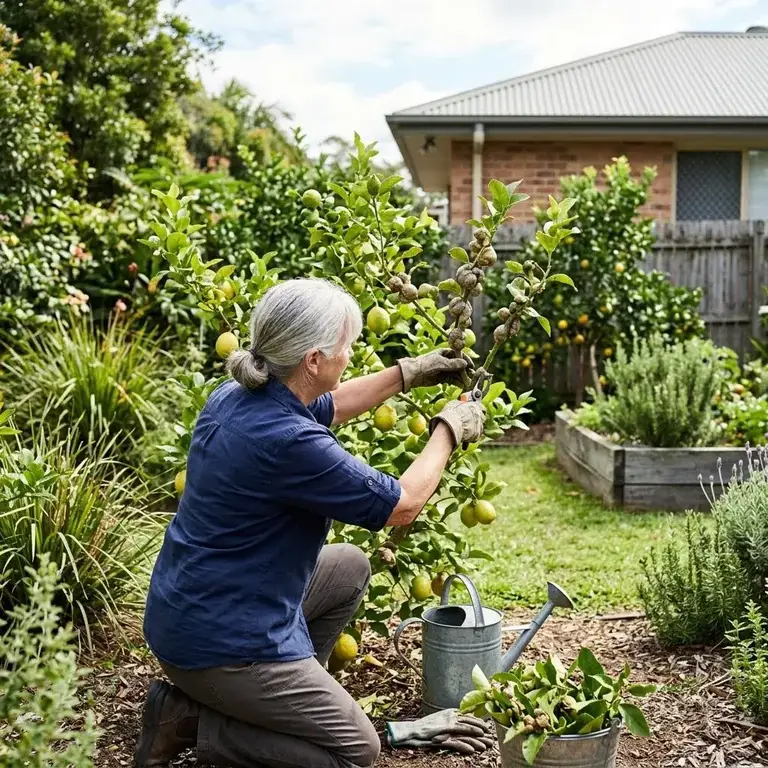
- Prune out every gall by late winter — before the end of August in Victoria, SA and southern WA, earlier in Queensland and northern NSW. Cut well below each gall into clean wood.
- Solarise or freeze prunings — seal them in a black plastic bag in full sun for a month, or freeze for a fortnight. Never compost or send them to green waste; the wasps inside will still emerge.
- Go easy on spring nitrogen — heavy feeding pushes out the soft flush the wasps prefer. Feed in late autumn instead and water deeply through summer.
- Hang yellow sticky traps in the canopy from late winter to monitor emerging adults.
- Encourage neighbours to treat their trees too — street-wide action works best.
A parasitoid wasp, Megastigmus brevivalvus, is being trialled as a biological control with promising early results. WA also restricts citrus plant movements from the eastern states, so always buy certified, locally grown stock.
How Much Does Citrus Gall Wasp Treatment Cost?
DIY treatment costs very little, while professional garden pest services across Australia generally range from $150 to $400 or more per visit in 2025–26, depending on tree size, access and how many citrus are on the property. These are typical Australian market rates you’ll see quoted across the industry:
| Service | Typical market rate (AUD) | What’s included/notes |
|---|---|---|
| DIY kit (pruners, bags, sticky traps) | $40–$100 | One-off purchase; suits small, lightly infested trees |
| Garden pest inspection | $99–$180 | Full yard assessment, often credited toward treatment |
| Pruning + disposal visit | $150–$300 | Gall removal, solarising/removal off-site, trap placement |
| Ongoing seasonal program | $250–$400+ per visit | Scheduled winter pruning plus spring monitoring across all citrus |
Bundling citrus work with a broader lawn grub and garden pest treatment is generally better value than booking separate visits, whatever provider you use.
While the figures above reflect what the Australian industry generally charges, Aussie Pest Strike typically comes in well under these market rates. For an exact quote tailored to your property, give us a call on [aps_phone].
Seasonal Activity: When Citrus Gall Wasp Is Active in Australia
Adult wasps emerge in spring — as early as August in Queensland and northern NSW, and September to November in Victoria, South Australia and southern WA — so risk peaks in late winter and spring, with fresh galls becoming visible from late summer. Adults live about a week, mate, and lay eggs under the bark of fresh spring flush.
Jan
Feb
Mar
Apr
May
Jun
Jul
Aug
Sep
Oct
Nov
Dec
Indicative activity pattern: emergence peaks August–November (earlier in the subtropics), while galls swell and become easiest to spot from late summer into winter — your cue to prune before spring.
The biggest mistake we see is gardeners pruning at the right time but composting the galls — the wasps hatch anyway and the cycle starts again. Get the timing right, dispose of prunings properly, and go easy on the spring fertiliser. Do that two winters running and most trees come back strongly.
Prune out every visible gall before the end of August (earlier in the subtropics), solarise or freeze the prunings, and hang yellow sticky traps from late winter. If your trees are tall, heavily infested or you have several citrus, book a licensed technician for a winter garden pest treatment and spring monitoring — and ask neighbours to act at the same time.
Frequently Asked Questions
What is citrus gall wasp and why does it damage lemon and lime trees?
Citrus gall wasp (Bruchophagus fellis) is a tiny native Australian wasp, barely three millimetres long, whose larvae tunnel into the soft new stems of lemon and lime trees. The tunnelling forms swollen galls that weaken branches, cause dieback and reduce fruit set. Originally breeding in native citrus such as finger limes and desert limes, it has spread to cultivated citrus across QLD, NSW, VIC, SA and parts of WA.
How do I identify citrus gall wasp in my backyard citrus?
Look for lumpy swellings on last season's green stems — the giveaway sign, since the adult wasp itself is almost never seen. Galls often cluster near branch tips and can reach golf-ball size on badly hit branches. Other signs include sparse foliage, dieback beyond the galls, smaller crops and thinning yield. Slicing a mature gall open in late winter reveals larvae packed inside like seeds.
When should I prune out citrus galls?
Prune out every visible gall before adults emerge in spring. In Victoria, SA and southern WA that means before the end of August; in Queensland and northern NSW act earlier because emergence can begin as early as August. There is only one generation per year, so every gall removed before spring stops that generation from emerging and laying eggs in fresh flush.
What should I do with pruned galls after cutting them off?
Never compost or mulch galled stems, or send them to green waste — wasps inside will still emerge and restart the cycle. Instead, seal prunings in a black plastic bag left in full sun for about a month to solarise them, or freeze them for a fortnight. Burning is another option. Correct disposal matters just as much as getting the pruning timing right.
Are there insecticides I can use against citrus gall wasp?
No insecticides are registered for home gardeners against citrus gall wasp in Australia, so sprays are not an option for DIY control. A general household pest control spray will not reach larvae sealed inside galls anyway. Management relies on cultural control: well-timed winter pruning, proper disposal of galls, sticky traps to monitor emergence and sensible feeding practices.
How does fertilising affect citrus gall wasp problems?
Go easy on spring nitrogen. Heavy feeding pushes out the soft new flush of growth that gall wasps prefer for laying eggs under the bark. Feed in late autumn instead and water deeply through summer. Combined with pruning out all galls before spring and hanging yellow sticky traps from late winter, this helps most backyard trees recover strongly over two winters.
When are citrus gall wasps active through the year?
Adults emerge in spring — as early as August in Queensland and northern NSW, and September to November in Victoria, South Australia and southern WA. Adults live about a week, mate, and lay eggs under the bark of fresh spring flush. Fresh galls become visible from late summer and are easiest to spot through winter, which is your cue to prune before spring emergence.
When should I call a professional instead of treating citrus gall wasp myself?
Most light infestations on one or two small trees respond well to DIY pruning and hygiene. Consider a licensed garden pest technician if your tree is heavily infested, the canopy is too tall to safely reach, or you have multiple citrus on the property. A professional can inspect the full canopy, prune correctly, dispose of galls properly and monitor spring emergence with traps.
How would Aussie Pest Strike assess my tree for the signs of citrus gall wasp?
A technician would inspect both the outer canopy and the shaded interior where galls are easily missed, looking for lumpy swellings on last season's green stems, dieback beyond galls and reduced fruit set. They would check whether galls are mature enough to contain larvae, assess how far the infestation has spread across each tree, and note any neighbouring citrus that could reinfest your garden after pruning.
What practical next step should I take if my lemon or lime tree is riddled with galls?
Start by marking every visible gall now, then arrange pruning before the end of August in southern states, or earlier if you are in the subtropics. If the canopy is tall, the tree is heavily infested or you have several citrus, booking a winter garden pest treatment with Aussie Pest Strike means galls are removed and disposed of correctly, with sticky traps placed for spring monitoring. Ask neighbours to treat their trees at the same time, since street-wide action works best.
Sources & further reading
Found Something
Dangerous?
Don’t touch it. Don’t spray it. Keep kids and pets clear, take a photo from a safe distance, and call us — or book a free inspection and we’ll come to you.
02 7235 0050