Armyworm: TheLawn Destroyer SpreadingAcross Australia
Armyworm the lawn — armyworm is a caterpillar that can strip a healthy lawn bare in just a few nights, feeding on grass blades in destructive "armies" that...
Armyworm is the caterpillar pest that can strip a healthy Australian lawn bare in just a few nights, and fall armyworm in particular is spreading across the country faster than most homeowners realise. If you’ve ever wondered whether your lawn is at “r”isk this season, the short answer is yes — especially from January through autumn, when humid weather pushes moth flights down the eastern seaboard.
Fast identification and prompt treatment are the difference between a scorched patch and a ruined lawn. This guide explains exactly what this pest is, how to confirm it, what DIY and professional pest control options cost in 2025–26, and when to act — because with this caterpillar, waiting even 48 hours can be expensive.
- These caterpillars feed in destructive “armies”, stripping grass blades and advancing across a lawn within 24–48 hours.
- Peak season is late summer to autumn (January to April), usually after humid, wet weather.
- A soapy-water flush is the quickest way to confirm an infestation — caterpillars wriggle to the surface within minutes.
- Professional lawn pest treatment in Australia typically costs $150–$350, while severe infestations with follow-up visits can run higher.
- Treat late afternoon, while larvae are small, and cover a margin beyond the visible damage to catch the marching front.
What is armyworm and why does it matter in Australia?
It is the larval stage of night-flying moths that feed on grass blades in dense groups, marching across turf as they exhaust each area — and Australia’s warm, humid climate makes most of the country ideal breeding ground. Two species concern Australian homeowners: the native lawn armyworm (Spodoptera mauritia) and the invasive fall armyworm (Spodoptera frugiperda), first detected in the Torres Strait in early 2020 and now found across most mainland states.
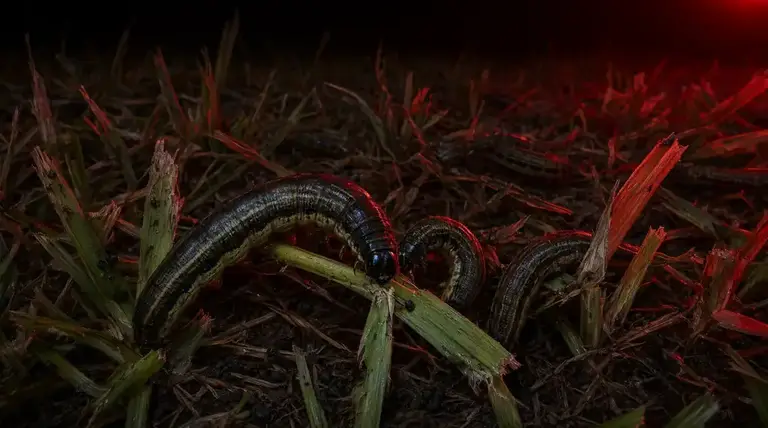
The caterpillars grow to 35–40 mm, are green to brown with pale side stripes, and hide in the thatch by day before feeding after dusk. A single moth lays 100–300 eggs, so populations explode in days rather than weeks. The name comes from their behaviour: once they strip one patch, the larvae move en masse to fresh grass, like an army advancing across your backyard.
Local conditions stack the odds in the pest’s favour. Queenslanders and homes on slab in the subtropics sit in near year-round breeding territory, while brick veneer homes in Sydney, Melbourne and Perth see sharp outbreaks after wet summers. Unlike slower lawn pests such as curl grubs — which eat roots and let turf lift like a carpet — this caterpillar eats blades from the top down. That means the damage looks cosmetic at first, then catastrophic overnight. Healthy, well-watered couch and kikuyu lawns, the staples of Australian backyards, are exactly what they prefer.
Warning signs you have an infestation
The clearest sign of these caterpillars is lawn damage that visibly spreads from one day to the next, combined with ragged, chewed grass blades. Use this checklist to confirm before you spend a dollar on treatment:
- Ragged, chewed blades – grass looks torn and skeletonised rather than cleanly mown, with rapidly browning patches.
- Fast-moving damage – the brown front advances noticeably day to day, sometimes metres in 24–48 hours.
- Bird activity – ibis, magpies and plovers working the lawn at dawn are often feasting on caterpillars below the surface.
- Frass in the thatch – small green or brown droppings visible when you part the grass.
- Evening sightings – caterpillars surfacing after watering, or visible feeding after dusk with a torch.
- Moths at night – dull brown moths fluttering up from the lawn around lights in the evening.
To confirm, run the soapy-water flush described in our guide to lawn grubs and curl grubs: mix a few tablespoons of dishwashing liquid in a bucket of water, pour it over a square metre of suspect turf, and watch. The larvae wriggle to the surface within minutes. Remember — unlike curl grubs, this pest eats blades, not roots, so the turf will not lift like carpet. If the grass lifts easily, you’re dealing with a different pest entirely.
DIY vs professional treatment
Light, early infestations can be managed by a confident DIYer with an APVMA-registered product from a hardware store, but heavy or repeat outbreaks are usually cheaper in the long run when handled by a licensed pest control technician. The key “r”ule either way: treat late afternoon, before night feeding, and cover the damaged area plus a generous margin. Here’s how the two approaches compare:
| Factor | DIY treatment | Professional treatment |
|---|---|---|
| Best for | Small, early outbreaks caught within a day or two | Widespread, repeat or fast-moving infestations |
| Cost (typical) | $30–$80 for product and hose-on applicator | $150–$350 per visit |
| Identification | You confirm with a soapy-water flush | Technician confirms species and rules out curl grubs and other lawn pests |
| Products | Retail APVMA-registered lawn insecticides, applied to label directions | Professional-grade APVMA-registered products applied by licensed technicians |
| Follow-up | Self-monitoring; reinfestation often missed | Monitoring advice and re-treatment options if moths re-lay |
| Safety | Must follow label precisely; keep kids and pets off until dry | Licensed applicators manage rates, drift and re-entry periods |
Whichever path you choose, no insecticide is risk-free — always follow the APVMA label, and for anything beyond a small patch, engage a licensed technician. Our Lawn Grub & Garden Pest Treatment service covers these caterpillars alongside other turf and garden pests in a single visit.
How much does armyworm treatment cost in Australia?
As a guide to typical Australian market rates in 2025–26, the industry generally charges between $150 and $350 per visit to treat a standard suburban lawn, depending on lawn size, severity and location. Market rates vary between metro and regional areas, and severe outbreaks may need a follow-up application two to three weeks later as new eggs hatch.
| Service | Typical market rate (AUD) | What’s included / notes |
|---|---|---|
| Inspection and identification | $0–$120 | Confirms caterpillars vs curl grubs or disease; often waived with treatment across the industry |
| Standard lawn treatment (up to ~200 m²) | $150–$250 | APVMA-registered insecticide to damaged area plus margin, late-afternoon application |
| Large or severe infestation | $250–$350+ | Bigger blocks, acreage edges, or heavy pressure requiring broader coverage |
| Follow-up visit | $90–$180 | Re-treatment if moths re-lay; common in humid QLD and northern NSW summers |
| Combined lawn pest program | $300–$550/year | Seasonal visits covering armyworm, curl grubs and other turf pests |
Compare these market rates with the cost of resowing or returfing a stripped lawn — typically $800 to several thousand dollars — and early professional treatment is clearly the cheaper route.
Here’s the good news: Aussie Pest Strike typically comes in well under these typical Australian market rates, without cutting corners on product quality or coverage. For an exact quote tailored to your lawn and the severity of your outbreak, give our team a call on [aps_phone] — we’ll talk you through your options and lock in a price before any work begins.
When is it most active in Australia?
Activity peaks from late summer into autumn, roughly January to April, particularly after humid, wet weather that suits the moths. In tropical Queensland and the Northern Territory the pest can breed year-round, while southern states see sharp, shorter outbreaks tied to summer storm systems.
Jan
Feb
Mar
Apr
May
Jun
Jul
Aug
Sep
Oct
Nov
Dec
Typical armyworm pressure across mainland Australia, peaking January–April after humid, wet weather and building again from late spring. Northern regions can see activity year-round.
Because fall armyworm moths are strong fliers that ride weather systems hundreds of kilometres, outbreaks track humidity from Queensland down the eastern seaboard — similar timing to the pests in our state-by-state mosquito season guide. The species also feeds well beyond lawns, on maize, pasture and garden crops, so your backyard sits within a much larger reservoir of the pest. That’s why even a lawn treated one season can be reinfested the next.
Watering, aftercare and prevention
During an active infestation, water early in the day rather than in the evening, because heavy evening watering brings caterpillars to the surface and keeps the thatch moist and comfortable, which can accelerate feeding. After treatment, water deeply, fertilise lightly and monitor for reinfestation over the following two to three weeks.
Keeping turf vigorous is your best long-term defence — the same principle we apply to soil pests in coastal brown ant lawn control. Mow at the correct height for your grass type, avoid over-fertilising with nitrogen (soft, lush growth attracts egg-laying moths), and watch for other garden invaders that thrive in the same humid conditions, from Portuguese millipedes after autumn rains to earwigs sheltering in dense thatch.
The biggest mistake we see is homeowners waiting a week to “see if it gets worse” — with armyworm, it always does. If birds are working your lawn and the brown patch moved overnight, treat that same afternoon. Catching it while the larvae are small saves the lawn and usually saves you a second visit.
Run a soapy-water flush the day you suspect an infestation. If caterpillars surface, treat that same late afternoon with an APVMA-registered product, covering the damage plus a 2–3 metre margin. For anything beyond a small patch — or any repeat outbreak — book a licensed technician through our Lawn Grub & Garden Pest Treatment service, then keep turf vigorous and water in the morning to reduce the chance of a second wave.
Frequently Asked Questions
What is armyworm and why does it damage lawns so quickly?
Armyworm is the caterpillar stage of night-flying moths that feed on grass blades in dense groups, marching across turf as they exhaust each patch. A single moth lays 100–300 eggs, so populations explode within days. Because the larvae eat blades from the top down rather than roots, damage can look minor at first, then spread catastrophically across a lawn within 24–48 hours.
How can I confirm armyworm in my lawn?
The quickest check is a soapy-water flush: mix a few tablespoons of dishwashing liquid in a bucket of water, pour it over a square metre of suspect turf, and watch for caterpillars wriggling to the surface within minutes. Supporting signs include ragged, chewed blades, a brown front advancing day to day, frass in the thatch, bird activity at dawn, and moths fluttering up around lights in the evening.
When is armyworm most active in Australia?
Activity peaks from late summer into autumn, roughly January to April, especially after humid, wet weather. In tropical Queensland and the Northern Territory the pest can breed year-round, while southern states see sharp, shorter outbreaks tied to summer storm systems. Fall armyworm moths are strong fliers that ride weather systems hundreds of kilometres, tracking humidity down the eastern seaboard.
What does fall armyworm look like and where did it come from?
Fall armyworm (Spodoptera frugiperda) is an invasive species first detected in the Torres Strait in early 2020 and now found across most mainland states. The caterpillars grow to 35–40 mm, are green to brown with pale side stripes, and hide in the thatch by day before feeding after dusk. The native lawn armyworm (Spodoptera mauritia) also affects Australian lawns.
Can I treat armyworm myself or should I hire a professional?
You can treat a small, early armyworm outbreak yourself with an APVMA-registered insecticide labelled for lawn armyworm, applied in the evening when larvae feed. If the damage is spreading quickly across large areas, keeps returning after treatment, or you cannot confirm the pest, a licensed pest controller can identify the species correctly and plan follow-up treatments if moths re-lay eggs.
Why should treatment be done late afternoon and beyond the visible damage?
Armyworm caterpillars hide in the thatch by day and feed after dusk, so treating late afternoon targets them just before night feeding begins. Covering the damaged area plus a generous margin matters because larvae march in groups — the visible browning marks where they have already been, while the advancing front sits just beyond it, ready to move onto fresh grass.
How do I care for my lawn during and after an armyworm infestation?
During an active infestation, water early in the day rather than in the evening, because heavy evening watering brings caterpillars to the surface and keeps the thatch moist, which can accelerate feeding. After treatment, water deeply, fertilise lightly and monitor for reinfestation over the following two to three weeks as new eggs hatch.
How can I prevent armyworm from returning next season?
Keep turf vigorous, since healthy lawns recover faster and resist pressure better. Mow at the correct height for your grass type and avoid over-fertilising with nitrogen, because soft, lush growth attracts egg-laying moths. Watch for reinfestation in following seasons, as fall armyworm feeds on maize, pasture and garden crops nearby, meaning treated lawns can be reinfested from the wider environment.
How can Aussie Pest Strike help with Armyworm: The Lawn Destroyer Spreading Across Australia?
Yes. An inspection confirms whether you are dealing with armyworm or a different pest such as curl grubs, which eat roots and let turf lift like carpet, whereas armyworm eats blades. Getting the identification right before spending money on treatment avoids wasted product and ensures any insecticide is applied to the right area at the right time of day.
What should I do next if I suspect armyworm in my lawn?
Run a soapy-water flush to confirm caterpillars are present, then act promptly, since waiting even 48 hours can make the difference between a scorched patch and a ruined lawn. Aussie Pest Strike can identify the pest, rule out other lawn problems and treat the damaged area plus a margin, with monitoring advice to catch reinfestation as new eggs hatch.
Sources & further reading
Found Something
Dangerous?
Don’t touch it. Don’t spray it. Keep kids and pets clear, take a photo from a safe distance, and call us — or book a free inspection and we’ll come to you.
02 7235 0050