Blow Flies:What a SuddenSwarm Means
Blow flies what — a sudden swarm of blow flies almost always means there is decomposing organic matter nearby most often a dead animal in a wall cavity,...
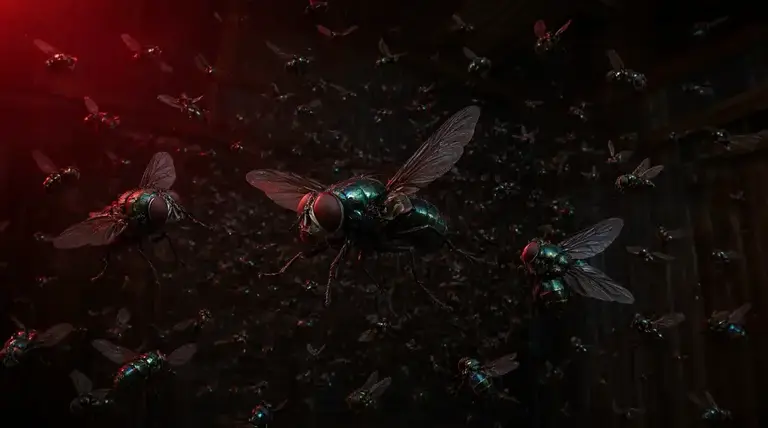
A sudden swarm of blow flies inside your home is one of the most unmistakable pest warnings an Australian household can get. It almost always means one thing: something is decomposing nearby — most often a dead rodent, possum or bird in a wall cavity, roof void or under the house. Blow flies are drawn to death and rotting flesh, and finding and removing the source is the only way to stop the swarm.
Blow flies (family Calliphoridae) are large, metallic-bodied flies that breed in carrion and decaying meat, so an indoor concentration is a reliable signal of hidden decomposition. A handful drifting in through an open door on a summer afternoon is normal; dozens appearing over a day or two is not. This guide covers identification, warning signs, safe removal, realistic pest control costs and when to call a licensed technician.
- A sudden indoor swarm of blow flies almost always points to a dead animal in the roof void, wall cavity or subfloor.
- Blow flies are 8–14 mm with a metallic blue, green or bronze sheen — larger and louder than house flies.
- A female can lay 150–200 eggs on a carcass, and maggots can hatch within 24 hours in summer heat.
- Removing the source is the only lasting fix; sprays alone will not stop new flies emerging.
- Inaccessible carcasses (wall cavities, fixed floors) are a job for licensed pest control professionals.
Why blow flies matter in Australian homes
Blow flies thrive across Australia because our long, hot summers accelerate both decomposition and fly breeding. The warmer the climate, the faster a carcass attracts flies and the faster eggs hatch into maggots — which is why swarms often seem to explode out of nowhere in Queensland, northern New South Wales and Western Australia.
Housing style plays a big part too. Homes on stumps with open subfloors, older Queenslanders with wall cavities and gap-prone weatherboards, and brick veneer houses with weep holes all give rodents and possums entry points — and places to die unseen. Even modern slab homes have roof voids where a rat baited weeks earlier can end its days. In Australia the European green blow fly and the Australian sheep blow fly (Lucilia cuprina) are among the most common species, and both are highly efficient at finding carrion. They can detect the scent of decomposition from up to a kilometre away, which is how they locate a dead animal in your roof within days of it dying.
How to recognise a blow fly (l)
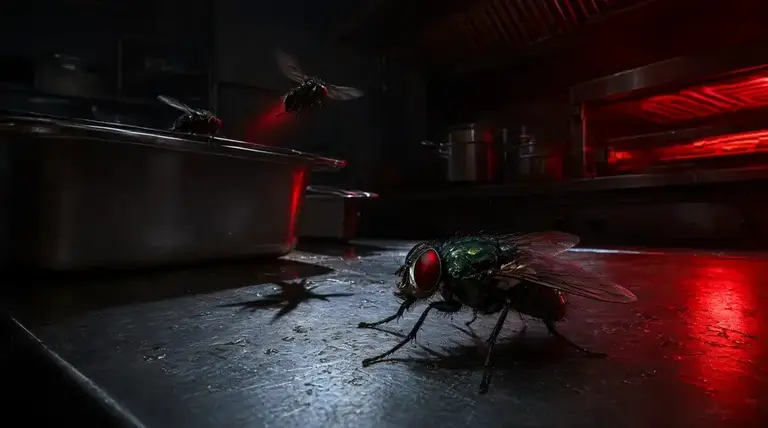
Blow flies are larger than house flies at 8–14 mm, with distinctive metallic blue, green or bronze bodies. Their loud, heavy buzzing and glinting bodies clustered at windows are usually the first clue something is wrong.
- Size: Blow flies are noticeably bigger and bulkier than the flies you normally see indoors.
- Colour: A metallic sheen, versus the dull grey of a house fly.
- Behaviour: Blow flies zero in on carrion and meat rather than general food waste.
Because their habits differ, control differs too. Managing carrion breeders is a very different job from managing house flies and their health risks, or the moisture-loving breeders covered in our guide to drain flies: ID, breeding sites and elimination. Correct identification is step one — getting it wrong means treating the wrong source.
Warning signs: what a sudden swarm is telling you
Dozens of blow flies appearing inside over a day or two is a near-certain sign of a dead animal somewhere in the structure or yard. Work through this checklist to narrow down the source before it gets worse.
- Sudden numbers: Many large metallic flies appearing indoors within 24–48 hours, often gathering at windows.
- Decomposition odour: A sweet, rotting smell that intensifies as you get closer to the source — follow your nose.
- Roof void activity: Recent scratching or scurrying that has now stopped, suggesting a rodent or possum has died up there.
- Wall cavity clues: Flies emerging from vents, downlights, weep holes or gaps around architraves.
- Subfloor and decking: Flies rising from under the house or a carcass smell near low decking.
- Yard and bins: A dead bird or animal in the garden, forgotten meat scraps, spoiled meat in an outdoor freezer, or an uncleaned bin.
- Maggots: Larvae appearing on floors or ceilings below the source — a late-stage sign that means the clock is ticking.
A female blow fly can lay 150–200 eggs on a carcass, and in summer heat maggots hatch within 24 hours. That is why the swarm builds so quickly — and why it vanishes almost as fast once the source dries out or is removed. The same spoilage conditions that attract blow flies outdoors can also draw fruit flies in the kitchen, so source control protects you on both fronts.
It is worth remembering that blow flies are not villains in the wider environment. Their larvae are nature’s clean-up crew, breaking down carrion, and forensic entomologists use the predictable stages of blow fly development to estimate time of death. The problem only arises when that decomposition happens inside your home.
DIY vs professional blow fly removal
If the carcass is accessible — in the yard, a bin or an open subfloor — careful DIY removal is reasonable. If it is deep in a wall cavity, a tight roof void or under a fixed floor, professional pest control is safer and usually cheaper than the damage caused by cutting blind into walls.
| Factor | DIY | Professional |
|---|---|---|
| Best for | Accessible carcasses: yard, bins, open subfloor | Wall cavities, roof voids, under fixed floors |
| Equipment | Gloves, mask, double bags, disinfectant | Inspection cameras, access tools, confined-space gear |
| Risk | Bacteria exposure, incomplete removal | Low — licensed, insured technicians |
| Finishing | Surface disinfecting only | Deodorising plus residual treatment to frames and eaves |
| Typical cost | Under $50 in materials | $180–$450 depending on access |
If you go the DIY route, wear gloves and a mask, double-bag any carcass, and disinfect the area thoroughly to deal with lingering maggots. Any chemical treatment beyond basic household disinfectant should be handled by a licensed technician using APVMA-registered products.
Blow fly removal costs in Australia
Across the Australian pest control industry, blow fly jobs generally run between $180 and $450, depending on where the carcass is and how hard it is to reach. Simple yard or subfloor removals sit at the low end of the market; wall-cavity extraction with deodorising sits at the top.
| Service | Typical market rate (AUD) | What’s included/notes |
|---|---|---|
| Inspection and source location | $0–$120 | Roof void, subfloor and cavity check; the industry often waives this when treatment follows |
| Accessible carcass removal | $180–$280 | Removal, bagging, disposal and area disinfection |
| Wall cavity or roof extraction | $300–$450 | Access cutting, removal, deodorising; patching may cost extra |
| Residual fly treatment | $120–$220 | Treatment to window frames, eaves and entry points for stragglers |
The figures above reflect typical Australian market rates for 2025–26 and vary with access, property size and location. A fixed quote after inspection is always preferable to an hourly rate, no matter which operator you engage.
Aussie Pest Strike typically comes in well under these market rates, without cutting corners on removal, disinfection or follow-up treatment. Call [aps_phone] for an exact quote on your property.
Seasonal blow fly activity in Australia
Blow fly activity peaks from late spring through early autumn across most of Australia, with the highest pressure in the warm, humid months from November to March. Activity drops sharply in winter in the southern states but continues year-round in the tropics.
Jan
Feb
Mar
Apr
May
Jun
Jul
Aug
Sep
Oct
Nov
Dec
Typical blow fly activity across temperate Australia. Peak season runs November to March; tropical regions see elevated activity all year.
Nine times out of ten, when a customer calls about big green flies everywhere, there’s a dead rat or possum in the roof. Spraying the flies achieves nothing — you have to find the source, get it out and treat the area. Do that, and the problem is gone within days.
Act fast: follow the odour, check the roof void, subfloor and yard, and remove the source within 24–48 hours before maggots hatch. If the carcass is in a wall cavity or anywhere you can’t safely reach, book a licensed technician — extraction, deodorising and a residual treatment will clear the swarm and the stragglers in one visit.
Frequently Asked Questions
What does a sudden swarm of blow flies inside my home mean?
A sudden indoor swarm of blow flies almost always means something is decomposing nearby — most often a dead rodent, possum or bird hidden in a wall cavity, roof void or under the house. Blow flies are drawn to carrion and can detect decomposition from up to a kilometre away. A few drifting in through an open door is normal; dozens appearing over a day or two signals a carcass that needs to be found and removed.
How do I tell a blow fly apart from an ordinary house fly?
Blow flies are larger than house flies at 8–14 mm long, with bulky bodies carrying a metallic blue, green or bronze sheen rather than the dull grey of a common house fly. They also have a loud, heavy buzzing and tend to cluster at windows. Behaviourally, they zero in on carrion and decaying meat rather than general food waste, so correct identification matters before you start treating the wrong source.
Where should I look for the source of a blow fly swarm?
Work through the likely hiding spots: the roof void, wall cavities (watch for flies emerging from vents, downlights, weep holes or architrave gaps), the subfloor and under decking, plus the yard, bins and any outdoor freezer with spoiled meat. Follow any sweet, rotting odour, and note if recent scratching noises in the ceiling have stopped — that often means a rodent or possum has died up there.
Why do blow fly swarms build so quickly in Australian summers?
Heat accelerates everything. A female blow fly can lay 150–200 eggs on a carcass, and in summer conditions maggots hatch within about 24 hours, so numbers explode within a day or two. Australia's long hot summers — especially in Queensland, northern New South Wales and Western Australia — speed up both decomposition and breeding. The swarm also fades quickly once the source dries out or is removed.
Can I remove a dead animal causing the swarm myself?
If the carcass is accessible — in the yard, a bin or an open subfloor — careful DIY removal is reasonable. Wear gloves and a mask, double-bag the carcass, and disinfect the area thoroughly to deal with lingering maggots. If it is deep in a wall cavity, a tight roof void or beneath fixed flooring, professional removal is safer and usually cheaper than cutting blindly into walls and causing damage.
Will spraying insecticide stop a blow fly infestation?
No. Sprays alone will not stop new flies emerging because the problem is the decomposing carcass they are breeding in. Finding and removing the source is the only lasting fix. Once the carcass is gone, a residual treatment applied by a licensed technician to window frames, eaves and entry points can deal with remaining stragglers. Any chemical treatment beyond household disinfectant should be handled by a licensed technician using APVMA-registered products.
When do blow flies peak in Australia?
Blow fly activity peaks from late spring through early autumn across most of Australia, with the highest pressure during the warm, humid months of November to March. In southern states activity drops sharply over winter, while tropical regions see elevated activity year-round. Housing style also plays a role: homes on stumps, older Queenslanders, brick veneer houses with weep holes and even slab homes with roof voids all offer places for animals to die unseen.
What do maggots appearing indoors mean?
Maggots on floors or ceilings below the source are a late-stage warning sign that the clock is ticking. It means eggs laid on a hidden carcass have hatched nearby, confirming active decomposition inside the structure. Because larvae hatch within roughly 24 hours in summer heat, act fast: follow the odour, check the roof void, subfloor and yard, and remove the source promptly before the cycle continues.
How can Aussie Pest Strike help after I have checked the usual spots myself?
If you have followed the odour, checked the yard and bins and still cannot locate or reach the carcass, Aussie Pest Strike can inspect the roof void, subfloor and wall cavities to pinpoint the source. Their technicians handle extraction, bagging, disposal, deodorising and residual treatment for stragglers in one visit. Call [aps_phone] for a quote tailored to your property and the access involved.
What is the next step if the carcass is trapped in my wall cavity?
Wall cavity extraction is not a DIY job — cutting blind into walls risks damage and incomplete removal. Contact Aussie Pest Strike to arrange a licensed technician who can locate the carcass with inspection equipment, cut access where needed, remove and dispose of it, then deodorise and apply residual treatment to frames and eaves. Call [aps_phone] to discuss your situation and get a fixed quote after inspection.
Found Something
Dangerous?
Don’t touch it. Don’t spray it. Keep kids and pets clear, take a photo from a safe distance, and call us — or book a free inspection and we’ll come to you.
02 7235 0050