Fruit Flies inthe Kitchen: SourceControl That Works
Fruit flies in the kitchen only go for good with source control. Learn to find and remove every breeding site and keep them out. Free inspection available.
Fruit flies in the kitchen are one of the most common summer pest complaints across Australia, and the only lasting fix is source control — finding and removing every fermenting food source or damp organic residue they breed in. Sprays and traps, or any quick “r” for remedy you see online, only kill visible adults while eggs keep hatching out of sight. A female fruit fly lays up to 500 eggs, and a new generation matures in as little as 7–10 days in warm weather, so ignoring the source guarantees they return.
This guide focuses on eliminating that source for good. You’ll learn why fruit flies erupt so suddenly in Australian kitchens, how to find every hidden breeding site, what DIY control realistically achieves versus professional treatment, what it costs, and how to keep them out through summer and beyond. In short: fruit flies are small flies (3–4 mm) of the Drosophila genus that breed in fermenting fruit, vegetable matter and organic slime, and they are controlled by removing those breeding sources rather than by spraying alone.
- Source control — removing fermenting food and organic slime — is the only permanent fix; traps and sprays are temporary.
- One female lays up to 500 eggs and a generation matures in 7–10 days in warm Australian conditions, so act fast.
- Check the obvious (fruit bowl, bins) and the hidden (drain film, drip trays, spills under the fridge).
- DIY cleaning resolves most household outbreaks within one to two weeks; persistent problems need a licensed technician.
- Professional fruit fly treatment typically costs $150–$350 AUD for a standard home visit.
Why fruit flies are such a problem in Australian kitchens
Fruit flies thrive in Australia because our warm climate accelerates their breeding cycle, and summer temperatures of 25–30°C can cut their lifecycle dramatically — which is why they seem to erupt overnight in January. Kitchen fruit flies (Drosophila species) are drawn to the yeasts on ripening and fermenting fruit and vegetables, and at only 3–4 mm long they can slip through standard flyscreens.
Housing style plays a role too. Older Queenslanders with open subfloors and generous ventilation give flies easy entry points, while brick veneer homes on concrete slabs often have floor wastes in laundries and bathrooms that build up organic film. Apartments with shared rubbish rooms and recycling chutes see waves of fruit flies whenever bins aren’t rinsed. In tropical Queensland and the Northern Territory, activity continues almost year-round; in southern states it peaks hard through the warmer months. A single overripe banana can seed a swarm within a week or two — their reproductive rate, or “r” value, is among the highest of any household pest.
Common breeding sites
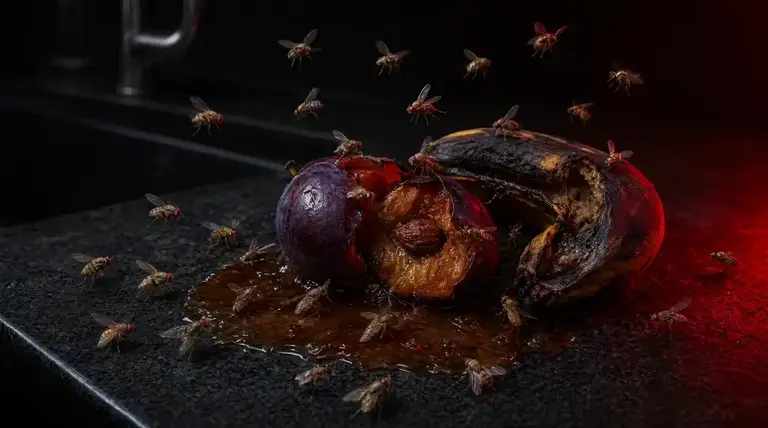
- Overripe fruit in the bowl, or a single forgotten piece rolling behind the counter.
- The bottom of rubbish and recycling bins, especially juice and bottle residue.
- Damp sponges, dishcloths and the drip tray under the dish rack.
- Sink and floor drains coated with organic slime.
- Spilled liquids behind or under the fridge and stove.
Warning signs you have a fruit fly problem
The clearest warning sign is small tan-brown flies hovering around fruit, bins or drains, often with red eyes and a slow, drifting flight. If you spot two or three, assume a breeding site is already active — check for the signs below before the population explodes.
- Flies around the fruit bowl — adults gathering on or above ripening bananas, tomatoes or stone fruit.
- Flies rising from the sink — small flies drifting up when you run the tap point to organic film inside the drain.
- Tiny larvae in residue — small white maggots in bin juice, drain slime or a forgotten piece of produce.
- Flies near recycling — activity around unrinsed bottles, cans and casks, especially in summer.
- A recurring swarm after cleaning — flies returning within days means a hidden source you haven’t found yet, or a different species such as those covered in our guide Drain Flies: ID, Breeding Sites and Elimination.
Step-by-step source control that actually works
Effective fruit fly control means removing every breeding site in a single thorough pass, then holding the kitchen clean for at least two weeks. Follow this order and don’t skip the hidden spots — that’s where most DIY attempts fail.
- Remove the food source. Bin or refrigerate all ripe fruit and vegetables; check for hidden fallen pieces behind the counter and under appliances.
- Empty and clean bins. Wash bins inside and out with hot soapy water, and rinse recyclables before they go in.
- Clean drains. Scrub the film inside sink and floor drains, where larvae breed unseen — the same principle applies to the related pest in our drain flies guide.
- Dry out damp spots. Replace or sanitise sponges and cloths, and dry the dish rack tray every night.
- Set a vinegar trap. A cup of apple cider vinegar with a drop of dish soap, covered with cling film pierced with small holes, catches remaining adults while you clean.
Once the source is gone, keep it that way: store ripe fruit in the fridge, take rubbish out daily in summer, keep benches, drains and bins clean and dry, and fit or repair flyscreens. A quick nightly wipe-down denies fruit flies the fermenting residue they need. For a broader routine, our pest prevention tips for Australian homes apply the same hygiene principles across the whole kitchen.
DIY vs professional fruit fly control
Most household fruit fly outbreaks respond well to disciplined DIY source control, but persistent swarms — especially in food businesses — usually mean a hidden moisture or waste problem that needs professional investigation. In commercial kitchens, ongoing fly issues also carry food-safety and compliance implications, and licensed technicians can apply APVMA-registered treatments safely. Weigh up both paths in our guide to DIY versus professional pest control.
| Factor | DIY source control | Professional pest control |
|---|---|---|
| Best for | Fresh, localised kitchen outbreaks | Persistent swarms, hidden sources, food businesses |
| Cost | $10–$40 (traps, cleaning supplies) | $150–$350 typical home visit |
| Time to resolve | 1–2 weeks with thorough cleaning | Often faster; includes source tracing |
| Limitations | Easy to miss hidden breeding sites | Higher upfront cost; still needs hygiene upkeep |
| Compliance | Not suitable alone for food premises | Documentation for food-safety audits |
Fruit fly treatment costs in Australia
Across the Australian pest control industry, professional fruit fly treatment for a standard home generally runs between $150 and $350 AUD in 2025-26, depending on property size, location and severity. Commercial kitchens usually require an ongoing service plan rather than a one-off visit. The figures below are typical Australian market rates charged across the industry — any individual quote will depend on the inspection findings.
| Service | Typical cost (AUD) | What’s included/notes |
|---|---|---|
| Inspection and source tracing | $0–$120 | Often free with treatment; identifies hidden breeding sites |
| One-off residential fly treatment | $150–$350 | Targeted treatment of breeding areas plus hygiene advice |
| Drain treatment (gel/foam) | $80–$180 add-on | Breaks down organic film in drains and floor wastes |
| Commercial kitchen service plan | $90–$250 per visit | Scheduled visits, monitoring, compliance documentation |
It’s worth noting that Aussie Pest Strike typically comes in well under these market rates, so the figures above should be treated as a general industry guide rather than what you’d actually pay. For an exact quote tailored to your property and the scale of the infestation, give the team a call on [aps_phone].
Seasonal fruit fly activity across Australia
Fruit fly activity in Australian kitchens peaks from December through March, when heat speeds up breeding and summer produce ripens fast on benches. Activity drops sharply in southern states over winter but remains moderate year-round in Queensland and the Top End.
Jan
Feb
Mar
Apr
May
Jun
Jul
Aug
Sep
Oct
Nov
Dec
Typical relative fruit fly activity in Australian homes by month. Summer heat (December–March) drives peak breeding; tropical regions see elevated activity all year.
Plan your deep kitchen clean in late spring, before the December spike. If a sudden indoor swarm appears in winter, it may not be fruit flies at all — see Blow Flies: What a Sudden Swarm Means for a very different cause. Larger flies around bins and pet waste also carry hygiene concerns, covered in House Flies: More Than Just Annoying.
Nine times out of ten, the customer has cleaned the bench and binned the fruit, but the real source is the drain film or a spill dried under the fridge. Kill the breeding site and the flies are gone within a fortnight — skip it and no amount of spray will save you. That’s the difference between treating symptoms and doing proper pest control.
Start with a full source-control pass: refrigerate ripe produce, wash bins, scrub drains and dry damp spots, then run a vinegar trap for a week. If flies persist after two weeks of disciplined cleaning — or you run a food business — book a licensed technician to trace the hidden source and treat it with APVMA-registered products applied safely.
Frequently Asked Questions
Why do fruit flies suddenly appear in my kitchen in summer?
Fruit flies seem to erupt overnight because warm Australian temperatures of 25–30°C dramatically speed up their breeding cycle. A female lays up to 500 eggs, and a new generation can mature in as little as 7–10 days in warm weather, so a single overripe banana or forgotten piece of produce can seed a swarm within a week or two. Activity peaks from December through March across most of Australia.
What are the most common breeding sites for fruit flies in a kitchen?
Fruit flies breed in fermenting food and damp organic residue. Common sites include overripe fruit in the bowl or pieces that have rolled behind counters, juice and bottle residue at the bottom of rubbish and recycling bins, damp sponges and dishcloths, the drip tray under the dish rack, sink and floor drains coated with organic slime, and spilled liquids behind or under the fridge and stove.
How do I know if I have a fruit fly problem?
The clearest sign is small tan-brown flies, often with red eyes and a slow drifting flight, hovering around fruit, bins or drains. Other warning signs include flies rising from the sink when you run the tap, tiny white larvae in bin juice or drain slime, activity around unrinsed bottles and cans, and swarms returning within days of cleaning, which suggests a hidden breeding site.
Why do traps and sprays alone not fix a fruit fly problem?
Traps and sprays only kill the visible adult flies while eggs keep hatching out of sight in fermenting food and organic slime. Because one female lays up to 500 eggs and generations mature in as little as 7–10 days in warm weather, the population rebounds quickly unless every breeding source is removed. Source control is the only lasting fix; sprays and traps are temporary measures.
What is the right way to do source control for fruit flies?
Remove every breeding site in one thorough pass: bin or refrigerate all ripe produce including hidden fallen pieces, wash bins inside and out with hot soapy water, rinse recyclables, scrub the film inside sink and floor drains, replace or sanitise sponges and cloths, and dry the dish rack tray nightly. Then set an apple cider vinegar trap with dish soap to catch remaining adults, and hold the kitchen clean for at least two weeks.
How long does it take to get rid of fruit flies with DIY cleaning?
Most household outbreaks respond to disciplined DIY source control within one to two weeks, provided you remove all breeding sources in a single thorough pass and then keep benches, bins and drains clean and dry. If flies persist beyond two weeks despite thorough cleaning, a hidden source remains undiscovered, or the problem may be a different species such as drain flies.
Which kitchen habits help prevent fruit flies from coming back after cleaning?
Call a licensed technician if swarms persist after two weeks of thorough DIY source control, especially if you run a food business where ongoing fly issues carry food-safety and compliance implications. Professionals can trace hidden moisture or waste problems, apply APVMA-registered treatments safely, and provide documentation suitable for food-safety audits. Commercial kitchens generally need an ongoing service plan rather than a one-off visit.
Do fruit flies stay active all year round in Australia?
It depends on your region. In southern states, fruit fly activity peaks hard from December through March and drops sharply over winter. In tropical Queensland and the Northern Territory, activity continues almost year-round due to consistently warm conditions. A sudden indoor swarm in winter may not be fruit flies at all, so identification matters before treating.
How can Aussie Pest Strike help with persistent fruit flies in my kitchen?
If fruit flies return after a full source-control pass — refrigerating produce, washing bins, scrubbing drains and drying damp spots — Aussie Pest Strike can inspect your kitchen to trace hidden breeding sites such as drain film or spills under appliances. They can explain what professional treatment involves for your situation and outline hygiene steps to keep the kitchen clear through the summer peak.
What should I do first before contacting Aussie Pest Strike about fruit flies?
Start with a complete source-control pass yourself: refrigerate ripe produce, wash bins inside and out, scrub sink and floor drains, sanitise sponges and cloths, and run a vinegar trap for a week. Note when and where flies appear afterwards. If they persist beyond two weeks, this record helps Aussie Pest Strike pinpoint any remaining hidden source during an inspection.
Found Something
Dangerous?
Don’t touch it. Don’t spray it. Keep kids and pets clear, take a photo from a safe distance, and call us — or book a free inspection and we’ll come to you.
02 7235 0050