Drain Flies:ID, Breeding Sitesand Elimination
Drain flies id — drain flies are small (1.5 5 mm), fuzzy, moth-like flies that breed in the gelatinous organic film lining drains, and the only way to...
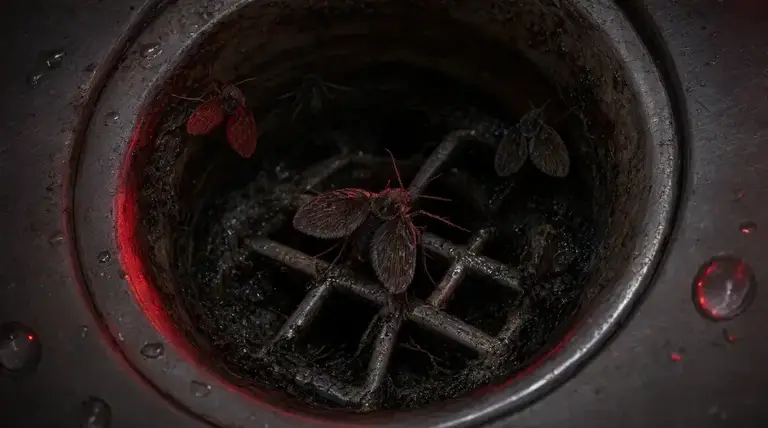
Drain flies — also called moth flies or sink flies — are small, fuzzy, moth-like insects that breed in the gelatinous organic film lining drains across Australia, and the only reliable way to eliminate them is to scrub out that film. Whether your home rates an r-value on comfort or not, a swarm of these little moths around the bathroom is a sign something is wrong with your plumbing hygiene. They don’t bite, but a persistent population signals a slow drain, a hidden leak or a moisture problem that won’t fix itself.
Drain flies (family Psychodidae) are 1.5–5 mm long, weak-flying, hairy-bodied flies that lay their eggs in the slime coating drains, gully traps and overflow openings — remove the biofilm and the infestation collapses. This guide covers identification, breeding sites, step-by-step elimination, realistic Australian costs, and when a licensed pest control technician is the smarter call.
- Drain flies breed only in the organic biofilm inside drains — scrubbing that film out is the one fix that actually works.
- The tape test overnight confirms which drain is the breeding source before you start cleaning.
- Enzyme drain cleaners outperform bleach, which usually runs straight past the slime.
- Flies that return after thorough cleaning point to a cracked pipe, dry trap or sewer fault needing professional attention.
- Typical professional drain-fly treatments in Australia cost roughly $150–$350 AUD, with plumbing repairs extra.
Why drain flies are such a common problem across Australia
Drain flies thrive anywhere warm, wet organic matter sits undisturbed — which describes a lot of Australian plumbing. Our climate does most of the work: humid Queensland and northern NSW summers keep drains permanently damp, while even southern states see spikes once indoor heating and long, hot showers raise bathroom humidity through winter.
Housing style matters too. Older Queenslanders and weatherboard homes on stumps often have ageing pipework, shallow gully traps and poorly ventilated subfloors where slow leaks feed hidden biofilm. Brick veneer homes on concrete slabs can conceal a cracked waste pipe beneath the slab for years. And the classic Australian holiday pattern — a beach house or guest bathroom that sits unused for months — lets floor-waste traps dry out, turning a sealed drain into an open breeding zone. Add hair, soap scum and kitchen grease, and conditions are perfect.
Warning signs: how to identify drain flies and their breeding sites
Drain flies are easy to confirm once you know what to look for: a fuzzy, moth-like fly resting on walls near drains, hopping in short bursts rather than hovering. Check for these signs:
- Moth-like appearance. Rounded grey-to-brownish body densely covered in tiny hairs, with heart-shaped wings held roof-like over the back.
- Weak, hopping flight. Short bursts of flight and long rests on bathroom walls, rather than circling food. If the flies are smooth-bodied, red-eyed and swarming the fruit bowl, you’re dealing with something else — see Fruit Flies in the Kitchen: Source Control That Works.
- Flies emerging from a specific drain. Tape a clear plastic cup loosely over the suspect drain overnight; adults trapped by morning confirm breeding below.
- Slow-draining sinks or showers. Sluggish drainage means biofilm build-up — prime larval habitat.
- Musty, damp odours near floor wastes, laundries or seldom-used bathrooms.
- Flies near outdoor gully traps or sewer vents, especially after rain.
- Activity in unused rooms. Guest bathrooms and floor wastes under the house are classic hidden sources.
If you’re seeing larger flies or a sudden mass emergence instead, the cause may be very different — Blow Flies: What a Sudden Swarm Means explains that scenario, while House Flies: More Than Just Annoying covers the bigger filth-fly risks.
DIY vs professional drain fly elimination
Most household drain fly problems are genuinely DIY-solvable because the fix is mechanical, not chemical: physically remove the biofilm and the flies have nowhere to breed. Professional help earns its keep when the source is hidden — a cracked pipe beneath a slab, a cavity leak, or a sewer fault — or when a food business needs documented, compliant pest control.
The DIY sequence that works:
- Confirm the source with the overnight tape test.
- Scrub the pipe walls with a stiff drain brush — the critical step, as larvae live in that layer.
- Flush with very hot or boiling water to wash residue away.
- Apply an enzyme or bacterial drain cleaner, which digests remaining organic matter far better than bleach.
- Keep traps wet — pour water down unused floor drains weekly so seals don’t dry out.
| Factor | DIY approach | Professional treatment |
|---|---|---|
| Typical cost | $15–$50 for a drain brush and enzyme cleaner | $150–$350 depending on access and scope |
| Best for | Accessible bathroom, kitchen and laundry drains | Recurring infestations, hidden sources, commercial kitchens |
| Effectiveness | High when the source drain is found and scrubbed | High — includes inspection of subfloor, slab and sewer lines |
| Limitations | Can’t reach cracked pipes, cavity leaks or sewer faults | Higher upfront cost; plumbing repairs may be extra |
| Chemical use | Enzyme products per label directions | APVMA-registered products applied by licensed technicians |
Drain fly treatment costs in Australia (2025–26)
Across the Australian pest control industry, a standard residential drain fly treatment generally costs between $150 and $350 AUD, with market rates rising where inspection equipment or plumbing work is needed. What the industry charges varies with access, property type and whether a plumber is required to trace a hidden leak.
| Service | Typical cost (AUD) | What’s included/notes |
|---|---|---|
| Inspection and source identification | $0–$150 | Often free with treatment; locates breeding drains and moisture faults |
| Standard residential drain fly treatment | $150–$300 | Treatment of affected drains, enzyme application, prevention advice |
| Subfloor or difficult-access treatment | $250–$450 | Queenslanders and stump homes with under-house breeding sites |
| Commercial kitchen/cafe program | $300–$600 per visit | Documented treatment for food-safety compliance, often recurring |
| Plumber — leak or cracked pipe repair | $200–$1,500+ | Quoted separately; depends on excavation or slab access |
These figures reflect typical Australian market rates — what the industry generally charges, not a quote. Aussie Pest Strike typically comes in well under these market rates, so for an exact price tailored to your property, call us on [aps_phone] today.
Seasonal drain fly activity in Australia
Drain fly activity peaks in the warmer, wetter months — roughly October through March — when heat and humidity accelerate biofilm growth and shorten the breeding cycle. Activity dips in winter in southern states but stays steady year-round in the tropics and in heated indoor bathrooms.
Jan
Feb
Mar
Apr
May
Jun
Jul
Aug
Sep
Oct
Nov
Dec
Indicative drain fly activity across temperate Australia. Northern Queensland and the NT often sit at 70–100% year-round; southern winters suppress but rarely eliminate indoor breeding.
Keeping drain flies away for good
Long-term prevention is simply keeping drains clean, wet and flowing — once the biofilm is gone the flies vanish, so the goal is stopping it re-forming. Clear hair and soap build-up regularly, run water through little-used drains weekly, fix leaks promptly, improve bathroom ventilation to lower humidity, and give every drain a monthly hot-water flush.
Nine times out of ten, the homeowner has already bleached the drain a dozen times and the flies are back within a fortnight. Bleach runs straight past the slime — you have to physically scrub the pipe wall or the larvae don’t even notice. When we find flies after a proper clean, we start looking for a cracked pipe or a dry trap, because there’s always a source hiding somewhere.
Start with the tape test, then scrub, flush and enzyme-treat every suspect drain — that resolves most infestations within a week or two. If flies persist after two rounds of thorough cleaning, book a professional inspection: the breeding site is likely in a pipe, cavity or trap you can’t reach, and any chemical treatment should be handled by a licensed technician using APVMA-registered products.
Frequently Asked Questions
How do I identify drain flies in my home?
Drain flies are small, fuzzy, moth-like insects, typically 1.5–5 mm long, with rounded grey-to-brownish bodies covered in tiny hairs and heart-shaped wings held roof-like over the back. They fly in short, weak bursts and rest on walls near drains rather than hovering or circling food. If you see smooth-bodied, red-eyed flies swarming a fruit bowl instead, you're likely dealing with fruit flies rather than drain flies.
Where do drain flies breed?
Drain flies breed only in the gelatinous organic biofilm that lines drains, gully traps and overflow openings. This slime layer of hair, soap scum and grease provides ideal habitat for their eggs and larvae. Common breeding sites include bathroom floor wastes, slow-draining sinks and showers, seldom-used guest bathrooms, laundry drains, outdoor gully traps, and dry floor-waste traps in unused rooms or under the house.
How do I find which drain is the breeding source?
Use the overnight tape test. Tape a clear plastic cup loosely over the suspect drain before bed; adults emerging from below will be trapped by morning, confirming that drain as the breeding site. Check each suspect drain this way — including floor wastes, showers and rarely used bathrooms — before you start cleaning, so your scrubbing effort targets the right pipe.
Do drain flies bite or spread disease?
Drain flies don't bite. However, a persistent population signals an underlying problem such as a slow drain, hidden leak or moisture issue that won't fix itself on its own. The flies themselves are more of a hygiene indicator than a direct health threat, but the damp organic conditions supporting them shouldn't be ignored, especially in kitchens or food businesses.
Why doesn't bleach get rid of drain flies?
Bleach usually runs straight past the slimy biofilm coating the pipe walls without breaking it down, so the larvae living in that layer are unaffected. That's why many homeowners bleach a drain repeatedly only to see flies return within a fortnight. The fix is mechanical: physically scrub the pipe walls with a stiff drain brush, then flush with very hot water to wash residue away.
What is the step-by-step DIY method for eliminating drain flies?
First confirm the source with the overnight tape test. Next, scrub the pipe walls with a stiff drain brush — the critical step, since larvae live in the biofilm layer. Flush with very hot or boiling water to wash residue away, then apply an enzyme or bacterial drain cleaner, which digests remaining organic matter far better than bleach. Finally, keep traps wet by pouring water down unused floor drains weekly.
When should I call a professional for drain flies?
Call a licensed pest control technician if flies persist after two rounds of thorough cleaning, because the breeding site is likely somewhere you can't reach — a cracked pipe beneath a slab, a cavity leak, a dry trap or a sewer fault. Professional help also makes sense for subfloor or difficult-access sites, and for food businesses needing documented, compliant pest control using APVMA-registered products.
When are drain flies most active in Australia?
Drain fly activity peaks in the warmer, wetter months, roughly October through March, when heat and humidity accelerate biofilm growth and shorten the breeding cycle. In southern states activity dips during winter but indoor breeding continues where heating and long hot showers raise bathroom humidity. Northern Queensland and the Northern Territory often see steady year-round activity due to persistent warmth and humidity.
I've tried the prevention steps in this article but drain flies keep coming back — how do I arrange help from Aussie Pest Strike?
If flies return after thorough scrubbing, flushing and enzyme treatment, the breeding site is probably hidden in a cracked pipe, cavity or trap you can't reach. Aussie Pest Strike can inspect suspect drains, subfloors and difficult-access areas to locate the true source. Contact Aussie Pest Strike to discuss an inspection tailored to your property and to have any treatment carried out by licensed technicians using APVMA-registered products.
Can Aussie Pest Strike help me work out whether my drain fly problem needs plumbing repairs?
Yes. When drain flies survive proper cleaning, Aussie Pest Strike technicians look beyond the obvious drains for sources such as cracked waste pipes, dry traps or sewer faults that may need a plumber. An inspection can pinpoint whether the issue is treatable directly or requires plumbing work alongside pest control, so you know exactly what's causing the infestation before committing to repairs.
Found Something
Dangerous?
Don’t touch it. Don’t spray it. Keep kids and pets clear, take a photo from a safe distance, and call us — or book a free inspection and we’ll come to you.
02 7235 0050