Bush Flies: WhyThey Swarm andHow to Cope
Bush flies (Musca vetustissima) are small native flies that swarm around people across Australia in search of moisture and protein from sweat, tears and...
Bush flies (Musca vetustissima) are small native Australian flies that swarm around people in search of moisture and protein, and they can turn any outdoor activity into a test of patience. If you’ve ever wondered “u” — as in, why do these flies target you specifically — the answer lies in your sweat, tears and the carbon dioxide you exhale. From suburban backyards to cattle stations, bush flies are one of the most widespread fly pests in the country.
This guide covers why bush flies swarm, the health risks they pose, and the practical steps that actually work — from fly screens and repellents through to professional pest control when numbers get out of hand. Whether you’re in a Queenslander in the tropics or a brick veneer home in suburban Melbourne, the strategies below will help you cope through fly season.
- Bush flies swarm people for moisture and protein — sweat, tears and saliva — not to bite.
- They breed almost exclusively in animal dung, so pet waste, manure and livestock yards drive local numbers.
- They don’t bite but can transfer bacteria like Salmonella and E. coli to food and surfaces.
- Screens, repellent, sanitation and covered bins handle most household situations.
- Persistent swarms, especially around food businesses, warrant a licensed pest control technician.
Why Bush Flies Are Such a Problem Across Australia
Bush flies matter across Australia because our climate and land use give them near-perfect breeding conditions for much of the year. Warm temperatures, widespread cattle grazing and seasonal inland rain combine to produce enormous populations that then drift towards where people live.
The Australian bush fly is a native species smaller than the common house fly, measuring around five to six millimetres. Grey with dark stripes on the thorax, it’s famous for inspiring the “Aussie salute” — the constant hand wave needed to keep flies off your face. Unlike the house fly, which breeds in decaying organic matter of all kinds, bush flies breed almost exclusively in animal dung. Cattle pats are their favourite nursery, and a single pat can produce hundreds of adults.
Since the 1960s, the CSIRO’s dung beetle program has helped by burying dung quickly before fly larvae can develop, but fly numbers still boom after warm, wet weather. Breeding happens in inland and pastoral districts, then adults ride weather fronts and northerly winds towards the coast. In Victoria, South Australia and southern New South Wales they’re worst from late spring through autumn. In Queensland, the Northern Territory and northern Western Australia they can be a nuisance all year, with numbers exploding after summer rain.
Housing style matters too. Older Queenslanders with gaps around stumps and verandahs, rural properties on slab construction near stockyards, and even brick veneer homes backing onto hobby farms all cop heavier fly pressure than sealed apartments in the CBD. If you keep horses, chooks or dogs, your yard can become a local breeding site in its own right.
Warning Signs: Are Bush Flies Targeting U and Your Property?
The clearest sign of a bush fly problem is persistent flies landing on faces, food and outdoor areas, especially through the warmer months. If you’re asking yourself why the flies are after “u” and not the neighbours, the checklist below will help you spot what’s attracting them and whether the issue is bigger than a passing swarm.
- Flies landing on faces and eyes — females seeking protein and moisture from sweat, tears and mucus, particularly in dry conditions.
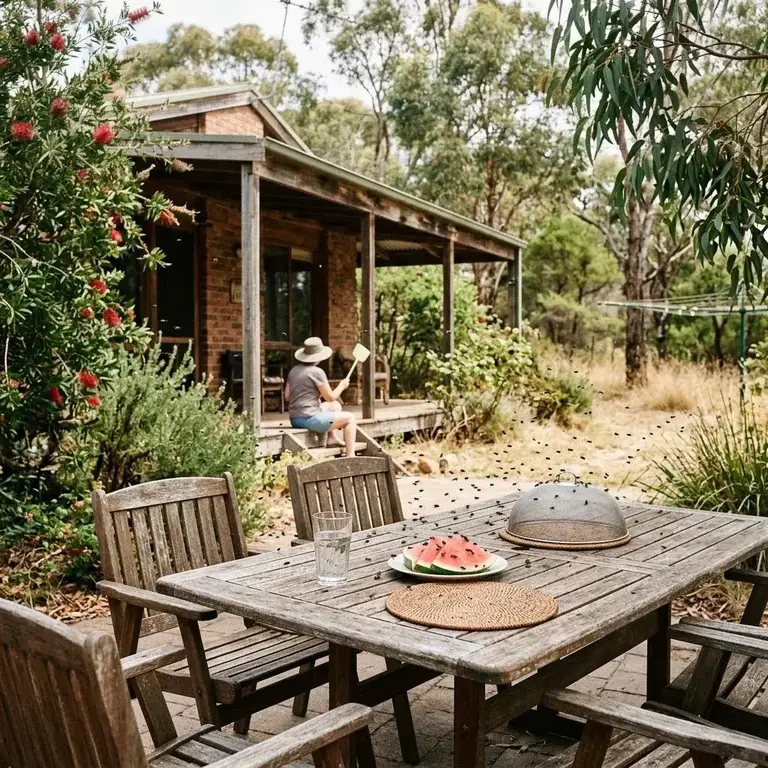
- Swarms around outdoor eating areas — flies hovering over barbecues, picnic tables and pet bowls within minutes of food appearing.
- Pet waste or manure nearby — dog droppings left in the yard, uncovered compost, or horse and cattle yards within a few hundred metres.
- Worse activity mid-morning to mid-afternoon — bush flies are most active in the warmer middle of the day.
- Sudden surges after inland rain — warm, wet weather in pastoral districts followed by northerly winds pushing swarms towards the coast.
- Flies indoors despite closed doors — pointing to torn screens, gaps around doors, or vents without mesh.
If most of your fly activity is indoors rather than out, you may be dealing with a different species entirely. Kitchen infestations usually point to fermenting fruit — see our guide on Fruit Flies in the Kitchen: Source Control That Works — while flies emerging around floor wastes and sinks suggest Drain Flies: ID, Breeding Sites and Elimination. Correct identification matters because the treatment for each is completely different.
DIY vs Professional Bush Fly Control
Most households can manage bush flies with exclusion, repellents and good sanitation, but heavy or persistent swarms — especially near food businesses or livestock — often need professional pest control. The table below compares the two approaches.
| Factor | DIY approach | Professional treatment |
|---|---|---|
| Best for | Seasonal annoyance around homes, outdoor entertaining, camping | Persistent swarms, food businesses, rural properties near stock |
| Methods | Fly screens, DEET or picaridin repellent, covered food, bin hygiene, daily pet-waste removal | APVMA-registered residual sprays, targeted baits and traps, breeding-site identification |
| Typical cost | $20–$150 for repellents, screen repairs and traps | $180–$450+ per visit depending on property size |
| Effectiveness | Reduces annoyance; won’t stop regional swarms | Timed, targeted treatments that outperform supermarket sprays |
| Compliance | Fine for private homes | Helps cafés and restaurants meet state food-safety standards |
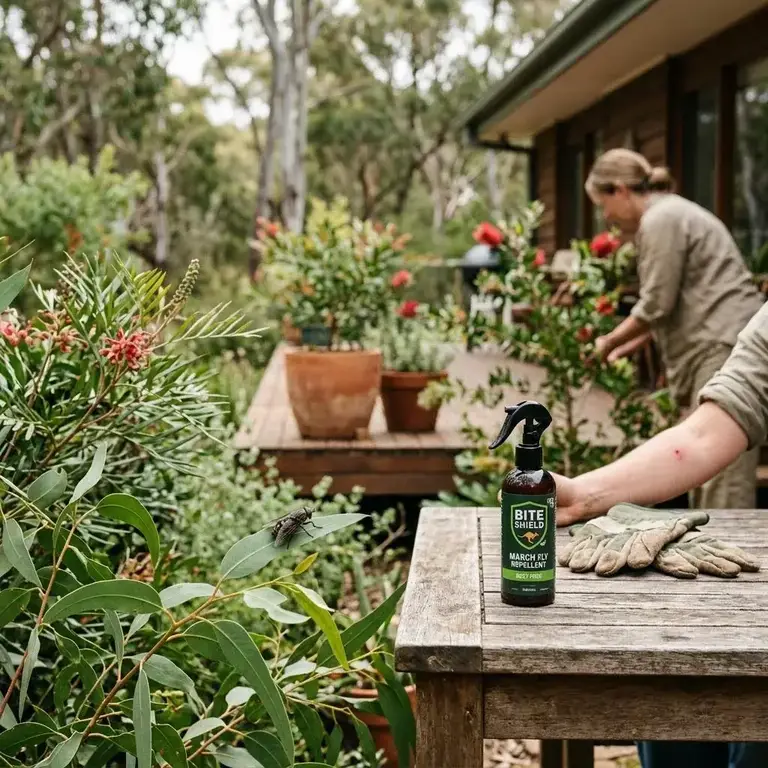
Practical DIY steps that genuinely work include wearing light-coloured clothing and a wide-brimmed hat, applying a repellent containing DEET or picaridin to exposed skin, fitting tight fly screens and repairing tears before spring, keeping food covered, and cleaning up pet waste daily. If you keep chooks or horses, clean yards and coops often — manure is prime breeding habitat. Outdoors, plan activities around the warmest part of the day when flies peak, and choose breezy spots: bush flies are weak fliers and avoid wind.
Any chemical treatment beyond basic household products should be handled by a licensed technician using APVMA-registered products, applied according to the label. No fly treatment is “100% safe” or guaranteed — results depend on breeding sources, weather and neighbouring land use.
How Much Does Bush Fly Pest Control Cost in Australia?
Across the Australian pest control market, professional fly control for a typical home generally sits between $180 and $450 per treatment, with larger rural properties and commercial premises attracting higher industry rates. Market pricing varies by state, property size, construction type and how accessible breeding areas are — a subfloor Queenslander with horse yards takes more work than a small slab home.
| Service | Typical market rate (AUD) | What’s included/notes |
|---|---|---|
| General fly treatment — standard home | $180–$280 (typical market rate) | Residual spray to external resting surfaces, bins and entry points; advice on breeding sites |
| Large or rural property treatment | $300–$450+ (typical market rate) | Extended coverage around sheds, yards and animal areas; may include larvicide baiting |
| Commercial/food business service | $250–$600 per visit (typical market rate) | Scheduled treatments, monitoring, documentation for food-safety compliance |
| Fly screen supply and installation | $80–$250 per opening (typical market rate) | Supply and fit of mesh screens to doors and windows; separate trade service |
These are typical Australian market ranges for 2025-26, not fixed quotes from any one provider. Always get an inspection-based quote, and remember that understanding the broader risks helps justify the spend — our article on House Flies: More Than Just Annoying explains how filth flies contaminate food and surfaces.
Here’s the good news: Aussie Pest Strike typically comes in well under these general market rates, without cutting corners on treatment quality. For an exact quote tailored to your property, give us a call on [aps_phone] and we’ll sort you out.
Seasonal Bush Fly Activity in Australia
In southern Australia, bush fly activity builds from early spring, peaks through summer and fades by late autumn, while tropical regions can see flies all year. The chart below shows typical relative activity for southern and eastern population centres.
Jan
Feb
Mar
Apr
May
Jun
Jul
Aug
Sep
Oct
Nov
Dec
Typical bush fly activity pattern for southern and eastern Australia. Numbers climb from late spring, peak through summer, and ease into winter. Tropical QLD, NT and northern WA can experience high activity year-round, with surges after inland rain.
Timing your prevention work to this curve pays off: repair screens in late winter, step up pet-waste removal from September, and book professional treatments early in the season rather than waiting until swarms are established.
Nine times out of ten, when a property has a fly problem that won’t quit, there’s a breeding source someone’s missed — a forgotten compost heap, a dog run, a neighbour’s horse paddock over the fence. Spraying without finding that source is like mopping with the tap still running. Find the source, then treat smart, and you’ll actually enjoy your summer.
Start with exclusion and sanitation: tight screens, covered food, sealed bins and daily pet-waste removal handle most household fly pressure. If swarms persist for more than a couple of weeks, or you run a food business, book a licensed pest control technician for an inspection — targeted APVMA-registered treatments timed to the season deliver far better results than repeated supermarket sprays.
FAQ
Why do bush flies keep landing on my face?
Bush flies land on your face because they’re seeking moisture, salts and protein from your sweat, tears and the corners of your eyes and mouth. Females need this protein to develop their eggs, and in dry conditions people become an irresistible water source. A hat, repellent and breezy spots reduce, but rarely eliminate, the attention.
When are bush flies worst in Australia?
In southern states, bush flies are worst from late spring through autumn, peaking in summer. Across tropical northern Australia they can be troublesome year-round. Numbers surge after inland rain followed by warm weather, and strong winds can carry huge swarms from pastoral districts into coastal towns and cities within days.
Do bush flies bite or spread disease?
Bush flies don’t bite — their sponging mouthparts can’t pierce skin, so they’re more annoying than dangerous. However, they can carry bacteria such as Salmonella, E. coli and Shigella from dung and rubbish onto food and surfaces, increasing gastroenteritis risk. Covering food, washing hands and sealing bins are effective precautions.
Don’t spend another summer doing the Aussie salute. Aussie Pest Strike’s licensed technicians provide effective, family-conscious fly treatments and practical prevention advice tailored to your property — from suburban homes to cafés and rural blocks. Call Aussie Pest Strike on [aps_phone] today to book your free inspection and get a clear, no-obligation plan for keeping bush flies under control this season.
Found Something
Dangerous?
Don’t touch it. Don’t spray it. Keep kids and pets clear, take a photo from a safe distance, and call us — or book a free inspection and we’ll come to you.
02 7235 0050