Bee Removal Costin Australia:What to Expect
The average bee removal cost in Australia ranges from $150 to $450 for a standard hive removal, with simple swarm collections sometimes free through local...
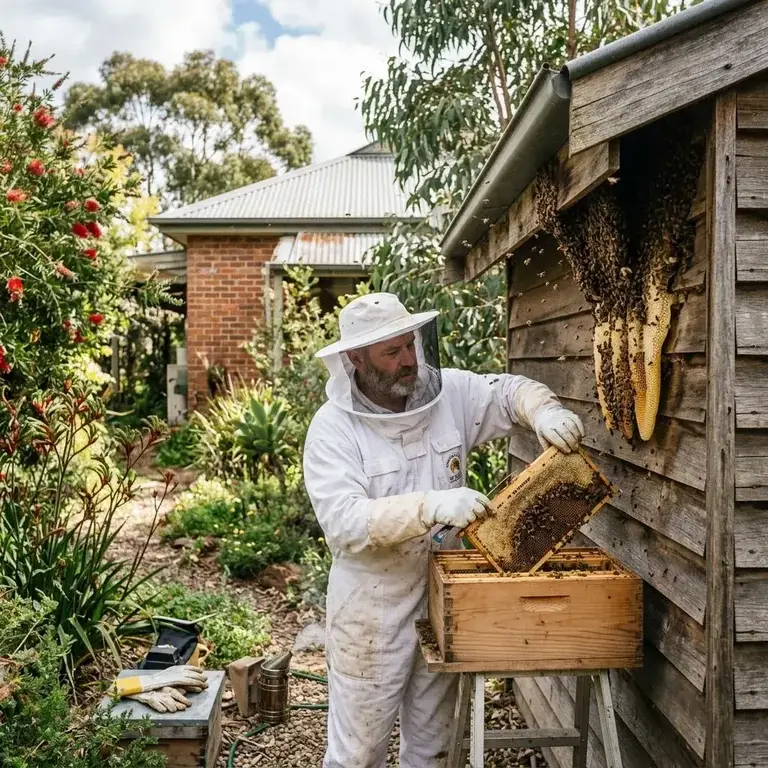
Bee removal cost in Australia typically sits between $150 and $450 for a standard hive removal, with simple swarm collections sometimes free through local beekeepers and complex structural extractions exceeding $1,000. Whether you’re in a Sydney brick veneer, a Melbourne weatherboard or a raised Queenslander, the final price depends on the species, hive size, location, accessibility and any repair work required afterwards.
Bee removal is the professional relocation or treatment of a bee colony or swarm from a home, business or structure, carried out by a licensed technician or registered beekeeper. This guide breaks down realistic 2025–26 pricing, what drives the quote up or down, and how to keep costs under control without risking your safety.
- Most Australian homeowners pay $150–$450 for professional bee removal; structural cut-outs can reach $1,000 or more.
- A resting swarm (common September to February) is often collected free or for $50–$150 by local beekeepers.
- European honey bees cause most problem hives; native stingless bees must always be relocated, never exterminated.
- Acting early is the single biggest way to cut your bee removal cost — a swarm costs a fraction of an established hive.
- Never spray or block a hive entrance yourself; agitated bees can push deeper into wall cavities and sting in large numbers.
Why Bee Removal Matters in Australian Homes
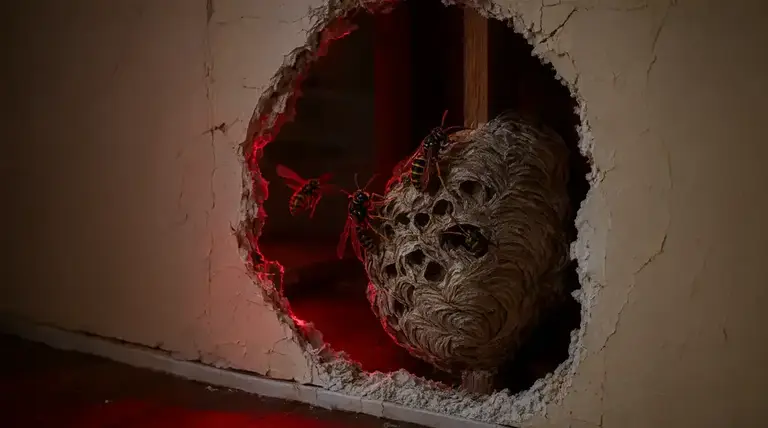
Bees matter because Australian housing and climate give colonies endless places to settle, and an untreated hive can cause structural damage, sting incidents and costly repairs. Warm springs and long summers across most of the country trigger swarming from September through to February, when colonies split and search for new nest sites.
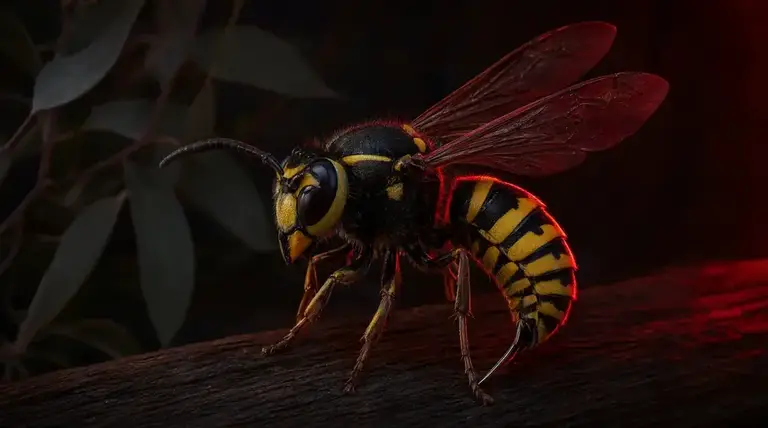
Our housing stock is part of the problem. Brick veneer homes have generous wall cavities, older weatherboards and Queenslanders offer gaps around eaves, stumps and subfloors, and even modern slab-on-ground builds have meter boxes, weep holes and roof voids. European honey bees (Apis mellifera) exploit all of them. Once comb and honey are established inside a wall, the heat of an Australian summer can melt wax and honey, which seeps through plaster and attracts ants and wax moths. If you’re also seeing paper wasps or aggressive scavenging wasps around the same areas, it’s worth reading about European Wasps in Australia: Identification and Dangers, because the two are often confused — and the treatment approach differs completely.
Warning Signs You Have a Hive on Your Property
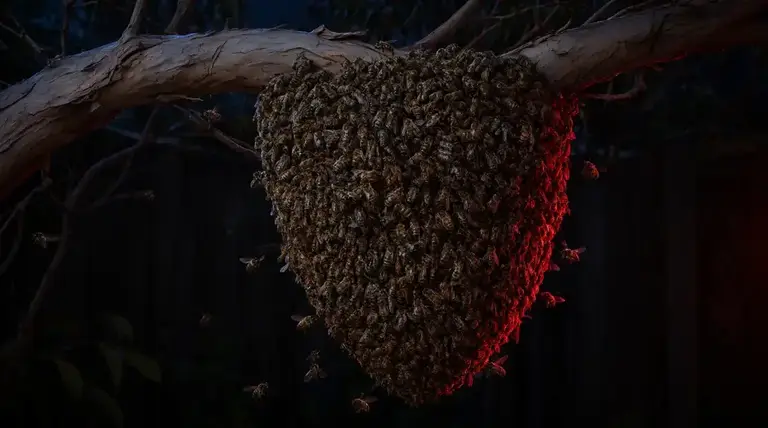
The clearest sign of an established hive is a steady stream of bees entering and leaving a single gap in your wall, roofline or chimney. A swarm, by contrast, appears as a loud, clustered ball of bees hanging from a branch, fence or eave. Use this checklist before you call:
- Constant bee traffic — dozens of bees per minute using one entry point, especially in the warmest part of the day.
- A dark cluster — a hanging mass of bees the size of a football or larger, typical of a resting swarm.
- Buzzing inside walls or ceilings — a low hum or vibration behind plaster, often strongest in the afternoon.
- Stains or sticky patches — honey seeping through plasterboard, eaves or window frames.
- Wax flakes or debris — small pieces of comb near an entry point or on the ground below.
- Increased ant activity — ants drawn to honey residue can indicate an old or dead hive nearby.
DIY vs Professional Bee Removal
DIY bee removal rarely saves money and frequently creates bigger problems. Bee stings are among the most common causes of venom-related hospital admissions in Australia, and a disturbed colony can sting in large numbers. Supermarket sprays usually kill only the bees you can see, leaving comb and honey behind to melt and seep through plaster. A licensed, insured pest controller removes the colony properly the first time. The same principle applies to wasps — as our article on Wasp Nest Removal: Why You Should Never DIY explains, disturbing a nest without the right gear and training is how most serious sting incidents happen.
| Factor | DIY approach | Licensed professional |
|---|---|---|
| Safety | High sting risk, especially on ladders or in roof voids | Protective suits, correct equipment, trained technique |
| Effectiveness | Sprays kill surface bees only; comb and honey remain | Full colony, comb and honey removed; cavity cleaned |
| Species knowledge | Easy to confuse bees with wasps, or natives with honey bees | Correct ID; stingless natives relocated, never exterminated |
| Chemicals | Off-label use risks contamination and poor results | APVMA-registered products applied by licensed technicians |
| Long-term cost | Often leads to repeat problems plus plaster and ant damage | Job done once, often backed by a service guarantee |
Bee Removal Costs in Australia: 2025–26 Price Guide
Across the Australian market, most homeowners are quoted between $150 and $450 for professional bee removal, with swarm collections at the cheap end and structural cut-outs at the top. Industry rates in Sydney, Melbourne and Brisbane are broadly similar, though regional call-outs typically attract a travel fee.
| Service | Typical market rate (AUD) | What’s included/notes |
|---|---|---|
| Swarm collection | Free – $150 | Resting swarm collected by a beekeeper; bees are valuable, so many in the industry collect free or for a small fee |
| Accessible outdoor hive removal | $200 – $450 | Established hive in a tree, shed, meter box or fence; comb and honey removed |
| Structural cut-out (wall, chimney, eaves, subfloor) | $450 – $1,000+ | Cavity opened, all comb and honey removed, space cleaned; repairs extra |
| Native stingless bee relocation | $250 – $600 | Specialist transfer of Tetragonula colonies (mainly QLD and northern NSW) |
| Emergency/after-hours call-out | Premium of $100 – $250 | Spring swarming peak, weekends or urgent allergy-risk situations |
These are typical market rates, and several factors drive where a quote lands within them. Location and access matter most: a hive at ground level generally costs far less than one three storeys up or buried inside a double-brick wall. Colony size and age also play a part — a colony established for a full season holds more bees, comb and honey than a fresh swarm. Any plastering, carpentry or painting afterwards is additional. For context on how bees end up inside wall cavities in the first place, see Bees in Your Wall: Relocation vs Removal Explained.
Whatever the market rate, you can keep your bee removal cost down: act early, take a clear photo from a safe distance so the technician can quote accurately, keep children and pets indoors, avoid mowing or using power tools near the hive, never spray insecticide or block the entrance, and ask whether the price includes comb removal, clean-up and repairs. If the insects turn out to be wasps rather than bees, our Wasp Removal & Nest Treatment service covers nest destruction and treatment across Australia.
Every figure above reflects typical Australian market rates — not our pricing. Aussie Pest Strike typically comes in well under these industry averages, so call [aps_phone] today for an exact quote tailored to your situation.
Seasonal Bee Activity in Australia
Bee activity in Australia peaks from September to February, when colonies swarm and establish new hives, and drops sharply through the cooler months. Spring is when removal enquiries spike hardest, particularly in temperate southern states, while subtropical Queensland sees a longer, flatter season.
Jan
Feb
Mar
Apr
May
Jun
Jul
Aug
Sep
Oct
Nov
Dec
Typical bee removal enquiry pattern across Australia: swarming peaks in October–November, stays busy through summer, and tapers off over winter. Northern regions often see activity start earlier and finish later.
Australian species matter here too. European honey bees cause the vast majority of problem hives in homes, readily colonising wall cavities, meter boxes and hollow trees. Native stingless bees such as Tetragonula carbonaria occur mainly in Queensland and northern New South Wales and must be relocated, never exterminated. Solitary natives like blue-banded bees rarely need removal at all. Since the 2022 varroa mite detection in New South Wales, biosecurity rules apply to managed hives, and anyone keeping bees must register with their state agriculture department.
Nine times out of ten, the expensive jobs are the ones people waited on. A swarm on a branch in October is a quick, cheap collection — leave it until it’s built comb inside the wall and you’re paying for a cut-out, a clean-up and a plasterer. Get it looked at the week you notice it.
If you’ve spotted a swarm or suspect a hive in a wall, roof void or subfloor, don’t spray it and don’t seal the entrance. Photograph it from a safe distance, keep kids and pets inside, and book a licensed pest control technician for a proper assessment. Wherever possible, choose an operator who relocates honey bee colonies to registered beekeepers — it’s better for pollinators and usually better for your wallet, because it means the comb and honey come out properly the first time.
Frequently Asked Questions
How much does bee removal cost in Australia?
Bee removal pricing varies with the type of job. A simple swarm collection is usually the cheapest option, while removing an established hive from inside a building costs more because it takes longer and requires more work. The final quote depends on the bee species, hive size, how accessible the colony is, and whether repairs are needed after the bees and comb are removed.
Can I get a bee swarm removed for free?
Yes, often. A resting swarm — a clustered ball of bees hanging from a branch, fence or eave during the warmer months — is frequently collected free or for a modest fee by local beekeepers, because the bees themselves are valuable to them. Acting while the swarm is still resting is far cheaper than waiting until it builds comb inside a wall cavity.
What is a structural cut-out and why does it cost more?
A structural cut-out means opening part of a building, such as a wall cavity, chimney, eave or subfloor, to reach an established hive. It costs more than a basic removal because the technician must extract all comb and honey, then clean the space thoroughly to prevent re-infestation. Any plastering, carpentry or painting needed to close the opening afterwards is typically charged separately.
Why should I never spray or block a hive entrance myself?
Spraying usually kills only the bees you can see, leaving comb and honey behind to melt in summer heat and seep through plaster, attracting ants and wax moths. Blocking the entrance can agitate the colony, pushing bees deeper into the wall cavity where they may sting in large numbers. A licensed technician removes the colony, comb and honey properly the first time.
How do I tell if I have a hive rather than just passing bees?
Signs of an established hive include constant bee traffic using one entry point, buzzing or humming behind walls or ceilings (often strongest in the afternoon), sticky honey stains on plasterboard or window frames, wax flakes near the entrance, and increased ant activity drawn to honey residue. A hanging cluster of bees the size of a football indicates a resting swarm instead.
Are native stingless bees treated differently from European honey bees?
Yes. Native stingless bees such as Tetragonula carbonaria must always be relocated and never exterminated, and specialist relocation usually costs more than a standard honey bee removal. European honey bees cause most problem hives in Australian homes, while solitary natives like blue-banded bees rarely need removal at all.
When is bee activity highest in Australia?
Bee activity peaks from September to February, when colonies swarm and establish new hives. Removal enquiries spike hardest in spring, particularly in temperate southern states, with swarming peaking around October and November before tapering over winter. Subtropical Queensland sees a longer, flatter season, and northern regions often see activity start earlier and finish later.
What factors make a bee removal quote higher?
Location and access matter most — a ground-level hive costs far less than one several storeys up or inside a double-brick wall. Colony size and age also matter, since a colony established for a full season holds more bees, comb and honey than a fresh swarm. Emergency or after-hours call-outs add a premium, and any repair work afterwards is additional.
I've photographed the hive and kept everyone indoors — how do I arrange practical help now?
Once you've taken a clear photo from a safe distance and moved children and pets inside, contact Aussie Pest Strike for an assessment tailored to your situation. Share the photo so the technician can identify whether you have a resting swarm or an established hive, as this affects the approach and cost. Avoid mowing or using power tools nearby, and don't spray or seal the entrance while you wait.
What should I do if the insects turn out to be wasps instead of bees?
Bees and wasps are often confused, but they need completely different treatment approaches. If the insects show aggressive scavenging behaviour or paper nests rather than a clustered swarm or steady hive traffic, mention this when you contact Aussie Pest Strike. They can assess the situation and carry out appropriate nest treatment, so correct identification from your photos helps ensure the right response.
Sources & further reading
Found Something
Dangerous?
Don’t touch it. Don’t spray it. Keep kids and pets clear, take a photo from a safe distance, and call us — or book a free inspection and we’ll come to you.
02 7235 0050