Wasps Nesting inthe Ground: IDand Safe Removal
Finding wasps nesting in the ground is a common surprise for Australian homeowners, especially through summer and early autumn. Species such as the...
Finding wasps nesting in the ground is a common surprise for Australian homeowners, especially through summer and early autumn. A nest might sit hidden under a lawn for months before the mower, a digging dog or a barefoot child discovers it the hard way. Species such as the introduced European wasp and several native burrowing wasps build nests in lawns, garden beds, retaining wall cavities and bushland edges right across the country.
Ground-nesting wasps are wasps that raise their colony inside a soil cavity — either an abandoned rodent burrow, an embankment void or a self-dug tunnel — rather than in an exposed paper nest under eaves or branches. This guide explains how to identify an underground nest, which species you’re likely dealing with, the real risks involved, and the safest removal options for Australian conditions.
- Around 80 per cent of European wasp nests are built underground, and a mature nest can hold tens of thousands of workers by late summer.
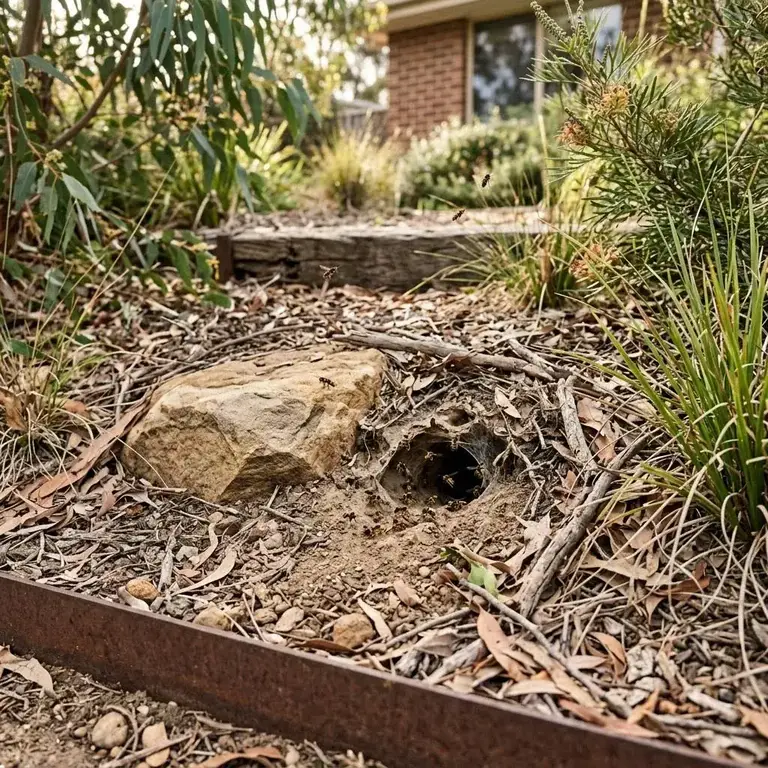
- The tell-tale sign of a ground nest is a single round entrance hole, roughly 20 to 40 mm across, with a steady two-way stream of wasps.
- Never mow over, dig into, flood or block a ground nest — disturbing it can trigger a swarm attack within seconds.
- Professional treatment with APVMA-registered insecticidal dust typically kills the colony within 24 to 48 hours.
- Native burrowing wasps are generally harmless and beneficial; correct identification before any treatment is essential.
Why wasps nesting in ground are a serious issue in Australia
Australia’s warm climate, long summers and suburban housing styles create ideal conditions for ground-nesting wasps to thrive. Lawns, garden beds, rockeries and the sandy soil around slab-on-ground homes and Queenslander stumps all offer easy nesting sites, and the European wasp has exploited them aggressively since arriving in 1959.
The European wasp (Vespula germanica) was first detected in Tasmania and is now established across Victoria, New South Wales, the ACT, South Australia and parts of southern Western Australia. Unlike honeybees, these wasps don’t die after stinging and will defend a nest in large numbers. In Western Australia the species is a declared pest, and any sighting must be reported to the Department of Primary Industries and Regional Development. For a deeper look at this invader, read our guide on European Wasps in Australia: Identification and Dangers.
Housing style matters too. Brick veneer homes with garden beds hard against the walls, older Queenslanders with open subfloor soil, and properties backing onto bushland all see higher ground-nest activity. Retaining wall cavities and disused rodent burrows near fences are classic sites. Because the nest is hidden, most homeowners only realise there’s a problem once worker numbers explode in late summer — which is exactly when colonies are at their most defensive.
It’s also worth knowing that not every wasp hovering over your lawn lives underground. Native flower wasps, sand wasps and the impressive cicada-killer wasp found along the east coast dig individual burrows in bare or sandy soil. These solitary natives are generally non-aggressive, rarely sting, and are actually beneficial predators in the garden. Telling them apart from European wasps before acting is critical.
Warning Signs of a Ground Wasp Nest
Ground nests are usually discovered by accident, most often when the mower passes overhead. Watch for these tell-tale signs around your yard before you disturb the soil:
- A single round entrance hole — roughly 20 to 40 mm across, in soil, lawn, garden beds or between pavers, often with freshly excavated dirt nearby.
- A steady two-way stream of wasps — constant traffic flying in and out, busiest from mid-morning to late afternoon on warm days, like an airport runway.
- A consistent low flight path — workers following the same route to the same patch of ground, often skimming just above the grass.
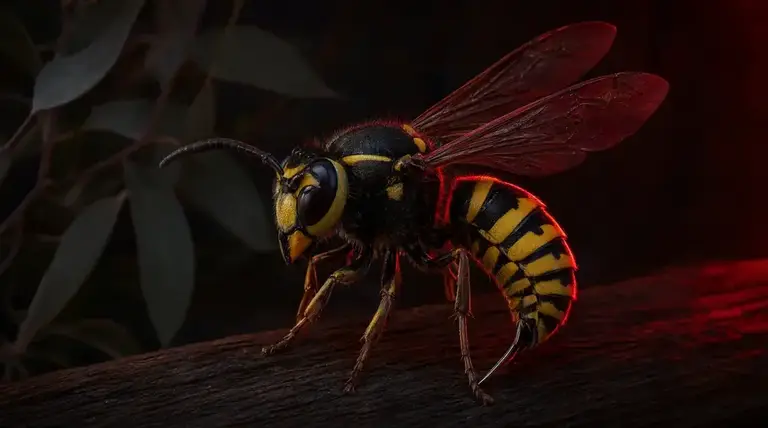
- Bright yellow-and-black workers — bold striped colouring points to European wasps, rather than the slender orange-brown bodies of native species.
- Increased scavenging nearby — more wasps around bins, pet food bowls, fruit trees, outdoor taps or barbecues within 20 metres of the hole.
- Wasps entering wall or retaining wall gaps — activity around weep holes or wall cavities can mean a nest has spread from the ground into the structure, a problem we also see with bees (see Bees in Your Wall: Relocation vs Removal Explained).
If you tick several of these boxes, keep children and pets well away from the area and avoid vibration from mowers, whipper snippers or digging until the nest is dealt with. Nests near play equipment, letterboxes, clotheslines or garden paths carry the highest risk of accidental contact, so treat any nest in a high-traffic area as urgent.
DIY vs Professional Removal of a Ground Wasp Nest
DIY removal of a ground nest is dangerous and usually fails. European wasps can sting repeatedly and defend the nest in swarms, home remedies like petrol or flooding rarely reach the queen, and blocking the entrance simply forces wasps to dig a new exit — sometimes inside your home. A licensed pest control technician, by contrast, treats the nest in a single visit with the correct protective gear and APVMA-registered products.
Petrol, diesel and kerosene are commonly suggested online, but fuel contaminates soil and groundwater and can ignite. Flooding with a hose rarely works because European wasp nests have complex tunnel systems. For a full breakdown of the risks, read Wasp Nest Removal: Why You Should Never DIY.
| Factor | DIY removal | Professional treatment |
|---|---|---|
| Sting risk | High — no protective suit, swarm attacks possible | Managed — full protective suits and sting-safety protocols |
| Effectiveness | Low — queen usually survives fuel or flooding | High — colony typically dies off within 24–48 hours |
| Species ID | Guesswork — natives may be killed needlessly | Confirmed — harmless natives can be left alone |
| Chemical use | Unregulated products or hazardous fuels | APVMA-registered insecticidal dust, applied at dusk by a licensed technician |
| Follow-up | None — re-nesting common | Advice on preventing queens re-nesting next spring |
Professional Wasp Removal & Nest Treatment involves applying insecticidal dust directly into the nest entrance, usually at dusk when most workers are inside. The colony typically dies off within 24 to 48 hours, and the technician confirms whether the nest belonged to an aggressive introduced species or a beneficial native.
Ground Wasp Nest Removal Costs in Australia (2025–26)
Across the Australian pest control industry, professional ground wasp nest removal generally runs between $150 and $450 AUD, depending on nest size, location, accessibility and whether follow-up visits are needed. The figures below reflect typical market rates charged by operators around the country for 2025–26 and vary by state and property — they are industry benchmarks, not any one company’s price list.
| Service | Typical market rate (AUD) | What’s included/notes |
|---|---|---|
| Inspection and species identification | Free – $90 | Often free with treatment; confirms European wasp vs native |
| Standard ground nest treatment | $150 – $280 | Single visit, insecticidal dust application, accessible lawn or garden nest |
| Large or late-season nest | $280 – $450 | Mature nests in retaining walls, embankments or hard-to-access sites |
| Multiple nests on one property | $250 – $500 | Common on acreage and bushland-edge blocks |
| Follow-up visit (if required) | $80 – $150 | Rarely needed; for surviving activity after 48 hours |
Market rates sit at the lower end for easily accessible lawn nests treated early in the season, and climb for large February-to-April colonies or nests entangled with structures. Emergency after-hours call-outs generally attract a surcharge across the industry. Any chemical treatment should be carried out by a licensed pest control technician using APVMA-registered products — no reputable operator will claim a treatment is 100 per cent safe or guaranteed, and you should be wary of one who does.
It’s worth knowing that Aussie Pest Strike typically comes in well under these general market rates while still delivering licensed, professional treatment. For an exact quote tailored to your property and nest situation, give us a call on [aps_phone].
Seasonal Activity: When Ground Wasps Are Most Active
Ground wasp activity in Australia runs from early spring through to late autumn, peaking in February to April. Queens emerge from winter shelter and start nests around September to November, colonies grow rapidly through summer, and worker numbers and aggression hit their maximum in late summer and early autumn.
Jan
Feb
Mar
Apr
May
Jun
Jul
Aug
Sep
Oct
Nov
Dec
Typical ground wasp activity across southern Australia. Colonies establish in spring, grow through summer and peak in size and aggression from February to April. In warmer parts of Queensland and northern New South Wales, some European wasp nests survive winter and grow into multi-year colonies with hundreds of thousands of workers, so activity can persist year-round in those regions.
The practical takeaway: a nest spotted in October is far easier and cheaper to treat than the same nest in March. Early-season pest control call-outs deal with smaller colonies, calmer workers and lower sting risk. If you see a steady stream of wasps in spring, don’t wait to see “if it gets worse” — it will.
The most dangerous jobs we attend are the ones where someone’s already had a go themselves — flooded the nest, blocked the hole, or hit it with the mower. By the time we arrive the colony is on high alert and twice as defensive. One dusk visit with the right dust and the right suit sorts a ground nest properly, and the backyard is usable again within a day or two.
If you’ve spotted wasps streaming in and out of the ground, keep people and pets away, don’t mow or dig near the area, and arrange a professional inspection. Correct species identification comes first — harmless native burrowing wasps are best left alone, while European wasp nests should be treated promptly by a licensed technician, ideally before the late-summer peak. Avoid all fuel, flooding and entrance-blocking methods.
Frequently Asked Questions
How can I tell if wasps are nesting in the ground in my yard?
Look for a single round entrance hole roughly 20 to 40 mm across in soil, lawn, garden beds or between pavers, often with freshly excavated dirt nearby. A steady two-way stream of wasps flying in and out, busiest from mid-morning to late afternoon on warm days, is the clearest sign. Workers may also follow a consistent low flight path over the same patch of grass.
Which wasp species nest underground in Australia?
The introduced European wasp (Vespula germanica) is responsible for most ground nests, with around 80 per cent of its nests built underground. Several native burrowing species also dig in soil, including flower wasps, sand wasps and the cicada-killer wasp along the east coast. Native solitary wasps are generally non-aggressive and beneficial, so correct identification before any treatment is essential.
Why should I never mow over or flood a ground wasp nest?
Disturbing a ground nest through vibration from mowers, whipper snippers or digging can trigger a swarm attack within seconds. European wasps do not die after stinging and defend their nest in large numbers. Flooding rarely works because European wasp nests have complex tunnel systems, and blocking the entrance simply forces wasps to dig new exits, sometimes inside your home.
How dangerous is a European wasp nest compared with native burrowing wasps?
European wasps are aggressive defenders that sting repeatedly without dying, and a mature nest can hold tens of thousands of workers by late summer. By contrast, native burrowing wasps such as sand wasps and cicada-killers are solitary, generally harmless and beneficial predators in the garden. This difference makes professional identification important before treating any hole in your lawn.
How does a professional remove a ground wasp nest?
A licensed pest control technician applies an APVMA-registered insecticidal dust directly into the nest entrance, usually at dusk when most workers are inside. The colony typically dies off within 24 to 48 hours. The technician also confirms whether the nest belonged to an aggressive introduced species or a harmless native, which determines whether treatment is needed at all.
When are ground-nesting wasps most active in Australia?
Activity runs from early spring through late autumn, peaking between February and April. Queens emerge from winter shelter and start nests around September to November, colonies grow rapidly through summer, and worker numbers and aggression reach their maximum in late summer and early autumn. In warmer parts of Queensland and northern New South Wales, some nests survive winter and become multi-year colonies.
What signs reveal a ground wasp nest entrance in my lawn or garden beds?
Common sites include lawns, garden beds, rockeries, retaining wall cavities, disused rodent burrows near fences and sandy soil around slab-on-ground homes and Queenslander stumps. Brick veneer homes with garden beds against walls, older Queenslanders with open subfloor soil and properties backing onto bushland all see higher activity. Nests near play equipment, paths or clotheslines carry the highest risk.
What should I do if I find a European wasp in Western Australia?
In Western Australia the European wasp is a declared pest, and any sighting must be reported to the Department of Primary Industries and Regional Development. The species has not become established there as it has in eastern states, so reporting helps authorities track and destroy incursions. Keep your distance from any suspected nest while waiting for guidance.
I have followed the safety advice in this article but still need help with a ground wasp nest — how do I arrange it?
If you have identified a likely ground nest and kept people and pets clear, Aussie Pest Strike can arrange a licensed technician to inspect the entrance hole, confirm whether you are dealing with European wasps or harmless natives, and apply APVMA-registered insecticidal dust at dusk if treatment is needed. Contacting them directly lets you describe your nest location and property so they can advise on the right next step for your situation.
How can I get my lawn checked for hidden ground wasp nests before spring?
A pre-season check is a practical way to avoid surprises once queens begin establishing new nests around September to November. Aussie Pest Strike can inspect likely nesting spots such as garden beds, retaining wall cavities, rodent burrows and subfloor soil, identify any existing activity, and confirm whether wasps present are aggressive introduced species or beneficial natives. An inspection also gives you advice on discouraging queens from re-nesting in the same areas next spring.
Sources & further reading
Found Something
Dangerous?
Don’t touch it. Don’t spray it. Keep kids and pets clear, take a photo from a safe distance, and call us — or book a free inspection and we’ll come to you.
02 7235 0050