Bees in YourWall: Relocationvs Removal Explained
Bees in your — Bees wall — Bees in wall — if honey bees have moved into your wall cavity, the preferred solution is relocation by a beekeeper rather than...
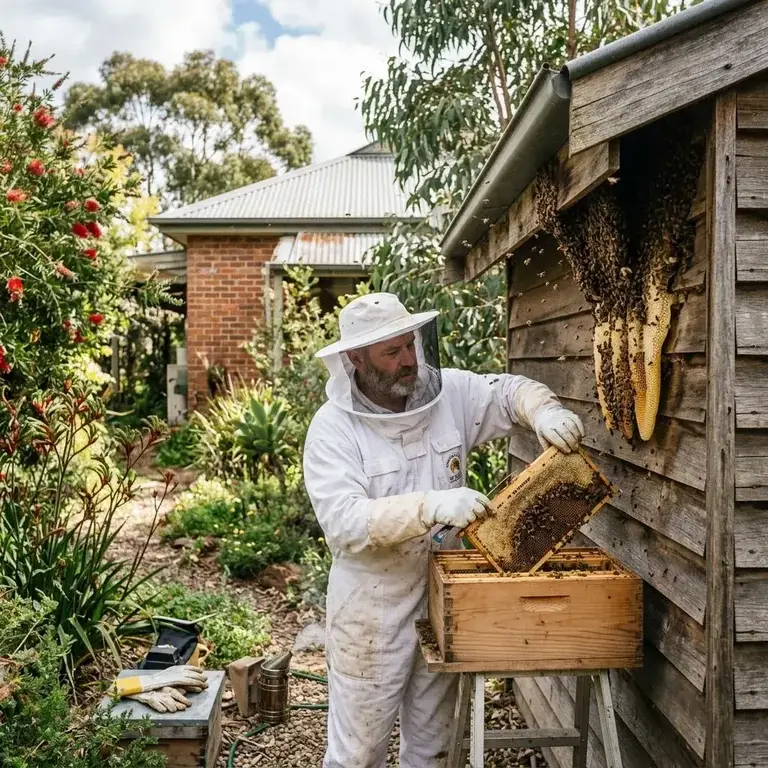
If you suspect bees in wall cavities at your property, the answer in most cases is relocation by a beekeeper, not extermination — because honey bees are vital pollinators and responsible practice across Australia favours saving colonies wherever possible. From Sydney brick veneers to elevated Queenslanders in Brisbane, wall voids are prime real estate for a spring swarm looking for a dry, defensible home.
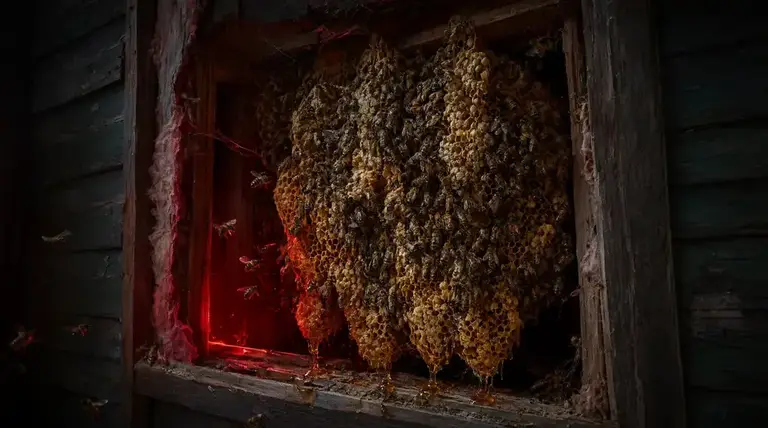
Bees in wall situations are defined simply: a honey bee colony (Apis mellifera) has taken up residence inside a structural cavity — a wall void, eave, chimney or roof space — and is building wax comb, storing honey and raising brood inside the building fabric. Removal is only appropriate when the colony genuinely cannot be reached safely, or when the insect turns out to be wasps rather than bees. Getting the identification right decides everything, which is why a professional pest control assessment should be your first move.
- Relocation by a licensed beekeeper is the preferred outcome for honey bees in wall cavities — extermination is a last resort.
- Many “bee” call-outs are actually European wasps; correct identification determines the entire treatment plan.
- Spraying a colony inside a wall leaves abandoned comb that melts, stains and attracts ants, rodents and wax moth.
- Swarming peaks in spring and early summer; acting early keeps relocation quick, clean and cheaper.
- Thorough cleaning and sealing of every gap over 3 mm is essential to stop a new swarm re-colonising the cavity.
Why Bees in Wall Cavities Are So Common Across Australia
Bees in wall voids are common Australia-wide because our housing stock offers exactly what a swarm is hunting for: dry, dark, defensible cavities of roughly 40 litres. Swarming is how honey bee colonies reproduce, and it peaks in spring and early summer across most of the country, with subtropical regions such as southeast Queensland and northern NSW seeing activity stretch longer through the year.
A departing swarm sends out scout bees to evaluate potential nest sites. Wall voids in brick veneer homes, the cavities under the eaves of weatherboard Queenslanders, chimneys, roof spaces and even water-meter boxes all fit the bill. Slab-on-ground homes tend to see bees enter around weep holes and pipe penetrations, while homes with a raised subfloor may attract colonies into floor voids instead. Crucially, scouts are drawn to cavities that previously held bees, because leftover wax and propolis smell like home — which is exactly why cleaning and sealing after any removal matters so much.
Once the swarm commits, workers begin drawing wax comb within hours and the queen starts laying. A colony that arrived last week may already be establishing brood, so acting early — while the comb is small — keeps relocation quick, clean and far less invasive than dealing with an established nest.
Warning Signs You Have Bees in Wall Voids
The clearest sign of bees in wall spaces is a steady stream of bees flying to and from a single small entry point, often with a faint hum behind the plaster. Honey bees are 12 to 15 mm, golden-brown and fuzzy, and they move with calm, purposeful traffic to one hole. Watch for these indicators:
- Steady flight path: Bees travelling in a consistent stream to a single entry hole in brickwork, weatherboards or eaves.
- Low humming or buzzing: A gentle, continuous hum audible through the wall, especially on warm afternoons.
- Wax or honey smell: A sweet, musty odour near the cavity, sometimes with faint staining on internal plaster.
- Bees appearing indoors: Occasional lost bees inside rooms adjacent to the cavity, particularly near windows or downlights.
- Dark staining or damp patches: Honey seeping through plasterboard in hot weather indicates heavy comb inside.
- Previous bee activity: An old, unsealed entry point or a cavity that hosted bees in prior seasons.
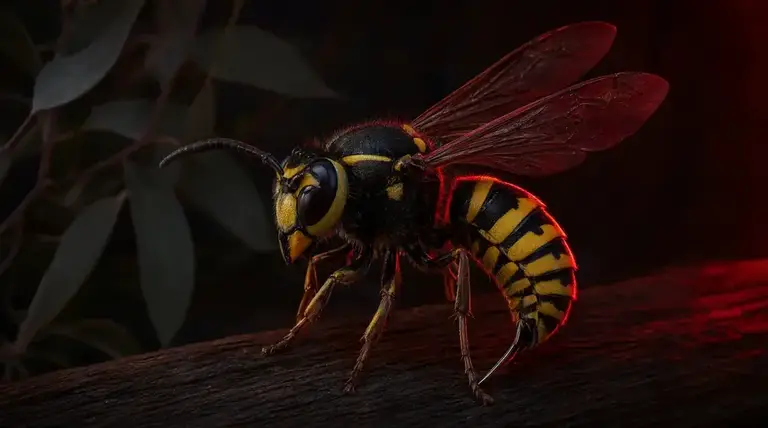
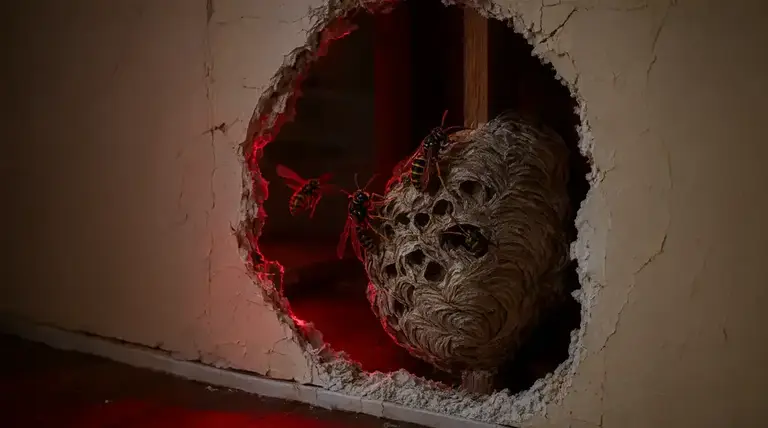
One critical check before anything else: confirm it is actually bees. People regularly call about “bees” when the culprit is a European wasp. Wasps are smooth, brighter yellow, and scavenge meat and sweet drinks, while honey bees are fuzzy and focused on flowers. If it is wasps, the approach changes completely — read our guide to European wasps in Australia: identification and dangers, or our overview of paper wasps managing common nests around your home if the nest is an exposed grey paper comb.
DIY vs Professional: Why Relocation Beats the Spray Can
DIY treatment of bees in wall cavities almost always backfires, so professional relocation or managed removal is strongly recommended. Spraying a colony inside a wall leaves the honeycomb behind — and abandoned comb, sometimes 20 kg or more in an established nest, melts in summer heat, stains walls and attracts ants, rodents, wax moth and small hive beetle. The mess and secondary pests often cost more than doing it properly the first time.
| Factor | DIY spray or ignore it | Professional relocation / removal |
|---|---|---|
| Colony outcome | Bees killed or driven deeper into the cavity | Colony rehomed where possible; removed only as a last resort |
| Comb left behind | Yes — melts, stains, attracts secondary pests | No — comb, brood and honey fully removed |
| Re-infestation risk | High — wax smell attracts the next swarm | Low — cavity cleaned and entry sealed |
| Sting and safety risk | High — a defensive colony is dangerous at close range | Managed with protective gear and correct technique |
| Environmental impact | Higher — pollinators destroyed, chemical residues | Low — colony saved wherever feasible |
The same logic applies if the insect turns out to be wasps — read why you should never DIY wasp nest removal before reaching for the aerosol. Disturbed wasp colonies are aggressive, and stings to the face and neck are a genuine emergency risk.
How Professional Bee Relocation and Pest Control Works
A professional bee relocation opens the cavity, removes every trace of comb and brood, transfers the colony to a hive box, and seals the entry — the whole point is to leave nothing behind that attracts the next swarm. Where relocation is impossible, a licensed pest control technician will treat the colony safely and then ensure the cavity is cleaned out. The process typically involves:
- Locating the cavity precisely using tapping, thermal imaging or a listening tool.
- Opening the wall or eave from inside or outside to expose the nest with minimal damage.
- Removing comb and brood, then transferring the queen and workers to a hive box for rehoming.
- Cleaning residual wax and honey, then sealing the entry and any gaps over 3 mm around eaves, weep holes and pipe penetrations.
If the nest is confirmed to be wasps rather than bees, our Wasp Removal & Nest Treatment service handles it with targeted, APVMA-compliant products applied by licensed technicians.
What Does Bee Removal From a Wall Cost in Australia?
Across the Australian market in 2025-26, bee relocation from a wall typically costs between $150 and $500+, depending on access, colony size and whether the wall must be opened and repaired. Simple swarm collections sit at the bottom of the range; established cut-outs with building repairs sit at the top. These figures reflect what the industry generally charges — most operators will confirm a firm price after inspecting the entry point and cavity.
| Service | Typical market rate (AUD) | What’s included / notes |
|---|---|---|
| Swarm collection (exposed cluster) | $100 – $250 | Quick collection of a resting swarm; often handled by a local beekeeper |
| Wall cut-out and relocation | $250 – $500+ | Opening the cavity, removing comb and brood, rehoming the colony, cleaning |
| Removal as a last resort | $200 – $450+ | For unreachable cavities; includes comb extraction to prevent secondary pests |
| Sealing and proofing | $100 – $300 | Meshing weep holes, sealing gaps over 3 mm, repairing entry points |
Across the industry, wall repairs (re-plastering or re-cladding) are usually quoted separately from the removal work itself. Whoever you engage, always use a licensed, insured operator for any work involving treatment products.
Those are the typical Australian market rates — Aussie Pest Strike generally comes in well under them. For an exact quote on your job, call us on [aps_phone] and we’ll give you a firm price, often straight over the phone.
Seasonal Activity: When Bees Move Into Walls
Swarming and new colony establishment peak from September to December across most of Australia, with a secondary pulse in early autumn in warmer regions. In tropical and subtropical areas, activity can begin as early as late winter.
Jan
Feb
Mar
Apr
May
Jun
Jul
Aug
Sep
Oct
Nov
Dec
Typical relative swarm activity for wall-cavity colonisation across temperate Australia. Spring and early summer (Sep–Dec) are peak season; subtropical regions see earlier and longer activity, while winter months are quietest.
The worst jobs we see are the ones where someone sprayed the bees a year ago and walked away. The comb melts, the honey runs down inside the wall, and suddenly you’ve got ants, wax moth and stained plaster on top of a bee problem. Do it once, do it properly — relocate the colony, clean the cavity and seal the entry, and you’ll never deal with it again.
If you have bees in wall cavities, do not spray them. Book a professional inspection to confirm whether you are dealing with honey bees or wasps. If it is bees, arrange relocation with a beekeeper while the comb is still small, then have every gap over 3 mm sealed. If it is wasps, call in a licensed pest control technician for safe treatment — never attempt a wall nest yourself.
Frequently Asked Questions
Why is relocation preferred over extermination for bees in a wall?
Honey bees are vital pollinators, and responsible practice across Australia favours saving colonies wherever possible. Relocation by a licensed beekeeper rehomes the queen and workers in a hive box, while extermination destroys pollinators and leaves chemical residues. Removal is only appropriate when the colony genuinely cannot be reached safely, or when the insect turns out to be wasps rather than bees.
How can I tell if I have honey bees rather than European wasps in my wall?
Honey bees are 12 to 15 mm, golden-brown and fuzzy, moving with calm, purposeful traffic to a single entry hole. European wasps are smooth, brighter yellow, and scavenge meat and sweet drinks. A steady flight path, low humming behind the plaster, and a sweet waxy smell all point to bees. Correct identification determines the entire treatment plan, so a professional assessment should come first.
What warning signs suggest bees have moved into my wall cavity?
Look for a steady stream of bees flying to and from one small entry point, a faint continuous hum audible through the wall on warm afternoons, and a sweet, musty wax or honey smell near the cavity. Other indicators include occasional lost bees indoors near windows or downlights, dark staining or damp patches where honey seeps through plasterboard, and an old unsealed entry from previous bee activity.
What happens if I just spray the bees inside the wall myself?
Spraying kills or drives the bees deeper into the cavity but leaves the comb behind — sometimes 20 kg or more in an established nest. Abandoned comb melts in summer heat, stains walls, and attracts ants, rodents, wax moth and small hive beetle. The leftover wax smell also draws the next swarm back to the same cavity, so DIY treatment usually creates costlier problems than it solves.
What does professional bee relocation from a wall involve?
A professional locates the cavity precisely using tapping, thermal imaging or a listening tool, then opens the wall or eave to expose the nest with minimal damage. Comb and brood are removed, and the queen and workers are transferred to a hive box for rehoming. Residual wax and honey are cleaned out, then the entry and any gaps over 3 mm around eaves, weep holes and pipe penetrations are sealed.
When is bee removal used instead of relocation?
Removal is only appropriate when the colony genuinely cannot be reached safely for relocation, or when the insect turns out to be wasps rather than bees. In those cases a licensed pest control technician treats the colony safely and then ensures the cavity is cleaned out, because leaving comb behind leads to melting honey, staining and secondary pests such as ants, rodents and wax moth.
When do bees most often move into wall cavities in Australia?
Swarming and new colony establishment peak from September to December across most of Australia, with a secondary pulse in early autumn in warmer regions. Subtropical areas such as southeast Queensland and northern NSW can see activity begin as late winter and stretch longer through the year, while winter months are quietest. Acting early, while the comb is small, keeps relocation quick, clean and far less invasive.
Why do bees keep returning to the same wall cavity, and how is that prevented?
Scout bees are drawn to cavities that previously held bees because leftover wax and propolis smell like home. That is why thorough cleaning of residual wax and honey after removal matters so much, along with sealing every gap over 3 mm around eaves, weep holes and pipe penetrations. Cleaning and proofing the cavity properly leaves nothing behind to attract the next swarm looking for a dry, defensible home.
Can I check whether Aussie Pest Strike handles bees nesting in wall cavities at my property?
Yes — Aussie Pest Strike deals with bees in wall cavities as covered in this article, including assessment, relocation by a beekeeper where possible, and managed removal when a colony cannot be safely reached. Because access, colony size and building type vary between properties, the practical way to confirm coverage for your situation is to describe your bee problem directly and arrange an inspection of the entry point and cavity.
What should I do first if I suspect bees in my wall cavity?
The best next step is a professional identification and assessment before touching anything, since many bee call-outs turn out to be European wasps and the treatment plan depends entirely on correct identification. Contact Aussie Pest Strike to describe what you are seeing — the flight path, entry point and any humming or staining — and they can assess whether you have honey bees suitable for relocation or a wasp nest needing different treatment.
Sources & further reading
Found Something
Dangerous?
Don’t touch it. Don’t spray it. Keep kids and pets clear, take a photo from a safe distance, and call us — or book a free inspection and we’ll come to you.
02 7235 0050