Bee Swarm Season:What to Do Whena Swarm Arrives
Bee swarm season guide: why bees swarm in spring, what a swarm looks like, and the safe steps to take when one arrives. Book a free inspection today.
Bee swarm season in Australia runs from early spring through summer, and if a cluster of bees lands on your property the rule is simple: stay calm, keep people and pets back, and call a beekeeper or licensed technician — never spray it. A resting bee swarm is a temporary cluster of honey bees searching for a new home, and it is usually docile because the bees have no hive, brood or honey stores to defend. That definition matters, because the right response to a swarm (keyword: e) is completely different to the right response to an established nest.
Every year across Australia, thousands of swarms settle on fences, branches, letterboxes and eaves — and most move on by themselves within hours. But when a swarm moves into a wall cavity or roof void and starts building comb, the job escalates from a free beekeeper collection to a professional extraction. This guide covers why swarms form, how to tell a passing swarm from a bigger problem, what to do step by step, realistic 2025–26 costs, and when to call in professional wasp and bee pest control services.
- A settled bee swarm is usually docile and often moves on within a few hours to two days — patience is frequently the safest response.
- Never spray, hose or smoke a swarm; provoking it triggers defensive stinging and makes removal harder.
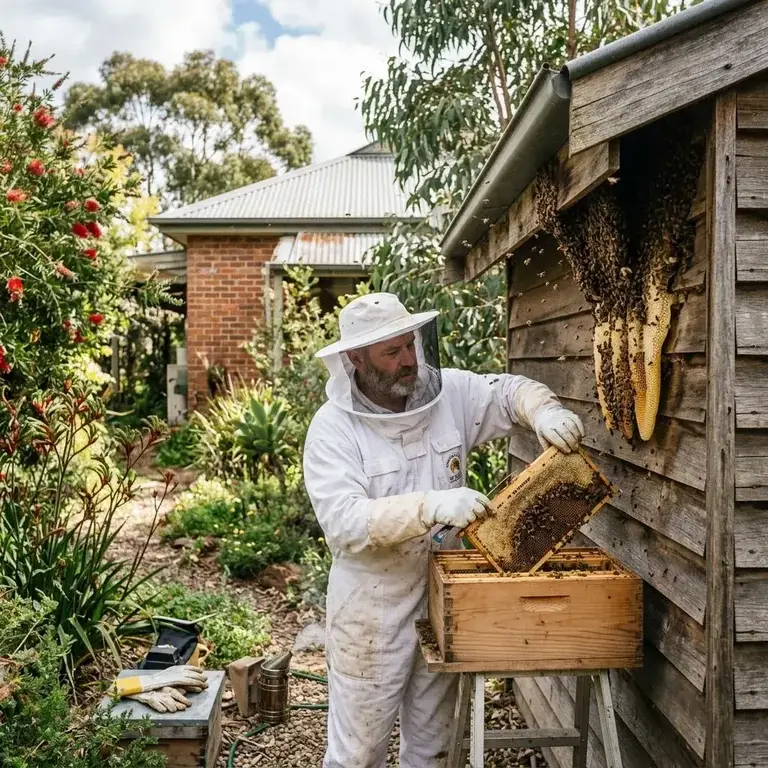
- Beekeepers will often collect an open swarm for free, but bees inside walls or roofs need professional assessment.
- Swarm season peaks September to December across most of Australia, with warm days after rain triggering the biggest activity.
- If bees enter a wall cavity, act fast — comb construction makes removal significantly more complex and costly.
Why Bee Swarms Matter in Australian Homes (e)
Bee swarms matter in Australia because our long, warm spring and summer give honey bees an extended breeding window, and our housing stock — weatherboard Queenslanders, brick veneer homes and older slab-on-ground builds — is full of attractive cavities. Australian swarm activity peaks from September to December when nectar flows are strong and colonies build up fast, with warm days after rain producing the most dramatic swarming events.
Swarming is simply how honey bee colonies reproduce. When a hive becomes crowded, roughly half the workers leave with the old queen to find a new nest site. A typical swarm contains 5,000–20,000 bees balled tightly around the queen, forming a football-to-basketball-sized cluster. In suburban areas — from Brisbane’s raised Queenslanders with open subfloors to Melbourne’s brick veneer homes with weep holes and roof voids — scout bees actively search for dry, sheltered cavities, which is why swarms so often end up inside walls and chimneys.
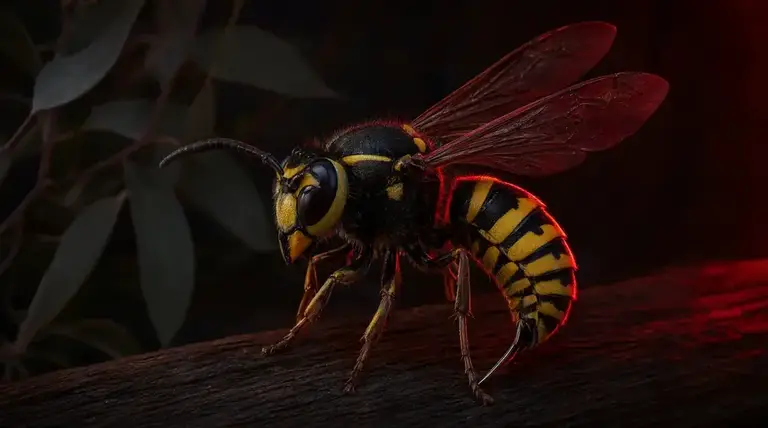
The stakes are higher for households with allergy sufferers. Anyone with a known bee allergy should carry their prescribed adrenaline auto-injector during spring and summer, and children should be taught to walk calmly away rather than swat. It’s also worth distinguishing bees from wasps at this time of year — our guide to European wasps in Australia: identification and dangers explains the differences, because the response to each pest is very different.
Warning Signs: Is It a Passing Swarm or a Bigger Problem?
The key warning signs to watch for are repeated bee traffic at a single entry point, bees disappearing into a structure, and any sign of comb building. A swarm hanging openly on a branch is usually temporary; bees entering and leaving a wall or roof all day means a colony is establishing itself. Use this checklist to assess the situation.
- A hanging cluster — a football-to-basketball-sized ball of bees on a branch, fence or eave. This is a resting swarm and will usually move on.
- A flying cloud — a brief, dramatic cloud of thousands of bees as the swarm arrives, settles or relocates. Keep everyone indoors until it passes.
- Scout bees investigating — small numbers of bees methodically checking weep holes, vents, gaps under eaves or chimneys. This often precedes a swarm moving in.
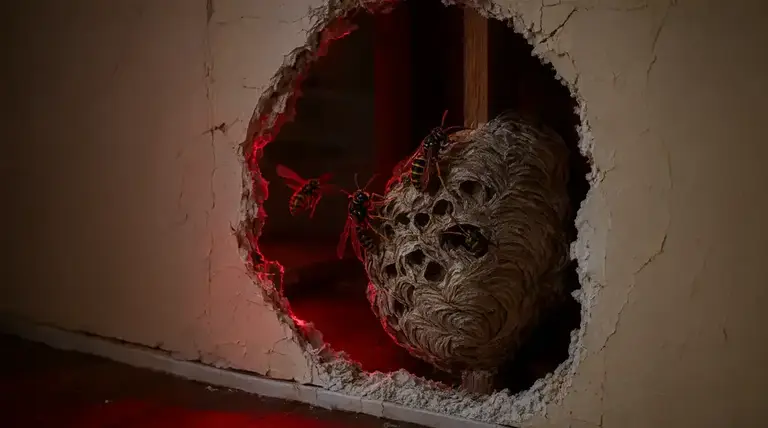
- Constant two-way traffic — a steady stream of bees entering and leaving one gap in a wall or roof for hours or days. A colony is moving in or is already established.
- Buzzing inside walls — audible humming or vibrating from a wall cavity, ceiling or chimney indicates comb construction has likely begun.
- Honey stains or odour — dark staining on plasterboard or a sweet smell can signal an established hive with honey stores inside the structure.
DIY vs Professional Bee Swarm Response
DIY is reasonable for one task only: keeping people and pets away from an open swarm while you wait for it to move on or for a beekeeper to collect it. Anything beyond that — especially cavity removals, high clusters, or chemical treatment — belongs with a licensed technician. Chemical treatments must be carried out by licensed professionals using APVMA-registered products, and no treatment can be claimed as completely risk-free.
| Situation | DIY approach | Professional approach |
|---|---|---|
| Open swarm on a branch or fence | Keep 5–10 metres back, close windows and doors, wait or call a beekeeper | Beekeeper collects and relocates, often free of charge |
| Swarm at height (roofline, tall tree) | Not recommended — ladders and swarms don’t mix | Safe access equipment and protective gear |
| Bees entering a wall or roof cavity | Do not seal the gap or spray — this traps bees inside the home | Inspection, relocation or licensed treatment, comb extraction if needed |
| Established hive with comb | Never DIY — comb left behind attracts new swarms and pests | Full removal, comb extraction and cavity treatment by a licensed technician |
Never attempt DIY removal from a cavity. The same reasoning that makes DIY wasp work dangerous applies here, as covered in our article on wasp nest removal: why you should never DIY. Disturbed colonies defend aggressively, and partial removals leave honeycomb that attracts ants, wax moths and future swarms. For the full decision framework, see bees in your wall: relocation vs removal explained.
Bee Swarm Removal Costs in Australia (2025–26)
Across the Australian market, bee swarm and hive work typically ranges from free beekeeper collection for open swarms up to $800 or more for complex cavity extractions, depending on access, height and whether comb must be removed. The figures below reflect what the industry generally charges in 2025–26 — they’re typical market rates, not a quote from any one provider. Your final cost will depend on location, structure type and severity.
| Service | Typical market rate (AUD) | What’s included/notes |
|---|---|---|
| Beekeeper swarm collection (open, accessible) | Free – $80 | Many beekeepers collect accessible swarms free; a small call-out fee may apply |
| Professional swarm removal (difficult access) | $150 – $300 | Height, roofline or confined-space work by a licensed pest control technician |
| Cavity inspection and assessment | $120 – $220 | Locating the colony, thermal or visual inspection, relocation vs removal advice |
| Hive removal from wall/roof with comb extraction | $400 – $800+ | Opening the cavity, removing bees and comb, treatment; building repairs usually extra |
These are the going market rates across Australia — and in most cases, Aussie Pest Strike comes in well under them. For an exact quote tailored to your property and situation, give us a call on [aps_phone] and we’ll sort it out.
Seasonal Activity: When Swarms Peak in Australia
Bee swarm activity in Australia rises sharply from late winter, peaks through spring and early summer (September to December), then tapers off through autumn as colonies settle and nectar flows decline. Warm days following rain produce the biggest swarming events, and in northern subtropical regions activity can start earlier and linger later.
Jan
Feb
Mar
Apr
May
Jun
Jul
Aug
Sep
Oct
Nov
Dec
Typical relative bee swarm activity across most of Australia. Activity peaks September–December during strong spring nectar flows, with a secondary flush in early autumn in some regions. Northern Australia often sees earlier and longer swarm seasons.
Step-by-Step: What to Do When a Swarm Arrives
When a swarm arrives, the correct response is to move everyone at least 5–10 metres back, secure the house, avoid provoking the bees, and call a beekeeper or licensed technician. A settled swarm frequently moves on by itself within a few hours to two days, so patience is often the safest response of all.
- Move people and pets at least 5–10 metres away and bring them indoors.
- Close nearby windows and doors so the swarm cannot enter a cavity in your home.
- Do not spray, hose or smoke the swarm — this provokes defensive stinging from thousands of bees at once.
- Note the location and height, then phone a local beekeeper or pest professional for advice.
- If bees are entering a wall or roof, act quickly before they build comb — early removal is far cheaper and simpler.
Keep an eye on likely landing spots around your property through spring — low branches, letterboxes, play equipment and fence lines — and teach children to walk calmly away rather than swat. If what you’re seeing turns out to be wasps rather than bees, our Wasp Removal & Nest Treatment service handles established nests safely.
The biggest mistake we see every spring is someone hitting a swarm with a can of fly spray. You turn a calm cluster of homeless bees into thousands of defensive stingers, and half the time they just move into your wall anyway. Give them space, make one phone call, and nine times out of ten the problem solves itself cheaply.
For an open swarm, keep your distance and call a local beekeeper first — collection is often free. If bees are entering a wall, roof or chimney, don’t wait and don’t seal the gap: book a licensed pest control inspection immediately, because every day of comb construction adds cost and complexity to the removal.
Bee Swarm Season: Frequently Asked Questions
Is a bee swarm dangerous?
A resting bee swarm is usually gentle because the bees have no hive, brood or honey to protect. However, it can still sting if disturbed, so keep at least 5–10 metres away, bring pets indoors, and never spray, hose or smoke the cluster — provoking it triggers defensive stinging.
How long will a bee swarm stay in one spot?
Most bee swarms move on within a few hours to two days, once scout bees locate a suitable permanent nest site. A settled cluster hanging on a branch or fence often resolves itself, so monitoring from a safe distance is usually all that’s required.
Who do I call to remove a bee swarm in Australia?
Call a local beekeeper or a licensed pest technician. Beekeepers frequently collect open, accessible swarms free of charge, while swarms inside walls, roofs or chimneys generally require professional pest control assessment, and established hives need licensed removal with comb extraction.
Dealing with a swarm that has settled somewhere awkward, or bees that have already moved into your walls or roof? Aussie Pest Strike’s licensed technicians can assess the situation safely and recommend the right response — whether that’s relocation, removal or treatment. Call Aussie Pest Strike on [aps_phone] to book your free inspection today and get swarm season sorted before it becomes a bigger problem.
Sources & further reading
Found Something
Dangerous?
Don’t touch it. Don’t spray it. Keep kids and pets clear, take a photo from a safe distance, and call us — or book a free inspection and we’ll come to you.
02 7235 0050