Native Bees inYour Garden: Protectingthe Good Guys
Native bees garden — Native bees australia — native bees in Australia are almost always harmless garden allies, not pests, and the right response is...
If you’ve typed “native bees australia” into a search bar after spotting bees in the garden, the short answer is usually reassuring: they’re almost always harmless allies, not pests, and the right response is protection rather than removal. With more than 1,700 native bee species across the country — most solitary, stingless or barely able to sting — these insects are vital pollinators that keep gardens productive and healthy. Yet every summer we see them needlessly sprayed after being mistaken for wasps or feral honey bees.
This guide helps you tell the difference, understand why native bees matter to Australian backyards, and learn the handful of situations where a nest genuinely needs professional attention. If you are ever unsure whether the insect on your eave is a friend or a threat, a quick identification from a licensed technician costs nothing and can save a colony of the good guys.
- Australia has over 1,700 native bee species; most are solitary or stingless and pose no risk to people or pets.
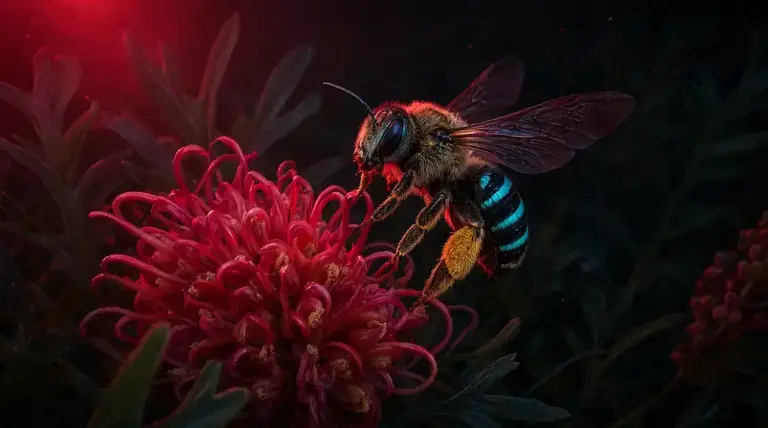
- Native bees are essential pollinators — blue-banded bees alone are famous for buzz-pollinating tomatoes and other crops.
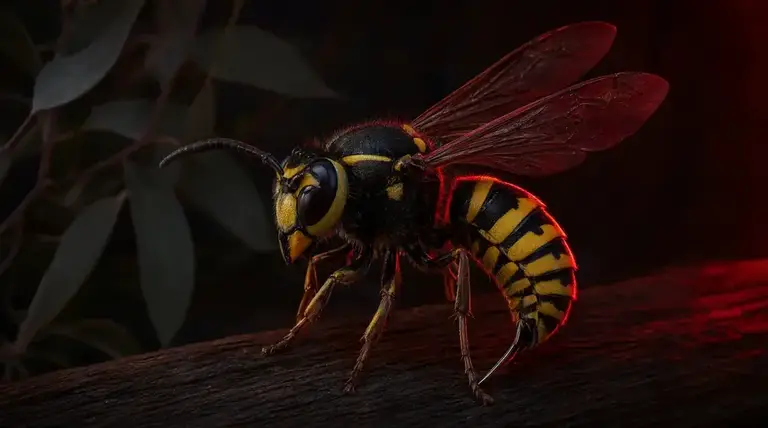
- Never confuse native bees with European wasps: wasps have narrow waists, smooth bodies and aggressive scavenging behaviour.
- Bee-friendly gardens need native flowers, bare soil patches, bee hotels and restraint with insecticides.
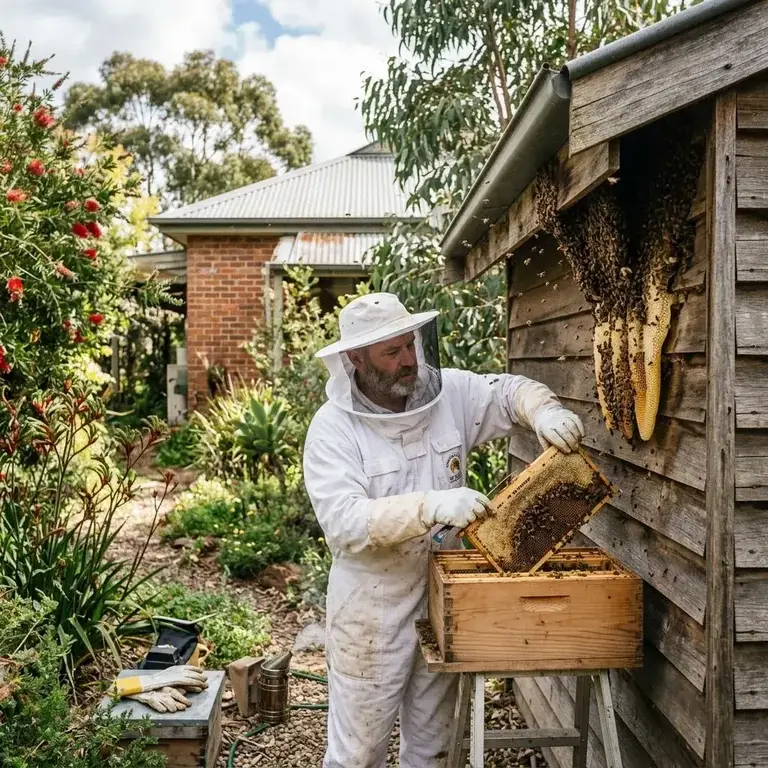
- Only large feral honey bee colonies inside wall cavities usually need professional relocation — native bee nests are best left alone.
Why native bees australia Need Protection in Gardens
Native bees matter because they pollinate native plants, vegetables and fruit trees that European honey bees often handle poorly, and they do it for free in your own backyard. In a country where summer heat, long dry spells and bushfire-affected landscapes already stress pollinator numbers, every backyard colony counts.
Australian housing styles make this especially relevant. Queenslanders with verandahs and gardens close to the house, brick veneer homes on concrete slabs, and older weatherboard places with subfloor voids all create nooks where solitary bees nest harmlessly — in soft soil banks, hollow stems, mortar gaps and garden timber. Warm coastal regions of Queensland and northern NSW support stingless bee colonies year-round, while southern states see a strong spring and summer surge. Treating these insects as pests wastes money, harms your garden’s productivity and can leave you worse off when genuine pests like aphids explode without their pollinator-balanced ecosystem.
It is also worth knowing what native bees are not. They are not the paper wasps building nests under your eaves, and they are not the European wasps that ruin summer barbecues. If what you are seeing is smooth-bodied, yellow-and-black and aggressive around food, that is a different problem entirely — our guide to European wasps in Australia: identification and dangers explains the risks and what to do next.
Warning Signs: When “Bees” Around Your Home Are Actually a Problem
The short answer is that native bees almost never present warning signs at all — the checklist below helps you spot the situations where the insect you are seeing is a wasp or feral honey bee that does need attention. Use it before reaching for any spray.
- Smooth, shiny bodies with a pinched waist — classic wasp morphology, very different from the hairy, pollen-dusted bodies of bees.
- Aggressive scavenging around food and drinks — European wasps hover over barbecues, pet bowls and soft-drink cans; native bees ignore your lunch entirely.
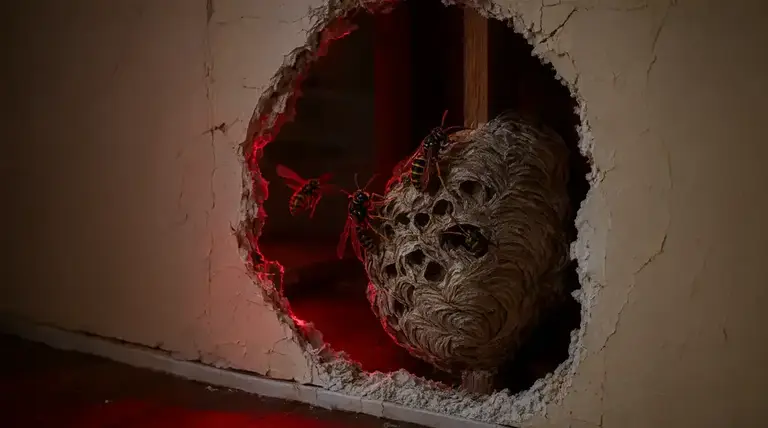
- A papery grey nest under eaves, in shrubs or underground — wasp nest material looks like grey cardboard; native bees do not build exposed paper nests.
- Heavy, constant traffic into a wall cavity or roof void — dozens of honey bees streaming into one gap suggests a feral colony building honeycomb inside, not native solitary bees.
- Sticky drips, dark staining or a sweet smell on interior walls — signs of honey and wax from an established feral honey bee colony inside the structure.
- Insects dying in large numbers near windows — bees trapped inside after emerging from a cavity nest within the wall.
If your checklist result points to wasps, treat it as a genuine hazard. Wasp nests grow fast through summer, and disturbing one without protective equipment can trigger a swarm. Our wasp removal and nest treatment service handles these safely, and it is worth reading why you should never DIY a wasp nest removal before climbing a ladder with a can of spray.
DIY Bee-Friendly Gardening vs Professional Pest Control
For native bees, the “treatment” is habitat — and that part is entirely DIY-friendly. Professional help only enters the picture when a genuine pest (wasps, or a feral honey bee colony in a wall) threatens the household or the bees themselves. Here is how the two approaches compare.
| Factor | DIY bee-friendly approach | Professional service |
|---|---|---|
| Best for | Attracting and protecting native bees; minor garden pests | Wasp nests, feral honey bee colonies in cavities, uncertain identification |
| Risk level | Very low — native bees are gentle or stingless | Low when done by licensed technicians with protective gear |
| Typical cost | $30–$150 for plants, bee hotels and materials | $150–$600 depending on nest type and access |
| Chemical use | Avoid broad-spectrum sprays; treat only at dusk if unavoidable | APVMA-approved products applied by licensed technicians, timed to protect pollinators |
| Outcome for native bees | Protected and encouraged | Relocation preferred over extermination wherever access allows |
The key discipline in any DIY approach is restraint with insecticides. Broad-spectrum sprays during flowering kill the bees you want along with the pests you do not — a real concern for anyone searching “native bees australia” and hoping to protect local pollinators. If aphids or caterpillars are hammering your plants, choose targeted methods, and if a bigger pest problem genuinely needs chemical treatment, a licensed technician can select products and application times that minimise harm. That balance is the core of responsible pest control.
Costs: Bee-Safe Pest Control and Removal Services (2025–26)
What’s a fair price for bee-related pest work? The table below sets out typical Australian market rates for 2025–26 — what the industry generally charges across the country. Actual quotes vary with nest size, height, access and your location, but these ranges give you a solid benchmark before you pick up the phone.
| Service | Typical market rate (AUD) | What’s included/notes |
|---|---|---|
| Insect identification & inspection | $0–$120 | Confirms native bee vs wasp vs feral honey bee; free inspections often available across the industry |
| Wasp nest treatment & removal | $150–$350 | Nest treatment, removal where accessible, entry-point advice |
| Honey bee colony relocation from wall cavity | $250–$600 | Cut-out or trap-out, honeycomb removal, coordination with a beekeeper where possible |
| Cavity clean-out & proofing after colony removal | $150–$400 | Removing residual comb and sealing entry points to stop re-infestation |
| Native bee garden setup (DIY) | $30–$150 | Native plants, bee hotel, water dish — no professional needed |
Where a feral honey bee colony is involved, the choice between relocation and removal matters for both cost and ecology, and the market rates above reflect that. Our article on bees in your wall: relocation vs removal explained walks through when each option is realistic and what drives the price difference.
Those figures are the going industry rates across Australia — the benchmark, not our price list. Aussie Pest Strike typically comes in well under these market rates, because we quote on the job, not the market average. For an exact quote on your situation, call [aps_phone] — it takes a minute and you’ll know precisely where you stand.
Seasonal Activity: When You Will See Native Bees
Native bee activity in Australia peaks through the warmer months, roughly September to March, with the December–February flowering season the busiest period in most regions. In subtropical Queensland and northern NSW, stingless bee colonies stay active nearly year-round, while southern states see solitary species like blue-banded bees emerge strongly in spring and taper off by late autumn.
Jan
Feb
Mar
Apr
May
Jun
Jul
Aug
Sep
Oct
Nov
Dec
Typical native bee foraging activity across temperate Australia: a spring build-up from September, peak activity through the December–February flowering season, and a quiet winter. Northern regions maintain moderate activity year-round.
Time any necessary pest treatments for the cooler months or for dusk during summer, and schedule garden planting so something is flowering in every season — grevillea and tea tree for winter, bottlebrush and daisies through spring and summer.
Nine times out of ten, when a customer calls about “aggressive bees”, we arrive and find either harmless blue-banded bees working the tomatoes or a wasp problem that has nothing to do with bees at all. Get the identification right first — killing a native bee colony costs your garden far more than it costs the bee. If it does turn out to be wasps or a feral hive in the wall, that is when you call us and we handle it properly.
Leave native bee nests exactly where they are and build your garden around them: native flowering plants, a bare soil patch, a bee hotel and a shallow water dish. Reserve professional pest control for the genuine threats — wasp nests near living areas and feral honey bee colonies inside wall cavities — and always choose relocation over extermination for bees wherever access allows.
Frequently Asked Questions
How many native bee species are there in Australia and are they dangerous?
Australia has more than 1,700 native bee species, and most are solitary, stingless or barely able to sting. They pose virtually no risk to people or pets and are best treated as garden allies rather than pests. Native bees are vital pollinators of native plants, vegetables and fruit trees, so the right response when you spot them is protection, not removal or spraying.
How can I tell native bees apart from wasps?
Bees have hairy, pollen-dusted bodies, while wasps are smooth and shiny with a pinched waist. European wasps also scavenge aggressively around barbecues, pet bowls and drink cans, whereas native bees ignore your food entirely. Wasps build papery grey nests that look like cardboard under eaves, in shrubs or underground — native bees never build exposed paper nests.
When does a bee problem actually need professional attention?
Only a few situations genuinely call for professional help: heavy constant traffic into a wall cavity or roof void suggesting a feral honey bee colony building honeycomb inside; sticky drips, dark staining or a sweet smell on interior walls from established comb; or bees dying in large numbers near windows after emerging from a cavity nest. Wasp nests are also genuine hazards requiring licensed treatment.
Where do native bees nest around Australian homes?
Solitary native bees nest harmlessly in soft soil banks, hollow stems, mortar gaps and garden timber. Common Australian housing styles create plenty of suitable nooks — Queenslanders with verandahs close to gardens, brick veneer homes on concrete slabs, and older weatherboard houses with subfloor voids all offer spots where these gentle insects can settle without causing any damage.
When are native bees most active in Australia?
Native bee activity peaks through the warmer months, roughly September to March, with December to February the busiest period in most regions as flowering peaks. In subtropical Queensland and northern NSW, stingless bee colonies stay active nearly year-round, while southern states see solitary species like blue-banded bees emerge strongly in spring and taper off by late autumn.
How do I make my garden more bee-friendly?
Plant native flowers so something blooms in every season — grevillea and tea tree for winter, bottlebrush and daisies through spring and summer. Leave patches of bare soil for ground-nesting solitary bees, add a bee hotel and a shallow water dish, and show restraint with insecticides. Broad-spectrum sprays during flowering kill the pollinators you want along with the pests you don't.
Why are blue-banded bees important for vegetable gardens?
Blue-banded bees are famous for buzz-pollinating tomatoes and other crops — a technique where they vibrate flowers to release pollen that European honey bees often handle poorly. They're solitary native bees common in southern states, emerging strongly in spring. If you see them working your tomato plants, they're helping your harvest rather than threatening anyone, so leave them be.
Should I spray a nest I've found in my garden?
Almost never. Native bee nests are best left alone entirely. Before reaching for any spray, check whether you're actually looking at wasps — smooth shiny bodies, aggressive scavenging, or a papery grey nest all point to wasps, which grow fast through summer and should only be treated by professionals with protective equipment. If unsure, get an identification first rather than spraying blind.
How would Aussie Pest Strike assess whether the insects at my home are native bees or something harmful?
A technician would examine body shape first — hairy, pollen-dusted bees versus smooth, narrow-waisted wasps — then look at behaviour, such as whether insects scavenge around food. They'd inspect any nest structure, since papery grey material indicates wasps, and check wall cavities for heavy traffic, sticky staining or sweet smells pointing to feral honey bee colonies. This identification confirms whether protection, relocation or treatment is appropriate.
What should I do if I find a suspected feral honey bee colony inside my wall cavity?
Don't seal the entry point or spray it yourself, as this can trap bees and push them further into the structure. Contact Aussie Pest Strike for an inspection to confirm what's inside the cavity. Where a feral honey bee colony is confirmed, relocation is preferred over extermination wherever access allows, often coordinated with a beekeeper, followed by clean-out and proofing to prevent re-infestation.
Sources & further reading
Found Something
Dangerous?
Don’t touch it. Don’t spray it. Keep kids and pets clear, take a photo from a safe distance, and call us — or book a free inspection and we’ll come to you.
02 7235 0050