Bed Bugs inHostels: AnAustralian Traveller’s Guide
Bed bugs in hostels are one of the most common pest complaints among Australian travellers, from Sydney's backpacker districts to budget lodges in Cairns...
Bed bugs in hostels are one of the most common pest complaints among Australian travellers, from Sydney’s backpacker strips to budget lodges in Cairns, Darwin and everywhere in between (e). These small, blood-feeding insects hide in mattresses, bed frames and luggage, and they move effortlessly between rooms and guests on every route of the backpacker trail.
Bed bugs in hostels are, put simply, hitchhiking insects that feed on sleeping guests and spread room to room through shared accommodation — and this guide explains how to spot them, protect yourself during your stay, report a problem properly, and avoid carrying them home in your pack.
- Two species bite in Australia: the common bed bug nationwide and the tropical bed bug across the north.
- Spend five minutes checking mattress seams, headboards and luggage racks before you unpack anywhere.
- Bed bugs have nothing to do with cleanliness — even top-rated hostels can be hit.
- Hot-wash clothes at 60°C and tumble-dry on high for 30 minutes before bringing luggage indoors.
- If bugs follow you home, professional pest control is far cheaper than a full-blown infestation.
Why bed bugs in hostels are a serious issue in Australia<|end_of_msg|>
Bed bugs thrive in Australian hostels because high guest turnover, shared dorms and constant luggage traffic give them endless hitchhiking opportunities. The country’s warm climate and year-round travel seasons only make conditions better for them.
Australia hosts two species. The common bed bug (Cimex lectularius) is found nationwide, while the tropical bed bug (Cimex hemipterus) turns up mostly in northern Queensland, the Northern Territory and the Kimberley. Both feed on human blood at night and hide within a couple of metres of where people sleep. Second-hand furniture, tightly packed dormitories and the relentless east-coast backpacker circuit — Sydney, Byron Bay, Brisbane, the Whitsundays, Cairns — create a perfect delivery network. Understanding how bed bugs actually spread (and how they don’t) helps you separate real risks from myths.
Warning Signs: How to Check a Hostel Room for Bed Bugs
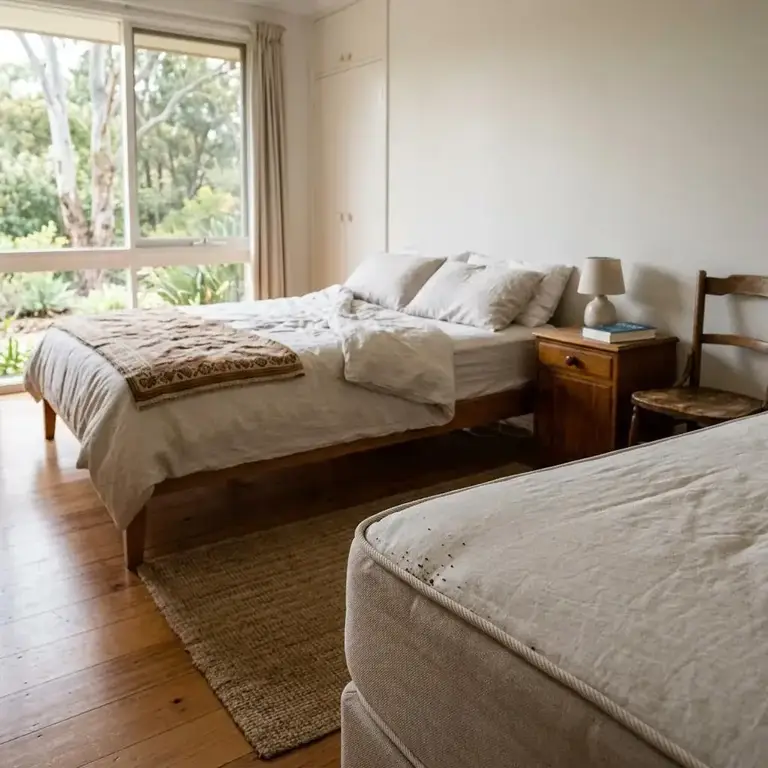
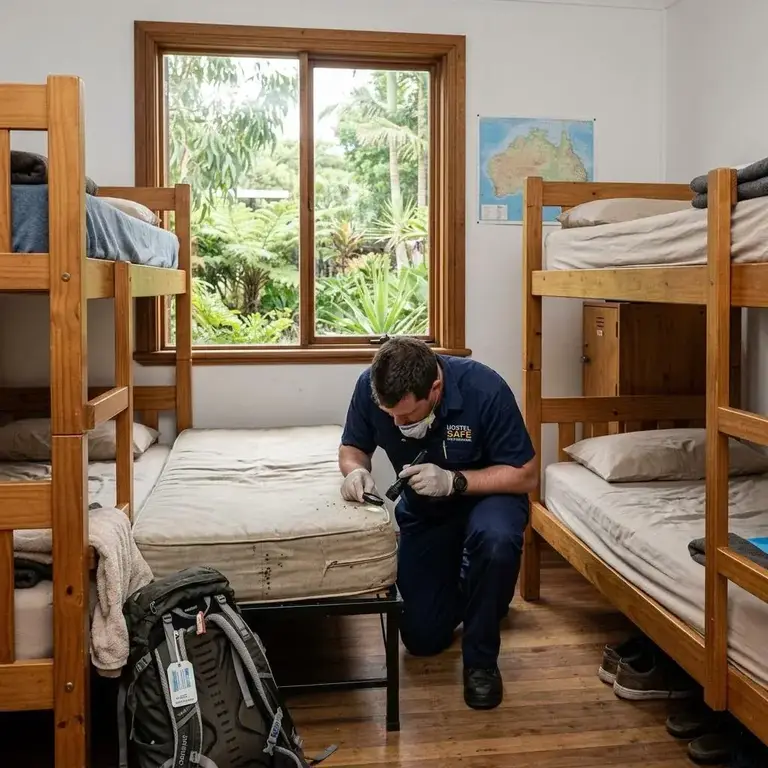
The fastest way to check a hostel room is a five-minute torch inspection of the bed, headboard and nearby furniture before you unpack. Your phone light is all you need. Pull back the sheets and run the light along mattress seams, piping, tags and the bed base, then check behind the headboard, around the bedside table, and inside power points and skirting cracks.
Any of the following should raise the alarm:
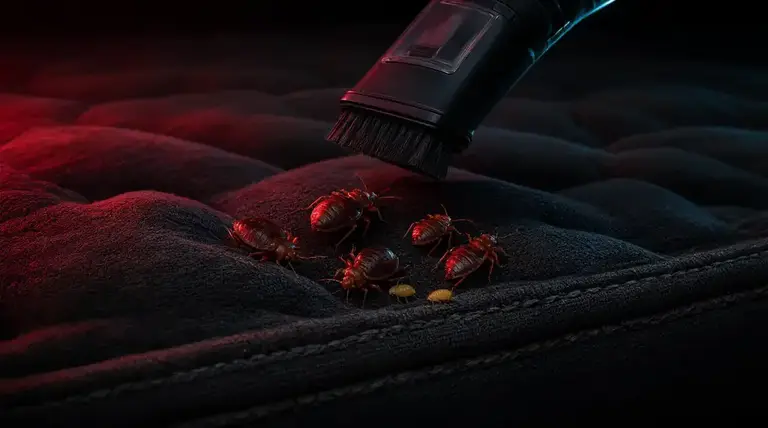
- Live bugs — flat, reddish-brown and roughly the size of an apple seed, hiding in seams and joints
- Faecal spots — small black or rust-coloured dots on sheets, mattress seams or the wall
- Shed skins and eggs — pale casings or pinhead-sized white eggs tucked into crevices
- Odour — a sweet, musty smell in heavily infested rooms
- Bites — itchy welts in lines or clusters on skin left exposed overnight; see our guide to bed bug bites: identification and your first steps if you’re unsure
Protecting Yourself During Your Stay
Keep your pack off the floor and the bed at all times — elevation and closed zips are your best defence. Use a metal luggage rack after checking its joints, or store bags in the bathroom, where bugs rarely hide. Avoid unpacking into provided drawers, and consider a light-coloured sleeping bag liner so hitchhikers are easier to spot.
If you find evidence, tell reception immediately and ask to be moved to a room that isn’t adjacent, above or below the infested one. Take dated photos. If management won’t act, you can lodge a complaint with the local council’s environmental health officer — under legislation such as the NSW Public Health Act 2010 and Queensland’s Public Health Act 2005, accommodation operators must keep premises free of vermin. You can also request a refund for unused nights under Australian Consumer Law, escalating to NSW Fair Trading or Consumer Affairs Victoria if needed.
DIY Checks vs Professional Pest Control: What Actually Works
Travellers can manage prevention and early detection themselves, but an established infestation in a hostel — or in your own home afterwards — needs licensed pest control technicians with commercial-grade equipment. The table below shows where the line sits.
| Task | DIY realistic? | Professional needed? |
|---|---|---|
| Inspecting a hostel room on arrival | Yes — torch, 5 minutes | No |
| Decontaminating luggage and clothing after a trip | Yes — 60°C wash, high-heat dry | Rarely |
| Treating one or two bugs spotted early at home | Possibly — steam and vacuuming | Recommended for confirmation |
| Eliminating an established infestation | No — supermarket sprays usually fail | Yes — heat or licensed chemical treatment |
| Whole-building treatment (hostels, apartment blocks) | No | Yes — always |
For anything beyond prevention, professional bed bug treatment & removal is the reliable path. Licensed technicians choose between whole-room heat and APVMA-approved chemical applications — our breakdown of bed bug treatment: heat vs chemical — which works? explains the trade-offs. Never attempt chemical treatments yourself; that work belongs with licensed operators.
What Bed Bug Treatment Costs in Australia (2025–26)
Across the Australian pest control industry, professional bed bug treatment generally costs between $300 and $1,800 AUD, depending on property size, treatment method and the severity of the infestation. As a typical market rate, inspections are often free or priced under $150, while multi-room heat treatments sit at the top end of what the industry generally charges.
| Service | Typical market rate (AUD) | What’s included/notes |
|---|---|---|
| Inspection and assessment | $0–$150 | Visual inspection, sometimes with detection tools; across the market this is often free with a treatment booking |
| Chemical treatment — 1–2 bedrooms | $300–$600 | The industry generally charges this for licensed application of APVMA-approved products; usually 2 visits |
| Chemical treatment — whole house | $600–$1,200 | All rooms; a follow-up visit is included in most quotes across the Australian market |
| Heat treatment — whole room/home | $900–$1,800 | Single-visit thermal remediation; the highest typical market rate, but faster knockdown |
| Hostel/commercial programs | Quoted per site | Industry-standard ongoing monitoring and treatment contracts for accommodation operators |
These figures reflect what the Australian pest control industry generally charges — not what you’ll pay with Aussie Pest Strike. We typically come in well under these market rates, so for an exact quote tailored to your property, give us a call on [aps_phone].
Seasonal Bed Bug Activity Across Australia
Bed bug reports in Australia peak over summer and school holidays, when backpacker traffic along the east coast is heaviest and warm temperatures speed up their breeding cycle. Activity never drops to zero — heated buildings keep them active year-round — but December to February is clearly the busiest stretch, with a smaller bump around Easter and the mid-year break.
Jan
Feb
Mar
Apr
May
Jun
Jul
Aug
Sep
Oct
Nov
Dec
Indicative pattern: bed bug activity and traveller reports climb through spring, peak across the summer holidays (December–February), and ease through winter — though heated accommodation keeps infestations ticking over all year. Tropical species in the north show less seasonal variation.
Most infestations we treat in homes trace back to a trip — someone unpacks a bag that spent two weeks on hostel floors, and a month later there are spots on the sheets. The travellers who avoid it are the ones who heat-treat everything before it crosses the front door. Catching one or two bugs early is a quick job; ignoring them for a season is not.
Inspect every hostel bed before unpacking, keep luggage elevated and zipped, and hot-wash and high-heat-dry everything the moment you get home. If you spot bites, faecal spots or live bugs in your own bedroom within weeks of returning, book a professional inspection immediately — early treatment is cheaper, faster and far less disruptive than tackling an established colony.
Frequently Asked Questions
How do I check a hostel room for bed bugs before unpacking?
Spend five minutes with your phone torch before unpacking. Pull back the sheets and run the light along mattress seams, piping, tags and the bed base, then check behind the headboard, around the bedside table, and inside power points and skirting cracks. Look for live reddish-brown bugs about apple-seed size, black or rust-coloured faecal spots, pale shed skins, pinhead-sized white eggs, and a sweet, musty smell in heavily infested rooms.
Which bed bug species are found in Australian hostels?
Two species bite travellers in Australia. The common bed bug (Cimex lectularius) is found nationwide, while the tropical bed bug (Cimex hemipterus) turns up mostly in northern Queensland, the Northern Territory and the Kimberley. Both feed on human blood at night and hide within a couple of metres of where people sleep. The tropical species shows less seasonal variation than the common bed bug.
Do bed bugs mean a hostel is dirty?
No. Bed bugs have nothing to do with cleanliness — even top-rated hostels can be hit. They thrive because high guest turnover, shared dorms and constant luggage traffic give them endless hitchhiking opportunities. Australia's warm climate and year-round travel seasons help too, and heated buildings keep them active even through winter. A spotless dorm can still harbour an infestation brought in by any guest's luggage.
How should I store my luggage in a hostel to avoid bed bugs?
Keep your pack off the floor and the bed at all times — elevation and closed zips are your best defence. Use a metal luggage rack after checking its joints, or store bags in the bathroom, where bugs rarely hide. Avoid unpacking into provided drawers, and consider using a light-coloured sleeping bag liner so any hitchhikers are easier to spot during your stay.
Can I get a refund or move rooms if bed bugs are found in my hostel?
Tell reception immediately and ask to be moved to a room that isn't adjacent, above or below the infested one, since bed bugs spread easily between nearby rooms. Take dated photos of the evidence as documentation. If management won't act, you can lodge a complaint with the local council's environmental health officer, and you may request a refund for unused nights under Australian Consumer Law.
What do bed bug bites look like on travellers?
Bed bug bites typically appear as itchy welts in lines or clusters on skin left exposed overnight while you slept. Because bites alone aren't conclusive proof of an infestation, they're best read alongside other warning signs such as live bugs, faecal spots, shed skins or eggs found in mattress seams and crevices. If you're unsure what's biting you, check identification guides before assuming it was bed bugs.
How do I avoid bringing bed bugs home after staying in hostels?
Hot-wash clothes at 60°C and tumble-dry on high for 30 minutes before bringing luggage indoors. Most home infestations trace back to a trip — someone unpacks a bag that spent weeks on hostel floors, and spots appear on sheets a month later. Inspect every hostel bed before unpacking, keep luggage elevated and zipped throughout your stay, and heat-treat everything before it crosses your front door.
When does DIY bed bug control work and when do I need professionals?
Travellers can realistically handle prevention and early detection themselves: inspecting rooms with a torch, hot-washing clothes at 60°C, and decontaminating luggage after a trip. Treating one or two bugs spotted early at home is possibly manageable with steam and vacuuming, but confirmation is recommended. An established infestation needs licensed pest control technicians with commercial-grade equipment, and whole-building treatment in hostels always requires professionals.
How does a professional bed bug inspection of a hostel differ from my own room check?
If you notice bites, faecal spots or live bugs in your own bedroom within weeks of returning from hostel travel, an on-site assessment is worthwhile. Early treatment is cheaper, faster and far less disruptive than tackling an established colony, and catching one or two bugs early is a quick job compared with ignoring them for a season. Aussie Pest Strike can inspect your home and confirm whether hitchhikers followed you back.
I've just returned from backpacking — what's the practical next step with Aussie Pest Strike?
Before unpacking, hot-wash everything at 60°C and tumble-dry on high for 30 minutes, then monitor your bedroom for signs over the following weeks. If you spot anything suspicious, contact Aussie Pest Strike for a professional inspection rather than reaching for supermarket sprays, which usually fail against established infestations. Licensed technicians can confirm the problem and recommend heat or APVMA-approved chemical treatment suited to your situation.
Sources & further reading
Found Something
Dangerous?
Don’t touch it. Don’t spray it. Keep kids and pets clear, take a photo from a safe distance, and call us — or book a free inspection and we’ll come to you.
02 7235 0050