Bed Bug Bites:Identification andYour First Steps
Bed bug bites appear as itchy welts in lines or clusters. Learn to identify them, confirm the diagnosis and take the right steps, then book a free check.
Waking up with itchy welts and no obvious culprit is unsettling — and in many Australian homes the cause turns out to be bed bug bites. These bites typically appear as small, raised red spots in a line or cluster on skin exposed while sleeping: arms, shoulders, neck and legs. Because they closely mimic mosquito and flea bites, correct identification matters before you spend a dollar on treatment.
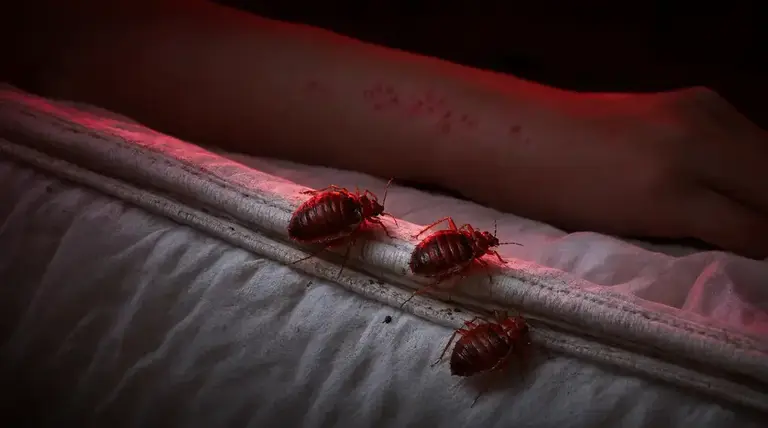
Bed bug bites are the skin reaction caused when bed bugs (Cimex lectularius) feed on your blood during the night — flat, reddish-brown insects roughly 4–5 mm long, about the size of an apple seed. They’re increasingly common in Australian homes, hotels, rentals and share houses. If you suspect bites, your first steps are to inspect mattress seams for live bugs, avoid moving belongings between rooms, and confirm the diagnosis before treating. This guide walks you through identification, first steps, treatment options and realistic costs, plus when to call in professional pest control.
- Bed bug bites usually appear as itchy red welts in a rough line or cluster — the “breakfast, lunch and dinner” pattern — on skin exposed while sleeping.
- Up to 30% of people show no visible reaction at all, so bites alone are a clue, not proof. Always confirm with physical evidence.
- Wash bed linen at 60°C and dry on high heat for at least 30 minutes to kill all life stages — and never drag the mattress into another room.
- A single female lays 200–500 eggs that hatch in 6–10 days in warm conditions, so early action is critical in the Australian summer.
- Professional treatment typically costs $300–$1,500+ depending on method and property size, with heat treatment at the higher end.
Why Bed Bug Bites Are a Growing Issue Across Australia
Bed bugs are thriving across Australia because our climate, housing styles and travel habits suit them perfectly. Warm temperatures accelerate their breeding cycle, while high-density living gives them endless opportunities to move between dwellings.
In Queensland and northern NSW, extended warm seasons mean eggs hatch faster and infestations escalate quickly. Further south, heated homes keep bed bugs active year-round, so there’s no true “off season”. Housing construction plays a role too: older Queenslanders with timber floors and wall cavities offer abundant harbourage, while modern apartments and brick veneer homes on slabs let bugs travel along shared walls, power points and pipe chases between units. Add heavy domestic and international travel — bed bugs hitchhike in luggage, not on people — and it’s easy to see why infestations are being reported from backpacker hostels in Cairns to family homes in Melbourne. If you travel often, our guide on How to Check a Hotel Room for Bed Bugs in 5 Minutes is worth reading before your next trip.
Warning Signs: Confirming Bed Bug Bites and Infestation
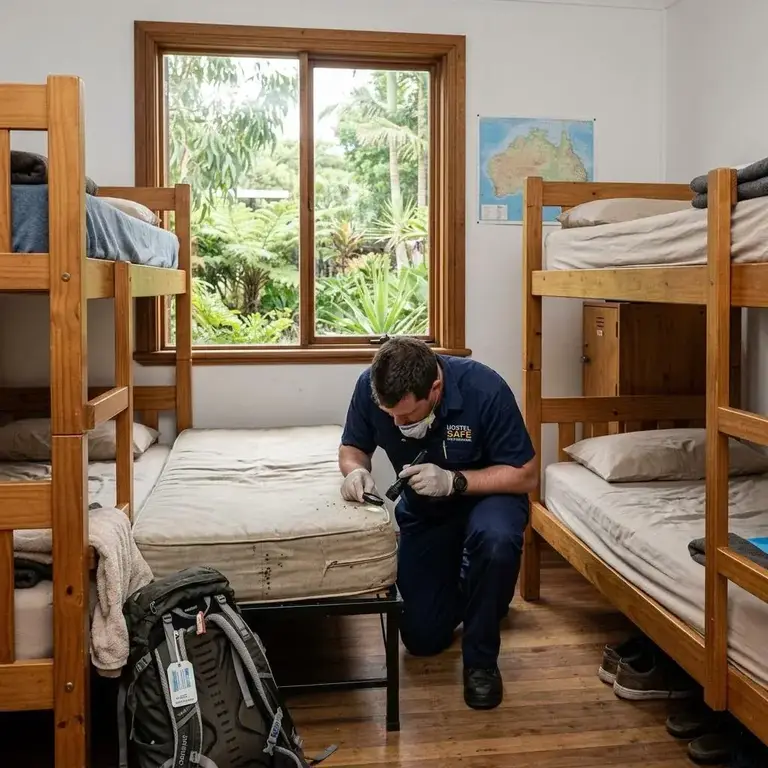
The fastest way to confirm bed bugs is to find physical evidence within about two metres of where you sleep — bites alone can’t prove an infestation. Use a torch and an old bank card to scrape along seams and crevices, and check for the following signs.
- Live bugs: Flat, apple-seed-sized reddish-brown insects hiding in mattress piping, tags, bed-frame joints, screw holes and behind the headboard.
- Dark spotting: Tiny black dots of digested blood on sheets, mattress edges and pillowcases — a strong indicator even when no bugs are visible.
- Eggs and shed skins: Pale 1 mm eggs and translucent cast skins tucked into crevices, drawer runners and where carpet meets skirting boards.
- Bite pattern: Itchy 2–5 mm welts in a line, zigzag or cluster on exposed skin, often itchier a day or two after biting.
- Sweet, musty odour: A faint coriander-like smell in heavier infestations, caused by the bugs’ scent glands.
- Spread beyond the bed: In advanced cases, bugs appear in power points, picture frames, curtain hems and bedside drawer runners.
To tell bites apart: flea bites are small red spots with a halo, usually on ankles and lower legs; mosquito bites are isolated raised lumps on any exposed skin, appearing randomly; bed bug bites follow that telltale line or cluster on skin uncovered during sleep.
DIY vs Professional Bed Bug Treatment
DIY steps like hot washing, vacuuming and mattress encasements are essential supporting measures, but they rarely eliminate an established infestation on their own — eggs hidden deep in crevices survive almost everything a household can throw at them. Licensed pest control technicians use commercial-grade heat or APVMA-approved chemical treatments that reach harbourages DIY methods can’t. Here’s how the two approaches compare.
| Factor | DIY approach | Professional treatment |
|---|---|---|
| Effectiveness on eggs | Poor — eggs in crevices usually survive | High — heat or residual chemicals target all life stages |
| Upfront cost | $50–$200 (laundry, encasements, sprays) | $300–$1,500+ depending on method and size |
| Time to resolution | Weeks to months, often with recurrence | Usually 1–3 visits over 2–6 weeks |
| Risk of spreading | High if furniture or bedding is moved incorrectly | Low — containment is part of the process |
| Warranty/follow-up | None | Often includes follow-up inspections and service warranty |
Understanding how bed bugs actually spread (and how they don’t) is critical before attempting anything yourself — the single biggest DIY mistake is dragging an infested mattress or clothing into other rooms, which seeds new harbourages through the home.
Bed Bug Treatment Costs in Australia (2025–26)
Across the Australian pest control industry, professional bed bug treatment generally sits somewhere between $300 and $1,500+, depending on the treatment method, property size and severity of the infestation. Chemical treatments are the typical market entry point; whole-room heat treatment commands a higher industry rate but often resolves the problem in a single visit.
| Service | Typical market rate (AUD) | What’s included/notes |
|---|---|---|
| Inspection & assessment | $0–$150 | Confirms species, maps harbourages, quotes treatment; often free with booking |
| Chemical treatment (single room) | $300–$600 | Residual insecticide applied by a licensed technician; usually 2–3 visits |
| Chemical treatment (whole home) | $600–$1,200 | Multi-room treatment with follow-up inspection |
| Heat treatment | $900–$1,800+ | Whole-room heating to kill all life stages, often one visit |
| Mattress encasements & interceptors | $50–$150 | Supporting measure; traps bugs and aids monitoring |
These figures are typical Australian market rates — what the industry generally charges — and they shift with the number of rooms, severity and access. For a detailed comparison of methods, see Bed Bug Treatment: Heat vs Chemical — Which Works? All chemical applications should be carried out by a licensed pest control technician using APVMA-registered products.
It’s worth knowing that Aussie Pest Strike typically comes in well under these general market rates, without cutting corners on licensed technicians or registered products. For an exact quote tailored to your property, give us a call on [aps_phone].
Seasonal Bed Bug Activity in Australia
Bed bugs remain active all year inside heated Australian homes, but breeding speeds up dramatically in warmer months, so reports peak from late spring through summer. Eggs hatch in 6–10 days in warm conditions versus several weeks in the cold, and holiday travel adds fresh introductions during the festive season.
Jan
Feb
Mar
Apr
May
Jun
Jul
Aug
Sep
Oct
Nov
Dec
Indicative activity levels across Australia. Bed bugs are active year-round indoors, but reproduction and reported infestations peak in the warm, high-travel months from November to February.
The worst infestations we treat aren’t the oldest — they’re the ones where someone moved the mattress to the spare room and slept on the couch for a fortnight. Bed bugs follow the host, so staying put and getting a proper diagnosis early saves you weeks of grief and a much bigger bill.
If you suspect bed bug bites, strip the bed and wash linen at 60°C, dry on high heat for at least 30 minutes, and inspect mattress seams and the bed frame with a torch. Keep sleeping in the same room, move nothing between rooms, and book a professional inspection to confirm the diagnosis before treating. If confirmed, our Bed Bug Treatment & Removal service will map the harbourages and recommend the most effective method for your home.
Frequently Asked Questions
What do bed bug bites look like?
Bed bug bites usually appear as small, raised, itchy red welts around 2–5 mm across, arranged in a rough line, zigzag or cluster — often called the 'breakfast, lunch and dinner' pattern. They typically show up on skin exposed while sleeping, such as arms, shoulders, neck and legs, and are often itchier a day or two after the bite.
How can I tell bed bug bites apart from flea or mosquito bites?
Flea bites are small red spots with a halo, usually on the ankles and lower legs. Mosquito bites are isolated raised lumps that appear randomly on any exposed skin. Bed bug bites follow a telltale line or cluster on skin left uncovered during sleep. Because they mimic each other closely, confirm with physical evidence before treating.
Can you have bed bugs without visible bites?
Yes. Up to 30% of people show no visible skin reaction to bed bug bites at all, so bites alone are only a clue, not proof of an infestation. The fastest way to confirm is to find physical evidence within about two metres of where you sleep, such as live bugs, dark spotting, eggs or shed skins.
What physical signs confirm a bed bug infestation?
Look for live flat, reddish-brown bugs about 4–5 mm long in mattress piping, tags and bed-frame joints; tiny black dots of digested blood on sheets and mattress edges; pale 1 mm eggs and translucent shed skins in crevices; a faint sweet, coriander-like odour in heavier infestations; and, in advanced cases, bugs in power points, picture frames and drawer runners.
What should I do first if I suspect bed bug bites?
Strip the bed and wash all linen at 60°C, then dry on high heat for at least 30 minutes to kill every life stage. Inspect mattress seams and the bed frame with a torch and an old bank card. Keep sleeping in the same room, move nothing between rooms, and book a professional inspection to confirm the diagnosis before spending money on treatment.
Why shouldn't I move my mattress or belongings to another room?
Moving an infested mattress or clothing into other rooms is the single biggest DIY mistake because it seeds new harbourages throughout the home. Bed bugs follow their host, so sleeping elsewhere simply draws them along. Staying put and getting a proper diagnosis early prevents a longer infestation and a much bigger treatment bill later.
Can I get rid of bed bugs myself?
DIY steps like hot washing at 60°C, vacuuming and mattress encasements are essential supporting measures, but they rarely eliminate an established infestation. Eggs hidden deep in crevices survive almost everything a household can throw at them. Licensed technicians use commercial-grade heat or APVMA-approved chemical treatments that reach harbourages DIY methods cannot.
When are bed bugs most active in Australia?
Bed bugs stay active year-round inside heated Australian homes, but breeding accelerates dramatically in warmer months, with reports peaking from late spring through summer, roughly November to February. Eggs hatch in 6–10 days in warm conditions versus several weeks in the cold, and holiday travel adds fresh introductions during the festive season.
What information should I give Aussie Pest Strike when booking help for suspected bed bug bites?
When contacting Aussie Pest Strike about suspected bed bug bites, describe where the bites appear on your body and when you first noticed them, mention any recent travel or shared accommodation, and note any physical evidence you have found, such as dark spotting, eggs, shed skins or live bugs. Mention whether linen has been hot washed and whether anything has been moved between rooms, as this helps map likely harbourages.
What is a practical next step after finding signs of bed bugs near my bed?
Keep sleeping in the same room and move nothing between rooms, then book a professional inspection with Aussie Pest Strike to confirm the diagnosis before treating. In the meantime, wash all bed linen at 60°C and dry on high heat for at least 30 minutes, and inspect mattress seams and the bed frame with a torch so you can point out exactly where you found evidence.
Sources & further reading
Found Something
Dangerous?
Don’t touch it. Don’t spray it. Keep kids and pets clear, take a photo from a safe distance, and call us — or book a free inspection and we’ll come to you.
02 7235 0050