Mice in theKitchen: AFast Action Guide
Mice kitchen — Mice in kitchen — if you have mice in the kitchen, act within days: secure all food in sealed containers, wipe down surfaces to remove...
Finding mice in kitchen cupboards, drawers or behind the toaster is one of the most common calls we take across Australia — and one of the most urgent. A single house mouse can contaminate food surfaces overnight and, left alone for a few weeks, become an established breeding colony behind your kickboards.
Put simply, mice in kitchen areas means Mus musculus (the house mouse) has found the three things it needs in one room: food, water and warmth. This guide gives you a fast, step-by-step action plan you can start today, the warning signs to confirm what you’re dealing with, realistic Australian pricing for professional help, and the exact point where DIY stops working and a licensed technician earns their fee.
- Act within days: secure food in sealed containers, set snap traps along walls, and seal gaps as small as 6–7 mm.
- Mice rarely travel more than 3–5 metres from their nest — trap placement along skirting boards matters more than trap numbers.
- A female house mouse can produce up to 10 litters a year in warm Australian kitchens, so a lingering problem escalates fast.
- Never dry-sweep droppings; disinfect first to avoid spreading bacteria such as salmonella.
- Recurring activity after trapping usually means a hidden nest or unsealed entry point — that’s a professional job.
Why Mice in Kitchen Spaces Are Such a Big Problem in Australia
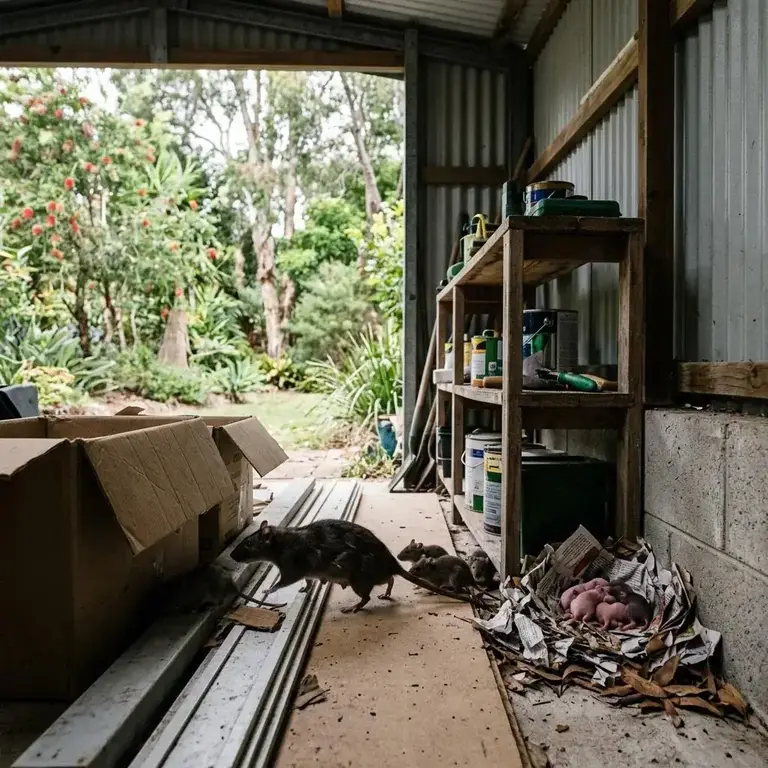
Mice in kitchen environments thrive year-round in Australia because our climate and housing stock suit them perfectly. Unlike colder countries where winter knocks populations back, heated Australian kitchens let house mice breed continuously through all twelve months.
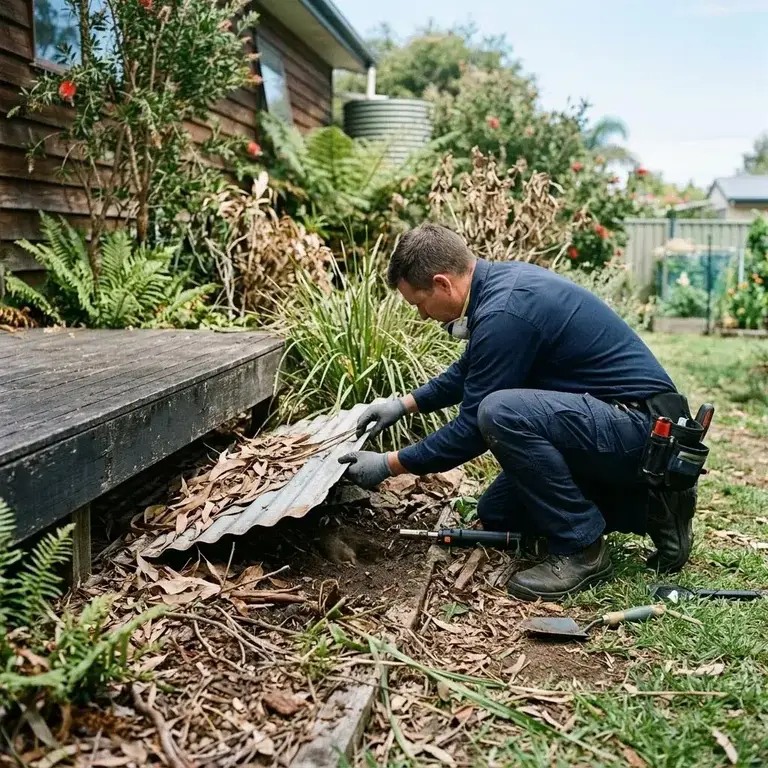
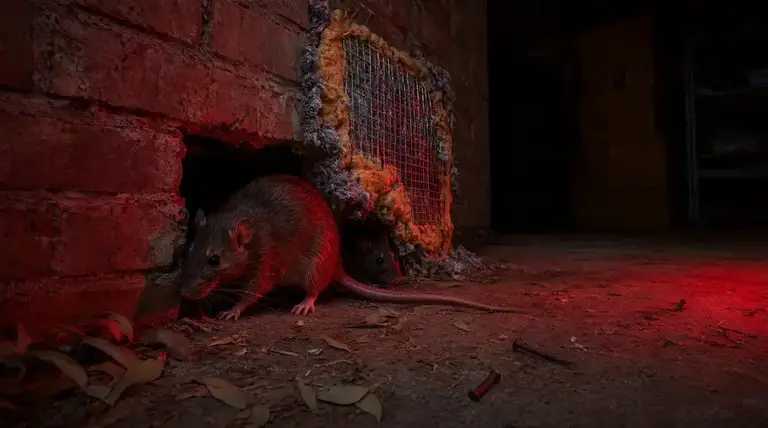
Construction style plays a big part. Older Queenslanders and weatherboard homes on stumps have subfloor voids riddled with entry gaps around plumbing and bearers. Brick veneer homes — the dominant style in most suburbs — have weep holes and wall cavities that give mice a sheltered highway straight into the pantry. Even modern slab-on-ground homes aren’t immune: mice follow pipe penetrations under the sink and gaps beside the dishwasher, both of which are rarely sealed properly at build time.
The stakes are higher than most people realise. Mice urinate constantly as they travel, and droppings on benches, in cutlery drawers and inside food packaging create a genuine hygiene risk. In our experience, homeowners who spot early signs of rats or mice in your home and act within the first week avoid the far larger bill that comes with an established colony.
Warning Signs: How to Confirm You Have Mice (Not Rats)
The fastest way to confirm mice is to find their droppings: house mouse droppings are 3–6 mm long, dark, and shaped like rice grains, usually concentrated along skirting boards and inside pantry corners. Correct identification matters because treatment for mice differs from treatment for rats.
- Droppings — small (3–6 mm), dark, rice-grain shaped, clustered near food sources. Rat droppings are noticeably larger at around 12 mm.
- Musky ammonia smell — a faint but persistent odour, strongest inside cupboards and the pantry.
- Gnawed packaging — chewed corners on cereal boxes, flour bags and pet food sacks.
- Night-time scratching — light scurrying behind kickboards, inside wall cavities or in the ceiling after dark.
- Grease marks — dark smudges along skirting where bodies repeatedly brush past.
- Nesting material — shredded paper, insulation or fabric stashed behind appliances.
If the droppings you’re finding are large and the gnaw marks are heavy, you may be dealing with rats instead. Our guide on how professionals actually eliminate rats explains the differences, and if the activity is overhead rather than at floor level, it’s worth reading about roof rats in Australia, which behave very differently to house mice.
Your Fast Action Plan: DIY vs Professional Treatment
DIY trapping works well for one or two mice caught quickly, but recurring activity, droppings in multiple rooms or a food business setting calls for professional pest control. Here’s how the two approaches compare.
If you’re going the DIY route, the sequence matters: first, strip the food supply by transferring flour, rice, cereal and pet food into hard plastic or glass containers, emptying the toaster tray, cleaning under the fridge and oven, taking bins out nightly and fixing dripping taps. Second, trap strategically — place snap traps flush against skirting with the trigger facing the wall, baited with a smear of peanut butter or chocolate (not cheese), and set several close together since mice are curious rather than trap-shy. Third, seal entry points by stuffing gaps with steel wool before sealing, because mice chew straight through silicone or expanding foam alone.
| Situation | DIY or professional? | Why |
|---|---|---|
| One or two mice, caught within days | DIY usually sufficient | Snap traps plus exclusion resolves isolated intrusions |
| Droppings in several rooms | Professional | Indicates an established colony with multiple nests |
| Activity returns after trapping | Professional | Hidden nest or unsealed entry point needs locating |
| Food business or rental bond | Professional | Compliance records and documented treatment required |
| Older home with subfloor or wall cavities | Professional | Entry points are numerous and hard to find without experience |
A professional rodent control & removal program goes well beyond traps: a licensed technician maps activity, identifies entry points, places secured bait stations where appropriate, and schedules follow-up visits. Any rodenticide used should be applied by a licensed pest control technician in accordance with APVMA label directions — particularly in homes with children or pets.
What Does Mice Treatment Cost in Australia? (2025–26 Pricing)
Across the Australian pest control industry, a professional mouse treatment typically runs between $150 and $450, with exclusion proofing generally adding $200–$800 depending on the number of entry points. These are broad market rates — what providers around the country commonly charge — and the final figure varies with property size, construction type and infestation severity.
| Service | Typical market rate (AUD) | What’s included / notes |
|---|---|---|
| Inspection and quote | $0–$99 | Many Australian providers inspect free; others charge a call-out fee |
| Standard mouse treatment (unit/small home) | $150–$280 | Trapping/baiting program, activity map, basic advice |
| Large home or severe infestation | $280–$450 | Multiple visits, more stations, roof void and subfloor coverage |
| Rodent proofing / exclusion work | $200–$800 | Sealing entry points with mesh, steel wool and flashing |
| Commercial kitchen program | $80–$180 per visit | Ongoing monitoring, compliance documentation for audits |
Proofing is where the long-term value sits. A proper rodent proofing & exclusion job means the next mouse that wanders in off the street finds no way inside — which is far cheaper than treating an infestation every winter.
One thing worth knowing: those figures are the going industry rates, not our rates. Aussie Pest Strike typically comes in well under these market prices while still delivering the full treatment and proofing program. For an exact quote on your property, give us a call on [aps_phone].
When Are Mice Most Active in Australian Homes?
Mouse activity inside Australian kitchens peaks from April through August, when cooler outdoor temperatures drive mice inside seeking warmth and food. That said, indoor breeding continues at a low level all year, so activity never truly stops.
Jan
Feb
Mar
Apr
May
Jun
Jul
Aug
Sep
Oct
Nov
Dec
Typical indoor mouse activity pattern across Australia: reports climb from autumn as outdoor temperatures drop, peak through winter, then ease in summer — though established indoor colonies breed year-round.
The smart move is to proof your home in March or April, before the winter influx. Once mice have nested inside wall cavities for a season, removal takes longer and costs more.
Cleaning Up Safely After Mice
Once the mice are gone, cleaning matters as much as trapping — never dry-sweep or vacuum droppings, because the dust can carry bacteria such as salmonella. The safe method is disinfect first, wipe second, bin everything sealed.
Put on disposable gloves, dampen the affected area with household disinfectant or a bleach-and-water solution, and leave it for five minutes before wiping. Bag the waste in a sealed bag. Wash any utensils, chopping boards or crockery the mice may have crossed, and disinfect pantry shelves before restocking. Afterwards, keep the habits that worked: sealed containers, nightly bench wipe-downs and fast attention to any new gnaw marks. A five-minute nightly kitchen reset removes the crumbs and water that lure the next mouse in.
Nine times out of ten, the homeowner has already caught a mouse or two — but they’re still hearing scratching because the entry point under the sink or behind the dishwasher was never sealed. Trapping removes the mice you have; exclusion stops the next lot. Do both, or you’ll be doing it again next winter.
Start the DIY steps today — sealed food, wall-line snap traps, steel wool in gaps. If you still see droppings or hear scratching after two weeks, book a professional inspection. A technician will locate the nest, identify every entry point and set up a treatment plus proofing plan that ends the cycle rather than pausing it.
Frequently Asked Questions
How do I confirm I have mice and not rats in my kitchen?
Check the droppings. House mouse droppings are 3–6 mm long, dark, and shaped like rice grains, usually clustered along skirting boards and inside pantry corners. Rat droppings are noticeably larger, around 12 mm, with heavier gnaw marks. Other mouse signs include a musky ammonia smell in cupboards, chewed food packaging, light night-time scratching behind kickboards or in walls, dark grease smudges along skirting, and shredded nesting material behind appliances.
What should I do first if I find mice in my kitchen?
Act within days. Start by removing the food supply: transfer flour, rice, cereal and pet food into hard plastic or glass containers, empty the toaster tray, clean under the fridge and oven, take bins out nightly and fix dripping taps. Then set snap traps flush against skirting boards with the trigger facing the wall, baited with peanut butter or chocolate rather than cheese. Finally, seal entry gaps as small as 6–7 mm using steel wool before sealing.
Where should I place traps for mice in the kitchen?
Place snap traps along skirting boards, because house mice rarely travel more than 3–5 metres from their nest and tend to run along walls. Set the traps flush against the skirting with the trigger facing the wall, and position several close together — mice are curious rather than trap-shy, so multiple nearby traps catch more than a few scattered ones. Focus on areas where you have seen droppings, grease marks or gnawed packaging.
How should I seal entry points to keep mice out of my kitchen?
Mice can squeeze through gaps as small as 6–7 mm, so check around pipe penetrations under the sink, gaps beside the dishwasher, weep holes, subfloor voids and wall cavities. Stuff each gap with steel wool before sealing it, because mice can chew straight through silicone or expanding foam on its own. In older Queenslanders and weatherboard homes, pay particular attention to plumbing and bearer gaps; in brick veneer homes, check weep holes and cavity access points.
When is DIY mouse control enough, and when should I call a professional?
DIY trapping is usually sufficient for one or two mice caught within days. Call a professional if you find droppings in several rooms, activity returns after trapping (which suggests a hidden nest or unsealed entry point), you run a food business or rental property needing documented treatment, or your home has a subfloor or wall cavities with numerous hard-to-find entry points. A licensed technician maps activity, locates entry points and places secured bait stations appropriately.
When are mice most active in Australian kitchens?
Indoor mouse activity peaks from April through August, when cooler outdoor temperatures drive mice inside seeking warmth and food. However, heated Australian kitchens allow house mice to breed continuously all year, so indoor activity never truly stops. The smart move is to proof your home in March or April before the winter influx — once mice have nested inside wall cavities for a season, removal takes longer and costs more.
How fast can a mouse problem escalate in an Australian kitchen?
Very quickly. A female house mouse can produce up to ten litters a year in warm Australian kitchens, and mice breed continuously through all twelve months here because heated homes suit them year-round. A single mouse that contaminates food surfaces overnight can become an established breeding colony behind kickboards within weeks. Homeowners who act within the first week of spotting signs generally avoid the larger cost of treating an established colony.
How do I clean up safely after getting rid of kitchen mice?
Never dry-sweep or vacuum droppings, as the dust can carry bacteria such as salmonella. Instead, put on disposable gloves, dampen the area with household disinfectant or a bleach-and-water solution, leave it for five minutes, then wipe. Bag waste in a sealed bag. Wash any utensils, chopping boards or crockery mice may have crossed, and disinfect pantry shelves before restocking. Keep up sealed containers, nightly bench wipe-downs and quick attention to new gnaw marks.
When is it worth asking Aussie Pest Strike for an on-site assessment for kitchen mice?
An on-site assessment makes sense when droppings appear in several rooms, scratching continues after you have trapped mice, or your home has a subfloor, wall cavities or numerous potential entry points that are hard to inspect yourself. Aussie Pest Strike can map activity, identify how mice are getting in and recommend whether trapping alone will do or a full treatment and proofing program is needed, tailored to your property's construction.
What practical next step should I take after trapping mice in my kitchen?
Once trapping has removed the mice you have, focus on exclusion so the next lot cannot get in. Seal gaps under the sink and behind the dishwasher with steel wool before sealing, store food in hard containers and maintain a five-minute nightly kitchen reset. If scratching persists or activity returns, contact Aussie Pest Strike to locate the hidden nest or unsealed entry point that trapping alone cannot resolve, and discuss proofing options for your home.
Sources & further reading
Found Something
Dangerous?
Don’t touch it. Don’t spray it. Keep kids and pets clear, take a photo from a safe distance, and call us — or book a free inspection and we’ll come to you.
02 7235 0050