Why TrapsAlone Don’t SolveRat Problems
Why traps alone — rat traps alone rarely solve a rat problem because they remove individuals while leaving the colony's breeding capacity, food sources and...
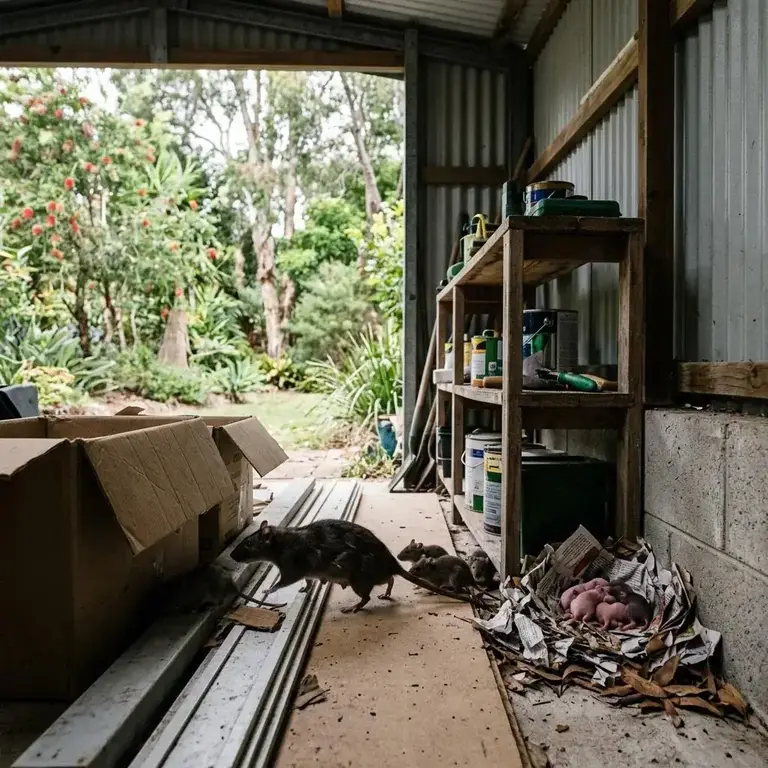
Rat traps are the first thing most Australians reach for when they hear scratching in the ceiling, and on the surface it makes sense: catch the rat, problem solved. The reality is that rat traps alone rarely solve a rat problem because they remove individuals while leaving the colony’s breeding capacity, food sources and entry points completely untouched. Traps treat the symptom; a lasting fix treats the whole environment that lets rats thrive.
It is one of the most common frustrations we hear from homeowners across Australia: someone catches two or three rats, feels relieved, then finds fresh droppings a fortnight later. Understanding why the problem persists explains why professional pest control layers several methods rather than relying on a single snap trap from the hardware store.
- Rat traps remove individual rats but do nothing about breeding, entry points or food sources.
- A pair of black rats can produce 5–6 litters a year — up to 40 pups — outpacing any trap line.
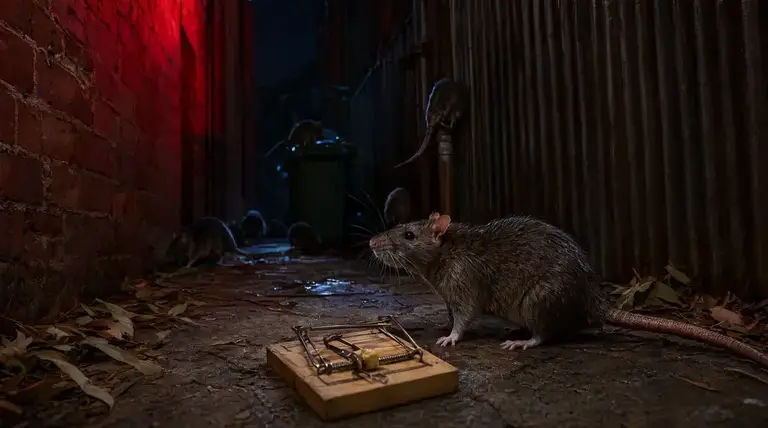
- Rats are neophobic: they learn to avoid triggered traps and route around them.
- Lasting control combines inspection, exclusion, baiting, sanitation and follow-up.
- Professional rodent control typically costs $250–$600 for an initial treatment, often cheaper than months of failed DIY.
Why Rats Are Such a Persistent Problem in Australian Homes
Rats thrive in Australia because our climate and housing styles give them year-round warmth, food and shelter. From the roof voids of Sydney brick-veneer homes to the open subfloors of Queenslanders, our buildings offer rodents endless harbourage within easy reach of kitchens, compost bins and fruit trees.
The main culprit in roof spaces is the black rat (Rattus rattus), an agile climber that reaches sexual maturity in about three months. It loves the insulated, undisturbed ceiling cavities common in Australian homes, and it travels along power lines and fence tops to move between properties. The brown rat (Rattus norvegicus) is more common around subfloors, sheds and drainage, while the introduced house mouse exploits gaps as small as 6–7 mm. For a deeper look at the climbing species, see our guide to roof rats in Australia: behaviour, risks and control.
Warm northern climates allow breeding nearly all year, and even in southern states a heated roof void keeps colonies productive through winter. That combination — fast breeding and abundant shelter — is exactly why a trap-only approach falls behind.
Warning Signs Your Rat Traps Aren’t Winning
If you are catching rats but the activity never stops, the colony is replacing its losses faster than you can remove them. Watch for these signs that the underlying problem is still alive and well:
- Fresh droppings — dark, spindle-shaped pellets appearing within days of a catch, especially along walls, in the pantry or near the hot water system.
- Night-time scratching and scurrying — movement in the roof void or wall cavities between dusk and dawn, even after several rats have been trapped.
- Gnaw marks — fresh pale chew marks on timber, plastic pipes, food packaging or electrical cabling.
- Greasy rub marks — dark smears along skirting boards, pipes and rafters where rats travel the same runs nightly.
- Nesting material — shredded insulation, paper or fabric dragged into quiet corners of the roof or subfloor.
- Untouched or avoided traps — baits ignored for days, or traps found triggered but empty, which points to neophobic, trap-shy survivors.
If any of these sound familiar, work through the full checklist of signs of rats or mice in your home to gauge how established the infestation really is.
Why Rat Traps Alone Fail: Myth vs Fact
Rat traps fail as a standalone solution because they ignore the three drivers of every infestation: breeding speed, entry points and available food. Here is how common beliefs stack up against reality.
| Common belief | Reality |
|---|---|
| “A few traps will clear the rats.” | A pair of black rats can produce 5–6 litters a year, up to 40 pups — traps can’t keep pace. |
| “If I catch some, the rest will follow.” | Rats are neophobic and avoid triggered traps, learning to route around them. |
| “Traps fix the cause.” | They ignore entry points, harbourage and the food that drew rats in the first place. |
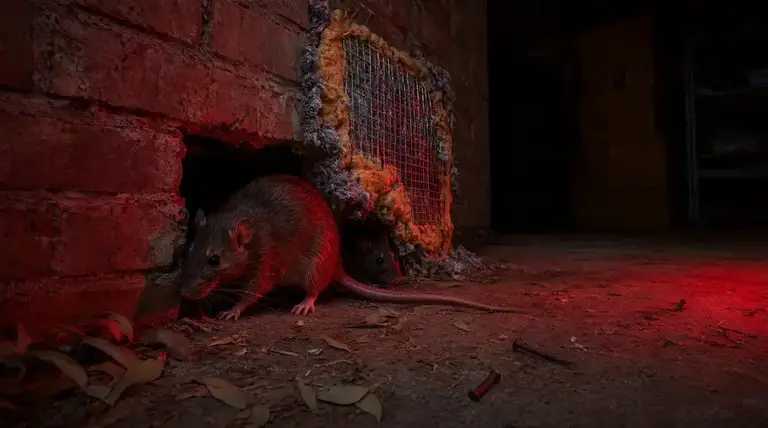
The numbers do the damage. Even if you trap five rats, a hidden pregnant female can rebuild the population within weeks — trapping removes today’s rats, not tomorrow’s litter. Meanwhile, rats squeeze through gaps as small as 20 mm around pipes, weep holes, roof lines and subfloor vents, so new rodents simply replace the ones you catch. Add pet food left out overnight, unsecured compost, fallen fruit and cluttered sheds, and the property keeps sustaining the colony no matter how many traps you set.
There is also a hidden cost to trapping alone. A dead rat inside a wall cavity or roof void can be impossible to retrieve, leaving a strong odour for one to three weeks and attracting flies and carpet beetles. Poorly placed traps can injure pets or curious children, and the surviving colony keeps gnawing wiring — a genuine fire risk in older timber homes.
DIY Rat Traps vs Professional Rodent Control
DIY rat traps can knock down a small, newly arrived incursion, but professional treatment addresses the whole system — entry points, breeding sites and attractants — which is what actually ends an infestation.
| Factor | DIY trapping | Professional rodent control |
|---|---|---|
| Upfront cost | $15–$60 for traps and bait | $250–$600 initial treatment |
| What it targets | Individual rats only | Colony, entry points and attractants |
| Trap-shy rats | Often avoided entirely | Tamper-resistant bait stations reach neophobic rats |
| Exclusion/proofing | Rarely included | Gaps sealed with rodent-proof steel mesh |
| Follow-up | None | Monitoring confirms activity has stopped |
| Risk to pets/children | Higher if traps or baits are poorly placed | Stations locked and positioned by licensed technicians |
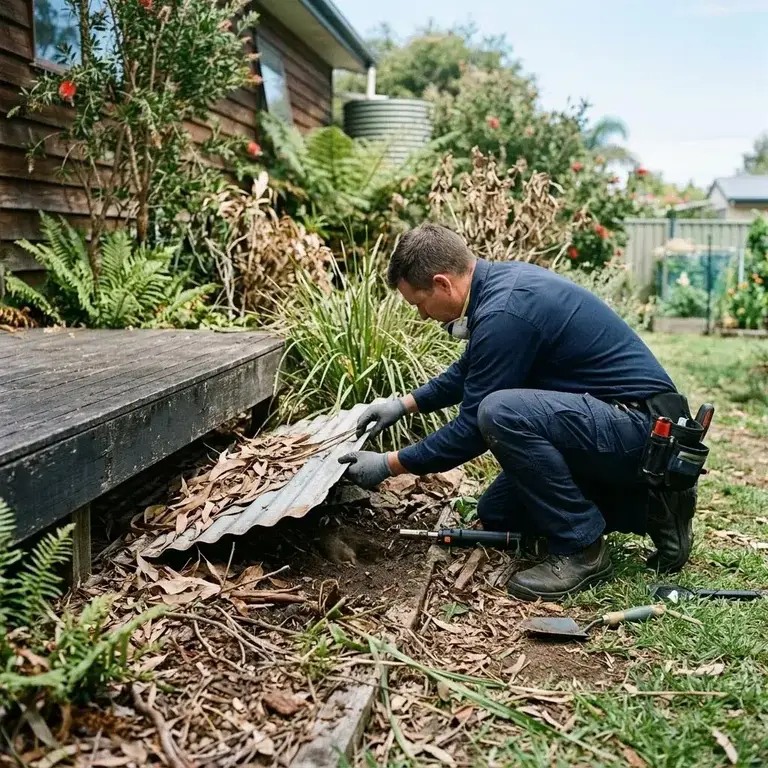
A complete professional program follows a layered model: a thorough inspection mapping runs, nests and entry points (often in the roof void); exclusion work sealing gaps with rodent-proof materials; tamper-resistant baiting and monitoring stations placed along active runs; sanitation advice to remove food and water; and follow-up visits to confirm activity has genuinely stopped. Our Rodent Control & Removal service is built on exactly this approach, and the full method is explained in Rat Control: How Professionals Actually Eliminate Rats.
What Does Proper Rat Control Cost in Australia?
Across the Australian pest control industry, an initial rat treatment generally runs between $250 and $600 in 2025–26, with proofing work quoted separately depending on the home. Those are the typical market rates you’ll encounter — and when you weigh them against months of hardware-store traps, damaged wiring and contaminated food, the maths usually favours getting it done properly.
| Service | Typical market rate (AUD) | What’s included/notes |
|---|---|---|
| Inspection (often free with treatment) | $0–$150 | Roof void, subfloor and perimeter assessment; entry points mapped |
| Initial rodent treatment | $250–$600 | Tamper-resistant bait stations, trapping program, placement along runs |
| Rodent proofing & exclusion | $300–$1,200+ | Sealing gaps with steel mesh; price varies with access and home style |
| Follow-up/monitoring visits | $80–$180 per visit | Station checks, rebaiting, confirming activity has ceased |
| Dead rodent retrieval/deodorising | $150–$350 | Where accessible; odour treatment when carcass can’t be reached |
These figures are industry-wide market rates, not any one company’s price list. Queenslanders and homes with open subfloors tend to sit at the higher end for exclusion work simply because there are more access points to seal. Any rodenticide use should be handled by a licensed technician in accordance with APVMA-registered labels, with stations placed where children and pets cannot reach them.
Here’s the good news: Aussie Pest Strike typically comes in well under these market rates. For an exact quote tailored to your home, call [aps_phone] and we’ll sort it out.
Seasonal Rat Activity in Australia
Rat activity peaks in the cooler months, when outdoor food dries up and rodents push into roof voids and wall cavities for warmth — but in much of Australia they remain active all year. The chart below shows typical activity levels reported by technicians across the seasons.
Jan
Feb
Mar
Apr
May
Jun
Jul
Aug
Sep
Oct
Nov
Dec
Typical rat activity pattern in Australian homes: infestations spike from late autumn through winter as rats move indoors seeking warmth, then ease over summer — though warm-climate regions see steady activity year-round.
Autumn is the smart time to act. Sealing entry points and setting up a monitoring program before the winter influx means you are defending the home, not reacting to an established colony.
Nine times out of ten, when a customer tells me the traps “stopped working”, the rats have simply learned to avoid them — and three more have come in through a gap under the garage door. Traps are one tool, not the plan. Seal the building, remove the food, then trap and bait what’s left.
Use rat traps as part of a program, never as the whole program. Book a professional inspection, seal every gap with proper Rodent Proofing & Exclusion, remove food and harbourage, and let tamper-resistant stations handle the remaining colony. That sequence is what actually ends a rat problem.
Rat Traps: Frequently Asked Questions
Why do my rat traps keep catching rats but never clear them?
Trapping only removes individuals while the colony keeps breeding and new rats enter through unsealed gaps. A pair of black rats can produce dozens of pups a year, so losses are replaced faster than traps remove them. You need exclusion, sanitation and monitoring alongside trapping to actually clear the infestation.
Are snap traps or bait stations more effective for rats?
Neither works well in isolation. Snap traps kill quickly but trap-shy rats avoid them; tamper-resistant bait stations reach neophobic rats but should be placed by licensed technicians. Both must be combined with sealing entry points and removing food sources to achieve lasting control of the colony.
How do I know if I still have rats after trapping?
Look for fresh droppings, new gnaw marks, greasy rub trails along walls and night-time scratching in the roof or walls. If any of these appear within a week or two of your last catch, the colony is still active. A professional inspection with monitoring stations confirms whether activity has genuinely stopped.
If traps aren’t ending your rat problem, it’s time to fix the cause rather than chase the symptoms. Aussie Pest Strike offers a free, no-obligation inspection anywhere we operate — our licensed technicians will map the entry points, identify what’s drawing rats in, and build a pest control plan that clears the colony and keeps it out. Call Aussie Pest Strike on [aps_phone] today to book your free inspection and take the first step towards a rat-free home.
Sources & further reading
Found Something
Dangerous?
Don’t touch it. Don’t spray it. Keep kids and pets clear, take a photo from a safe distance, and call us — or book a free inspection and we’ll come to you.
02 7235 0050