Bed Bug DetectionDogs: HowAccurate Are They?
Bed bug detection dogs are highly accurate, often 95-98% in trials. Learn how they work, when alerts need confirming, and when a dog is worth it.
Bed bug dogs are among the fastest, most accurate inspection tools in modern pest control — when they’re properly trained and handled. Well-run studies report detection rates around 95–98% for live bugs and viable eggs, and a good dog can screen a room in minutes, pinpointing hidden pockets a visual check would miss.
So, how accurate are they really, and when is a canine inspection worth paying for? In short: a bed bug detection dog is a specially trained dog that locates live bed bugs and viable eggs by scent, alerting its handler to active infestations that visual inspections often cannot find. This guide breaks down how the dogs work, what affects their accuracy, what an inspection costs in Australia, and how to decide whether one makes sense for your home or business.
- Properly trained and certified detection dogs achieve roughly 95–98% accuracy on live bed bugs and viable eggs.
- Dogs detect active infestations by scent — not old cast skins or dead bugs — so they can tell a current problem from a historic one.
- Accuracy depends on training standards and handler skill; every alert should be confirmed visually before treatment.
- Canine inspections typically cost $250–$550 per visit in Australia (2025–26), with multi-room commercial rates lower per room.
- Dogs are most valuable for low-level infestations, large multi-room properties, and confirming a treatment has worked.
Why Bed Bug Dogs Matter for Detection Across Australia
Bed bugs are a year-round problem in Australia because our heated and air-conditioned homes give them the stable warmth they need to breed in every season. Unlike many pests, Cimex lectularius doesn’t slow down much in winter indoors, which means infestations can build quietly for months before anyone notices.
Australian housing adds its own complications. Older Queenslanders on stumps, brick veneer homes with wall cavities, and apartments with shared walls all give bed bugs endless harbourage points that a torch and mirror simply can’t reach. Bed bugs also travel easily between suburbs and states — understanding how bed bugs actually spread (and how they don’t) explains why even spotless homes get hit after a holiday, a houseguest, or a second-hand furniture purchase. Early, accurate detection is what keeps a two-bug problem from becoming a whole-house treatment, and that’s precisely where a detection dog earns its keep.
Warning Signs You May Need a Canine Inspection
The most common triggers for booking a detection dog are unexplained bites, travel history, or a previous infestation you’re not confident is gone. If any of the following sound familiar, a canine inspection is a sensible next step — and our guide to bed bug bites: identification and your first steps can help you confirm what you’re seeing.
- Unexplained bites in lines or clusters — itchy welts appearing overnight, often on arms, shoulders and legs.
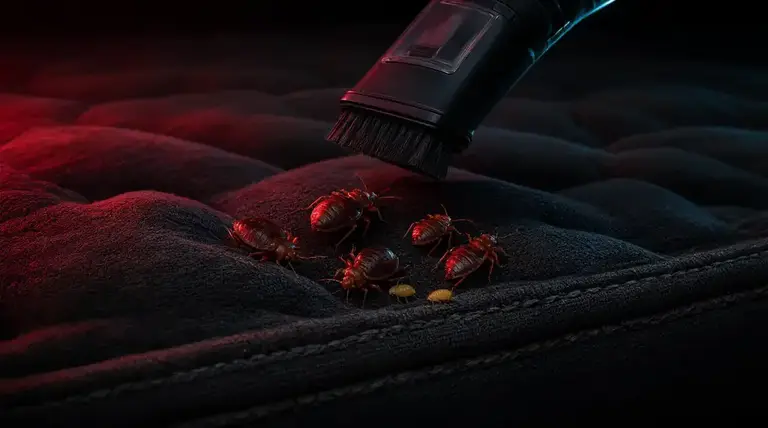
- Small blood spots or dark faecal marks — rust-coloured stains on sheets, mattress seams or bed heads.
- A recent stay in accommodation — hotels, hostels, cruise cabins or short-stay rentals within the past few weeks.
- Second-hand furniture or luggage — especially mattresses, bed frames and couches brought into the home.
- A previous treatment you’re unsure about — lingering bites or anxiety weeks after a heat or chemical treatment.
- A musty, sweet odour — in heavier infestations, a distinctive coriander-like smell near sleeping areas.
- Nothing visible, but suspicion remains — low-level infestations of just a few bugs often leave almost no visual evidence.
How Detection Dogs Work
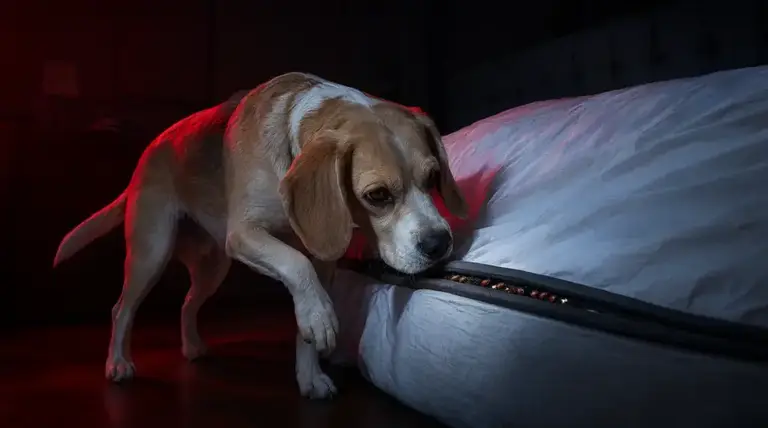
Trained dogs detect the specific scent of live Cimex lectularius and their eggs — not old cast skins or dead bugs. That means a dog can distinguish an active infestation from a historic one, which is valuable because visual inspections often cannot.
Handlers work the dog systematically around beds, skirting, furniture and luggage, and the dog signals a find by sitting or pointing. Because a dog uses scent rather than sight, it can locate bugs sealed inside wall cavities, mattress cores and cracks that no technician could ever see. Dogs consistently outperform visual checks in very low-level infestations, in multi-room settings like hotels, aged care and student housing, when confirming success weeks after a treatment, and in cluttered rooms where visual access is limited.
DIY Checks vs a Professional Canine Inspection
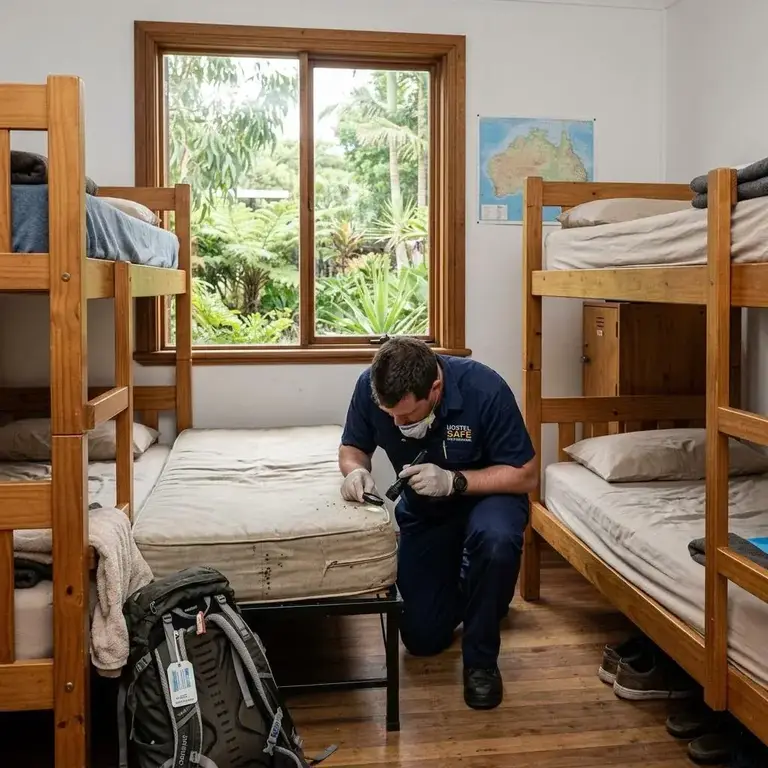
You can do a reasonable visual check yourself, but DIY inspection has a hard ceiling: you can only find what you can see. A licensed pest control professional with a certified detection dog covers scent-hidden harbourages and gives you a defensible answer, which matters before you commit to a treatment that may cost over a thousand dollars.
| Factor | DIY visual check | Professional canine inspection |
|---|---|---|
| Detection method | Eyesight only — torch, mirror, mattress seams | Scent detection of live bugs and viable eggs, plus visual confirmation |
| Hidden harbourages | Wall cavities, mattress cores and cracks are effectively invisible | Dog alerts to scent through sealed and concealed areas |
| Low-level infestations | Frequently missed — a few bugs leave almost no evidence | Strongest use case; dogs excel at small, early infestations |
| Active vs historic activity | Old skins and dead bugs can be misleading | Dog responds only to live scent, distinguishing current from past activity |
| Speed | 30–60 minutes per room, often inconclusive | Around 2–3 minutes per room |
| Cost | Free, but inconclusive results risk wasted treatment spend | $250–$550 typical per visit |
The Accuracy Question: What Affects Results
With bed bug dogs, accuracy depends heavily on training standards and handler skill, not the dog alone. Controlled trials show excellent results, but real-world figures drop when dogs are poorly maintained, rushed, or worked past their focus window.
Several factors move the needle. A certified, regularly re-trained dog delivers high reliability with few misses. Handler cueing or fatigue increases false alerts. Strong distracting odours — heavy cleaning chemicals, cooking, smoke — can reduce scent detection. And confirmation of every alert by visual check remains the best-practice standard, cutting false positives. Best practice is that a dog alert is verified with a visual inspection before treatment begins; this two-step approach keeps confidence high and avoids treating a room unnecessarily, which matters for cost and for minimising chemical use around families.
What a Canine Inspection Involves and What It Costs
A typical inspection sees the handler declutter and ventilate the room briefly, then walk the dog methodically around beds, furniture, skirting and luggage — a single room often takes only two to three minutes. Dogs are worked in short sessions to keep scent focus sharp, handlers rotate rooms so the animal never fatigues, and reputable operators run regular blind trials (where the handler doesn’t know where target scent is hidden) to keep detection honest and free of unconscious cueing.
Across the Australian market for 2025–26, industry pricing for canine bed bug detection generally falls into these ranges:
| Service | Typical market rate (AUD) | What’s included/notes |
|---|---|---|
| Canine inspection — unit or small home (1–2 bedrooms) | $250–$400 | Full scent sweep of sleeping and living areas, alert locations mapped, visual confirmation of alerts |
| Canine inspection — standard house (3–4 bedrooms) | $350–$550 | All rooms including wardrobes and furniture; written findings for treatment planning |
| Commercial per-room rate (hotels, aged care, student housing) | $15–$40 per room | Volume-based; minimum call-out typically applies; ideal for clearing dozens of rooms quickly |
| Post-treatment verification sweep | $200–$350 | Confirms a heat or chemical treatment has fully worked, usually 2–4 weeks after treatment |
These are the typical market rates Australian providers generally charge — and a detection fee is often modest compared to the cost of treating rooms that don’t need it, or missing a room that does. If an infestation is confirmed, the next decision is treatment method, and our breakdown of bed bug treatment: heat vs chemical — which works? covers that in detail. Any chemical treatment should be carried out by a licensed technician using APVMA-registered products.
It’s worth knowing that Aussie Pest Strike typically comes in well under these general market rates, without cutting corners on detection quality. For an exact quote tailored to your property, give us a call on [aps_phone] today.
Seasonal Demand for Bed Bug Detection in Australia
Bed bugs themselves breed year-round indoors, but detection demand peaks when Australians travel most — the summer holidays and the mid-year break. Infestations are usually discovered in the weeks after people return home with hitchhiking bugs in luggage.
Jan
Feb
Mar
Apr
May
Jun
Jul
Aug
Sep
Oct
Nov
Dec
Indicative detection-demand pattern across Australia: enquiries spike after summer holiday travel (Dec–Mar) and the mid-year break, with steadier baseline activity through the cooler months as indoor breeding continues.
The dog is only ever as good as its training and its handler. We never treat on an alert alone — the dog tells us where to look, and then we confirm it with our own eyes before anyone spends a dollar on treatment. That two-step approach is what keeps the accuracy figures honest.
Book a canine inspection when you have bites but no visible evidence, when you manage a multi-room property, or when you need proof a treatment has worked. Always choose a certified, regularly re-trained dog team, insist on visual confirmation of every alert, and only proceed to professional bed bug treatment and removal once live activity is confirmed.
Frequently Asked Questions
How accurate are bed bug detection dogs?
Well-run studies report detection rates of roughly 95–98% for live bed bugs and viable eggs when dogs are properly trained and handled. Real-world results can drop if a dog is poorly maintained, rushed, or worked past its focus window, so accuracy depends heavily on training standards and handler skill rather than the dog alone.
Can a bed bug dog tell the difference between an active infestation and an old one?
Yes. Trained dogs detect the specific scent of live Cimex lectularius and their eggs, not old cast skins or dead bugs. This means they can distinguish a current problem from a historic one, which is valuable because visual inspections often cannot make that distinction reliably.
How long does a canine bed bug inspection take per room?
A single room often takes only two to three minutes for a full scent sweep. Handlers work the dog systematically around beds, furniture, skirting and luggage, rotating rooms so the animal never fatigues. Dogs are worked in short sessions to keep scent focus sharp throughout the inspection.
Why should every dog alert be confirmed visually before treatment?
Best practice is to verify each alert with a visual inspection before treatment begins. This two-step approach keeps confidence high, cuts false positives caused by handler cueing or fatigue, avoids treating rooms unnecessarily, and minimises chemical use around families while keeping costs down.
When is a bed bug detection dog most useful compared to a visual check?
Dogs consistently outperform visual checks in very low-level infestations where a few bugs leave almost no evidence, in multi-room settings like hotels, aged care and student housing, in cluttered rooms with limited visual access, and when confirming success weeks after a heat or chemical treatment.
What factors can reduce a detection dog's accuracy during an inspection?
Handler cueing or fatigue increases false alerts, and strong distracting odours such as heavy cleaning chemicals, cooking or smoke can reduce scent detection. A certified, regularly re-trained dog delivers high reliability with few misses, which is why reputable operators run regular blind trials to keep detection honest.
How much does a bed bug dog inspection cost in Australia?
Inspection pricing varies with property size, location, and provider, so most handlers quote after learning the layout and number of rooms. Smaller dwellings generally cost less than larger homes, while commercial spaces are often priced per room or per visit. Many operators charge a reduced rate for quick post-treatment verification sweeps. Because fees differ widely between companies, it is best to request itemised quotes from several providers and confirm exactly what the inspection covers before booking.
What warning signs suggest I should book a canine bed bug inspection?
Common triggers include unexplained bites in lines or clusters, small blood spots or dark faecal marks on sheets, recent stays in hotels or short-stay rentals, second-hand furniture or luggage brought home, lingering concerns after a previous treatment, a musty sweet odour near sleeping areas, or suspicion despite no visible evidence.
What information should I provide when booking a bed bug dog inspection with Aussie Pest Strike?
Be ready to describe your property type and number of bedrooms, any warning signs you have noticed such as bites, blood spots or faecal marks, recent travel or second-hand furniture purchases, and details of any previous treatments. Aussie Pest Strike can use this information to tailor an inspection quote suited to your property.
If a bed bug dog confirms an infestation, what is the practical next step?
Once Aussie Pest Strike's detection dog has located and visually confirmed active bed bugs, the next decision is choosing a treatment method, typically heat or chemical. Any chemical treatment should be carried out by a licensed technician using APVMA-registered products, and a post-treatment verification sweep two to four weeks later can confirm it worked.
Sources & further reading
Found Something
Dangerous?
Don’t touch it. Don’t spray it. Keep kids and pets clear, take a photo from a safe distance, and call us — or book a free inspection and we’ll come to you.
02 7235 0050