How Long CanBed BugsLive Without Feeding?
How Long Can Bed Bugs Live Without Feeding? — bed bugs can live without feeding for 20 to 400 days depending on temperature and life stage. In cooler...
How long can bed bugs live without feeding? The honest answer surprises most people: anywhere from 20 to 400 days depending on temperature and life stage. In cooler Australian conditions, adult bed bugs can survive without a blood meal for up to a year, while nymphs typically last only a few weeks to three months.
That resilience is exactly why “waiting them out” almost never works. In this guide, e break down what actually determines bed bug survival, why vacating a room rarely solves the problem, and what effective treatment looks like in Australian homes — whether you’re in a Brisbane Queenslander, a Melbourne brick veneer, or a Sydney apartment.
- Adult bed bugs live without feeding for roughly 2–6 months at typical indoor temperatures, and up to a year in cool conditions; nymphs survive only weeks to three months.
- Temperature is the single biggest factor — cool rooms trigger a semi-dormant state, while sustained heat above 45°C kills all life stages.
- Starving bed bugs out by vacating a room or property almost never works and often spreads the infestation further.
- Eggs don’t feed at all and can hatch weeks later, which is why “clear” properties flare up again.
- Licensed professional treatment with APVMA-registered products and/or heat is the only dependable solution.
How Long Can Bed Bugs Live Without Feeding — and Why It Matters in Australia
Bed bugs can live without feeding for between 20 and 400 days, with adult survival stretching towards the upper end of that range in cool conditions. Put simply: a short holiday, a tenancy gap, or sealing off a spare room will not kill an established infestation.
Australia’s climate and housing stock make this especially relevant. Two species bite Australians: the common bed bug (Cimex lectularius), found nationwide, and the tropical bed bug (Cimex hemipterus), established across Queensland, the Northern Territory and northern Western Australia. Tropical strains are more active in heat and can burn through energy reserves faster, slightly shortening their survival window in hot, humid conditions.
Housing style plays a role too. Elevated Queenslanders with cool, shaded subfloors give bed bugs stable, mild harbourages year-round. Brick veneer homes in the southern states hold cooler internal wall temperatures through winter, slowing bed bug metabolism and extending survival. Apartments and townhouses with shared wall voids give hungry bugs easy routes to new hosts — which is why understanding how bed bugs actually spread (and how they don’t) matters before you attempt any DIY strategy.
What Affects How Long Bed Bugs Live Without Feeding
Temperature, life stage and access to shelter are the three factors that determine bed bug survival without a host. Understanding each one explains why these pests are so hard to eliminate by neglect alone.
Temperature and humidity. Bed bugs are ectothermic — their metabolism slows dramatically in the cold. A bug in a cool spare room or an unoccupied investment property over a Melbourne or Hobart winter can enter a semi-dormant state called diapause, stretching survival to many months. At a typical indoor temperature of 22–25°C, adults generally last two to six months. Sustained temperatures above 45°C kill bed bugs at every life stage, which is the principle behind professional heat treatment.
Life stage and feeding history. Well-fed adults survive longest because a recent full blood meal provides substantial energy reserves. Starved nymphs die within weeks. Eggs don’t feed at all and remain viable for weeks before hatching — the reason a seemingly cleared room can flare up a month later.
Access to hiding spots. Bugs harbouring deep inside mattress seams, bed frames, skirting boards and electrical outlets lose less moisture and energy. Australian homes with wall-to-wall carpet, gaps in timber flooring and upholstered furniture offer no shortage of protected harbourages.
Warning Signs Bed Bugs Are Still Active in Your Home
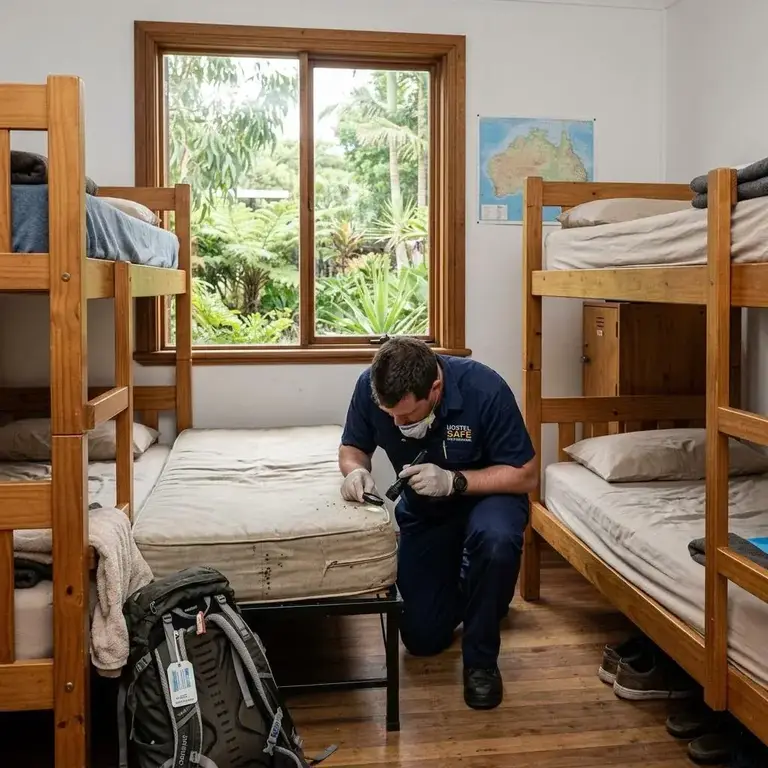
If you suspect bed bugs have survived a vacancy period or a failed treatment, these are the signs that confirm ongoing activity. Check mattress seams, bed head crevices, skirting boards and bedside furniture with a torch and a flat card, such as an old credit card, to scrape along seams and crevices.
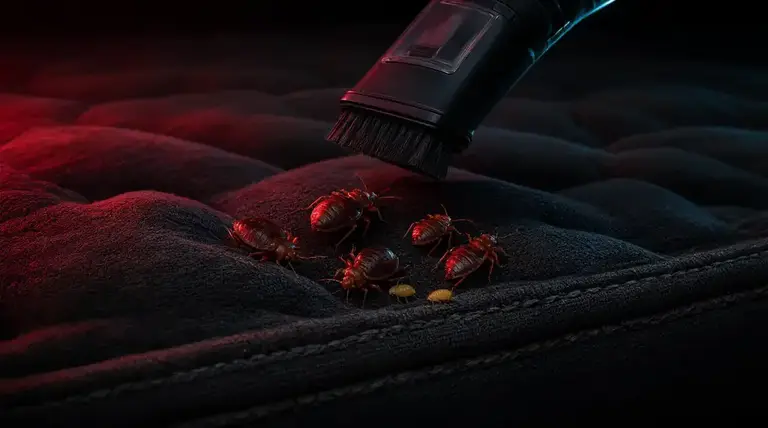
- Live insects: apple-seed-sized, reddish-brown adults clustered in mattress seams, bed head crevices and nearby furniture.
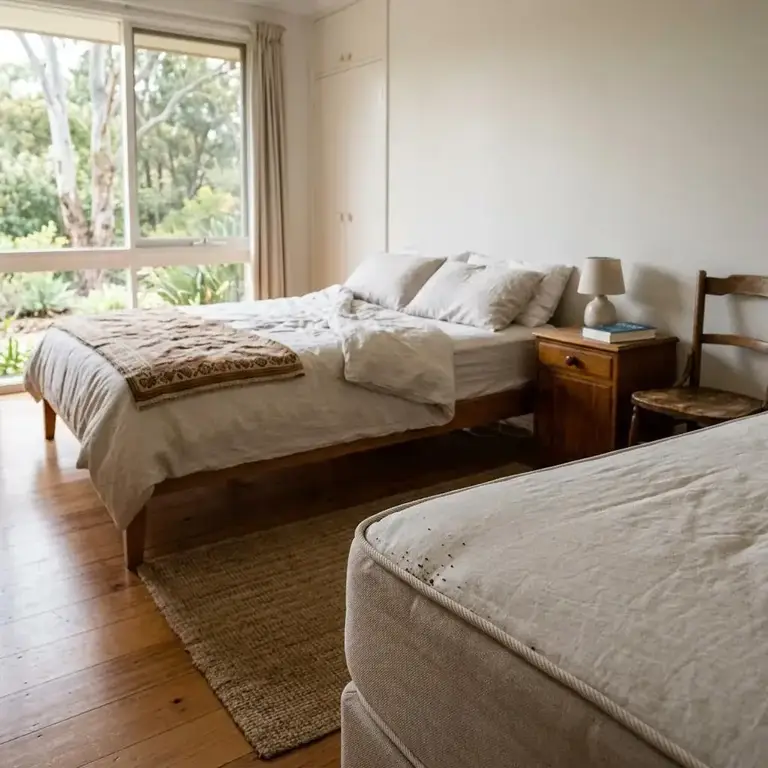
- Faecal spotting: small black or rust-coloured dots on sheets, mattresses and skirting boards.
- Shed skins: translucent casings left behind as nymphs moult through five growth stages.
- Bite marks: itchy welts, often in lines or clusters, on skin exposed during sleep — see our guide to bed bug bites: identification and your first steps if you’re unsure.
- Eggs and eggshells: pearly white, roughly 1mm long, glued into cracks and fabric folds.
DIY vs Professional Pest Control for Bed Bugs
DIY methods — vacuuming, mattress encasements, steam and supermarket sprays — can reduce numbers but rarely eliminate every life stage, and starvation strategies simply don’t work given how long bed bugs live without feeding. Professional pest control combines thorough inspection, APVMA-registered insecticides and targeted heat to reach eggs and hidden harbourages. Our comparison of bed bug treatment: heat vs chemical — which works? explains the strengths of each approach.
| Factor | DIY approach | Professional treatment |
|---|---|---|
| Effectiveness against eggs | Poor — most DIY products don’t penetrate eggs | High — heat and residual products target all life stages |
| Reaching hidden harbourages | Limited to visible areas | Wall voids, outlets and furniture treated systematically |
| Risk of spreading the infestation | Moderate to high — disturbed bugs relocate | Low — contained, methodical process |
| Typical timeframe to resolution | Weeks to months, often unresolved | Usually 1–3 visits over several weeks |
| Upfront cost | $50–$300 in products | $300–$2,500+ depending on scope |
Remember that vacating a room makes things worse: hungry bed bugs become more adventurous, travelling through wall voids, along pipes and under doors to find a host — often spreading into neighbouring rooms or adjoining units. They can also feed on pets and other warm-blooded animals in a pinch.
Bed Bug Treatment Costs in Australia (2025–26)
Across the Australian market, professional bed bug treatment generally costs between $300 and $2,500 or more, depending on the number of rooms, the treatment method and how established the infestation is. Industry-wide, heat treatment sits at the higher end because of the equipment and time involved, while chemical programs are usually priced per room with follow-up visits included. The figures below reflect typical market rates charged across the industry — not any one company’s pricing.
| Service | Typical market rate (AUD) | What’s included/notes |
|---|---|---|
| Inspection and assessment | $0–$150 | Often free with booking; confirms species, extent and harbourages |
| Chemical treatment (per room) | $250–$450 | APVMA-registered residual insecticides; usually 2 visits |
| Whole-home chemical program | $700–$1,500 | Multi-room treatment with follow-up inspection |
| Heat treatment (whole home) | $1,500–$2,500+ | Single-day treatment; kills all life stages including eggs |
| Combined heat + chemical | $1,800–$3,000 | For severe or multi-unit infestations |
These market rates vary by city, property size and infestation severity. In most states, technicians must hold a licence from the relevant state authority — for example, NSW EPA licensing or a Queensland pest management technician licence — so always verify credentials before booking. You can learn more about what’s involved on our Bed Bug Treatment & Removal service page.
It’s worth noting that Aussie Pest Strike typically comes in well under these general market rates while still delivering a fully licensed, professional service. For an exact quote tailored to your property, give us a call on [aps_phone] today.
Seasonal Bed Bug Activity in Australia
Bed bug activity in Australia peaks from October through March, when warmer temperatures accelerate breeding cycles and shorten the time between generations. Activity doesn’t stop in winter — indoor heating keeps bugs active year-round — but reported infestations and reproductive rates climb through the warmer months, alongside peak holiday travel when bugs hitchhike in luggage.
Jan
Feb
Mar
Apr
May
Jun
Jul
Aug
Sep
Oct
Nov
Dec
Indicative Australian bed bug activity by month. Peaks align with warmer temperatures and summer holiday travel (December–February); activity dips in winter but never stops indoors.
The biggest mistake e see is people shutting the door on a room for a month and assuming the problem’s sorted. Bed bugs will happily wait that out, then come back hungrier and more willing to travel. If you’ve found one sign of activity, treat the whole area properly — eggs included — or you’ll be dealing with it again in six weeks.
Don’t try to starve bed bugs out — it won’t work, and it often spreads the infestation. If you’ve spotted live bugs, faecal spotting or unexplained bites, arrange a professional inspection promptly. Early treatment is faster, cheaper and far less disruptive than tackling a whole-house infestation after summer breeding season.
Frequently Asked Questions
How long can bed bugs live without feeding?
Bed bugs can survive without a blood meal for anywhere from 20 to 400 days, depending on temperature and life stage. At typical indoor temperatures of 22–25°C, adults generally last two to six months, while in cool conditions they can stretch survival towards a year. Nymphs are far less resilient, usually dying within weeks to three months without a feed.
Can I get rid of bed bugs by vacating the room and waiting them out?
No. Starving bed bugs out almost never works because adults can survive for months, and up to a year in cool conditions. Worse, hungry bugs become more adventurous, travelling through wall voids, along pipes and under doors to find a host — often spreading into neighbouring rooms or adjoining units. Vacating a room typically makes an infestation worse, not better.
How does temperature affect how long bed bugs survive without feeding?
Temperature is the single biggest factor. Bed bugs are ectothermic, so their metabolism slows dramatically in the cold. In a cool spare room or unoccupied property over a Melbourne or Hobart winter, they can enter a semi-dormant state called diapause, stretching survival to many months. Sustained temperatures above 45°C kill bed bugs at every life stage.
Do bed bug eggs need to feed, and why do cleared rooms flare up again?
Eggs don't feed at all. They remain viable for weeks before hatching, which is why a seemingly cleared room can flare up again a month later. Most DIY products don't penetrate eggs effectively, so even if adult bugs die off during a vacancy period, newly hatched nymphs restart the infestation once a host returns.
Which bed bug species are found in Australia and does it affect their survival?
Two species bite Australians: the common bed bug (Cimex lectularius), found nationwide, and the tropical bed bug (Cimex hemipterus), established across Queensland, the Northern Territory and northern Western Australia. Tropical strains are more active in heat and can burn through energy reserves faster, slightly shortening their survival window in hot, humid conditions.
What signs show bed bugs are still active after a vacancy or failed treatment?
Check mattress seams, bed head crevices, skirting boards and bedside furniture with a torch and a flat card. Look for apple-seed-sized reddish-brown adults, small black or rust-coloured faecal spots on sheets and skirting boards, translucent shed skins, pearly white eggs about 1mm long glued into cracks, and itchy bite welts often in lines or clusters on exposed skin.
Why do Australian housing styles affect bed bug survival?
Elevated Queenslanders with cool, shaded subfloors give bed bugs stable, mild harbourages year-round. Brick veneer homes in southern states hold cooler internal wall temperatures through winter, slowing metabolism and extending survival. Apartments and townhouses with shared wall voids give hungry bugs easy routes to new hosts, which is why sealing off one room rarely contains them.
Do bed bugs feed on pets when no humans are present?
Yes. If humans are absent for an extended period, hungry bed bugs can feed on pets and other warm-blooded animals in a pinch. This is another reason starvation strategies fail — even in a vacant property, any warm-blooded host can keep at least some bugs alive until people return.
What information should I provide when booking Aussie Pest Strike for a suspected bed bug problem?
When you contact Aussie Pest Strike, describe what you've observed: where you've seen live insects, faecal spotting, shed skins or eggs, which rooms are affected, how long the problem has been going, and whether anyone has recently travelled or stayed elsewhere. Mention your property type too, such as a Queenslander, brick veneer home or apartment, as this helps plan inspection and treatment.
What's the practical next step if I've spotted signs of bed bugs in my home?
Don't shut the door and wait — that lets surviving bugs spread further. Instead, avoid disturbing harbourages, keep bedding in place where possible, and arrange a professional inspection with Aussie Pest Strike so all life stages, including eggs, can be identified and treated properly. A technician can confirm the species and extent before recommending a treatment approach suited to your home.
Sources & further reading
Found Something
Dangerous?
Don’t touch it. Don’t spray it. Keep kids and pets clear, take a photo from a safe distance, and call us — or book a free inspection and we’ll come to you.
02 7235 0050