How Long DoHouse SpidersLive? Australian Facts
How Long Do House Spiders Live? Australian Facts — most house spiders live for one to two years in Australian homes, although females of some species, such...
How long do house spiders live? In most Australian homes, the answer is one to two years — though females of some species, like the black house spider, can survive for five years or more in the same undisturbed corner. If you are seeing the same webs reappear season after season, there is a good chance the same long-lived spider is behind them.
A house spider’s lifespan depends on the species, food supply, shelter and how stable your indoor conditions stay throughout the year. Understanding how long spiders live — and what keeps them alive in your roof void, garage or wardrobe — is the first step to getting numbers under control for good.
- Most common house spiders live one to two years; female black house spiders can exceed five years.
- Heated homes, steady insect prey and undisturbed harbourage areas let spiders complete their full life cycle indoors.
- Redbacks (nationwide) and funnel-webs (greater Sydney and coastal NSW) are the medically significant species to watch for.
- Sealing entry points, removing webs and cutting insect prey reduce numbers; a professional spider treatment handles established infestations.
- General spider treatments in Australia typically range from $180 to $450 AUD depending on home size and construction.
Why Spider Lifespan Matters in Australian Homes
Long-lived spiders matter because a stable, warm Australian home lets them survive far beyond their natural outdoor lifespan, turning a one-off visitor into a permanent resident. Our climate and housing styles give spiders everything they need: warmth, shelter and a steady supply of insect prey.
Construction plays a big part. Older Queenslanders on stumps have open subfloors that harbour redbacks and huntsmen, while brick veneer homes across New South Wales, Victoria and South Australia offer weep holes, window frames and eaves that suit web-building species like the black house spider. Slab-on-ground homes still provide roof voids, garages and wardrobes where spiders go undisturbed for years. Add reverse-cycle heating keeping interiors warm through southern winters, and spiders that would normally die off outdoors simply keep living — and breeding — inside.
How Long Do Common Australian House Spiders Live? Species by Species
Most common Australian house spiders live between one and three years, with females almost always outliving males. Here is what to expect from the species you are most likely to find.
Black House Spiders
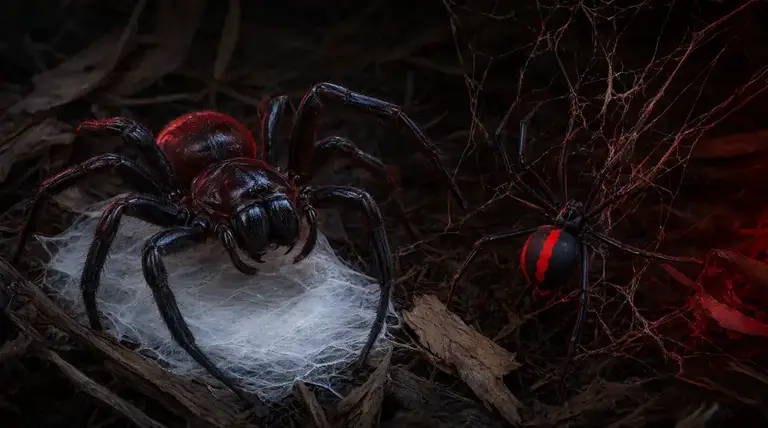
The black house spider (Badumna insignis) is one of the longest-lived indoor species. Females can survive for five years or more in the same lacy web, tucked into window frames, eaves and brickwork across New South Wales, Victoria and South Australia. Males are much shorter-lived, dying soon after mating.
Huntsman Spiders
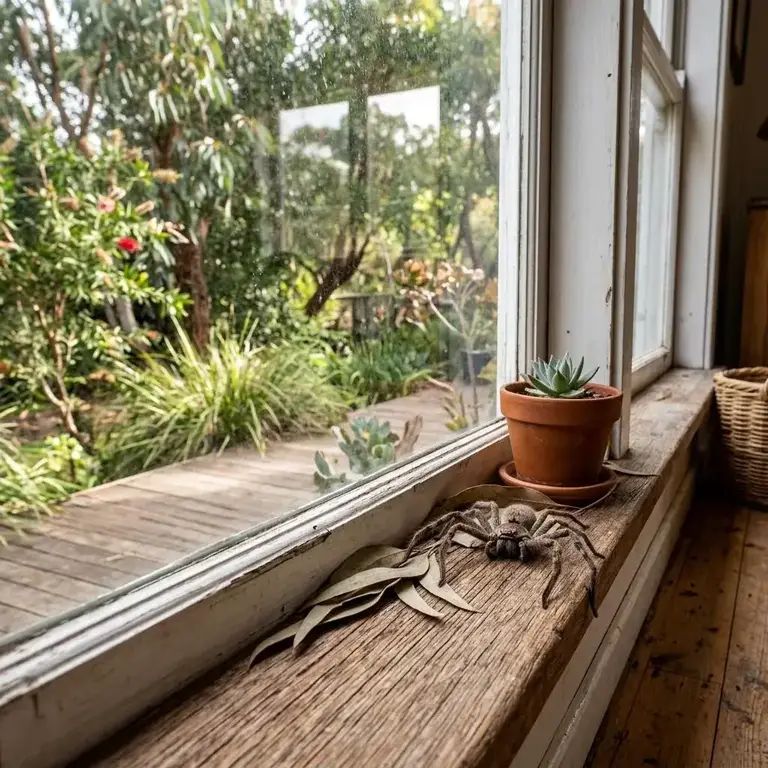
Huntsmen typically live two to three years. They are most noticeable in summer and autumn, when mature males wander indoors across Queensland and New South Wales searching for females. Despite the fright they give, they are timid and rarely bite — our guide on huntsman spiders: dangerous or harmless housemates? explains the difference between a scare and a genuine risk.
Daddy Long-Legs
The introduced daddy long-legs (Pholcus phalangioides) lives for roughly one to two years, hanging upside down in webs on ceilings and in garages and sheds. Females guard their eggs and can produce several batches, which is why numbers build up quickly in undisturbed corners.
White-Tails and Redbacks
White-tailed spiders generally live one to two years and hunt at night rather than building webs. Female redbacks can survive two to three years around sheds, letterboxes and outdoor furniture, while males live only a few months. Given their medical significance, our article on the redback spider: identification, bites and safe removal is essential reading for households with children or pets.
Warning Signs Spiders Are Living Long-Term in Your Home
The clearest sign of long-lived resident spiders is webs and egg sacs that keep reappearing in the same spots despite regular cleaning. Check for the following:
- Established webs in the same location. A large, layered web in a window frame or corner suggests a female that has occupied the spot for years.
- Egg sacs. Round or papery silk sacs in webs, garages, sheds or under outdoor furniture mean breeding is underway — each sac can hold a dozen to several hundred eggs.
- Moulted skins. Spiders moult five to ten times as they grow, so shed skins near webs indicate a maturing, long-term population.
- Night-time hunters. White-tails and wandering male spiders spotted on walls and floors after dark.
- Heavy insect activity. Flies, moths and mosquitoes around lights and windows are a food supply that supports spiders for longer.
- Webs in outdoor structures. Letterboxes, BBQs, play equipment and garden furniture are classic redback harbourages.
The House Spider Life Cycle
All spiders follow the same basic pattern: egg sac, spiderling, repeated moults, then a short adult life focused on mating. Females produce silk egg sacs containing anywhere from a dozen to several hundred eggs depending on the species, and spiderlings usually hatch within a few weeks.
Young spiders moult repeatedly as they grow — often five to ten times — before reaching maturity, a process taking anywhere from a few months to over a year depending on species and conditions. After their final moult, males begin the wandering search for females that brings so many of them indoors in late summer and autumn, and most die within weeks of mating. This is why autumn often feels like “spider season” even though the females stay hidden year-round.
DIY vs Professional Spider Control
Simple housekeeping handles light spider activity, but established or medically significant infestations call for licensed pest control. The comparison below shows where each approach fits.
| Factor | DIY approach | Professional treatment |
|---|---|---|
| Best for | Occasional webs, low numbers, harmless species | Recurring infestations, egg sacs, redbacks or funnel-webs |
| Methods | Vacuuming webs, sealing gaps, reducing insects and lighting | Species identification, harbourage treatment, residual barriers by licensed technicians |
| Safety | Low risk if you avoid handling unknown spiders | APVMA-approved products applied correctly and responsibly |
| Lasting effect | Weeks to months; webs often rebuilt | Several months of protection with follow-up advice |
| Cost | Minimal — your time and basic supplies | Typically $180–$450 AUD for a standard home |
If you do go the DIY route: seal gaps around windows, doors and weep holes and fit flyscreens; reduce outdoor lighting near doors or switch to warm-toned globes; vacuum ceilings, cornices and garage corners to remove webs and egg sacs; and keep firewood, boxes and vegetation away from external walls. Wear gloves when gardening, shake out shoes left outside, and never handle a spider you cannot identify. For anything beyond that, our Spider Control & Removal service identifies the species and treats the harbourage areas where they live longest.
Spider Treatment Costs in Australia (2025–26)
Across the Australian pest control industry, the going market rate for a professional spider treatment on a standard home sits between $180 and $450 AUD, with larger properties, subfloor access or severe infestations pushing towards the top of that range. These are general industry figures — what pest control companies around the country commonly charge — and they shift with home size, construction type and whether a general pest treatment is bundled in.
| Service | Typical market rate (AUD) | What’s included/notes |
|---|---|---|
| General spider spray (unit/small home) | $180–$260 | Internal/external perimeter, eaves, window frames, web removal |
| General spider treatment (3–4 bed home) | $250–$380 | Full perimeter, roof void dusting, garages and sheds |
| Large/Queenslander with subfloor | $350–$450+ | Subfloor and roof void treatment, extended external coverage |
| Redback/funnel-web targeted treatment | $220–$400 | Harbourage inspection, nest treatment, safety advice for high-risk species |
Here’s the good news: Aussie Pest Strike typically comes in well under these market rates, without cutting corners on products, coverage or safety. For an exact quote tailored to your property, give us a call on [aps_phone] and we’ll sort you out.
Seasonal Spider Activity Across Australia
Spider sightings peak from late spring through autumn, when warmth boosts insect prey and mature males wander in search of mates. Indoor numbers in heated homes stay steadier year-round, especially in southern states.
Jan
Feb
Mar
Apr
May
Jun
Jul
Aug
Sep
Oct
Nov
Dec
Typical spider sighting activity in Australian homes: sightings climb through summer and peak in March–April as mature males wander, then ease through winter — though heated homes keep indoor activity from ever hitting zero.
When a customer tells me the same web has been in the window frame for years, they are usually right — a female black house spider will happily sit in one spot for five years if nobody disturbs her. The trick is not just knocking webs down; it is removing the insects she is feeding on and treating the harbourage properly. Do that, and the whole cycle breaks.
Stay on top of webs, egg sacs and entry points yourself, but if spiders keep returning, you find egg sacs, or you suspect redbacks or funnel-webs, book a licensed pest control inspection. If you are in the greater Sydney or coastal NSW region and spot a large dark spider near ground level, read our guide on funnel-web spider identification, danger and control before going anywhere near it.
Frequently Asked Questions
How long do house spiders live in Australian homes?
Most common Australian house spiders live one to two years, though some species reach two to three years. Female black house spiders are the exception, surviving five years or more in the same undisturbed web. A stable indoor environment with warmth, shelter and steady insect prey lets spiders live well beyond their typical outdoor lifespan, turning a one-off visitor into a permanent resident.
How long do black house spiders live?
Female black house spiders (Badumna insignis) can survive for five years or more in the same lacy web, often tucked into window frames, eaves and brickwork across New South Wales, Victoria and South Australia. Males are much shorter-lived and typically die soon after mating. If the same web keeps reappearing in a window frame season after season, it is likely the same long-lived female behind it.
What is the lifespan of huntsman spiders indoors?
Huntsman spiders typically live two to three years. They are most noticeable in summer and autumn, when mature males wander indoors across Queensland and New South Wales searching for females. Despite their alarming size and speed, huntsmen are timid and rarely bite. Their relatively long lifespan means an individual spider may return to the same home repeatedly if conditions suit it.
How long do daddy long-legs spiders live?
The introduced daddy long-legs (Pholcus phalangioides) lives for roughly one to two years, hanging upside down in webs on ceilings and in garages and sheds. Females guard their eggs and can produce several batches over their lifetime, which is why numbers build up quickly in undisturbed corners of Australian homes where cleaning is infrequent.
How long do white-tailed spiders and redbacks live?
White-tailed spiders generally live one to two years and hunt at night rather than building webs. Female redbacks can survive two to three years around sheds, letterboxes and outdoor furniture, while male redbacks live only a few months. Because redbacks are medically significant, households with children or pets should take their presence seriously and avoid handling them.
What signs show spiders are living long-term in my home?
Look for established webs in the same location, especially large layered webs in window frames or corners suggesting a female has occupied the spot for years. Other signs include egg sacs in webs or sheds, moulted skins near webs from repeated moulting, night-time hunters such as white-tails on walls after dark, heavy insect activity around lights, and webs in letterboxes, BBQs and garden furniture.
Why does my heated home help spiders live longer?
Reverse-cycle heating keeps interiors warm through southern winters, so spiders that would normally die off outdoors simply keep living and breeding inside. Combined with steady insect prey and undisturbed harbourage areas like roof voids, garages and wardrobes, a warm Australian home allows spiders to complete their full life cycle indoors year-round rather than perishing in cold weather.
Do house spiders live longer indoors than outdoors?
Spider sightings peak from late spring through autumn, when warmth boosts insect prey and mature males wander in search of mates. Sightings climb through summer and peak in March and April as wandering males appear indoors, then ease through winter. However, heated homes keep indoor activity from ever reaching zero, with females staying hidden year-round.
I have tried sealing gaps and removing webs but spiders keep coming back — what should I do next?
If simple housekeeping like vacuuming webs, sealing entry points and reducing insects has not stopped spiders returning, the next step is professional help. Aussie Pest Strike can identify which species are living in your home and treat the harbourage areas where they survive longest, such as roof voids, subfloors and window frames. This targets the source rather than just the visible webs you keep clearing away.
How can I get a quote for a spider treatment for my home?
Once you know what species you are dealing with, contacting Aussie Pest Strike for a tailored quote is a practical next step. Treatment costs vary with home size, construction type and whether subfloor or roof void access is needed, so an assessment of your specific property gives an accurate figure. Mention any recurring webs, egg sacs or sightings of redbacks or funnel-webs so the right approach is recommended.
Sources & further reading
Found Something
Dangerous?
Don’t touch it. Don’t spray it. Keep kids and pets clear, take a photo from a safe distance, and call us — or book a free inspection and we’ll come to you.
02 7235 0050