How Fast DoRats Breed? TheNumbers Behind Infestations
How Fast Do Rats Breed? The Numbers Behind Infestations — how fast do rats breed? A single female can produce up to six litters a year, each with six to...
How fast do rats breed? Fast enough that a single overlooked pair can turn into a full-blown infestation before you’ve finished wondering what that scratching noise in the ceiling is. A female rat can produce up to six litters a year, each with six to twelve pups, and her offspring start breeding at just five weeks old — the maths escalates quickly.
Put simply: rats breed on a roughly monthly cycle, with gestation of just 21 to 23 days, and a single breeding pair can be responsible for hundreds of descendants within twelve months. That’s why every pest control professional will tell you the same thing — the cheapest rat problem to fix is the one you catch in the first few weeks. This guide breaks down the real numbers behind rat breeding in Australia, the warning signs to watch for, and when to bring in a licensed technician.
- A female rat produces five to six litters per year, with six to twelve pups per litter, and can mate again within 24–48 hours of giving birth.
- Young rats reach sexual maturity at five to eight weeks, so populations grow exponentially, not gradually.
- Roof rats dominate in coastal NSW, Queensland and WA; brown rats favour subfloors and burrows in southern cities.
- DIY trapping rarely keeps pace with breeding — one missed pregnant female can rebuild the population within weeks.
- Professional Rodent Control & Removal typically costs $250–$600 AUD for an initial treatment program in 2025–26.
Why rats breed in Australian Homes Matters So Much
Rat breeding matters in Australia because our climate and housing stock give rodents ideal conditions to breed almost year-round. Warm roof voids, abundant food and mild winters mean the breeding cycle rarely stops completely, especially north of Sydney.
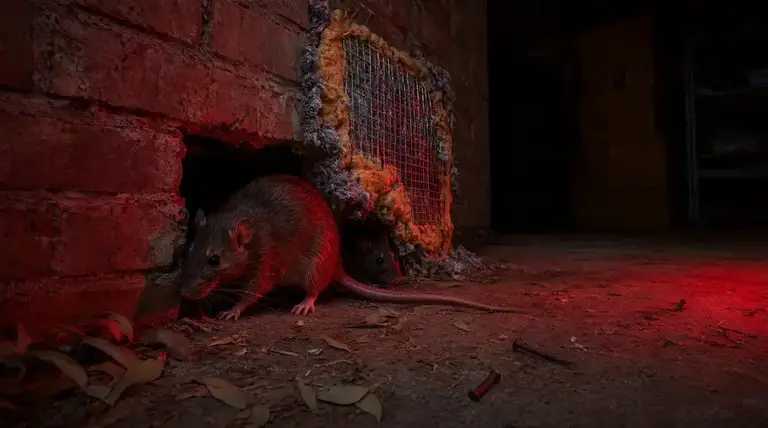
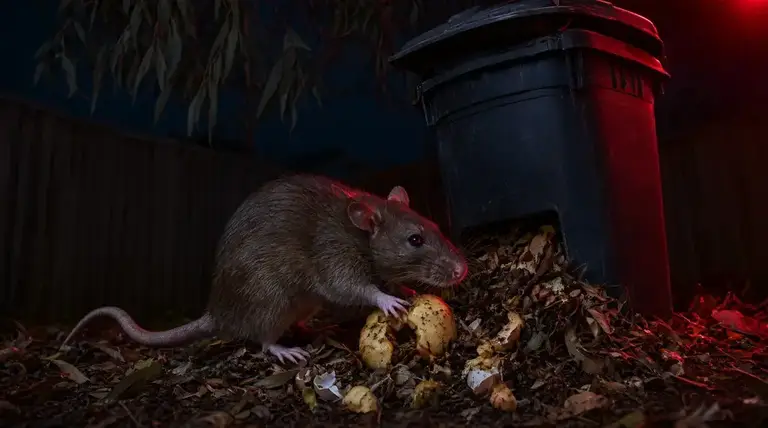
Australian housing is practically designed for rats. Suspended timber floors and subfloor voids in older Queenslanders and Federation homes offer sheltered burrowing and nesting sites. Brick veneer walls create cavity runs between the frame and the outer skin. Tile and Colorbond roofs develop gaps at ridge capping, eaves and around plumbing penetrations — and the black rat, Australia’s most common home invader, only needs a gap the size of a 20-cent coin. Add fruit trees, chook pens, compost bins and pet food left out overnight, and a suburban backyard becomes a reliable food supply that fuels continuous breeding.
In subtropical Queensland and the Northern Territory, warmth and humidity mean breeding barely slows at any point in the year. In southern states like Victoria and South Australia, rats still breed through winter once they’re established inside a heated roof void. Understanding roof rat behaviour in Australia — where they nest, how they travel and when they breed — is the first step to breaking the cycle.
The Breeding Numbers: Gestation, Litters and Maturity
Rats breed on three key figures: a gestation period of only 21 to 23 days, litters of six to twelve pups, and the ability to mate again within 24 to 48 hours of giving birth. A healthy female typically produces five to six litters per year.
That post-birth mating window is the detail most homeowners miss. A female doesn’t pause between litters — she can be pregnant again before her current litter is even weaned. Under favourable conditions with steady food, water and shelter, this produces a litter roughly every three to four weeks.
Pups grow up fast. Females can conceive from around five weeks of age, and males are fertile by six to eight weeks. A litter born in early spring can be producing its own young by summer, compounding population growth in months rather than years. This is why technicians treat rat control as a race against the breeding clock, not just a trapping exercise.
From One Pair to Hundreds: The Exponential Maths
A single breeding pair of rats can be responsible for several hundred descendants within twelve months, and under perfect conditions some industry estimates exceed 1,000 rats in a year. Even with natural mortality factored in, a small unnoticed problem can become a serious infestation within two or three breeding cycles.
Pest managers often use a conservative model: two rats producing five litters of eight pups a year, with half the pups female. Once those new generations mature and start breeding themselves, the growth curve goes vertical. In practical terms, the two rats you heard in the ceiling in March can be forty by winter if nothing is done. That’s the core reason early action is critical — and why professional pest control focuses on eliminating the entire population, not just the rats you can see.
Warning Signs Rats Are Breeding on Your Property
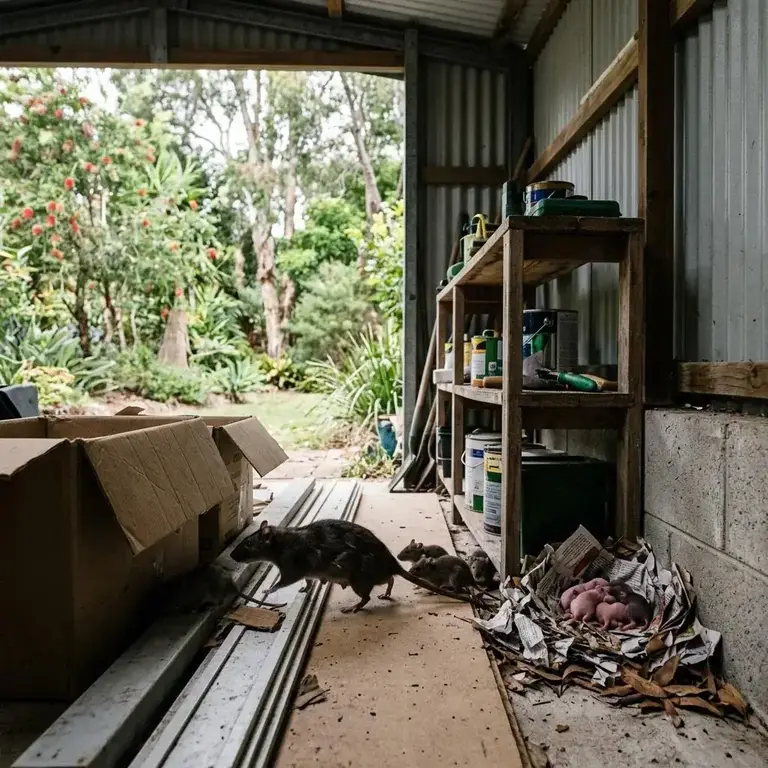
The clearest sign of a breeding population is evidence of rats at different life stages — mixed-size droppings, nests, and juveniles seen during the day. Because most breeding happens out of sight in roof voids, wall cavities and subfloors, watch for these early indicators:
- Droppings of varying sizes — a mix of large and small pellets suggests both adults and juveniles are active, which means breeding is underway.
- Nesting material — shredded paper, insulation or fabric gathered in roof voids, wall cavities, sheds, garages or behind appliances.
- Night-time noises — scratching, squeaking or scurrying in ceilings and behind walls, especially in the hours after dark.
- Grease and rub marks — dark smears along skirting boards, pipes and rafters where rats travel the same routes repeatedly.
- Gnaw damage — chew marks on timber, electrical wiring, plastic pipes and stored goods in pantries or garages.
- Musky odour — an ammonia-like smell in enclosed areas such as pantries, subfloors and storerooms.
For a complete room-by-room rundown, work through our checklist of signs of rats or mice in your home — catching a breeding pair early can save you thousands in damage and treatment costs.
DIY vs Professional Rat Control: Why DIY Struggles to Keep Pace
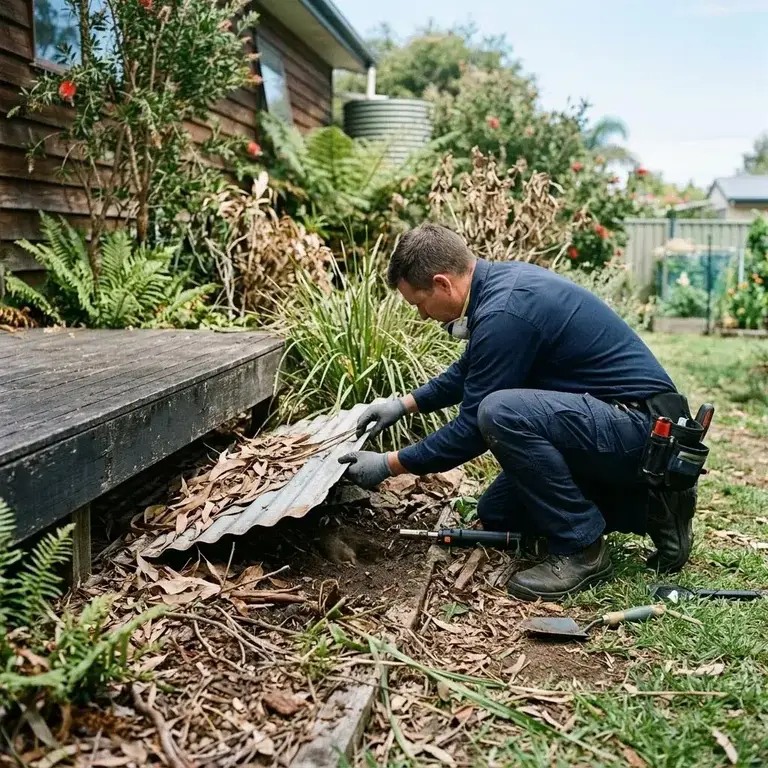
DIY trapping rarely solves a breeding rat problem because removal almost never outpaces reproduction. Females are often trap-shy, and a single missed pregnant female can rebuild the population within weeks. Licensed professionals combine inspection, exclusion, sanitation advice and targeted baiting to collapse the whole population at once.
Rodenticides are also regulated in Australia. The Australian Pesticides and Veterinary Medicines Authority (APVMA) controls which products can be sold and how they’re used, and second-generation anticoagulants can poison native predators such as powerful owls that feed on affected rats. Chemical treatments should always be handled by a licensed technician using tamper-resistant stations — no bait is risk-free, and placement matters as much as product choice.
| Factor | DIY approach | Professional treatment |
|---|---|---|
| Speed vs breeding | Catches a few rats; breeding usually outpaces removal | Program designed to eliminate the entire population, including breeders |
| Nest location | Nests in voids and cavities often missed | Full inspection of roof voids, subfloors and wall cavities |
| Entry points | Rarely identified or sealed | Exclusion work seals gaps so new rats can’t replace old ones |
| Bait safety | Risk to pets, children and native wildlife if misused | Tamper-resistant stations, APVMA-compliant products, licensed application |
| Long-term result | Population typically rebounds within weeks | Follow-up visits and monitoring to confirm the cycle is broken |
If you want to see exactly how the process works, read our breakdown of how professionals actually eliminate rats — it’s a structured program, not a one-off visit.
How Much Does Rat Control Cost in Australia?
Across the Australian pest control industry, a professional rat treatment program generally sits between $250 and $600 AUD for the initial work, with severe or ongoing infestations pushing higher. The figures below are typical 2025–26 market rates for the industry as a whole, and they’ll shift with property size, access and how entrenched the infestation is.
| Service | Typical cost (AUD) | What’s included / notes |
|---|---|---|
| Inspection and assessment | $0–$150 | Roof void, subfloor and perimeter check; many operators waive the fee if treatment goes ahead |
| Standard baiting/trapping program | $250–$600 | Tamper-resistant stations, initial set plus one to two follow-up visits |
| Severe infestation program | $600–$1,200+ | Multiple visits, larger properties or commercial premises, extended monitoring |
| Rodent proofing and exclusion | $300–$900 | Sealing entry points, mesh, door seals; depends on number of gaps and access |
| Ongoing monitoring plan | $40–$90 per visit | Quarterly or bi-monthly servicing for high-risk properties |
Keep the breeding maths in mind when you weigh up market rates: a typical $400 treatment today is far cheaper than repairing gnawed wiring, contaminated insulation and a year-old infestation. Pairing any treatment with Rodent Proofing & Exclusion is what stops the next pair from moving in.
One thing worth knowing: those are industry benchmarks, not our price list. Aussie Pest Strike typically comes in well under these market rates on most jobs, so call [aps_phone] and we’ll give you an exact quote for your property on the spot.
Seasonal Rat Breeding Activity Across Australia
Rat breeding activity in Australia peaks in autumn and spring in the southern states, while tropical and subtropical regions see steady breeding all year. Autumn is the highest-risk period for new indoor infestations as rats seek shelter ahead of winter.
In Melbourne, Adelaide, Hobart and Canberra, breeding surges in autumn as rats push into roof voids and subfloors for warmth, then spikes again in spring as food becomes abundant. In Brisbane, coastal Queensland and the Northern Territory, warmth and reliable food mean breeding barely slows, so an infestation can escalate at any time of year. The chart below shows typical national indoor activity pressure by month.
Jan
Feb
Mar
Apr
May
Jun
Jul
Aug
Sep
Oct
Nov
Dec
Indicative national pattern: indoor rat activity and breeding pressure climbs sharply through autumn, peaks in early winter as rats shelter indoors, then lifts again through the spring breeding season. Northern Australia sees flatter, year-round activity.
The biggest mistake homeowners make is treating the rats they can see and ignoring the ones they can’t. If you’ve trapped two rats but haven’t found the nest or sealed the entry points, the breeding females are still in the roof void doing their job. We always work backwards from the nest — remove the breeders, block the access, and the problem actually ends.
If you’ve noticed any two or more warning signs — especially mixed-size droppings or nesting material — treat it as a breeding population, not a single rat. Book a professional inspection within days, not weeks. Every month you wait is another litter cycle, and the cost of removal climbs with the population.
Frequently Asked Questions
How fast do rats actually breed?
Rats breed on a roughly monthly cycle. A female rat has a gestation period of just 21 to 23 days, produces litters of six to twelve pups, and can mate again within 24 to 48 hours of giving birth. Under favourable conditions with steady food, water and shelter, she can produce five to six litters per year, with barely a pause between pregnancies.
How many rats can one breeding pair produce in a year?
A single breeding pair can be responsible for several hundred descendants within twelve months, and under perfect conditions some industry estimates exceed 1,000 rats in a year. Even accounting for natural mortality, pest managers model that two rats producing five litters of eight pups can turn into around forty rats by winter if nothing is done.
At what age do young rats start breeding?
Female rats can conceive from around five weeks of age, and males are fertile by six to eight weeks. This means a litter born in early spring can be producing its own young by summer. Because each new generation starts breeding almost immediately after maturity, rat populations grow exponentially rather than gradually.
Why do rats breed so successfully in Australian homes?
Australian homes offer warm roof voids, sheltered subfloors and wall cavities, plus reliable food from fruit trees, chook pens, compost bins and pet food left out overnight. The black rat only needs a gap the size of a 20-cent coin to get in. In subtropical Queensland and the Northern Territory breeding continues year-round, while southern rats keep breeding through winter inside heated roof voids.
Which rat species are common in Australian homes?
Roof rats, also called black rats, dominate in coastal NSW, Queensland and WA and are Australia's most common home invader, nesting in roof voids and travelling through wall cavities. Brown rats favour subfloors and burrows, particularly in southern cities. Knowing which species you have helps identify where nests and entry points are likely to be.
What are the signs that rats are breeding on my property?
The clearest sign is evidence of rats at different life stages: droppings of varying sizes suggest both adults and juveniles are active. Other indicators include shredded nesting material in roof voids or behind appliances, night-time scratching and squeaking in ceilings, dark grease marks along travel routes, gnaw damage on timber and wiring, and a musky ammonia-like odour in enclosed spaces.
Why does DIY trapping struggle against a breeding rat population?
DIY trapping rarely keeps pace with reproduction because removal almost never outpaces breeding. Females are often trap-shy, and a single missed pregnant female can rebuild the population within weeks. Nests hidden in voids and cavities are frequently missed, entry points stay open for new rats, and misused baits can put pets, children and native wildlife at risk.
How much does professional rat control cost in Australia?
Professional rat control pricing varies with the scale of the infestation, property size and how difficult access is. An initial baiting or trapping program is usually a one-off visit, while severe infestations may need follow-up treatments and exclusion work to seal entry points. Ongoing monitoring visits can add to the total. Because every infestation differs, most pest controllers provide quotes after an inspection rather than quoting sight unseen.
Can I check whether Aussie Pest Strike handles rat breeding problems like mine?
Yes. If you have noticed mixed-size droppings, night-time noises in the ceiling or other signs of a breeding rat population, you can contact Aussie Pest Strike to check availability for your area and arrange an inspection of your roof void, subfloor and perimeter. They can assess the extent of the problem and explain what a treatment program would involve before any work begins.
What is the best next step if I suspect rats are breeding in my home?
Act early, because the cheapest rat problem to fix is the one caught in the first few weeks. Start by confirming the warning signs using a room-by-room checklist, then contact Aussie Pest Strike for a professional inspection. A licensed technician can locate nests in roof voids and cavities, seal entry points through exclusion work, and set up a program designed to eliminate the entire breeding population.
Sources & further reading
Found Something
Dangerous?
Don’t touch it. Don’t spray it. Keep kids and pets clear, take a photo from a safe distance, and call us — or book a free inspection and we’ll come to you.
02 7235 0050