Flying Ants inAustralia: What aSudden Swarm Means
Flying Ants in Australia — flying ants are reproductive ants, known as alates, that leave established nests on warm, humid days to mate and found new...
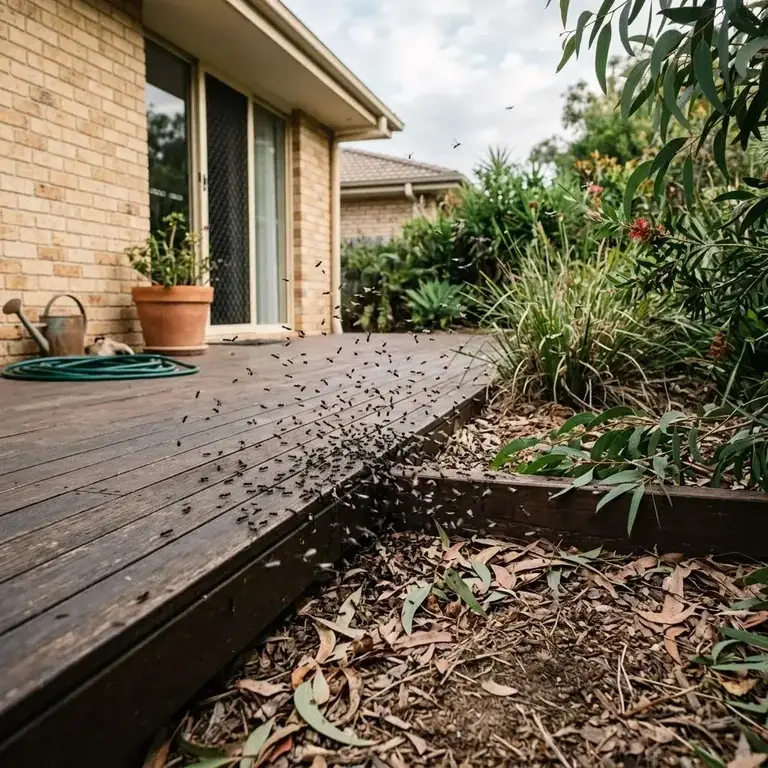
A sudden cloud of winged ants around the windows or pouring from a skirting board is one of the most common spring and summer surprises in Australian homes — and one of the most misunderstood. Flying ants are the winged reproductive caste of ordinary ant colonies, known as alates, that leave an established nest on warm, humid days to mate and found new colonies. This guide explains what a swarm means, how to tell flying ants from termites, and when to call in professional pest control.
Most swarms pass within a few hours and cause no harm, but repeated activity indoors can point to a mature nest hidden in a wall cavity, subfloor or roof void. The sections below cover identification, warning signs, DIY versus professional treatment, realistic 2025-26 costs in AUD, and the seasonal pattern across Australia’s states and territories.
- Flying ants are winged reproductives (alates) from a mature colony — a swarm means an established nest is nearby, not a new invasion.
- Telling flying ants from termite swarmers is critical: check the waist, antennae and wings before assuming the best.
- Outdoor swarms are usually harmless; swarmers emerging from skirting boards, window frames or power points suggest a nest inside the structure.
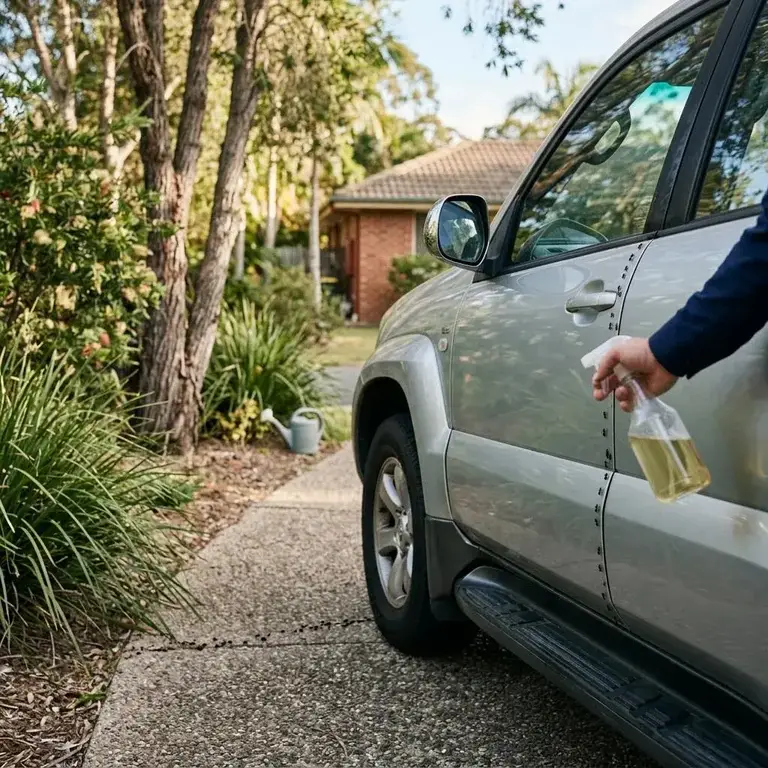
- Avoid aerosol sprays — they can split the colony and make professional treatment harder.
- Professional ant nest treatment in Australia typically costs $180-$450 depending on nest location and property size.
Why Flying Ant Swarms Are So Common in Australia
Australia’s warm, humid climate and mix of housing styles make it ideal territory for nuptial flights almost year-round in the north and through the warmer months in the south. Because colonies respond to the same weather cues, whole suburbs can swarm on a single afternoon.
In Queensland, the Northern Territory and northern Western Australia, heat and humidity allow flights for much of the year. In New South Wales, Victoria, South Australia and Tasmania, swarms peak from late spring to early autumn, and wet La Niña summers often produce noticeably larger events. Housing plays a role too: older Queenslanders on stumps, homes with timber subfloors, and brick veneer houses with weep holes and wall cavities all offer sheltered nesting sites close to — or inside — the building envelope. Many of the common Australian ant species found in homes, including black house ants, green-head ants, meat ants, carpenter ants and even bull ants, produce winged swarmers once their colonies mature, which can take several years.
Warning Signs: What a Flying Ant Swarm Around Your Home Means
An outdoor swarm drifting over the lawn is usually harmless — birds and dragonflies will clean up most of it. Concern rises when swarmers emerge from inside the house, because that suggests the colony is nesting within the structure itself.
- Swarmers emerging indoors — ants flying out of window frames, skirting boards, power points or ceiling vents point to a nest inside walls, roof voids or the subfloor.
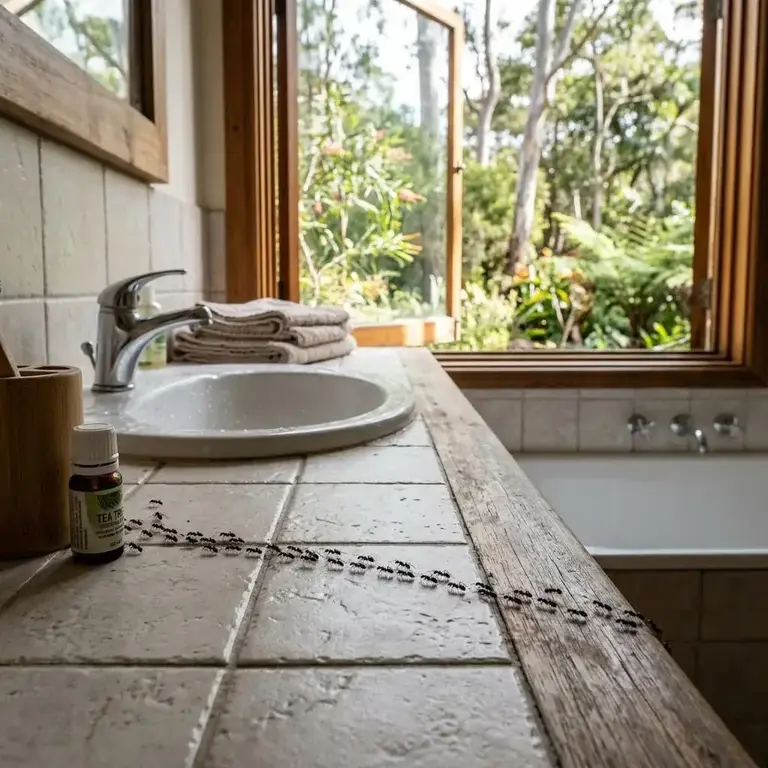
- Piles of shed wings on windowsills — fertilised queens drop their wings after mating; recurring wing piles indicate a well-established colony nearby.
- Repeat activity over several days — a single afternoon swarm is normal, but winged ants appearing day after day suggest the nest is large and close.
- Large dark ants near damp timber — carpenter ants favour moisture-damaged wood, so their alates can signal a hidden leak or rot problem worth fixing.
- Uniform, milky-winged swarmers — if the insects have straight antennae, a broad waist and equal-length wings, treat them as termites until a licensed pest manager proves otherwise. Australia is home to highly destructive species such as Coptotermes acinaciformis, and an indoor termite swarm is a genuine red flag.
DIY vs Professional Treatment for Flying Ants
Light, once-off outdoor swarms need nothing more than a vacuum and some patience, but indoor or recurring swarms are a different matter. The comparison below shows where DIY ends and professional work begins.
| Factor | DIY approach | Professional treatment |
|---|---|---|
| Immediate swarmers | Vacuum up and empty the canister outside straight away | Technician inspects emergence points to trace the nest |
| Identification | Keep specimens in a jar or take a clear photo | Confirms species and rules out termites on the spot |
| Nest elimination | Seal entry points, fix leaks, improve subfloor ventilation | Targeted baiting and nest treatment with APVMA-registered products |
| Risk of making it worse | Aerosol sprays can split the colony and scatter the nest | Licensed methods treat the colony at its source |
It’s worth understanding why the spray-can approach backfires — our article on why ant sprays often make the problem worse explains how repellent chemicals fragment colonies into multiple harder-to-treat nests. Surface sprays also do nothing for the moisture and hygiene issues that attract ants in the first place, which is why broader silverfish and pantry pest control is often bundled into a general household treatment.
How Much Does Flying Ant Treatment Cost in Australia?
Across the Australian pest control industry, professional ant treatment for a standard home typically runs between $180 and $450 in 2025-26, with termite inspections generally priced separately. What the market charges ultimately depends on property size, nest location and whether structural treatment is needed.
| Service | Typical market rate (AUD) | What’s included/notes |
|---|---|---|
| General ant treatment (standard home) | $180-$320 | Internal/external baiting and perimeter treatment, species identification |
| Nest location and targeted treatment | $250-$450 | Wall cavity, subfloor or roof void nests; dusting or direct nest injection |
| Termite inspection (to rule out swarmers) | $250-$400 | Carried out in line with Australian Standard AS 3660 by a licensed pest manager |
| Large/rural property or severe infestation | $400-$650+ | Multiple colonies, acreage, or follow-up visits included |
These figures are typical Australian market ranges for 2025-26 — what the industry generally charges — and they vary by state, access and property construction. Subfloor homes and pole-style Queenslanders often take longer to inspect than concrete-slab brick veneer, which pushes market pricing up. For stubborn species like the black house ant, see our Black House Ants complete control guide, or book dedicated ant control and nest treatment for a fixed quote.
One thing worth knowing: the rates above reflect the broader Australian market, not Aussie Pest Strike. Our pricing typically comes in well under these industry rates, and every job is quoted upfront with no hidden extras. For an exact quote tailored to your property, call us on [aps_phone] and we’ll sort it out on the spot.
Seasonal Flying Ant Activity in Australia
Flying ant activity in southern Australia peaks from late spring through to early autumn, while northern regions can see nuptial flights almost year-round. Warm, humid, calm afternoons — often straight after rain — trigger the biggest events.
Jan
Feb
Mar
Apr
May
Jun
Jul
Aug
Sep
Oct
Nov
Dec
Indicative activity for southern Australia (NSW, VIC, SA, TAS), where swarms peak from late spring to early autumn. In QLD, NT and northern WA, activity stays moderate to high for most of the year, and wet La Niña summers produce noticeably larger flights.
Nine times out of ten, the swarm itself isn’t the problem — it’s the mature nest that’s been sitting in a wall cavity or under the subfloor for years. If people can tell us exactly where the swarmers came out, we can usually find and treat the colony in a single visit. The worst cases we see are the ones where someone’s hit it with a spray can first and scattered the nest into three.
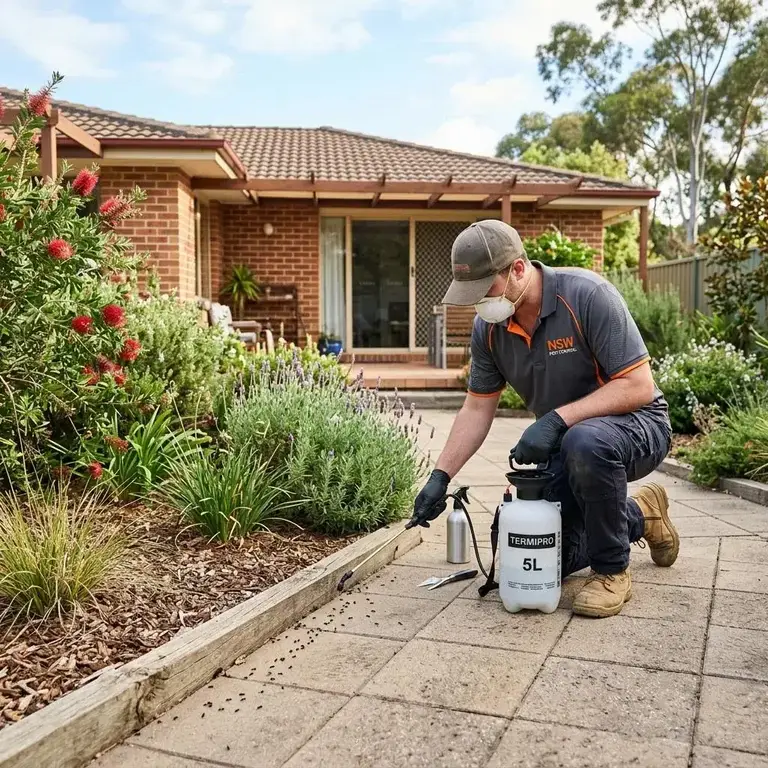
Vacuum up a one-off outdoor swarm and seal entry points once it passes. If winged ants are emerging indoors, appearing over several days, or you can’t confidently rule out termites, book an inspection with a licensed technician rather than spraying — correct identification and source treatment is faster, cheaper and far more effective in the long run.
Frequently Asked Questions
What does a sudden swarm of flying ants around my home actually mean?
Flying ants are the winged reproductive caste, known as alates, that leave an established ant colony on warm, humid days to mate and start new colonies. A swarm means a mature nest is nearby — not that ants are invading from elsewhere. Most swarms pass within a few hours and cause no harm, but repeated activity indoors can point to a nest hidden in a wall cavity, subfloor or roof void.
Why do flying ants suddenly appear indoors after rain?
Check three features before assuming anything. Flying ants have a pinched waist, bent antennae and two pairs of unequal-length wings. Termite swarmers have straight antennae, a broad waist and equal-length wings. If you see uniform, milky-winged insects indoors, treat them as termites until a licensed pest manager proves otherwise, because destructive species such as Coptotermes acinaciformis occur in Australia.
When is a flying ant swarm a warning sign rather than harmless?
An outdoor swarm drifting over the lawn is usually harmless, as birds and dragonflies eat most of it. Concern rises when swarmers emerge inside the house — out of window frames, skirting boards, power points or ceiling vents — because that suggests a nest within the structure. Piles of shed wings on windowsills, activity repeating over several days, or large dark ants near damp timber are also warning signs.
Why should I avoid spraying flying ants with aerosol insecticide?
Aerosol sprays can split the colony and scatter the nest into multiple harder-to-treat locations. Repellent chemicals fragment colonies rather than eliminating them at the source, which makes professional treatment harder afterwards. Surface sprays also do nothing about the moisture and hygiene issues that attract ants in the first place. Vacuuming up swarmers and emptying the canister outside is the safer immediate response.
What time of year do flying ants swarm in Australia?
In Queensland, the Northern Territory and northern Western Australia, heat and humidity allow nuptial flights for much of the year. In New South Wales, Victoria, South Australia and Tasmania, swarms peak from late spring to early autumn. Warm, humid, calm afternoons — often straight after rain — trigger the biggest events, and wet La Niña summers often produce noticeably larger swarms.
Which Australian ant species produce winged swarmers?
Many common Australian household ants produce winged reproductives once their colonies mature, which can take several years. Species include black house ants, green-head ants, meat ants, carpenter ants and even bull ants. Carpenter ant alates deserve particular attention because these ants favour moisture-damaged timber, so their presence can signal a hidden leak or rot problem worth fixing.
Can I deal with a flying ant swarm myself?
For a light, once-off outdoor swarm, vacuuming up the insects and sealing entry points once the swarm passes is usually enough. Keep a specimen in a jar or take a clear photo if you want identification help. However, indoor or recurring swarms need professional attention: a technician inspects emergence points to trace the nest, confirms the species, rules out termites and treats the colony at its source.
How much does professional flying ant treatment cost in Australia?
Professional flying ant treatment pricing varies widely depending on the size of the property, the extent of the infestation, and how difficult the nests are to reach. Treatments targeting visible swarms are usually simpler, while nests hidden in wall cavities, subfloors or roof voids require more labour and cost more. Many pest controllers offer a quote after an inspection, which also helps confirm whether the swarmers are ants or termites.
What happens during an Aussie Pest Strike inspection for indoor flying ants?
A technician starts by inspecting the emergence points you've noticed — window frames, skirting boards, power points or ceiling vents — to trace where the swarmers are coming from. They confirm whether the insects are flying ants or termites, then locate the nest, which is often sitting in a wall cavity, subfloor or roof void. If you can tell them exactly where the swarmers came out, the colony can often be found and treated in a single visit.
I've found piles of shed wings on my windowsill — what should I do next?
Recurring wing piles mean fertilised queens have been dropping their wings after mating nearby, indicating an established colony close to or inside your home. Collect a specimen or take a clear photo, note where the wings appear, and avoid using aerosol sprays, which can scatter the nest. Contact Aussie Pest Strike to arrange an inspection so the species can be confirmed and the source nest located before treatment.
Sources & further reading
Found Something
Dangerous?
Don’t touch it. Don’t spray it. Keep kids and pets clear, take a photo from a safe distance, and call us — or book a free inspection and we’ll come to you.
02 7235 0050