Black HouseAnts: The CompleteControl Guide
Black house ants control guide: cut food and water, bait with sweet non-repellent products, and stop trails returning. Free on-site inspection and quote inside.
Black house ants (Ochetellus glaber) are Australia’s most reported indoor ant, and they are controlled by removing food and moisture, then using a sweet non-repellent bait that workers carry back to the queen — never a knock-down spray. Whether you’re in a Brisbane Queenslander, a Melbourne brick veneer or a Perth slab home, these glossy 2.5–3 mm invaders follow the same playbook: find sweets, find water, move in.
While they don’t sting or bite meaningfully, they contaminate food, spread bacteria across benchtops and appear in frustrating numbers through the warm months. This guide covers identification, the step-by-step method that actually works, realistic pest control costs for 2025–26, and when DIY stops being enough.
- Black house ants are sweet feeders — sugar-based non-repellent bait is the only DIY method that reaches the queen.
- Spraying the trail kills foragers only and can split the colony into multiple nests, making the problem worse.
- Activity peaks from December to February; ceiling or cornice trails suggest a roof-void nest.
- Professional ant treatment typically costs $180–$350 AUD for a standard home.
- Sealing entry points after the colony collapses prevents the next nest from moving in.
Why Black House Ants Are Such a Problem Across Australia
Black house ants thrive in every Australian state and territory because our climate and housing stock suit them perfectly. Warm, humid summers supercharge foraging, while mild winters in coastal regions let colonies survive year-round rather than dying off.
Our housing gives them endless nesting options. Slab-on-ground homes develop hairline cracks where pavers meet foundations — prime nesting soil. Subfloor homes and older Queenslanders offer cool, protected voids beneath stumps and bearers. Brick veneer construction creates a cavity between frame and brickwork that functions as a ready-made ant highway. Add wall cavities, roof voids and the gaps around pipe penetrations, and a single property can host multiple colonies simultaneously. Colonies favour sweet and greasy foods, and one nest can house thousands of workers with one or more egg-laying queens — which is why wiping up the visible trail never solves anything.
They’re frequently confused with other species, so it’s worth checking our guide to common Australian ant species found in homes before you treat — misidentification is the number one reason DIY baiting fails.
Warning Signs You Have a Black House Ant Problem
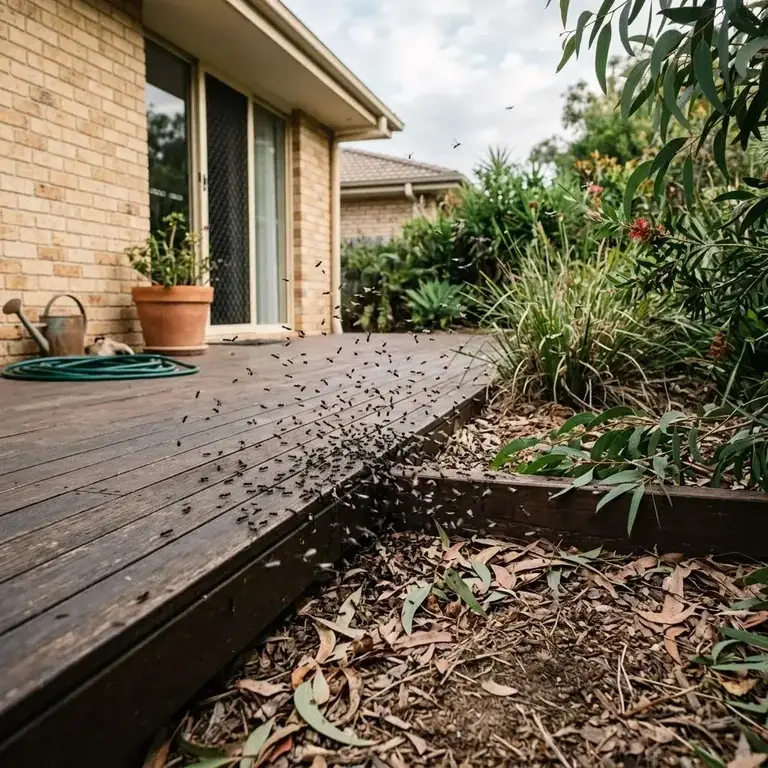
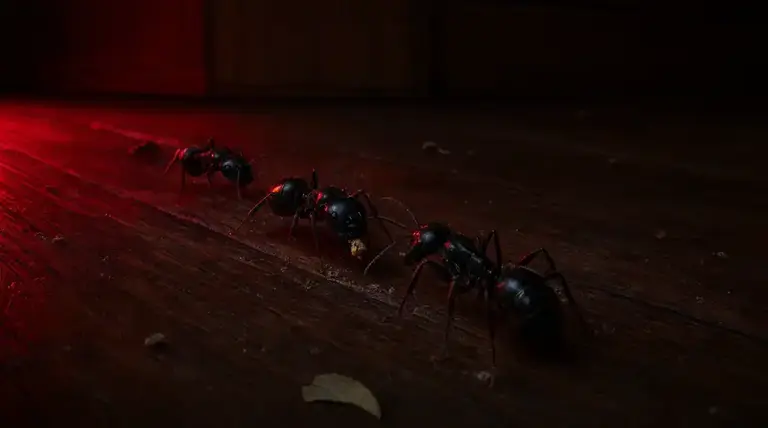
The clearest sign of an infestation is a persistent, organised trail of small glossy black ants moving between a food source and a fixed entry point. Look for these indicators:
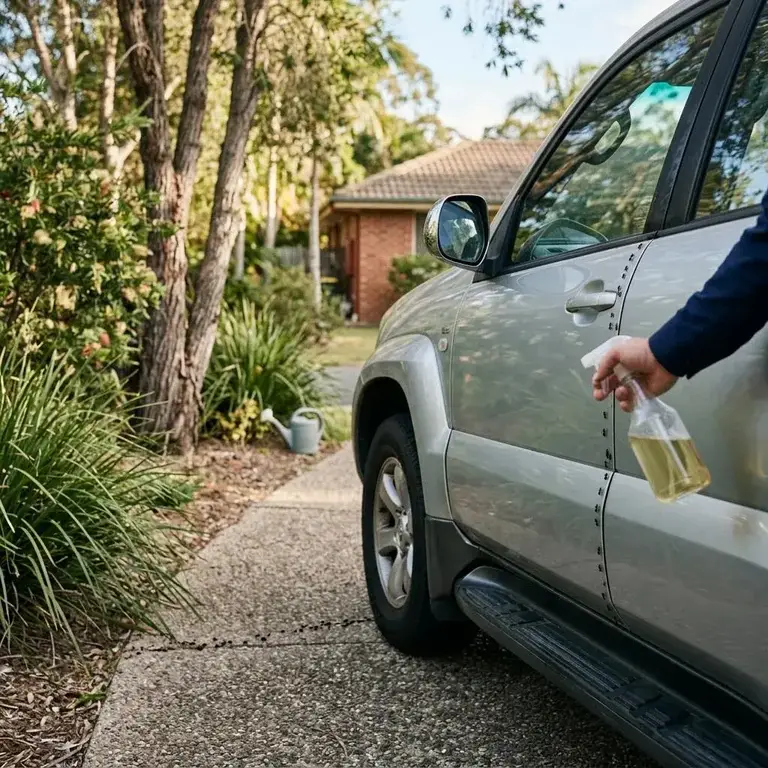
- Trails along skirting boards and bench edges — foragers follow set routes, often returning to the same gap day after day.
- Ants around kettles, toasters and fruit bowls — anywhere crumbs or sugary residue collects.
- Activity near sinks, dishwashers and dripping taps — ants need water as much as food.
- Trails on ceilings or cornices — a strong hint the colony is living in the roof void above you.
- Ants emerging from wall cracks, window frames or power points — indicates nesting inside wall cavities.
- Nest activity outdoors — loose soil under pavers, pots or along garden edges near the house.
- Sudden summer surges — a burst of indoor activity after rain or during heatwaves.
DIY vs Professional Black House Ant Control
DIY works when the nest is accessible and you bait correctly; professional treatment is the right call when nests are concealed in walls or roof voids, or trails keep returning after a fortnight of proper baiting. The core DIY method is simple: cut the food supply (sealed containers, soapy-water wipe-downs, nightly bin emptying), remove water sources (fix dripping taps, dry sinks overnight), trim branches touching the roofline, then bait — never spray. Workers share sweet non-repellent bait through the colony via trophallaxis, reaching the queen. Spraying the trail only kills foragers and can split the nest, as explained in our article on why ant sprays often make the problem worse.
| Factor | DIY baiting | Professional treatment |
|---|---|---|
| Reaches the queen | Yes, if sweet bait placed correctly | Yes — species-matched products at concealed entry points |
| Wall/roof-void nests | Rarely accessible | Located and treated directly |
| Typical cost | $15–$40 in products | $180–$350 |
| Time to results | 1–2 weeks | Usually faster, with follow-up if needed |
| Risk of colony budding | High if sprays are used | Low — non-repellent methods only |
How Much Does Black House Ant Pest Control Cost in Australia?
Across the Australian pest control industry, a professional ant treatment for a standard home generally runs between $180 and $350 AUD in 2025–26, with larger properties and concealed nests sitting at the higher end of the market. What pest control companies typically charge varies by property size, construction type (subfloor access adds time), number of colonies and whether follow-up visits are included in the quoted rate.
| Service | Typical market rate (AUD) | What’s included/notes |
|---|---|---|
| Standard ant treatment (unit or small home) | $180–$250 | Inspection, species ID, interior and exterior baiting |
| Standard house (3–4 bedroom) | $220–$350 | Full perimeter plus roof void/wall cavity treatment where accessible |
| Severe or multi-colony infestation | $300–$450+ | Multiple nest sites, may include follow-up visit |
| Annual pest control plan | $300–$600/yr | Scheduled treatments covering ants and general pests |
Ants often share kitchens with other stored-food invaders, so if you’re seeing pantry moths or silverfish alongside the trails, a combined service such as Silverfish & Pantry Pest Control can be more economical than paying separate callout fees at standard market rates.
Those figures reflect what the broader industry generally charges — not what you’ll pay with Aussie Pest Strike. Our ant treatments typically come in well under these market rates, so call [aps_phone] for an exact quote tailored to your property.
Seasonal Activity: When Black House Ants Are Most Active
Black house ant activity peaks from December to February, when warm, humid weather boosts foraging and colony growth. Activity stays moderate through spring and autumn, then drops in winter — though heated homes in southern states can sustain indoor trails year-round.
Jan
Feb
Mar
Apr
May
Jun
Jul
Aug
Sep
Oct
Nov
Dec
Typical relative foraging activity for black house ants across Australia — a sharp summer peak, a winter trough, and a steady spring build-up. Northern regions see less winter drop-off than the southern states.
Don’t confuse indoor black house ant trails with the soil mounds appearing on your lawn in spring — those are usually a different species, covered in our Coastal Brown Ants lawn and garden control guide.
Sealing Them Out for Good
Exclusion after the colony collapses is what stops the next nest moving in. Black house ants exploit the smallest gaps, so work methodically around your home’s perimeter.
- Seal cracks around window frames, weep holes and where pipes and cables enter walls.
- Fit door sweeps and repair torn flyscreens.
- Keep mulch, firewood and pot plants a hand’s width off external walls — these are prime nesting spots.
- Cut back vegetation touching the roof and eaves to remove aerial highways into the roof void.
Nine times out of ten, the trail a homeowner has been spraying for weeks leads to a nest in the wall cavity or roof void that no surface spray will ever touch. Once we place a sweet bait right at the concealed entry point, the colony usually collapses within a fortnight. The bait has to reach the queen — that’s the whole job.
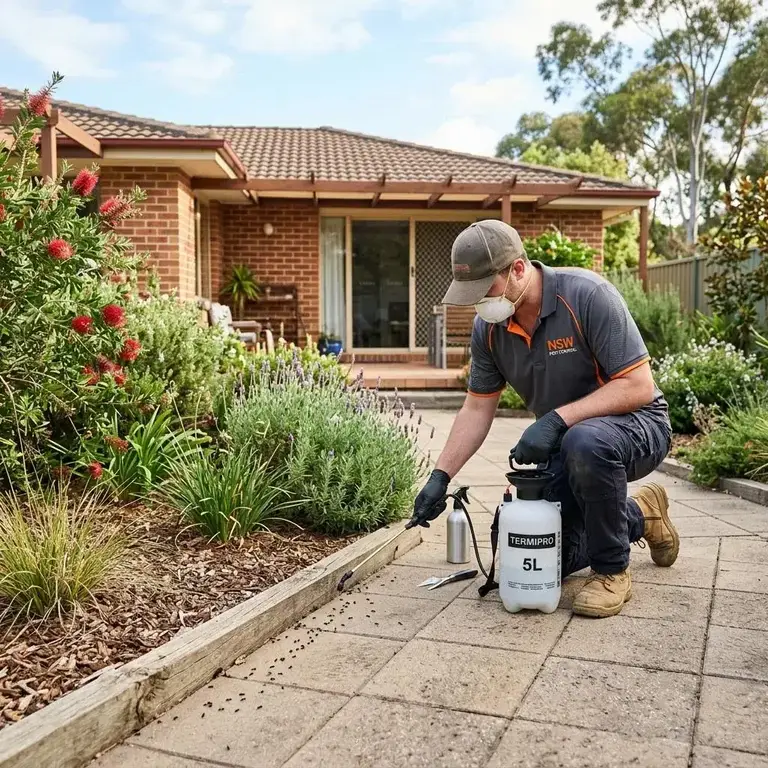
Start with two weeks of strict food and water control plus sweet non-repellent bait placed directly on active trails. If trails persist, appear on ceilings, or show up in several rooms at once, stop repeating retail products and book a professional Ant Control & Nest Treatment — concealed nests in walls and roof voids need licensed treatment at the source.
Frequently Asked Questions
What do black house ants look like and how do I identify them?
Black house ants (Ochetellus glaber) are small, glossy black ants measuring about 2.5 to 3 mm long. They are Australia's most commonly reported indoor ant. The clearest sign of an infestation is a persistent, organised trail moving between a food source and a fixed entry point, such as a gap in a skirting board or window frame. Because they are often confused with other species, checking a guide to common Australian ant species before treating is worthwhile, as misidentification is the number one reason DIY baiting fails.
Why does spraying ant trails make the problem worse?
Spraying a visible trail only kills the foraging workers you can see; it never reaches the queen back in the nest. Worse, sprays can cause the colony to split into multiple nests, a process known as budding, which spreads the problem through your home. The effective approach is a sweet, non-repellent bait placed on active trails. Workers carry it back and share it through the colony via trophallaxis, eventually reaching the queen so the whole colony collapses.
How do I get rid of black house ants myself?
Begin with two weeks of strict food and water control: seal pantry items, wipe benches with soapy water, empty bins nightly, fix dripping taps and dry sinks overnight, and trim branches touching the roofline. Then place sweet non-repellent bait directly on active trails — never spray, as this scatters the colony. Workers carry bait back to the queen, with results typically within one to two weeks. DIY baiting rarely reaches nests hidden in wall cavities or roof voids.
Why do I have ants on my ceiling or cornices?
Trails along ceilings or cornices strongly suggest the colony is nesting in the roof void above you. Black house ants use vegetation touching the roof and eaves as aerial highways into roof spaces, and they also travel through wall cavities. Surface sprays will never reach a concealed nest like this. Sweet bait placed at the concealed entry point is what works, because foragers carry it back to the queen. If ceiling trails persist after proper baiting, professional treatment at the source is usually needed.
When are black house ants most active in Australia?
Black house ant activity peaks from December to February, when warm, humid weather boosts foraging and colony growth. Activity stays moderate through spring and autumn, then drops in winter, though heated homes in southern states can sustain indoor trails year-round. Northern regions see less winter drop-off than southern states. Sudden indoor surges often follow rain or heatwaves. Note that soil mounds appearing on lawns in spring are usually a different species, such as coastal brown ants.
What attracts black house ants into my home?
Black house ants are sweet feeders that also favour greasy foods, and they need water as much as food. They gather around kettles, toasters, fruit bowls, sinks, dishwashers and dripping taps wherever crumbs or sugary residue collects. Australian housing stock suits them perfectly: slab homes develop hairline cracks where pavers meet foundations, subfloor homes offer cool protected voids, brick veneer creates cavity highways, and gaps around pipes give easy entry. A single property can host multiple colonies at once.
How much does professional black house ant treatment cost?
Professional black house ant treatment pricing varies with property size, construction type, colony count and whether follow-up visits are included. Smaller homes and units generally sit at the lower end of the range, standard family houses in the middle band, and severe or multi-colony infestations at the higher end. Annual plans that bundle ants with general pest coverage are usually more economical than one-off visits. Request itemised quotes from several licensed operators to compare what each treatment includes.
How do I stop black house ants coming back after treatment?
Exclusion work after the colony collapses prevents the next nest from moving in. Seal cracks around window frames, weep holes and where pipes and cables enter walls. Fit door sweeps and repair torn flyscreens. Keep mulch, firewood and pot plants a hand's width off external walls, since these are prime nesting spots. Cut back any vegetation touching the roof and eaves to remove aerial highways into the roof void. Black house ants exploit very small gaps, so work methodically around the entire perimeter.
What happens during an Aussie Pest Strike inspection for black house ants?
An inspection starts with identifying the ant species correctly, since misidentification is the main reason treatments fail. The technician traces active trails to their entry points, checks likely nest sites such as wall cavities, roof voids, subfloors and areas under pavers near the house, and looks for the moisture and food sources sustaining the colony. Once concealed nests are located, species-matched non-repellent products can be applied directly at those points rather than just treating visible foragers.
When should I call Aussie Pest Strike about black house ants instead of continuing DIY baiting?
Give DIY a fair go first: two weeks of strict food and water control plus sweet non-repellent bait on active trails. If trails persist beyond that fortnight, appear on ceilings or cornices, or show up in several rooms at once, stop repeating retail products and book a professional ant control and nest treatment. Concealed nests in walls and roof voids need licensed treatment at the source, and professionals can locate and treat those entry points directly so the bait reaches the queen.
Sources & further reading
Found Something
Dangerous?
Don’t touch it. Don’t spray it. Keep kids and pets clear, take a photo from a safe distance, and call us — or book a free inspection and we’ll come to you.
02 7235 0050