How Much DoesAnt TreatmentCost in Australia?
How Much Does Ant Treatment Cost in Australia? — ant treatment cost in Australia usually falls between $150 and $450 for a professional service, depending...
Wondering about ant treatment cost in Australia? Whether you typed the full question or just “n” into a search bar, here is the straight answer: professional ant treatment in Australia typically costs between $150 and $450, depending on the species, the size of your property and how established the infestation is. A simple baiting program for common black house ants sits at the lower end, while carpenter ant or multi-nest problems push costs higher.
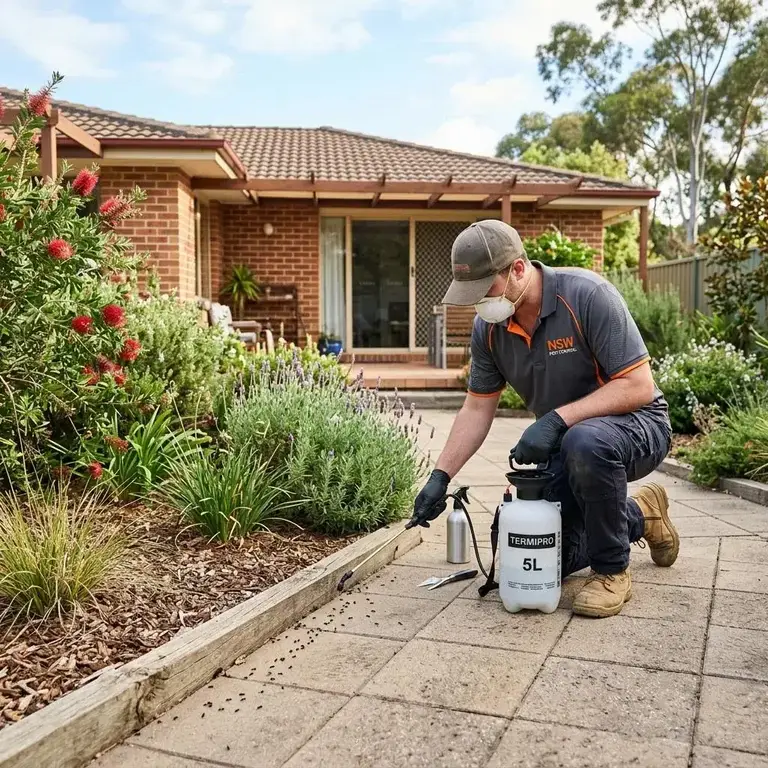
Ant treatment cost is best defined as the price a licensed pest control technician charges to identify the species, locate the nest, apply APVMA-registered baits or residual products, and back the work with a service warranty. Below, we break down real 2025–26 price ranges, the factors that move a quote up or down, seasonal patterns across the country, and when DIY stops being the cheap option.
- Most Australian homes pay $150–$350 for a standard professional ant treatment, with complex infestations reaching $450–$600.
- Species identification drives price — black house ants are the cheapest to treat; carpenter ants and multi-queen invasive species cost more.
- Repellent supermarket sprays often make infestations worse by causing colonies to bud into new nests.
- Spring and early summer are peak ant season nationally; booking early keeps costs down.
- A free inspection and fixed quote from a licensed technician is the most reliable way to price your job.
Why Ants Are Such a Persistent Problem Across Australia
Ants thrive in Australian conditions because our climate gives them long warm breeding windows and our housing styles give them endless entry points. Slab-on-ground homes develop hairline cracks that ants exploit, subfloor and weatherboard houses offer cool, sheltered nesting zones, and older Queenslanders with damp stumps and timber framing are prime targets for carpenter ants.
Australia has more than 1,300 described ant species, but only a handful regularly invade homes. Knowing which one you are dealing with matters, because treatment — and therefore cost — varies enormously. Our guide to common Australian ant species found in homes covers the usual suspects, from tiny black house ants trailing across kitchen benches to coastal brown ants building supercolonies along fences and pavers. In Queensland and northern New South Wales, heavy summer rain flushes nests and sends colonies surging indoors, which is why bookings spike after every wet spell.
Warning Signs You Need Professional Ant Treatment
A single ant on the bench is a scout, not a crisis — but recurring trails, nests or timber damage mean the colony is established and DIY is unlikely to hold. Watch for these signs:
- Recurring trails — ants reappearing along the same benchtop, skirting or window path within days of wiping or spraying.
- Multiple entry points — activity in several rooms at once, suggesting more than one nest or a budding multi-queen species.
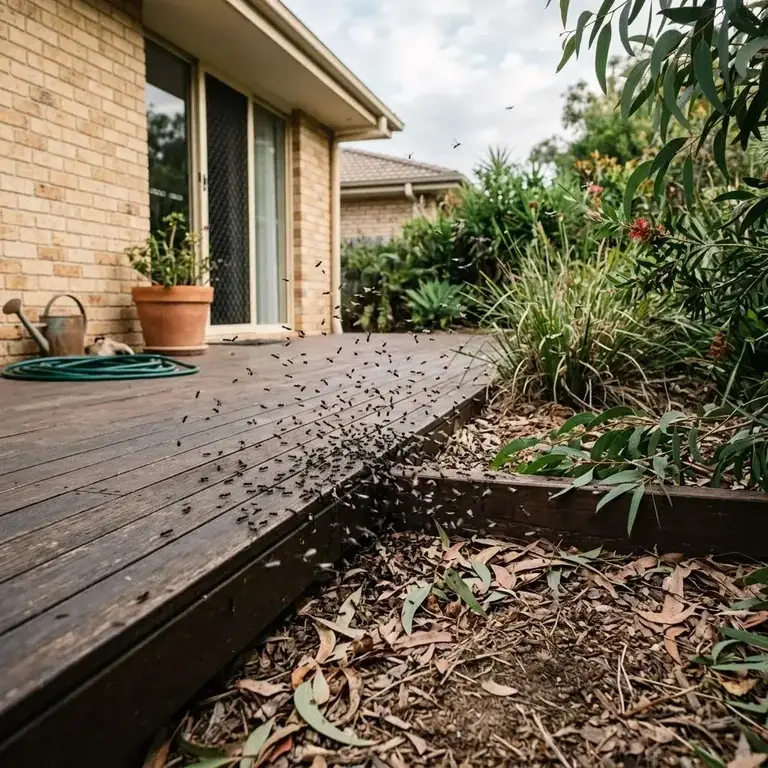
- Sand or soil mounds — fine dirt pushed up between pavers, along driveways or at the base of external walls.
- Frass or sawdust piles — carpenter ant galleries in decks, window frames or wall cavities expel shredded timber.
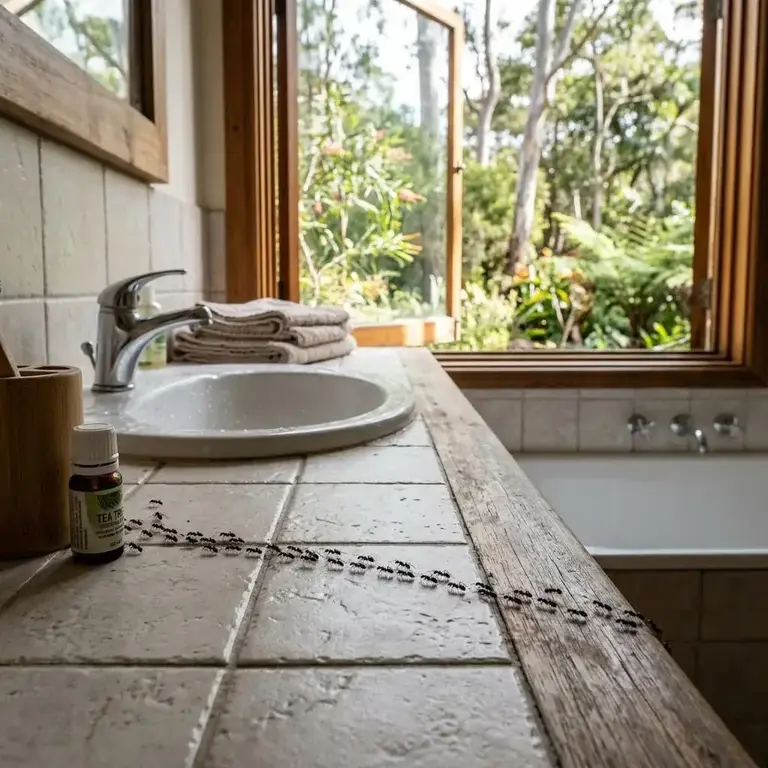
- Ants in wet areas — persistent activity around sinks, dishwashers and bathrooms, pointing to a moisture-driven nest.
- Winged ants indoors — alates emerging inside the house signal a mature colony nesting in the structure.
If you are seeing mostly small dark ants in the kitchen, our black house ants control guide explains why they behave the way they do and what actually eliminates the nest rather than the trail.
DIY vs Professional Ant Treatment
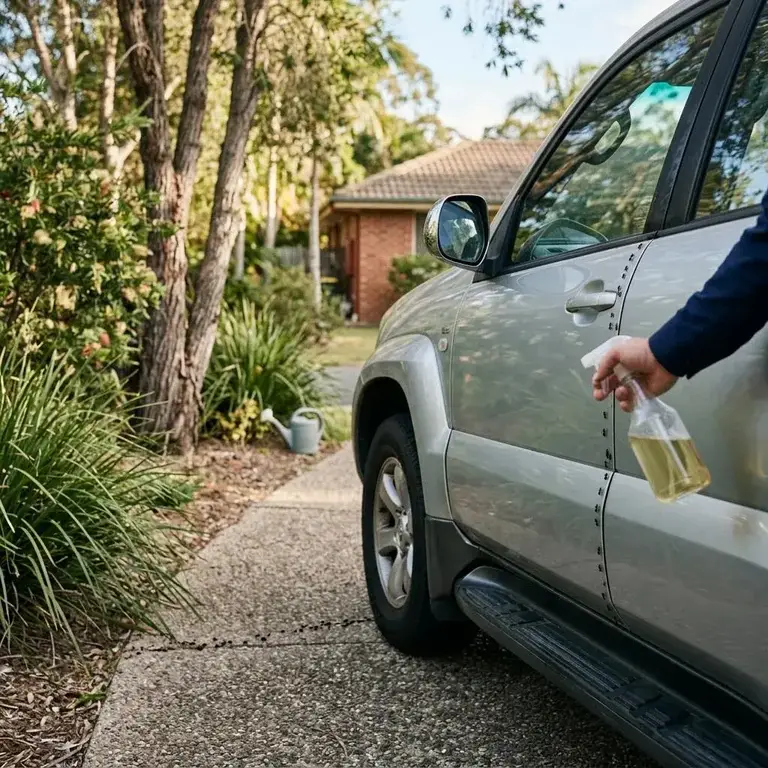
Hardware store sprays and baits cost $10 to $40 and can knock over a small, fresh trail of black house ants. The catch is that most retail products are repellent: survivors reroute around the treated zone, or the colony buds into several new nests that are harder and dearer to treat later. Licensed technicians use APVMA-registered non-repellent products that workers carry back to the queen, and in every state they must hold a pest control licence to apply them.
| Factor | DIY products | Professional treatment |
|---|---|---|
| Upfront cost | $10–$40 per product | $150–$450 typical |
| Product type | Mostly repellent sprays | Non-repellent transfer products, gel baits, dusts |
| Effect on colony | Kills foragers; colony often buds | Targets the queen and nest |
| Species identification | Guesswork | Identified during inspection |
| Warranty | None | Typically 3–6 months with free re-treatment |
We have written in detail about why sprays often make the ant problem worse — the short version is that repellent chemistry splits colonies, and a $20 can of spray can turn a $180 job into a $400 one. For anything beyond a single small trail, professional ant control & nest treatment is the more economical path over a full season.
Ant Treatment Costs in Australia: What You’ll Pay (n)
For a typical three- or four-bedroom Australian home, the industry generally charges $150–$350 for a standard ant treatment covering internal gel baiting, an external perimeter spray and dusting of weep holes or roof voids. Metro jobs in Sydney, Melbourne and Brisbane tend to sit mid-range, regional call-outs may attract a travel fee, and severe or multi-nest infestations commonly reach $450–$600 across the market once follow-up visits are factored in. If you have searched “n” or any variation of ant treatment pricing, these are the realistic 2025–26 Australian market rates.
| Service | Typical market rate (AUD) | What’s included/notes |
|---|---|---|
| Standard nuisance ant treatment (black house ants) | $150–$250 | Gel baits plus residual barrier spray; usually 3–6 month warranty; often a single visit |
| Coastal brown / Argentine ant program | $250–$450 | Sustained baiting for multi-queen supercolonies along fences, paths and garden beds |
| Carpenter ant nest location & treatment | $300–$600 | Wall cavity or timber nest work; extra labour; common in Queenslanders and weatherboard homes |
| Bull ant nest treatment | $80–$150 per nest | Priced per nest in lawns and garden beds |
| Follow-up / severe infestation visit | $100–$250 | Re-baiting or re-treatment for established colonies; sometimes included under warranty |
Across the industry, the main cost drivers are the species involved, property size and construction (double-storey homes, large blocks and subfloor access all add time on site), nest location (a garden nest is simple; a colony inside a wall cavity or under concrete is not), season and demand, and warranty inclusions. Packages with free re-treatments are generally priced slightly higher upfront but save money if ants return. Households battling ants often also deal with other stored-food invaders, so bundling with a service like silverfish & pantry pest control can reduce the combined market price of a general pest control visit.
Here’s the good news: Aussie Pest Strike typically comes in well under these market rates while still delivering the same thorough treatment and warranty cover. For an exact quote tailored to your property, give us a call on [aps_phone] and we’ll sort it out.
Seasonal Ant Activity Across Australia
Ant activity in Australia climbs sharply from early spring, peaks through the humid summer months and tapers off over winter, with tropical regions staying active almost year-round. Treating a small trail in September or October is far cheaper than dealing with an established, multi-nest colony in January.
Jan
Feb
Mar
Apr
May
Jun
Jul
Aug
Sep
Oct
Nov
Dec
Typical national ant activity pattern: activity builds from September, peaks December–February (with post-rain surges in QLD and northern NSW), and drops to its lowest point in mid-winter. Northern regions remain moderately active all year.
Nine times out of ten, the jobs that cost the most are the ones where someone has been spraying the trail for months. The colony buds, the nests multiply, and what would have been a straightforward baiting job becomes a wall-cavity excavation. Call early, identify the species, and the treatment almost always stays at the cheaper end of the scale.
Do not spend another season cycling through supermarket sprays. Book a licensed inspection, get the species identified, and have a non-repellent baiting and barrier program applied with a written warranty. Between visits, seal gaps around pipes and windows, store pantry food in airtight containers, fix leaking taps and trim branches touching the roofline — these steps cut re-infestation risk and keep your next treatment at the lower end of the price range.
Frequently Asked Questions
What does a typical ant treatment involve when a professional visits my home?
For a typical three- or four-bedroom home, a standard ant treatment usually covers internal gel baiting, an external perimeter spray and dusting of weep holes or roof voids. More complex jobs, such as carpenter ant nest work or severe multi-nest infestations needing follow-up visits, sit at the higher end of the market. Final cost depends on property size, construction type, infestation severity and how many treatments are required.
What factors push an ant treatment quote up or down?
The main cost drivers are the ant species involved, the size and construction of the property, and the location of the nests. Double-storey homes, large blocks and subfloor access all add time on site. A garden nest is simple to treat, while a colony inside a wall cavity or under concrete takes far more work. Season and demand also matter, and packages that include re-treatments are usually priced slightly higher upfront.
Why is black house ant treatment cheaper than other species?
Black house ants are the cheapest common species to treat because they respond well to a straightforward program of gel baits plus a residual barrier spray, often completed in a single visit at the lower end of the price range. By contrast, coastal brown and Argentine ants form multi-queen supercolonies needing sustained baiting, and carpenter ants require locating nests inside wall cavities or timber, which adds labour and cost.
Can I combine DIY methods with professional ant treatment for better results?
DIY sprays and baits can knock over a small, fresh trail of black house ants. Beyond that, DIY often fails because most retail products are repellent: surviving ants reroute around treated zones or the colony buds into several new nests. Professional technicians use APVMA-registered non-repellent products that workers carry back to the queen, targeting the whole colony rather than just the foragers you can see, which suits persistent or recurring problems.
What warning signs mean an ant problem needs professional treatment?
Look for recurring trails along the same benchtop, skirting or window path within days of cleaning; activity in several rooms suggesting multiple nests; fine sand or soil mounds between pavers or at wall bases; frass or sawdust piles from carpenter ant galleries; persistent ants around sinks, dishwashers and bathrooms; and winged ants emerging indoors, which signal a mature colony nesting within the structure itself.
How does season affect ant treatment timing and cost?
Ant activity climbs sharply from early spring, peaks through December to February, and drops over winter, though tropical northern regions stay moderately active year-round. Heavy summer rain in Queensland and northern New South Wales flushes nests and sends colonies indoors, causing booking spikes after wet spells. Treating a small trail in September or October is far cheaper than tackling an established multi-nest colony in January.
What should I do between treatments to keep ants from returning?
Simple prevention steps cut re-infestation risk and help keep future treatments at the lower end of the price range. Seal gaps around pipes and windows, store pantry food in airtight containers, fix leaking taps that create moisture-driven nesting conditions, and trim branches touching the roofline so ants cannot bridge onto the house. These measures reduce the attractants and entry points colonies rely on.
How many ant species invade Australian homes, and why does it matter?
Australia has more than 1,300 described ant species, but only a handful regularly invade homes. The usual suspects include tiny black house ants trailing across kitchen benches and coastal brown ants building supercolonies along fences and pavers. Knowing which species you are dealing with matters because treatment methods differ enormously between them, and that difference flows directly into what a job costs to treat properly.
What will a technician discuss with me about my ant problem?
Aussie Pest Strike technicians typically start by identifying the ant species during an inspection, since treatment and cost vary enormously between black house ants, coastal brown or Argentine ants, carpenter ants and bull ants. Expect discussion of where trails and nests appear on your property, whether repellent sprays have caused budding, the construction features affecting access such as subfloors or wall cavities, and a fixed quote tailored to your situation.
How do I get an accurate price for treating the ants at my place?
The most reliable next step is to book a licensed inspection so the species can be identified before any pricing is given. Aussie Pest Strike offers a free inspection and fixed quote tailored to your property, which avoids guesswork about whether you need simple baiting or more involved nest location work. Calling early in the season, before a small trail becomes an established multi-nest colony, keeps the job at the cheaper end of the scale.
Sources & further reading
Found Something
Dangerous?
Don’t touch it. Don’t spray it. Keep kids and pets clear, take a photo from a safe distance, and call us — or book a free inspection and we’ll come to you.
02 7235 0050