How Long ShouldYou Stay OutAfter Pest Control?
How long you should stay out after pest control depends on the treatment used. For most general sprays, plan to leave for 2 to 4 hours until treated...
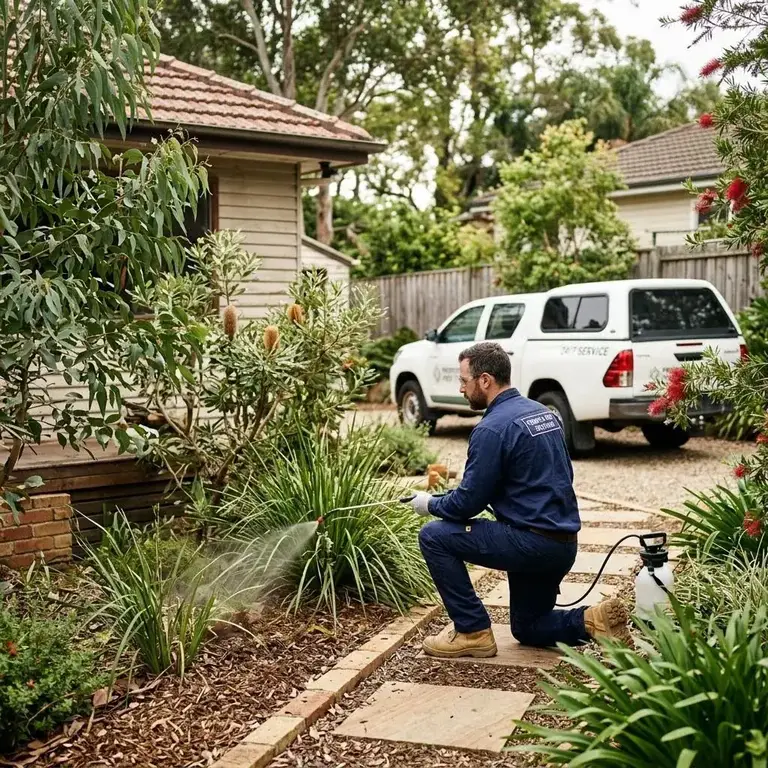
If you’ve just booked a general pest spray, the short answer to how long you should stay out after pest control is simple: most Australian homes need only 2 to 4 hours away, until every treated surface is completely dry. Fumigation and flea treatments are the exception, sometimes requiring 6 to 24 hours or more. Don’t wing it — always follow the written re-entry advice your licensed technician leaves behind, because label directions are legally binding.
Staying out after pest control isn’t just about your health; it protects the treatment itself. Walk across a wet residual barrier and you can carry it away on your shoes before it bonds, letting German cockroaches and black house ants march straight back in. If you’re the type who’d rather double-check than guess, this guide breaks down re-entry times by treatment type, the factors that change them, typical costs, seasonal patterns, and what to do the moment you walk back through the door.
- General surface sprays: leave for 2 to 4 hours until treated surfaces are fully dry.
- Flea treatments: typically 4 to 6 hours; full structural fumigation can require 24 to 72 hours.
- Gel baits, dusts and rodent stations usually require no evacuation at all.
- Humidity, ventilation, pets, pregnancy and asthma all change your stay-out time.
- Avoid mopping along skirting boards for at least a week so the residual barrier keeps working.
Why stay out after pest control times matter in Australian homes
The stay-out period exists because most liquid sprays are applied as a wet residual barrier along skirting boards, cracks and entry points, and that product can transfer to skin, clothing and paws while wet. Once dry, the active ingredient binds to the surface and poses minimal risk to people and pets.
Australia’s climate makes drying times genuinely variable. In a humid Brisbane summer or the Top End wet season, a spray that dries in an hour in Melbourne might take three in Cairns. Housing style matters too: a high-set Queenslander with open subfloor ventilation dries faster than a slab-on-ground brick veneer home with closed windows. Modern pest control products used in Australia are registered with the Australian Pesticides and Veterinary Medicines Authority (APVMA) and are formulated to be low-risk once applied correctly by a licensed technician and allowed to settle — but “once dry” is the critical condition. Don’t confuse this with the folklore you’ll find online; our guide on 10 Pest Control Myths Busted: Complete Australian Guide tackles the common misconception that you need to vacate for days after every spray.
Warning Signs You Need to Stay Out Longer
Certain situations extend the standard 2-to-4-hour window, and your technician should flag them before starting. Watch for these indicators that a longer absence — or extra precautions — applies to your household.
- Pregnant household members or newborns — most technicians advise extra ventilation time and caution even with low-odour products.
- Asthma, allergies or respiratory sensitivity — allow extended airing on return, typically 30 minutes or more of open windows.
- Birds, fish, cats or dogs in the home — birds and fish are especially sensitive; tanks and cages must be covered or relocated during application.
- Fumigation or flea-bomb signage — if insect growth regulators or structural fumigants are used, expect 4 to 6 hours minimum, up to 72 hours for full fumigation.
- High humidity or rain on treatment day — slow drying in tropical north Queensland and coastal NSW means surfaces stay wet longer.
- Severe German cockroach or termite work — additional dusts, flushing agents or barrier installations come with different label requirements.
DIY vs Professional Pest Control: Stay-Out Times Compared
DIY sprays from the hardware store often carry vague re-entry instructions, while licensed technicians give written, label-specific advice tailored to your home. Many off-the-shelf fixes also fail outright — our article on DIY Pest Remedies That Don’t Work (And What Does) explains why supermarket bombs rarely match a professional residual treatment. Similarly, gadgets like plug-in repellers don’t involve chemicals at all, but as we cover in Ultrasonic Pest Repellers: The Honest Truth, they rarely solve the problem either.
| Factor | DIY products | Licensed professional |
|---|---|---|
| Typical stay-out time | Varies; often unclear or overly cautious | 2–4 hours for general sprays, given in writing |
| Re-entry instructions | Fine print on the can | Verbal and written advice based on label directions |
| Product registration | APVMA-registered consumer strength | APVMA-registered professional formulations |
| Residual effectiveness | Often short-lived; easily mopped away | Weeks to months if barrier is left undisturbed |
Pest Control Costs in Australia (2025–26)
Across the Australian pest control industry, a standard general pest treatment for an average home typically costs between $180 and $350, with specialised services priced higher. These are typical market rates for 2025–26 — what Australian providers generally charge — and prices vary by state, property size and pest type. The ranges below reflect typical industry figures across the market.
| Service | Typical market rate (AUD) | What’s included/notes |
|---|---|---|
| General spray (cockroaches, spiders, ants) | $180–$350 | Internal and external residual spray; 2–4 hour stay-out |
| Flea treatment | $200–$400 | Insect growth regulators; 4–6 hours out, pets removed |
| German cockroach program | $250–$500 | Gel baits, dusts and follow-up visits |
| Rodent baiting program | $200–$450 | Lockable stations; usually no evacuation needed |
| Termite inspection | $250–$400 | Visual and moisture-meter inspection, written report |
| Termite barrier installation | $2,000–$5,000+ | Chemical barrier or baiting system; varies by perimeter length |
It’s worth knowing that Aussie Pest Strike typically comes in well under these typical market rates, without cutting corners on treatment quality. For an exact quote tailored to your property and pest problem, give us a call on [aps_phone] today.
Seasonal Pest Activity and Treatment Timing in Australia
Pest pressure peaks in the warmer months from October through March, when cockroaches, ants, spiders and fleas are most active, and drops through the southern winter. Humid northern regions stay active nearly year-round, which also means longer drying times for wet treatments.
Jan
Feb
Mar
Apr
May
Jun
Jul
Aug
Sep
Oct
Nov
Dec
Typical pest activity and treatment demand across Australia: peaks December–February, easing through winter, then building again from September. Book before the spring rush and allow extra drying time in humid months.
What to Do When You Return Home
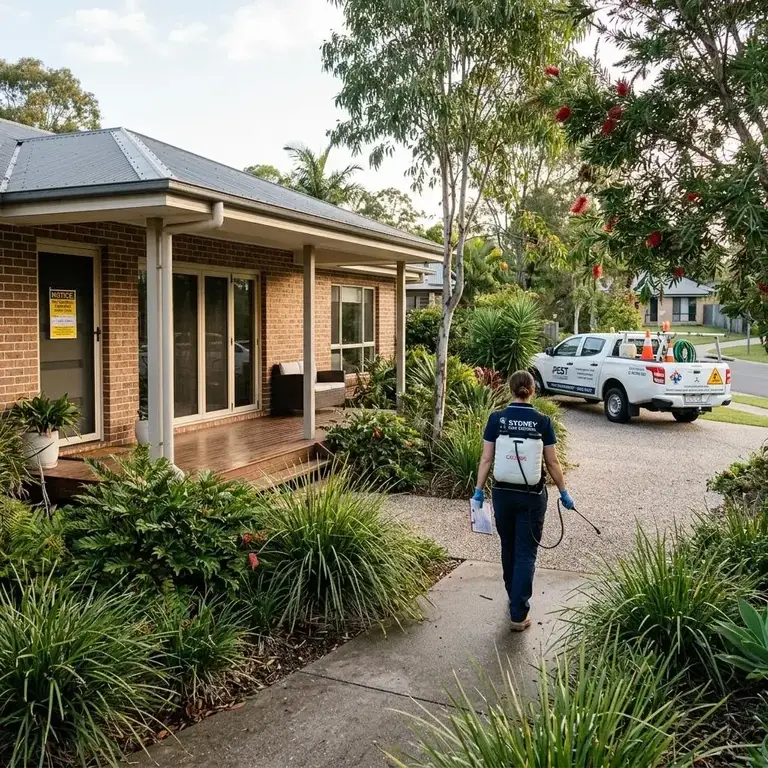
Once the recommended stay-out time has passed, open windows and doors for 15 to 20 minutes to air the property before settling back in. Then wash your hands before eating and wipe down food preparation surfaces such as benchtops.
Crucially, avoid mopping hard against skirting boards or washing external treated areas for at least a week, so the residual barrier keeps working. It’s normal to see more pest activity in the first few days as cockroaches and spiders are flushed out of hiding — that’s a sign the treatment is working, not failing. If anyone experiences headaches, nausea or irritation after re-entry, move outside into fresh air and contact your technician or the Poisons Information Centre on 13 11 26 for advice.
The biggest mistake we see isn’t people coming back too early — it’s them mopping the skirting boards the same afternoon and wiping away the barrier they just paid for. Give the product time to dry, follow the written re-entry time, and let it do its job. In humid weather, we always tell customers to add an extra hour rather than cut it fine.
Plan for 2 to 4 hours out of the house for any general spray, arrange pets and sensitive household members in advance, and ask your technician to confirm the exact re-entry time in writing on the day. If fumigation or flea treatment is involved, organise overnight accommodation where advised. When in doubt, add an hour — especially in humid conditions.
FAQs: Staying Out After Pest Control
How long should I stay out after pest control for cockroaches?
For a standard cockroach treatment using surface spray and gel bait, plan to stay out for 2 to 4 hours until all treated surfaces are dry. Severe German cockroach infestations treated with additional dusts or flushing agents may need slightly longer. Your technician will confirm the exact re-entry time on the day.
Is it safe to stay home during pest control if I have pets?
Most technicians ask that dogs and cats be removed or secured during application and kept off treated surfaces until dry, usually 2 to 4 hours. Birds and fish are more sensitive, so cover tanks and cages or relocate them. Always tell your technician about all pets before treatment begins.
Do I need to clean my house after pest control?
Light cleaning is fine, but timing matters. Wipe food preparation surfaces before use, but avoid mopping along skirting boards or washing external treated areas for at least 7 days. Cleaning too aggressively removes the residual barrier and lets pests return, undoing the treatment you paid for.
Knowing how long to stay out after pest control keeps your family, your pets and the treatment itself protected — and it only takes a little planning. If you’re unsure which treatment your home needs or you want clear, written re-entry advice from a licensed technician, book a free inspection with Aussie Pest Strike today — call us on [aps_phone]. We’ll assess your property, explain exactly what we’ll use, and give you straightforward guidance so you can return home with confidence.
Sources & further reading
Found Something
Dangerous?
Don’t touch it. Don’t spray it. Keep kids and pets clear, take a photo from a safe distance, and call us — or book a free inspection and we’ll come to you.
02 7235 0050