Ultrasonic PestRepellers: TheHonest Truth
Do ultrasonic pest repellers work? The honest, evidence-based answer is no. Learn why they fail against rodents and insects, and what actually works instead.
Do ultrasonic pest repellers work? The honest answer, backed by independent testing and consumer regulator action, is no — these plug-in devices do not reliably repel or eliminate rodents, spiders, cockroaches or mosquitoes in Australian homes. Ultrasonic pest repellers are plug-in devices that emit high-frequency sound (typically 20–65 kHz) claimed to drive pests away, but independent trials consistently show no lasting effect. Despite slick marketing, an ultrasonic pest repeller offers no real protection, and relying on one often lets a small problem grow into a serious infestation. If you’re weighing up gadgets versus proven pest control, this guide lays out the evidence, the costs and the alternatives that actually work Australia-wide.
Australians spend millions each year on these devices, drawn in by promises of chemical-free, set-and-forget protection. It’s an appealing pitch, especially in a country with some of the world’s most persistent household pests. But before you plug one in, it’s worth understanding why the technology fails, what regulators and researchers have found, and where your money is better spent.
- Ultrasonic pest repellers have not been shown in independent testing to provide lasting repellency against rodents, cockroaches, spiders or mosquitoes.
- High-frequency sound is blocked by walls and furniture, pests habituate within days, and cockroaches and ants don’t even hear in that range.
- The US Federal Trade Commission has taken action against repeller makers for unsupported claims; Australian consumer testing reached the same conclusion.
- The real cost is false security — weeks or months while a rodent or cockroach infestation compounds into structural, wiring and hygiene damage.
- Exclusion, sanitation, APVMA-approved baits and licensed professional treatment deliver results a $30–$80 gadget never will.
Why Ultrasonic Pest Repellers Appeal So Much in Australia
Australia’s climate and housing stock create ideal conditions for pests year-round, which makes a cheap, effortless fix understandably tempting. Warm, humid summers across Queensland and northern New South Wales drive cockroach and spider activity indoors, while cooler southern winters push rats and mice into roof voids and subfloors seeking warmth.
Our housing styles multiply the hiding spots. Older Queenslanders on stumps offer open subfloor access for rodents and termites; brick veneer homes on concrete slabs have weep holes and wall cavities that shelter cockroaches and spiders; and post-war weatherboard homes develop gaps around pipes, vents and eaves that mice can exploit — a gap as small as 6 mm admits a young mouse. In that environment, a device promising whole-house protection for under a hundred dollars sounds like a bargain. It’s the same psychology behind many of the quick fixes we debunk in our 10 Pest Control Myths Busted: Complete Australian Guide — the easier the solution sounds, the more sceptical you should be.
Warning Signs a Repeller Is Masking a Real Infestation
The clearest warning sign is pest activity continuing — or increasing — while a repeller is plugged in and running. Because the devices give a false sense of security, homeowners often notice the problem late, when it’s far more expensive to fix. Check for these signs:
- Droppings in cupboards, drawers or along skirting boards — rodent or cockroach droppings near a running device prove it’s not working.
- Gnaw marks on food packaging, timber or electrical cable — rats gnaw constantly and are a documented cause of electrical fires when they strip insulation.
- Scratching or scurrying sounds in walls, ceilings or subfloors — particularly at night, when rodents are most active.
- Grease marks or rub trails along walls and pipes — oily smears left by rats and mice following regular runways.
- Cockroach sightings during daylight — usually a sign the population has outgrown its harbourage and the infestation is established.
- Musty or ammonia-like odours in enclosed spaces — a common indicator of nesting rodents in roof voids or under floors.
How Ultrasonic Repellers Claim to Work — and Why They Fail
Manufacturers claim these devices emit high-frequency sound above the range of human hearing that irritates or drives away pests, with some models adding electromagnetic pulses said to travel through household wiring. The theory sounds plausible — and that’s exactly why the market keeps thriving. In practice, it falls apart on three fronts:
- Sound doesn’t travel through walls. High-frequency sound is easily blocked by furniture, walls and soft furnishings, so most of a home is completely unaffected. “Whole-house coverage” is physically impossible from a single plug point.
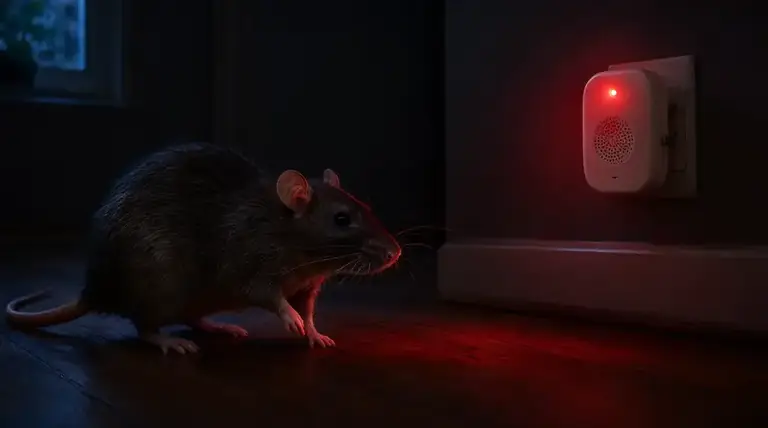
- Pests habituate. Any initial startle reaction fades within days as rodents learn the sound signals no real threat. Rats will nest within metres of a running device.
- Insects don’t hear it. Cockroaches and ants do not hear in the relevant frequency range at all, so claims of repelling them are baseless from the outset.
This isn’t just our opinion. In the United States, the Federal Trade Commission has taken enforcement action against ultrasonic repeller manufacturers for unsupported claims, and multiple university trials have found no meaningful reduction in rodent or insect activity. Independent Australian consumer testing has reached the same conclusion. If you’ve been burned by gadgets like this before, our review of DIY Pest Remedies That Don’t Work (And What Does) covers the same territory, and Vinegar and Baking Soda for Pests: Fact or Fiction? examines another popular “natural” fix.
DIY Gadgets vs Professional Pest Control
The fundamental difference is that proven pest control targets pest biology — entry points, food, water, harbourage and breeding cycles — while a repeller simply makes noise. Here’s how the approaches compare on what actually matters:
| Factor | Ultrasonic repeller | Professional treatment |
|---|---|---|
| Evidence of effectiveness | None in independent testing | Backed by APVMA-approved products and industry practice |
| Coverage | Blocked by walls and furniture | Targeted to where pests live and travel |
| Long-term result | Pests habituate within days | Breaks the breeding cycle; residual protection |
| Identifies the source | No | Yes — inspection finds entry points and nests |
| Upfront cost | $30–$80 per device | From around $150–$350 for general treatment |
What Real Pest Control Costs in Australia (2025–26)
A genuine fix typically costs more upfront than a gadget but far less than repairing the damage an unchecked infestation causes. The figures below are typical Australian market rates for 2025–26 — what the industry generally charges, not what any one company quotes. Actual quotes vary with property size, pest species and severity:
| Service | Typical market rate (AUD) | What’s included/notes |
|---|---|---|
| Ultrasonic repeller (for comparison) | $30–$80 | Plug-in device; no proven effect |
| General pest treatment (cockroaches, spiders, ants) | $150–$350 | Internal/external spray, dusting of voids, gel baits |
| Rodent control program | $200–$450 | Inspection, tamper-resistant bait stations, follow-up visits |
| Cockroach infestation treatment (severe) | $250–$500 | Gel baiting, residual treatment, multiple visits |
| Annual pest management plan | $300–$600/yr | Scheduled treatments and monitoring |
For context, repairing rodent-damaged wiring or replacing contaminated insulation in a roof void commonly runs into the thousands at typical trade rates — many times the cost of early professional treatment.
Here’s the good news: Aussie Pest Strike typically comes in well under these market rates. For an exact quote tailored to your property, give us a call on [aps_phone] — no obligation, straight answers.
Seasonal Pest Activity Across Australia
Pest pressure in Australia never fully stops, but it peaks through the warmer months when insects breed rapidly and rodents forage aggressively. The chart below shows typical combined household pest activity across the year for most populated regions:
Jan
Feb
Mar
Apr
May
Jun
Jul
Aug
Sep
Oct
Nov
Dec
Indicative combined household pest activity. Activity climbs from spring into a summer peak (cockroaches, ants, spiders), dips in mid-winter, but never reaches zero — rodents actively move indoors during the cooler months, which is why a repeller offers no seasonal respite.
Every month we walk into homes where the owner has three or four repellers plugged in and a rat nest twenty centimetres from one of them. The gadgets don’t hurt anything, but the false confidence does — by the time we’re called, what was a $250 job has become a wiring repair and a full roof-void cleanout. Spend the money on finding the entry point, not on noise.
Skip ultrasonic repellers entirely. Seal gaps of 6 mm or more, remove food, water and harbourage, and use APVMA-approved baits and gels placed where pests actually travel. For anything beyond a stray pest, book a licensed technician — professional inspection finds and treats the source, which is the only approach proven to clear an infestation and keep it cleared.
Frequently Asked Questions
Do ultrasonic pest repellers actually work in Australian homes?
No. Independent trials consistently show no lasting repellent effect against rodents, cockroaches, spiders or mosquitoes, and Australian consumer testing has reached the same conclusion. The US Federal Trade Commission has even taken enforcement action against repeller makers for unsupported claims. Relying on one often lets a small pest problem grow into a serious infestation while you believe your home is protected.
Why do ultrasonic repellers fail to cover a whole house?
High-frequency sound is easily blocked by walls, furniture and soft furnishings, so most of a home is completely unaffected by a single plug-in device. Claims of whole-house coverage from one power point are physically impossible. Any sound that does reach pests only causes a brief startle reaction before they habituate within days and learn the noise signals no real threat.
Do ultrasonic repellers work on insects like cockroaches and ants?
No. Cockroaches and ants do not hear in the relevant frequency range at all, typically 20–65 kHz, so claims that these devices repel them are baseless from the outset. Independent university trials have found no meaningful reduction in insect activity. For cockroaches and ants, proven approaches include sanitation, exclusion and APVMA-approved gels and baits placed where pests travel.
What warning signs show a repeller is masking a real infestation?
Pest activity continuing or increasing while a device is running is the clearest sign. Check for droppings in cupboards or along skirting boards, gnaw marks on packaging, timber or electrical cable, scratching sounds in walls or ceilings at night, grease marks along walls and pipes, cockroach sightings during daylight, and musty or ammonia-like odours in enclosed spaces such as roof voids.
How much do ultrasonic repellers cost compared with professional treatment?
Ultrasonic repellers are usually a one-off purchase per unit, but they lack proven effectiveness, so any money spent may deliver little real control. Professional pest treatment costs more upfront, yet it targets the actual infestation with evidence-based methods. For an accurate comparison, request quotes from local providers, since pricing depends on property size, pest species and infestation severity.
What is the real cost of relying on an ultrasonic repeller?
The biggest cost is false security. Weeks or months of believing a gadget is protecting your home allow rodent or cockroach infestations to compound into structural damage, chewed wiring and hygiene problems. Repairing rodent-damaged wiring or replacing contaminated roof-void insulation commonly runs into thousands at typical trade rates — many times the cost of early professional treatment.
Why do rodents seem to thrive in Australian homes despite repellers?
Australian housing offers ideal harbourage: Queenslanders on stumps give open subfloor access, brick veneer homes have weep holes and wall cavities sheltering pests, and weatherboard homes develop gaps around pipes, vents and eaves. A gap as small as 6 mm admits a young mouse. Cooler months push rats and mice into roof voids and subfloors, where sound-based devices offer no protection.
What actually works instead of an ultrasonic pest repeller?
Proven control targets pest biology rather than making noise. Seal gaps of 6 mm or more, remove food, water and harbourage, and use APVMA-approved baits and gels placed where pests actually travel. For anything beyond a stray pest, book a licensed technician — professional inspection finds entry points and nests, breaks the breeding cycle and delivers residual protection a gadget never will.
What information should I provide when contacting Aussie Pest Strike about a possible infestation?
When you call Aussie Pest Strike, describe what you are seeing and hearing: droppings, gnaw marks, scratching noises in walls or ceilings, grease trails, daylight cockroach sightings or musty odours. Mention how long signs have been present, whether any ultrasonic repellers are plugged in, your home's construction type, and areas affected such as the roof void, subfloor or kitchen. This helps the technician plan an appropriate inspection and treatment approach.
Should I unplug my ultrasonic repellers before a professional treatment?
Yes. If Aussie Pest Strike attends your home, remove or unplug any ultrasonic devices first so they do not create false confidence while the real problem continues. A licensed technician will inspect for entry points, nests and harbourage, then recommend exclusion measures, sanitation changes and APVMA-approved baits or treatments targeted to where pests live and travel. Ask for a written quote tailored to your property before any work begins.
Sources & further reading
Found Something
Dangerous?
Don’t touch it. Don’t spray it. Keep kids and pets clear, take a photo from a safe distance, and call us — or book a free inspection and we’ll come to you.
02 7235 0050