Vinegar and BakingSoda for Pests:Fact or Fiction?
Vinegar baking soda — Baking soda pests — vinegar and baking soda are the internet's favourite pest cures but do they work? Mostly, no. Vinegar can erase...
Vinegar and baking soda are the internet’s favourite pest cures, but the honest verdict on vinegar pest control is mostly no — and if you’ve typed “do I really need professional pest control?” after wiping a bench for the third time, this guide is for you. It can blur ant scent trails and freshen surfaces, while bicarb has only a narrow, baited role against cockroaches; neither reliably clears an infestation alone.
Put simply: vinegar and baking soda for pests are cleaning aids with narrow, short-term effects — not pest control treatments. Here is the honest, evidence-based breakdown of what these pantry staples can and cannot do in Australian homes, what actually works, and when it’s time to call a licensed technician.
- Vinegar erases ant pheromone trails temporarily but never kills the colony or nest.
- Baking soda mixed with sugar is an unreliable cockroach remedy — most roaches won’t eat a meaningful dose.
- Apple cider vinegar traps catch adult fruit flies but don’t stop breeding at the source.
- Effective control requires reaching the nest and eggs, which is why gel baits and professional treatments outperform pantry cures.
- A licensed general pest treatment in Australia typically costs $180–$350 — often less than months of failed DIY attempts.
Why vinegar pest control and baking soda matter in Australian homes
Australia’s warm climate and diverse housing styles make pantry-staple remedies especially tempting — and especially inadequate. From humid Queenslander homes in Brisbane to brick veneer houses in Melbourne and slab-on-ground builds in Perth, our conditions keep ants, cockroaches and fruit flies active for much of the year.
Australian cockroach species such as the German cockroach thrive in warm kitchens year-round, while black house ants and coastal brown ants exploit the gaps around subfloor vents, weep holes and slab edges common in local construction. Because pressure from pests is near-constant in most capital cities, a remedy that merely delays a trail — rather than destroying the nest — gives infestations time to establish. That’s the core problem with treating vinegar and baking soda as genuine pest control: they create the feeling of action while the colony quietly grows behind the wall or under the fridge. For a broader look at popular misconceptions, see our guide on 10 Pest Control Myths Busted: Complete Australian Guide.
Warning Signs Your DIY Remedy Isn’t Working
The clearest sign your vinegar or baking soda approach has failed is that pest activity returns within hours or days of treatment. Watch for these indicators that you’re dealing with an established infestation rather than a few stray scouts:
- Ant trails reforming within hours — a sure sign the nest is intact and still sending workers, no matter how often you wipe.
- Cockroach droppings or egg cases — small dark specks in cupboards or brown oothecae behind appliances indicate breeding, not passing visitors.
- Daytime cockroach sightings — roaches seen during the day usually mean harbourages are overcrowded and the population is large.
- Fruit flies persisting after traps — if adults keep appearing despite vinegar traps, the breeding source (drains, compost, overripe fruit) remains active.
- Activity spreading to new rooms — ants or roaches appearing beyond the kitchen suggests multiple nests or a growing colony.
- No reduction after two weeks of DIY — any honest home remedy should show clear results by then; if not, it’s time to escalate.
Vinegar, Baking Soda and What Each One Really Does
Vinegar has genuine but narrow uses; baking soda’s pest claims are mostly fiction. White vinegar’s acetic acid disrupts the pheromone trails ants lay down to guide the colony to food, which is why wiping benches with a vinegar solution can temporarily scatter a trail — but the nest keeps sending scouts. An apple cider vinegar trap with a drop of detergent does catch adult fruit flies, though it won’t stop breeding at the source.
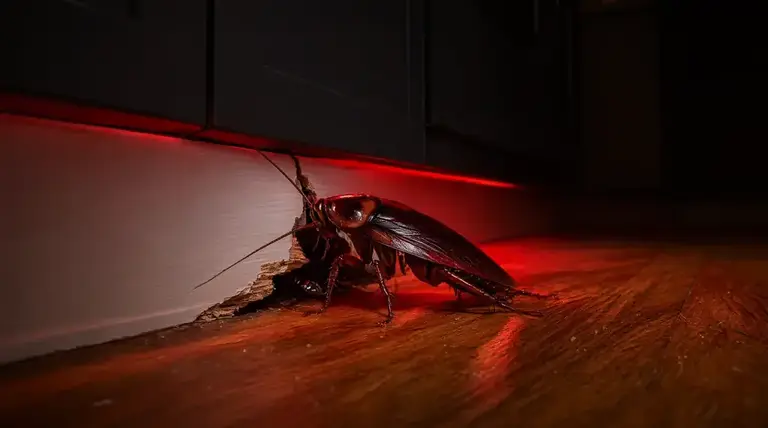
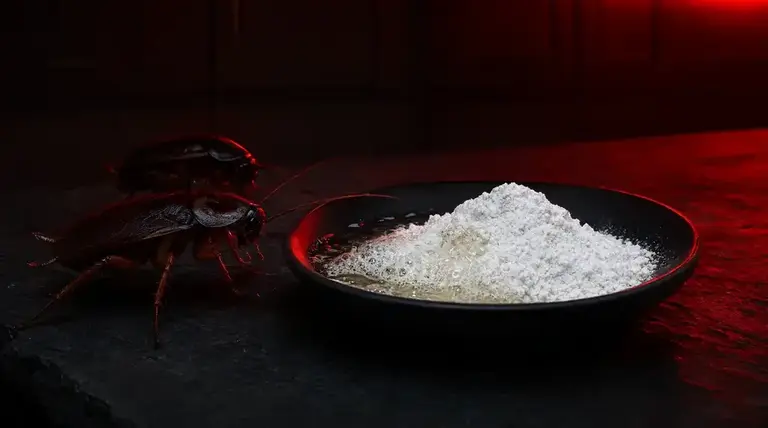
The baking-soda-and-sugar theory sounds scientific: sugar lures the roach, bicarbonate reacts with stomach acid, and the resulting gas supposedly ruptures the insect. In practice, cockroaches have an open respiratory system and a digestive setup very different from the human stomach the theory imagines. Even where a roach eats the mixture, the dose needed is far larger than one will voluntarily consume when better food is nearby. A modern gel bait, by contrast, contains an active ingredient designed to be shared through the colony via faeces and grooming, killing insects you never see — a transfer effect pantry cures completely lack. It sits alongside other overrated fixes in our review of DIY Pest Remedies That Don’t Work (And What Does).
| Remedy | Claimed use | Reality |
|---|---|---|
| Vinegar spray | Repel ants | Erases trails briefly only |
| Vinegar trap | Catch fruit flies | Catches adults, not the breeding source |
| Baking soda + sugar | Kill cockroaches | Unreliable; low uptake by roaches |
| Baking soda on carpet | Kill fleas | No evidence it works |
| Professional gel bait | Eliminate cockroach colonies | Proven transfer effect through the harbourage |
The same scepticism should apply to other heavily marketed gadgets — our honest assessment of Ultrasonic Pest Repellers: The Honest Truth reaches a similar verdict to vinegar pest control, another internet favourite.
What Professional Pest Control Costs in Australia (2025–26)
Across the Australian pest control industry, professional treatment typically costs far less than homeowners expect — especially compared to months of repeated DIY spending. The figures below are typical 2025–26 market rates charged across Australian capital cities, not any one company’s price list:
| Service | Typical market rate (AUD) | What’s included/notes |
|---|---|---|
| General pest treatment (ants, cockroaches, spiders) | $180–$350 | Internal/external spray, gel baiting, roof void and subfloor dusting where accessible |
| Cockroach-specific treatment | $220–$420 | Targeted gel baits and harbourage treatment; follow-up often included |
| Ant treatment (internal/external) | $180–$320 | Non-repellent transfer products aimed at the nest, not just trails |
| Flea treatment | $200–$380 | Carpet and subfloor treatment with insect growth regulator |
These typical market rates shift with property size, construction type (slab versus subfloor access) and infestation severity, so treat them as industry-wide benchmarks rather than a firm quote. Any chemical application should be carried out by a licensed technician using APVMA-registered products according to label directions.
Aussie Pest Strike typically comes in well under these market rates, so treat the figures above as the industry’s going rate — not the price you’d actually pay. Call [aps_phone] for an exact quote on your property.
Seasonal Pest Activity in Australia
Ant, cockroach and fruit fly pressure peaks through the warmer months and dips in winter, though heated kitchens keep German cockroaches active year-round. The chart below shows typical relative activity across the calendar year for the pests these pantry remedies target:
Jan
Feb
Mar
Apr
May
Jun
Jul
Aug
Sep
Oct
Nov
Dec
Activity peaks from November to February across most of Australia as heat and humidity accelerate breeding. Tropical regions see elevated activity year-round; southern states see the sharpest winter dip. Treating in early spring, before populations build, delivers the best results.
“I get asked about vinegar and bicarb on almost every job, and I tell customers the same thing: keep them for cleaning, because a clean kitchen genuinely helps. But when a customer asks me ‘can i fix this with the pantry?’, the answer is no — the colony is in the wall or under the slab, and the only way to reach it is with a bait the workers carry home for you.”
Use vinegar for what it’s genuinely good at — wiping away ant trails and food residue — then follow up with a proper bait, not a spray, so the active ingredient reaches the nest. Set an apple cider vinegar trap for fruit flies while removing overripe fruit and cleaning drains. Skip baking soda for cockroaches entirely and use a proven gel bait instead. If activity persists beyond two weeks, book a licensed technician before a small problem becomes an established infestation.
FAQ: Vinegar and Baking Soda for Pests
Does vinegar really get rid of ants?
No. Vinegar erases ant scent trails temporarily but does not kill the colony, so ants return within hours unless you also bait the nest. Use it as a cleaning step before baiting, never as the treatment itself.
Does baking soda pest control work for cockroaches?
Not reliably. The theory requires roaches to eat a large dose of baking soda, which most avoid when other food is available. A professionally formulated gel bait is far more effective because it spreads through the colony via grooming and faeces.
Are vinegar and baking soda safe to use around food areas?
Yes. Both are common household staples that are safe for cleaning kitchen surfaces, and removing food residue genuinely reduces what attracts pests. Just don’t mistake that hygiene benefit for actual pest elimination — cleaning supports control but never replaces it.
If the kitchen-cupboard cures aren’t cutting it, Aussie Pest Strike’s licensed technicians use targeted baits and treatments designed to reach the nest, not just the trail. Call Aussie Pest Strike on [aps_phone] to book a free inspection and no-obligation quote today and get an honest assessment of what your home actually needs — Australia-wide, no fluff, no gimmicks.
Sources & further reading
Found Something
Dangerous?
Don’t touch it. Don’t spray it. Keep kids and pets clear, take a photo from a safe distance, and call us — or book a free inspection and we’ll come to you.
02 7235 0050