10 Pest ControlMyths Busted:Complete Australian Guide
10 Pest Control Myths Busted: 10 Pest Control Myths Busted: Complete Australian Guide. 10 pest control — most stubborn pest problems are kept alive by myths...
Pest problems in Australia are rarely defeated by the pest itself — they’re kept alive by bad information. From the belief that a spotless kitchen is immune to German cockroaches, to the hope that a letter like “e” typed into a search bar will reveal a magic fix, misinformation costs homeowners real money. Pest control myths are widely believed shortcuts and folk remedies that sound plausible but fail against the actual biology of pests — and replacing them with what works is the fastest way to protect your home.
Below we bust ten of the most common pest control myths Australians believe, from Queenslanders on stumps in Brisbane to brick veneer homes in Melbourne and slab-on-ground builds in Perth. For every myth, you’ll get the fact, why the myth persists, and what to do instead — so you stop wasting money on approaches that were never going to succeed.
- Cleanliness reduces food sources but never blocks entry — pests arrive via packaging, luggage and structural gaps.
- Seeing one pest usually means many more hiding; termites and cockroaches work out of sight.
- Surface sprays and home remedies kill individuals, not nests or eggs — that’s why problems “come back”.
- Ultrasonic repellers, cats and cheese baits are folklore; biology-based treatment is what works.
- A licensed technician’s inspection is the cheapest reliable way to know what you’re actually dealing with.
Why Pest Control Myths Matter So Much in Australia
Australia’s climate and housing stock make myths unusually expensive, because our pests breed faster and hide better than almost anywhere else. Warm, humid conditions across Queensland and northern NSW let cockroaches, ants and rodents breed year-round, while subterranean termites attack timber in every mainland state.
Housing style compounds the risk. Older Queenslanders on stumps have open subfloors that shelter rodents and give termites concealed entry points. Brick veneer homes have weep holes and cavity gaps. Even modern slab-on-ground construction relies on chemical or physical termite barriers that degrade over time. When a homeowner believes a myth — that a clean house is immune, or that one spray fixes everything — the hidden population gets months of uninterrupted breeding time. In Australian conditions, that delay is the difference between a $250 treatment and a $5,000 termite repair bill. Searches for quick answers (even something as vague as “e” + pest) tend to surface folklore first, which is exactly the problem this guide corrects.
Warning Signs a Myth Has Been Masking a Real Infestation
The clearest sign a myth has failed you is evidence of pest activity appearing despite the “fix” you trusted. If any of the following are present, the folklore approach has run its course and the underlying infestation needs proper assessment.
- Droppings in cupboards, along skirting boards or in the subfloor — rodents are active regardless of how clean the kitchen is or whether you own a cat.
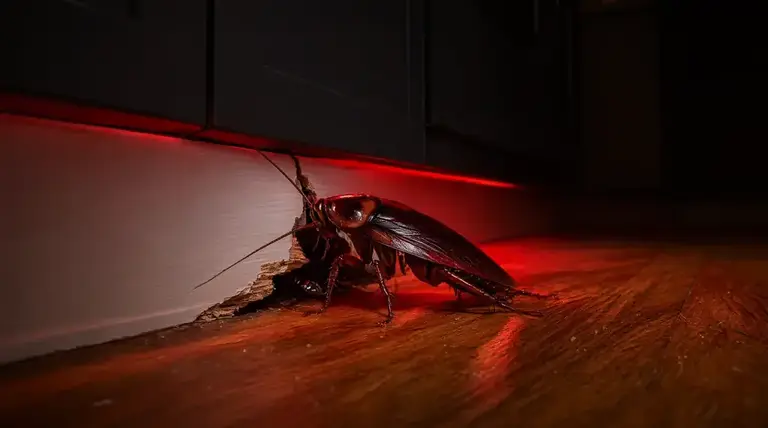
- Cockroaches visible during daylight — German cockroaches are nocturnal; daytime sightings usually signal a large, overcrowded population.
- Mud tubes on stumps, piers or slab edges — subterranean termites working silently, often for months, before any timber damage is visible.
- Hollow-sounding or sagging timber — termite damage well past the point where any surface spray could help.
- Bites or blood spots on bedding after travel — bed bugs hitchhike in luggage and follow blood, not dirt; five-star hygiene is no defence.
- A problem that “comes back” every few weeks — eggs and nests survived whatever you sprayed, sprinkled or plugged in.
DIY vs Professional Pest Control: Where the Myths Fall Apart
DIY products have a legitimate role in prevention and minor issues, but most of the ten myths collapse the moment you compare what a supermarket spray actually does against a licensed treatment. The table below shows the practical difference.
| Factor | DIY / myth-based approach | Licensed professional treatment |
|---|---|---|
| What it kills | Only the pests it directly touches | Nests, eggs and harborage areas via targeted products and baits |
| Hidden infestations | Missed entirely (termites, wall-void roaches) | Detected via inspection, moisture meters and experience |
| Chemical use | Over-application risk; breaching APVMA label rates is illegal | Applied at registered label rates and precise placements |
| Recurrence | Common — lifecycle never broken | Reduced — treatment targets the breeding cycle |
| Typical cost | $15–$60 per product, often repeated | $180–$450 for general treatment with warranty options |
The one-spray-fixes-all belief is a core theme of our DIY versus professional comparison. Equally persistent is the idea that kitchen concoctions match professional results — our review of DIY pest remedies that don’t work shows why vinegar, essential oils and similar mixtures rarely reach nests or eggs. And if you’ve been relying on bicarb and white vinegar specifically, read Vinegar and Baking Soda for Pests: Fact or Fiction? before spending another weekend on it.
What Proper Pest Control Costs in Australia (2025–26)
Across the Australian market, professional pest control generally runs between $180 and $450 for a standard general treatment, with termite work sitting higher due to inspection complexity and barrier installation. Market rates vary by state, property size and construction type — subfloor access on a Queenslander adds time, and larger brick veneer homes need more product. The figures below are typical industry-wide ranges, not quotes from any one company.
| Service | Typical market rate (AUD) | What’s included / notes |
|---|---|---|
| General pest treatment (cockroaches, spiders, ants) | $180–$350 | Internal and external spray, dusting of voids, gel baits; 3–6 month service warranty common across the industry |
| Rodent control program | $220–$450 | Lockable bait stations, exclusion advice, follow-up visits |
| Termite inspection | $250–$400 | Full timber pest inspection to Australian Standard, written report |
| Termite barrier / treatment | $2,000–$5,000+ | Chemical soil treatment or baiting system around slab or subfloor perimeter |
| Bed bug treatment | $300–$800 | Multi-visit program; market price depends on rooms affected |
Compare those market rates with the slow bleed of myth-driven spending: $30 sprays every month, a $60 ultrasonic plug-in, endless bicarb and essential oils. Many households spend $300+ a year on products that never address the nest — more than what the industry generally charges for a single professional treatment that does.
Here’s the good news: Aussie Pest Strike typically comes in well under these general market rates, without cutting corners on products, warranties or thoroughness. For an exact quote tailored to your property and pest problem, give us a call on [aps_phone] — we’ll tell you straight what the job needs and what it’ll cost.
Seasonal Pest Activity Across Australia
Pest pressure in Australia peaks through the warmer months (roughly October to March) and dips in mid-winter, though termites and rodents stay active year-round in most regions. Spring heat triggers cockroach and ant breeding; summer humidity supercharges it; autumn sends rodents indoors seeking warmth. The chart below shows typical combined pest activity by month.
Jan
Feb
Mar
Apr
May
Jun
Jul
Aug
Sep
Oct
Nov
Dec
Typical Australian pest activity by month: activity builds from September, peaks across December–February, and eases through winter — but rodents often spike indoors in May–July, and termites never fully stop. Booking treatment in early spring, before populations explode, is the smart play.
All Ten Myths, Busted
Here is the complete list: ten myths, the fact for each, and what to do instead. Every myth fails for the same reason — it ignores pest biology.
Myth 1: A clean home never gets pests. Fact: cleanliness helps, but German cockroaches, bed bugs and rodents enter the tidiest homes through packaging, luggage and structural gaps. Hygiene reduces food; it doesn’t block entry.
Myth 2: You only have pests if you see them. Fact: most infestations hide. Termites work silently inside timber for months, and a cockroach seen by day often signals a large population.
Myth 3: Cats and dogs keep rats away. Fact: pets catch the odd mouse, but rats simply avoid them — and pet food actively attracts rodents.
Myth 4: One spray solves the problem. Fact: surface sprays kill what they touch but miss eggs and nests.
Myth 5: More chemical means better results. Fact: over-application repels pests away from baits, scatters cockroaches into new harbourages, and breaches APVMA label rates — which is illegal and unsafe.
Myth 6: Ultrasonic repellers get rid of pests. Fact: independent testing has repeatedly shown no lasting effect. The full breakdown is in Ultrasonic Pest Repellers: The Honest Truth.
Myth 7: Daddy long-legs are the most venomous spider. Fact: debunked in our article on daddy long-legs myths — their fangs and venom pose no danger to humans.
Myth 8: Cheese is the best rat bait. Fact: rats prefer grains, chocolate and peanut butter.
Myth 9: Bed bugs only live in dirty beds. Fact: they infest five-star hotels; they follow blood, not dirt.
Myth 10: Home remedies work as well as professionals. Fact: most fail against the pest lifecycle — the pattern across all ten myths is that pests are beaten by understanding their biology, not by folklore.
Why do these beliefs persist? Because each contains a grain of truth: a cat does occasionally catch a mouse; a spray does kill the roach you can see. But a single visible pest is almost never the whole story — a German cockroach female carries an egg case holding up to 40 nymphs, and a pair of rats can produce more than a thousand descendants in a year. Folk remedies address the individual you noticed while the hidden population keeps breeding, which is exactly why the problem seems to “come back”. Understanding the lifecycle, not the folklore, breaks the cycle for good.
Most jobs I attend could have been fixed six months earlier and hundreds of dollars cheaper if the customer hadn’t trusted a plug-in repeller or a supermarket bomb first. The pests we can’t see are always the real problem — my job is to find where they’re breeding, not just kill the ones wandering across the kitchen floor. Skip the folklore, get the inspection, and the whole thing is usually sorted in one visit.
Stop spending on products that target the pest you can see. Book a professional inspection, treat the nest and lifecycle with a licensed technician (essential for any chemical treatment), and use DIY products only for prevention afterwards. Act early — small problems are cheaper and faster to fix than established infestations.
Frequently Asked Questions
Does a clean home really prevent pest infestations?
No. Cleanliness reduces the food sources pests rely on, but it never blocks entry. German cockroaches arrive through packaging and deliveries, bed bugs hitchhike in luggage regardless of hygiene standards, and rodents exploit structural gaps in even the tidiest kitchens. Hygiene is worth maintaining as part of prevention, but treating it as a complete defence leaves entry points open and hidden populations free to breed.
If I can't see any pests, does that mean my home is pest-free?
Not necessarily. Most infestations work out of sight. Subterranean termites tunnel silently inside timber for months before visible damage appears, and German cockroaches are nocturnal, so a single cockroach seen during daylight often signals a large, overcrowded population hiding in wall voids or cupboards. Waiting until pests are obvious gives them months of uninterrupted breeding time, which is why a professional inspection is the reliable way to know what you're dealing with.
Will having a cat or dog keep rats away from my home?
Pets catch the occasional mouse, but rats generally learn to avoid cats and dogs rather than being driven off by them. Worse, pet food left in bowls or stored loosely actively attracts rodents into the home. Relying on a pet as your rodent control strategy lets the real population keep breeding unchecked while you believe the problem is handled.
Why doesn't one spray of supermarket insecticide fix a pest problem?
Surface sprays only kill the individual pests they directly touch. They miss eggs, nests and harbourage areas where the bulk of the population lives, which is why problems seem to disappear then return every few weeks. A licensed treatment uses targeted products and baits designed to reach nests and break the breeding cycle, not just knock down the few insects visible at the time of spraying.
Is using more pesticide better than using less?
No. Over-application can repel pests away from baits and scatter cockroaches into new harbourages around the home, making the infestation harder to treat. It also breaches APVMA label rates, which is illegal and unsafe for occupants. Professional treatments apply registered products at label rates with precise placement, targeting where pests actually live and breed rather than dousing surfaces indiscriminately.
Do ultrasonic pest repellers actually work?
Independent testing has repeatedly shown that ultrasonic repellers have no lasting effect on pest populations. The devices may appear to work briefly, but pests habituate or simply avoid the sound's range while continuing to breed elsewhere in the structure. Money spent on plug-in repellers is typically wasted; biology-based treatment aimed at nests, entry points and food sources is what actually reduces infestations.
Are daddy long-legs spiders really the most venomous spiders in Australia?
This is folklore. Daddy long-legs have small fangs and venom that pose no meaningful danger to humans — the claim that their venom is supremely toxic but their fangs too short to bite people has been thoroughly debunked. They are harmless household residents. Believing the myth leads people to either fear them unnecessarily or assume all spider risks are exaggerated, when some Australian spiders genuinely do require professional attention.
Is cheese the best bait for trapping rats?
No. Despite cartoons and folk wisdom, rats prefer grains, chocolate and peanut butter over cheese. Using cheese in traps often means poor capture rates while the population keeps growing behind walls and in subfloors. Effective rodent control combines attractive baits matched to rat preferences with lockable bait stations, exclusion advice and follow-up visits to address the breeding population, not just individual animals.
How can Aussie Pest Strike help me tell whether I'm dealing with termites or another timber pest?
Mud tubes on stumps, piers or slab edges point to subterranean termites, but hollow-sounding or sagging timber can be mistaken for rot or other damage by untrained eyes. Aussie Pest Strike technicians inspect the property, check moisture levels and identify the actual pest before recommending treatment, so you don't spend money on the wrong fix. An accurate identification is the cheapest reliable way to know what you're truly dealing with.
What should I do first if I've spotted warning signs like droppings or daytime cockroaches?
Stop spending on sprays, plug-in repellers and kitchen remedies, and arrange a professional inspection instead. Aussie Pest Strike can assess evidence such as droppings along skirting boards, mud tubes or daytime cockroach sightings, confirm which pest is present, and explain what treatment the situation actually needs. Booking in early spring, before warm-season populations explode, is generally the smartest timing for treatment across most Australian regions.
Sources & further reading
Found Something
Dangerous?
Don’t touch it. Don’t spray it. Keep kids and pets clear, take a photo from a safe distance, and call us — or book a free inspection and we’ll come to you.
02 7235 0050