Common AustralianAnt Species Foundin Homes
Common australian ant — Ant species australia — the ant species most Australian households see indoors are black house ants, coastal brown ants, Argentine...
Ants are the most common pest complaint in Australian homes, and the phrase “ant species australia” covers a surprisingly varied cast — from the tiny black house ant trailing across your kitchen bench to the coppery fire ant that’s a genuine biosecurity threat in Queensland. Knowing which species you’re dealing with is the single most important step in getting rid of them, because each feeds differently, nests in different places and responds to different treatments.
Put simply: ant species in Australia differ enough in diet and nesting behaviour that a bait that wipes out one colony will be completely ignored by another. This guide identifies the species Australian households meet most often, explains why identification changes the treatment, and shows what professional pest control typically costs in 2025-26.
- The most common indoor ant species Australia-wide are black house ants, coastal brown ants, Argentine ants and odorous house ants, with fire ants a serious threat in warmer states.
- Identification drives treatment — sugar-feeders ignore protein baits and vice versa, so the wrong product simply sits untouched.
- Fire ants are a notifiable biosecurity pest: report them to authorities, never treat them with retail products.
- Professional ant treatment typically costs $180–$450 depending on species, colony size and property type.
- Activity peaks through the warm, humid months and after heavy rain, when flooded soil nests push colonies indoors.
Why Ant Species Australia-Wide Thrive in Local Homes
Australia’s climate and housing styles give ants near-ideal conditions. Warm, humid summers drive colonies to peak activity, while slab-on-ground homes offer easy entry through weep holes and expansion joints, and older Queenslanders and subfloor homes provide cool, sheltered voids beneath the floor where nests go undisturbed for years.
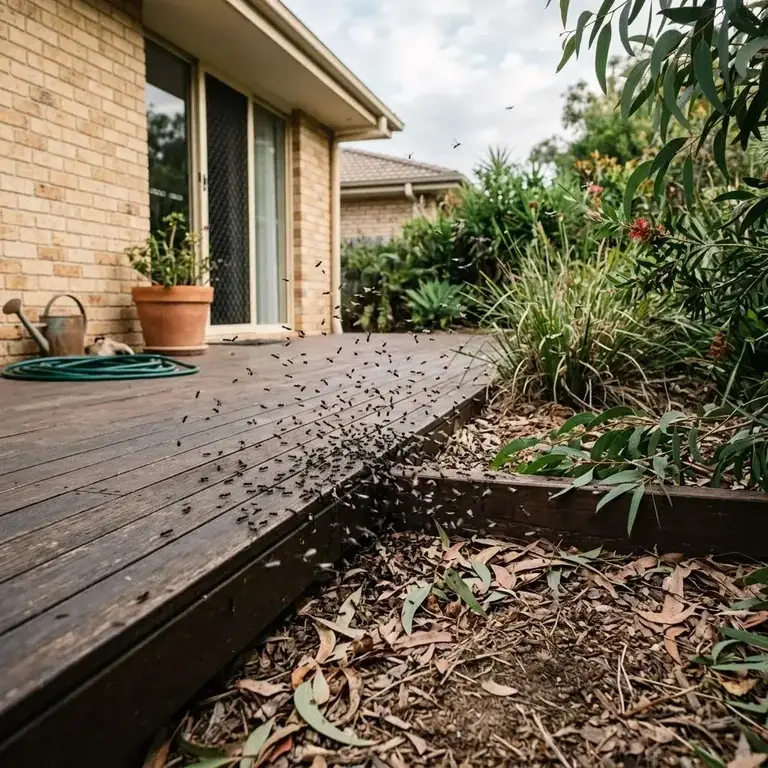
Brick veneer construction — the most common style in southern capitals — creates a hidden cavity between the brickwork and internal lining that black house ants in particular love. Coastal and northern homes see the widest range of species thanks to warmer year-round temperatures, while cooler southern states experience a sharper seasonal spike. After heavy rain, soil nests flood and colonies relocate to drier ground, which is often your wall cavities, roof void or subfloor. That’s why a stormy week so often ends with a trail of ants across the pantry shelf.
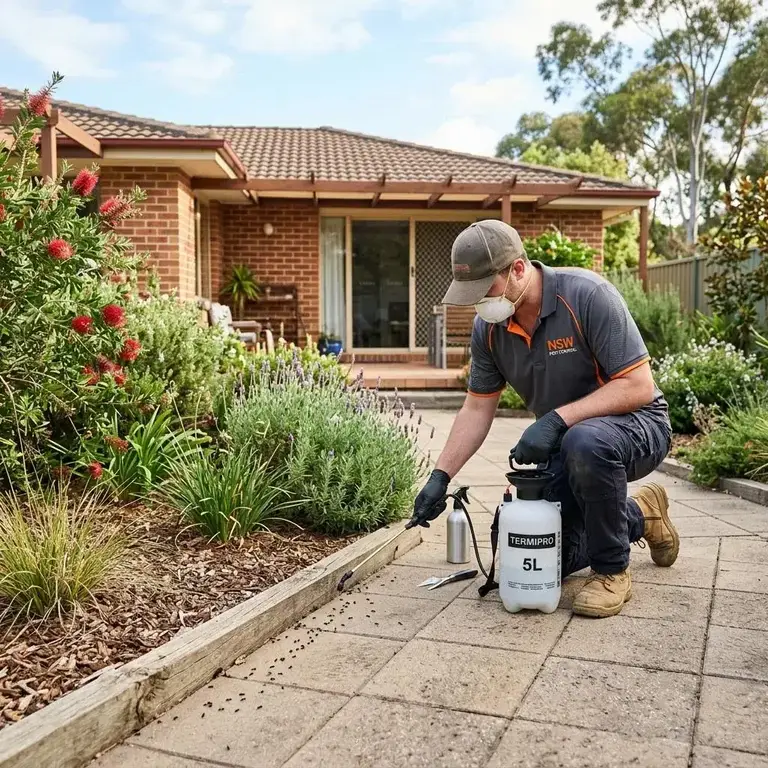
Understanding which species has moved in matters before you reach for any product. Our Ant Control & Nest Treatment service always starts with identification on site for exactly that reason.
The Ant Species You’re Most Likely to Meet
Five species account for the vast majority of indoor ant callouts across Australia. Here’s how to tell them apart at a glance.
Black house ant (Ochetellus glaber)
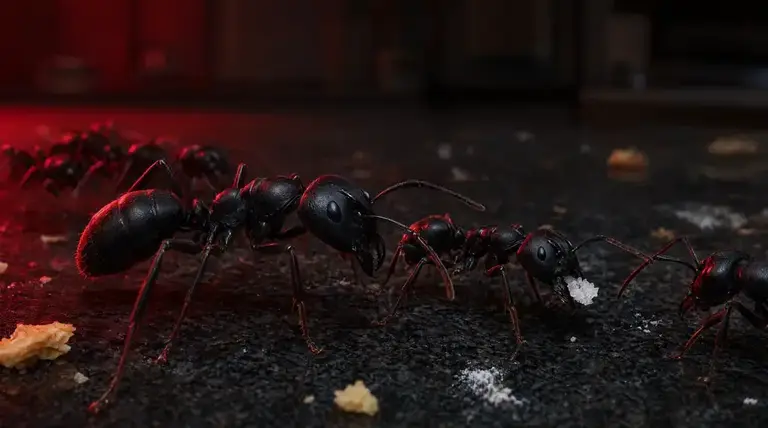
Shiny black, 2.5–3 mm, and Australia’s most common indoor ant. It loves sweet foods and nests in wall cavities, roof voids and garden soil. Harmless to people but relentless in kitchens, it forms long trails to any sugary spill or unsealed jar. For a deep dive, see our Black House Ants: The Complete Control Guide.
Coastal brown ant (Pheidole megacephala)
Light brown, 1.5–3 mm, with two worker sizes — tiny minors and big-headed majors that crack seeds. It throws up small soil piles between pavers and along lawn edges across coastal Queensland, NSW and WA, and it prefers protein and oils over sugar. Our Coastal Brown Ants: Lawn and Garden Control Guide covers outdoor management in detail.
Argentine ant (Linepithema humile)
Light brown, 1.6–2.6 mm, and a declared invasive species. It forms cooperating supercolonies with multiple queens, so trails can stretch across whole streets. Single-nest treatments rarely work because neighbouring nests simply reinvade.
Odorous house ant
Crush one and it smells faintly of rotten coconut. Small, dark and drawn to sugary spills, it’s a common kitchen visitor that’s easy to confuse with the black house ant.
Fire ant (Solenopsis invicta)
Coppery brown, 2–6 mm, and delivers a painful, burning sting. Fire ants are a notifiable biosecurity threat in Queensland and must be reported to authorities — never disturb the nest or attempt treatment with retail products.
Warning Signs: How to Tell Which Ant You Have
You can usually narrow down the species from a few observable clues before calling anyone. Run through this checklist:
- Colour and size: glossy black at 2.5–3 mm points to black house ants; light brown at 1.5–3 mm suggests coastal brown or Argentine ants; coppery brown at 2–6 mm is a potential fire ant.
- Food preference: trails heading for sugar, honey or fruit indicate black house ants; interest in pet food, meat or oils points to coastal brown ants.
- Soil mounds: small piles of excavated soil between pavers or along lawn edges are classic coastal brown ant activity.
- Smell when crushed: a faint rotten-coconut odour identifies the odorous house ant.
- Two worker sizes: tiny workers alongside big-headed soldiers in the same trail means coastal brown ants.
- Trail scale: heavy trails extending across multiple properties or a whole street suggest Argentine ant supercolonies.
- Painful sting: any stinging coppery ant in Queensland should be treated as a suspected fire ant and reported immediately.
Why Identification Changes the Treatment
Each species has a distinct diet and nesting habit, so the bait type and placement that eliminates one species may be completely ignored by another. A sugar-feeder like the black house ant ignores a protein bait, while coastal browns often reject sweet gels — get the match wrong and the bait sits untouched while the colony keeps growing.
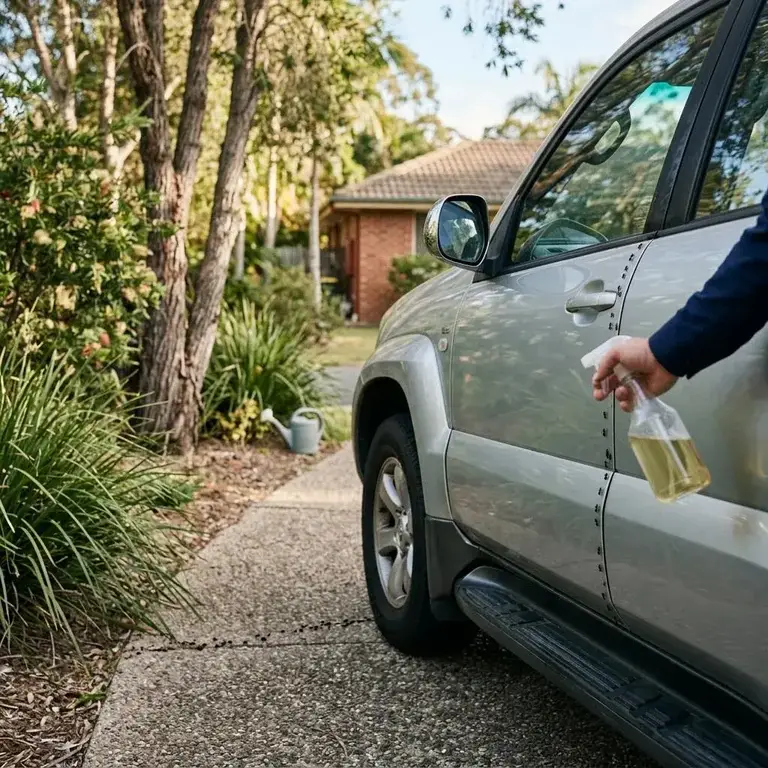
This is also why the wrong product can backfire badly. As we explain in Ant Control: Why Sprays Often Make the Problem Worse, repellent sprays scatter colonies and can cause species like pharaoh ants to split into multiple new nests. Correct identification, matched bait and patience are what actually collapse a colony at the queen.
DIY vs Professional Ant Control
Minor trails of common nuisance ants can sometimes be managed with careful DIY baiting, but misidentification, invasive species and hidden nests in wall cavities usually call for licensed pest control. Here’s an honest comparison:
| Factor | DIY approach | Professional treatment |
|---|---|---|
| Species identification | Guesswork from appearance; easy to confuse similar species | On-site identification by a licensed technician |
| Bait matching | One-size retail products; often the wrong food base | Bait selected to match the species’ actual diet |
| Nest location | Wall cavity and roof void nests rarely reached | Nest tracing and direct treatment where accessible |
| Risk of making it worse | Repellent sprays can split and scatter colonies | Non-repellent transfer products target the queen |
| Fire ants | Never appropriate — must be reported | Handled through official biosecurity channels |
What Does Ant Treatment Cost in Australia?
Across the Australian pest control industry, professional ant treatment generally costs between $180 and $450 in 2025-26, depending on the species, colony size, property type and whether follow-up visits are needed. These are typical market rates charged by licensed operators nationwide — here’s what the industry generally charges:
| Service | Typical market rate (AUD) | What’s included/notes |
|---|---|---|
| Inspection and species identification | $0–$120 | Often free with treatment booked; confirms species and nest locations |
| Standard internal ant treatment | $180–$280 | Gel baiting and targeted treatment for common nuisance ants |
| External perimeter and lawn treatment | $220–$350 | Granular baits and barrier treatment for coastal brown ants and garden nests |
| Multi-visit program (supercolonies, pharaoh ants) | $350–$450+ | Staged baiting over several weeks for Argentine or pharaoh ant infestations |
Across the market, homes with heavy subfloor or wall-cavity nesting, or large rural blocks, may sit above these ranges. Chemical treatments should always be applied by licensed technicians in line with APVMA-registered label directions.
Worth knowing: Aussie Pest Strike typically comes in well under these general market rates while still delivering licensed, professional-grade treatment. For an exact quote tailored to your property and ant problem, give us a call on [aps_phone] today.
Seasonal Ant Activity in Australia
Ant activity in Australian homes peaks from late spring through summer and spikes again after heavy rain. Indoor sightings surge through the warm, humid months when colonies forage hardest, and whenever flooded soil nests push ants into drier wall cavities.
Jan
Feb
Mar
Apr
May
Jun
Jul
Aug
Sep
Oct
Nov
Dec
Typical indoor ant activity across Australia: activity builds from September, peaks through December–February, and dips over winter — though northern and coastal homes stay active year-round, and heavy rain can trigger a spike in any month.
A Few More Ant Species Australia Households Encounter
Beyond the headline species, several others turn up seasonally in Australian homes and gardens:
- Sugar ants (Camponotus species). Large, sometimes 5–15 mm, often orange and black, active at night and drawn to sweet foods. They nest in soil, timber and tree stumps.
- Pharaoh ants. Tiny (about 2 mm) and yellowish, a problem in hospitals and multi-unit buildings because they nest in wall voids and split colonies readily when sprayed.
- Green-head ants. Metallic green-black, 5–7 mm, common in gardens, and they deliver a genuinely painful sting that occasionally triggers allergic reactions.
If ants in the pantry have you finding other stored-food invaders as well, our Silverfish & Pantry Pest Control service handles the full range of kitchen pests in one visit.
Nine times out of ten, a failed ant treatment comes down to the wrong bait for the wrong species. We see homeowners spray for weeks and actually feed the problem by splitting the colony. Identify the ant first, match the bait to its diet, and the colony usually collapses from the inside within a couple of weeks.
Identify the species before spending a dollar on products. If you’re seeing persistent trails, soil mounds between pavers, or any stinging coppery ant in Queensland, book a professional inspection. Licensed technicians can confirm the species, match the bait correctly and treat nests in wall cavities and roof voids that retail products simply can’t reach.
Ant Species Australia: Frequently Asked Questions
What are the tiny black ants in my kitchen?
They are almost always black house ants, a shiny 2.5–3 mm species drawn to sugar and grease that nests in wall cavities, roof voids and garden soil. They’re harmless but persistent, and sweet-based gel baits matched to their diet are the most effective way to eliminate the colony rather than just the visible foragers.
Are any common ant species Australia homeowners find dangerous?
Most indoor ants are harmless nuisances, but two deserve caution. Fire ants deliver painful stings and are a declared biosecurity pest that must be reported to authorities rather than treated yourself, while green-head ants can sting painfully and occasionally trigger allergic reactions in sensitive people.
Do different ant species need different treatments?
Yes. Because species differ in diet and nesting habits, the bait type and placement that eliminates one species may be completely ignored by another. Sugar-feeding black house ants reject protein baits, coastal brown ants often reject sweet gels, and spraying pharaoh ants splits their colonies into multiple new nests.
Not sure which ant species you’re battling? Aussie Pest Strike’s licensed technicians identify the species on site and match the right bait to it, clearing the colony properly the first time. Call Aussie Pest Strike on [aps_phone] to book your free inspection and quote today, or visit aussiepeststrike.com for expert pest control tailored to your home and your ant problem.
Sources & further reading
Found Something
Dangerous?
Don’t touch it. Don’t spray it. Keep kids and pets clear, take a photo from a safe distance, and call us — or book a free inspection and we’ll come to you.
02 7235 0050