Ant Control: WhySprays Often Makethe Problem Worse
Ant control why — spraying ants often backfires because surface insecticides kill only the foragers you can see while triggering the colony to split into...
If you’ve typed “n” into a search engine looking for ant control answers, chances are you’ve already been through the spray-and-repeat cycle that frustrates thousands of Australian households every summer. Ant control, put simply, is the process of eliminating the entire colony — queen, brood and workers — rather than just killing the visible foragers on your benchtop. That single distinction explains why the can of surface spray under your sink never actually fixes the problem.
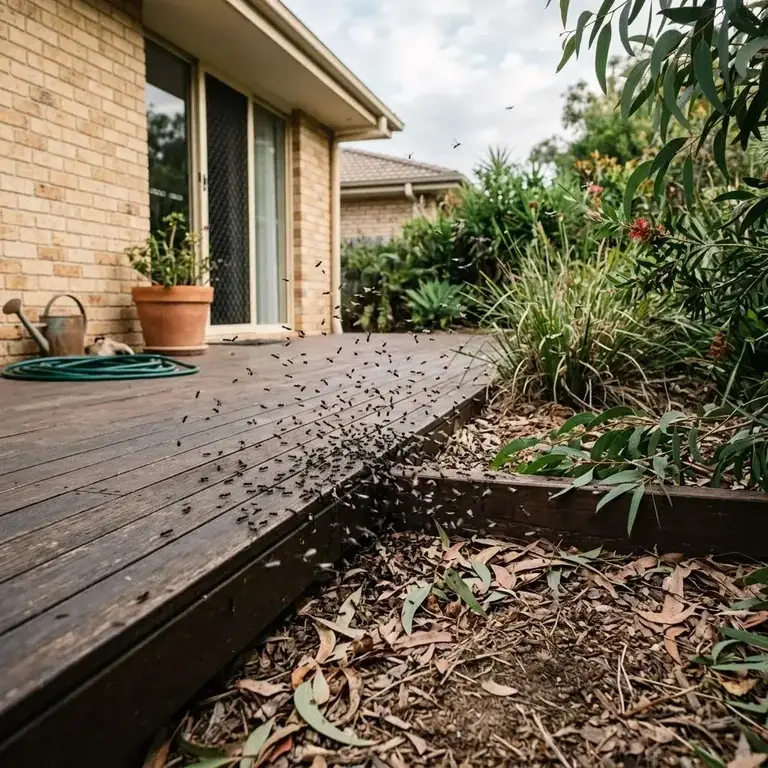
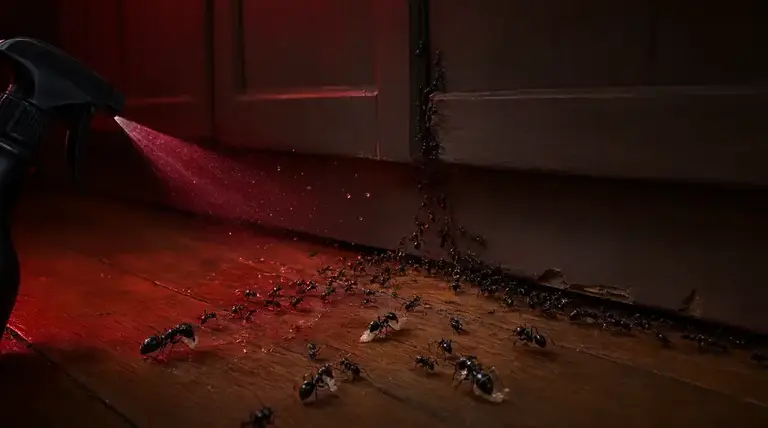
The ants marching across your kitchen are workers, and they represent a tiny fraction of the colony. A mature black house ant nest can hold thousands of individuals plus one or more queens, all hidden in wall cavities, soil or under paving. Retail repellent sprays kill the visible 5–10% while the queen keeps laying hundreds of eggs — and worse, the chemical alarm can trigger the colony to split into multiple satellite nests, a stress response called budding. You started with one trail and now you have three.
- Surface sprays kill only the foragers you can see — around 5–10% of the colony — while the queen keeps producing new workers.
- Repellent sprays can trigger “budding”, causing one colony to fragment into several satellite nests and making the infestation worse.
- Professional baiting works because workers carry non-repellent product back to the queen and brood, collapsing the colony in 1–3 weeks.
- Identifying the species first matters: sugar-feeding ants ignore protein baits and vice versa.
- Professional ant treatments in Australia typically cost between $180 and $450 depending on property size and nest complexity.
Why Ant Problems Hit Australian Homes So Hard
Australia’s climate and housing styles create near-ideal conditions for ants to nest in and around buildings for most of the year. Warm, humid conditions across Queensland and northern New South Wales support year-round foraging, while even cooler southern states see intense ant activity from late spring through autumn.
Housing design plays a big role too. Older Queenslanders on stumps offer shaded, sheltered subfloor voids that colonies love. Post-war brick veneer homes have generous wall cavities where species like the black house ant nest undisturbed for years. Modern slab-on-ground construction pushes nesting into garden beds, under pavers and along expansion joints — right against the slab edge, a short march from your pantry. If you’re unsure which species you’re dealing with, our guide to Common Australian Ant Species Found in Homes will help you match the ant to the right control method.
Species identification genuinely matters. Black house ants are the classic kitchen invaders and respond well to sweet liquid baits, while coastal brown ants undermine lawns, pavers and garden beds and need a different bait profile and treatment zone entirely.
Warning Signs Your “n” Ant Problem Is More Than a Nuisance
Occasional scouts are normal; persistent or recurring trails indicate an established nest in or near the structure. Watch for these signs that the colony is well established and DIY sprays are making things worse, not better.
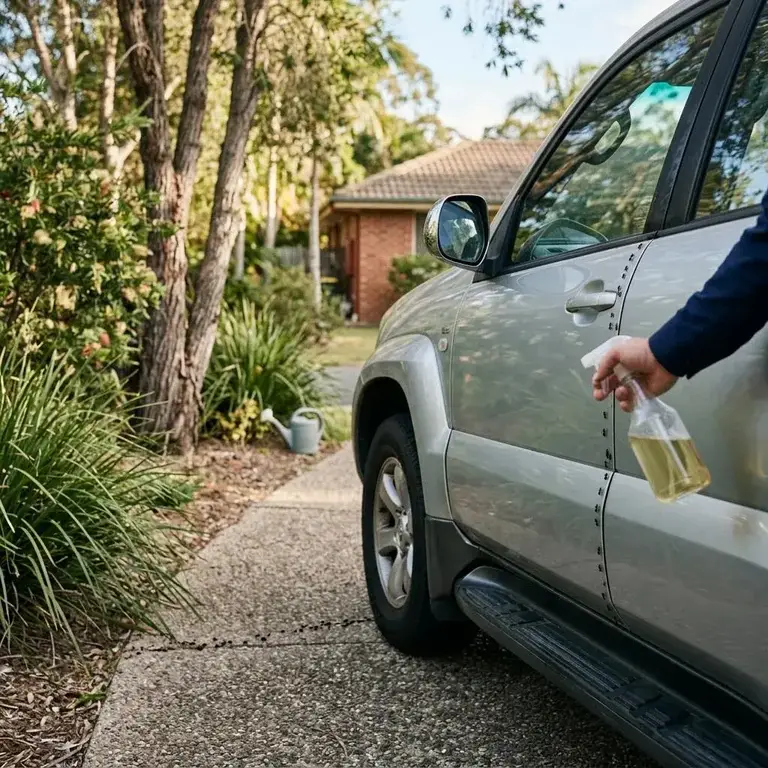
- Recurring trails in the same spot — trails that disappear after spraying and return within days mean the queen and brood are untouched.
- Multiple trails appearing after spraying — a classic sign of budding, where one colony has split into several satellite nests.
- Ants emerging from wall cracks, power points or skirting boards — indicates nesting inside wall cavities, common in brick veneer homes.
- Soil mounds between pavers or along the slab edge — typical of coastal brown ants nesting right against the building.
- Winged ants (alates) indoors in warm, humid weather — a mature colony is releasing new queens and males to start fresh nests.
- Ant activity in pantries and pet bowls — scouts have mapped reliable food and water sources inside your home.
DIY “n” Ant Sprays vs Professional Treatment
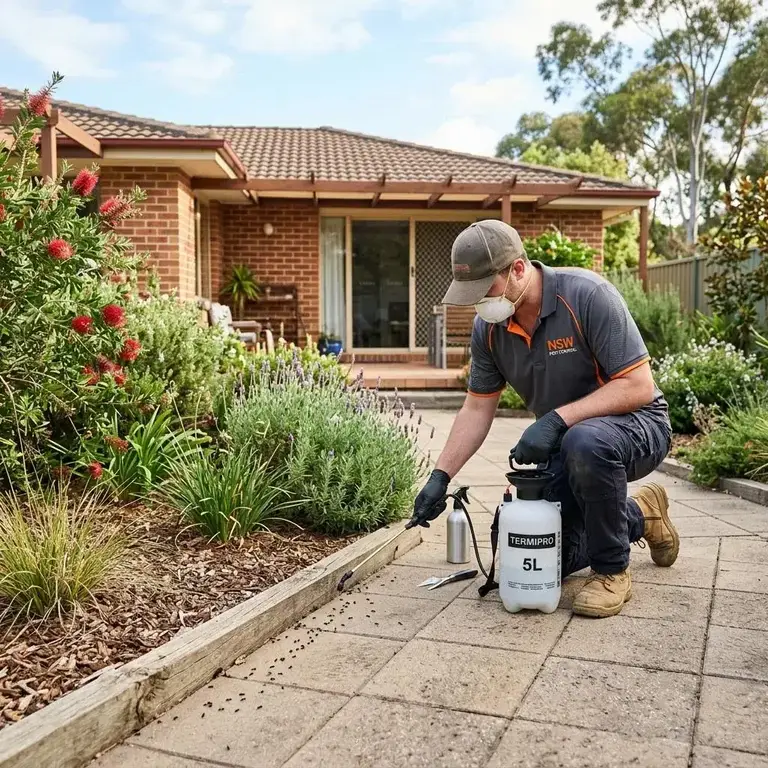
Off-the-shelf repellent sprays deliver a satisfying instant knockdown but almost never reach the queen; professional pest control uses non-repellent products and baits that workers unknowingly carry back to the nest. That’s the fundamental difference between treating the symptom and treating the source.
| Approach | Kills queen? | Risk of budding | Typical result |
|---|---|---|---|
| Retail repellent surface spray | No | High | Trail returns within days; colony may split |
| Hardware-store ant bait (DIY) | Sometimes | Low | Works only if bait matches the species’ food preference |
| Professional non-repellent gel/liquid bait | Yes | Low | Colony declines over 1–3 weeks |
| Professional non-repellent perimeter treatment | Indirectly | Low | Ongoing barrier; ants carry product back to the nest |
There is a place for sprays — just not the repellent kind. Non-repellent sprays applied by a licensed technician as a perimeter treatment work precisely because ants can’t detect them: they walk through the treated zone and carry the active ingredient back to the nest. The problem lies with off-the-shelf knock-down sprays used on visible trails, not with professional perimeter work. And while you’re treating, resist the urge to wipe trails with bleach or spray mid-treatment — you break the bait chain the whole strategy depends on.
What You Can Do Right Now (Without Making It Worse)
The most effective DIY steps are sanitation and exclusion, which cut off the food and water drawing ants inside in the first place. These measures support any baiting program and never trigger budding.
- Seal pantry goods in airtight containers and clean up spills and crumbs promptly.
- Fix dripping taps and leaking pipes — moisture attracts ants as much as food does.
- Clean under appliances, where grease and crumbs accumulate out of sight.
- Identify the species before baiting, because a sugar-feeding ant ignores a protein bait and vice versa.
- Keep pet bowls on a water moat or elevate them, and pick up uneaten food.
While you’re in the pantry, check for other stored-food invaders — weevils, moths and silverfish often share the same conditions. Our Silverfish & Pantry Pest Control service covers these alongside ant treatments where needed.
How Much Does Professional Ant Control Cost in Australia?
Across the Australian pest control industry in 2025–26, the typical market rate for professional ant treatment on a standard home sits between $180 and $450, depending on property size, species and nest complexity. That’s what the industry generally charges — and it’s often less than a summer’s worth of repeated retail spray cans, with an actual result at the end of it.
| Service | Typical market rate (AUD) | What’s included/notes |
|---|---|---|
| Internal baiting program (standard home) | $180–$280 industry-wide | Species identification, gel/liquid bait placement, follow-up advice |
| Internal + external treatment | $250–$380 industry-wide | Baiting plus non-repellent perimeter barrier around slab or foundations |
| Lawn/garden ant treatment (coastal brown ants) | $220–$450 industry-wide | Nest location, granular or liquid treatment of mounds and paving areas |
| Large or complex properties / severe infestations | $380–$550+ industry-wide | Multiple nests, wall-cavity treatment, staged follow-up visits |
These market rates shift with access (subfloor vs slab), the number of active nests and whether follow-up visits are required. A reputable operator will quote after inspection, not over the phone sight-unseen.
Here’s the good news: Aussie Pest Strike typically comes in well under these general market rates while still delivering a full professional treatment. For an exact quote tailored to your property, give us a call on [aps_phone] today.
Seasonal Ant Activity Across Australia
Ant foraging in most of Australia peaks through the warmer months, with black house and coastal brown ants most active between December and February. Northern regions see meaningful activity almost year-round, while southern states experience a sharper winter lull.
Jan
Feb
Mar
Apr
May
Jun
Jul
Aug
Sep
Oct
Nov
Dec
Typical ant foraging intensity across temperate Australia: activity builds from September, peaks December–February, and eases through the cooler months. Queensland and northern WA show flatter, year-round activity.
The Hidden Cost of the Spray Cycle
Every time you spray and the trail returns, you’re paying twice — for the product and in wasted effort — while the colony quietly recovers and expands. Across an Australian summer this cycle can run for months, and repeated retail spraying also builds background chemical residue across benches and floors: precisely the surfaces you cook and eat on, for no lasting benefit.
There’s an environmental cost as well. Repellent surface sprays don’t discriminate; they knock down beneficial insects and can wash into stormwater. Targeted baiting uses a fraction of the active ingredient, placed where only ants reach it — which is both more effective and more responsible. All chemical treatments should be applied by licensed technicians using APVMA-registered products in accordance with label directions.
The worst ant jobs we attend are almost always the ones where someone’s been spraying for months. By the time we arrive, one colony has budded into four or five nests spread across the wall cavities and garden. Leave the trail alone, let the bait do its work, and the whole colony comes down — that’s the job done properly.
Stop spraying visible trails today. Identify the species, remove food and water sources, and engage a licensed technician for a targeted baiting program backed by a non-repellent perimeter treatment. Expect visible trails for the first few days — that means the bait is being carried home to the queen.
Frequently Asked Questions
Why do retail ant sprays make the problem worse?
Repellent surface sprays kill only the visible foragers, which represent roughly 5–10% of the colony, while the queen keeps laying hundreds of eggs. Worse, the chemical alarm can trigger budding, a stress response where the colony splits into multiple satellite nests. You start with one trail and end up with three, so the infestation spreads rather than shrinks.
What is ant control actually trying to achieve?
Ant control means eliminating the entire colony — the queen, brood and workers — not just killing the ants you can see on your benchtop. The ants marching through your kitchen are workers from a mature nest that can hold thousands of individuals plus one or more queens, hidden in wall cavities, soil or under paving. Killing visible ants alone never touches the source.
What is budding and how do I know it has happened?
Budding is a stress response where one colony fragments into several satellite nests after being disturbed by repellent chemicals. The classic sign is multiple new trails appearing after spraying, where previously there was only one. If trails disappear briefly but return within days, or multiply after each spray session, the queen and brood are untouched and the colony is splitting.
Why does identifying the ant species matter before treating?
Species identification determines which bait will work. Black house ants, the classic kitchen invaders, respond well to sweet liquid baits, while coastal brown ants that undermine lawns, pavers and garden beds need a different bait profile and treatment zone entirely. A sugar-feeding ant ignores a protein bait and vice versa, so guessing wastes time and lets the colony keep growing.
How does professional baiting collapse an ant colony?
Professional treatments use non-repellent gels, liquids and perimeter products that ants cannot detect. Workers walk through treated zones or feed on baits and unknowingly carry the active ingredient back to the nest, where it reaches the queen and brood. The colony then declines over one to three weeks, addressing the source instead of just the visible symptom.
What warning signs show my ant problem is well established?
Watch for recurring trails in the same spot that return within days of spraying, multiple trails appearing after spraying (a sign of budding), ants emerging from wall cracks, power points or skirting boards, soil mounds between pavers or along the slab edge, winged ants indoors in warm humid weather, and activity in pantries and pet bowls.
What can I do myself without making the ant problem worse?
Focus on sanitation and exclusion, which never trigger budding. Seal pantry goods in airtight containers, clean spills and crumbs promptly, fix dripping taps and leaking pipes since moisture attracts ants as much as food, clean under appliances where grease accumulates, identify the species before baiting, and elevate pet bowls or place them on a water moat while removing uneaten food.
When are ants most active in Australian homes?
Ant foraging peaks through the warmer months, with black house and coastal brown ants most active between December and February. Activity builds from September in temperate areas and eases through winter. Queensland and northern regions see meaningful activity almost year-round due to warm, humid conditions, while southern states experience a sharper lull during the cooler months.
How does Aussie Pest Strike approach ant control differently from using retail sprays?
Describe where trails appear, how long they have persisted, and whether they return or multiply after spraying, as this helps indicate nesting sites and possible budding. Mention any sightings of winged ants, soil mounds near pavers or the slab edge, and food or moisture sources such as pet bowls or leaking taps. The technician should identify the species before recommending baiting or a non-repellent perimeter treatment.
What is a practical next step if I keep reaching for the spray can every summer?
Stop spraying visible trails, since wiping them with bleach or spraying mid-treatment breaks the bait chain a proper program depends on. Instead, note where trails appear and contact Aussie Pest Strike to arrange an inspection, so the species can be identified and a targeted baiting or non-repellent perimeter plan quoted for your property. Meanwhile, keep up sanitation steps like sealed pantry goods and fixing leaks.
Sources & further reading
Found Something
Dangerous?
Don’t touch it. Don’t spray it. Keep kids and pets clear, take a photo from a safe distance, and call us — or book a free inspection and we’ll come to you.
02 7235 0050