Ants in Your Car:How They Get In andHow to Evict Them
Finding ants in your car is more common than most drivers expect, especially during an Australian summer. Ants climb in searching for crumbs, sweet spills...
Finding ants marching across your dashboard is more common than most Australian drivers expect, especially through summer. Ants climb in searching for crumbs, sweet spills and water, and some species even nest in door cavities, seat foam or the engine bay. The fix is straightforward: clean thoroughly, bait strategically, park smart and act fast before a few scouts become a colony.
Put simply, ants in your car means a foraging trail — or worse, a satellite nest — has been established inside your vehicle, and it will keep growing until the food source, scent trail and nearby colony are all dealt with. A vehicle offers everything ants need: shelter from heat and rain, engine warmth, and often a steady food supply. Once a scout finds a source, it lays a pheromone trail that can bring hundreds of workers into your car within hours.
- Ants enter cars through gaps under a millimetre wide, usually via tyres, overhanging branches, engine bays and vents.
- Food residue and moisture are the main attractants — vacuum, wipe down surfaces and remove pheromone trails first.
- Use APVMA-registered bait stations, never aerosol sprays or foggers, inside a vehicle cabin.
- Re-parking away from gardens, bins and trees breaks the foraging trail while baits work.
- Call a licensed pest control technician if ants persist beyond two weeks or a nest is found in wiring or upholstery.
Why Ants in Cars Are Such a Common Problem Across Australia
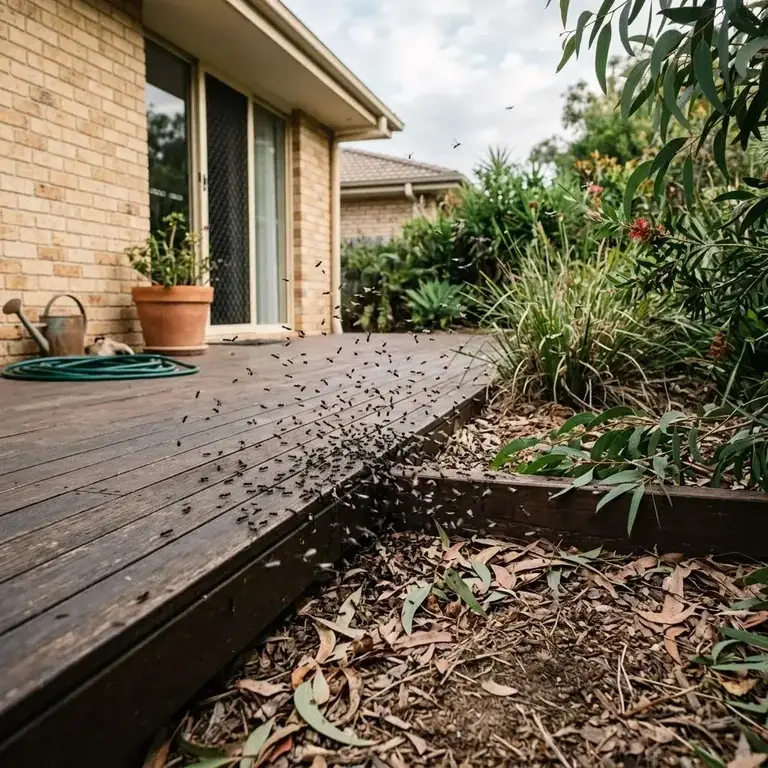
Australia’s climate makes vehicles particularly attractive to ants, from the tropical wet season in the north to summer heatwaves in the south. In Queensland and the Northern Territory, heavy rain floods ground nests, pushing species like green tree ants and black house ants towards dry, elevated shelter — including your car. In southern states, heatwaves drive ants into shaded engine bays. Coastal brown ants and Argentine ants, common across Sydney, Melbourne, Brisbane and Perth, regularly trail up tyres from kerbside nests.
Housing style plays a role too. Homes on concrete slabs with gardens hard against the driveway, older Queenslanders with under-house parking, and brick veneer homes with mulched garden beds beside the carport all give ants a short commute to your vehicle. Cars parked under trees, near garden beds or beside wheelie bins face the highest risk, as these are prime foraging zones. If you’re also seeing ants indoors, it’s worth reading about the common Australian ant species found in homes, because the colony invading your car is often the same one invading your kitchen.
Warning Signs: How to Tell If Ants Have Moved Into Your Car
The clearest sign of an ant problem in your car is a visible trail of workers, but several subtler clues appear earlier. Ants need only a gap under a millimetre wide, and they use predictable routes — so check the following:
- Tyres and suspension: the main bridge from the ground, especially when parked on grass or soil — look for ants trailing up the sidewalls.
- Overhanging branches: ants drop onto the roof, then slip through door seals and window rubbers.
- Engine bay gaps: warm wiring and insulation attract nesting ants, which chew foam and rubber — check for soil, leaf litter or winged ants.
- Vents and drainage channels: air-conditioning intakes and sunroof drains give direct cabin access.
- Food debris: pet treats, kids’ snacks, soft-drink spills and even the dregs in coffee cups are the biggest drawcards.
- Moisture: a damp floor mat or air-conditioning condensation can sustain ants through a dry spell.
Spotting winged ants inside the cabin is a red flag that a nest may be established in the door cavity, seat foam or engine bay rather than a simple foraging trail.
Getting Rid of Ants in Your Car: DIY vs Professional Treatment
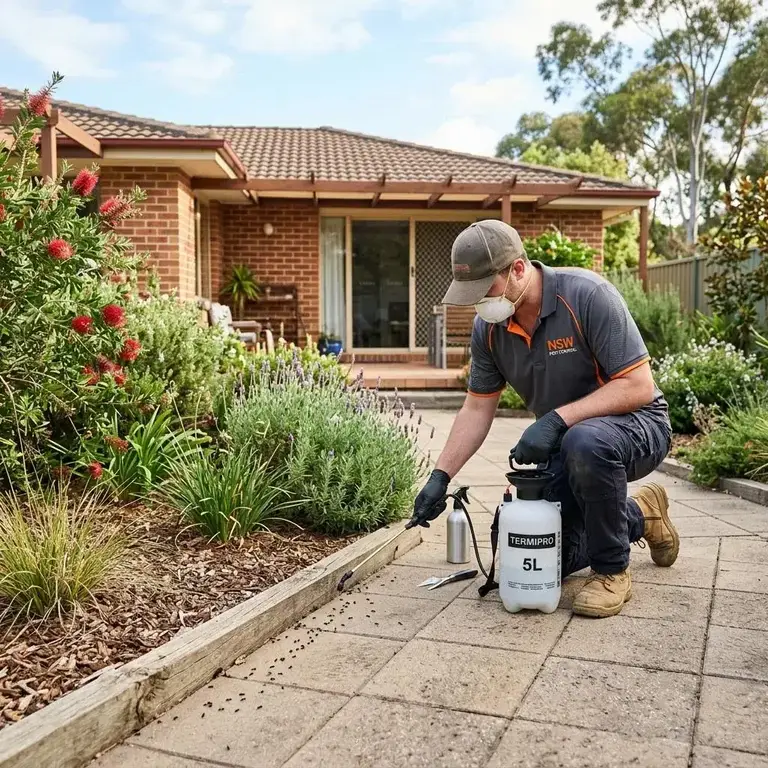
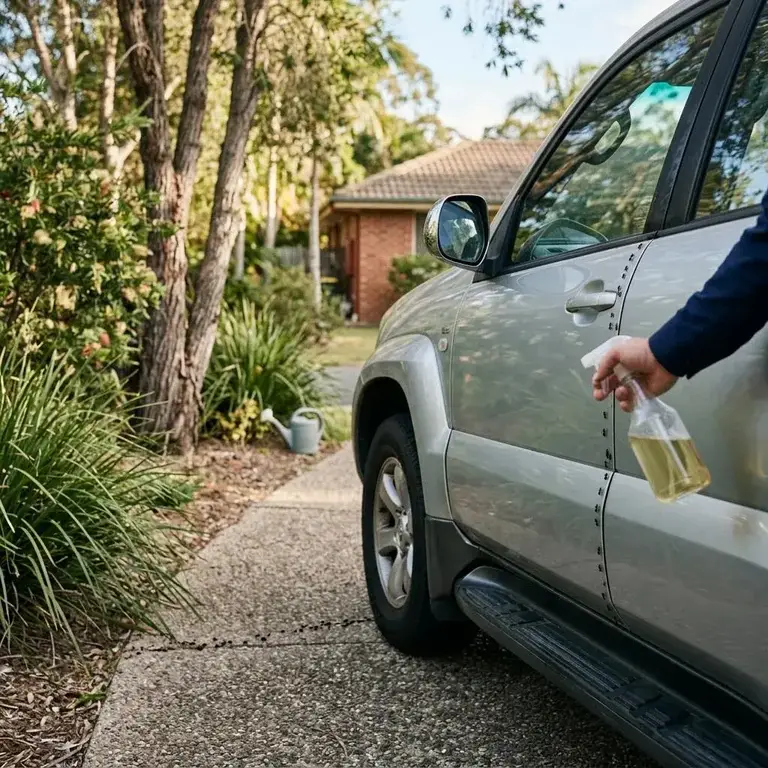
Most minor invasions respond well to DIY: remove every food source, vacuum seats, carpet, boot and between cushions, wipe hard surfaces with warm soapy water to erase pheromone trails, then place a small APVMA-registered ant bait station on the floor overnight so workers carry it back to the nest. As our guide on why ant sprays often make the problem worse explains, aerosols scatter ants, contaminate cabin surfaces and never reach the colony. Re-park somewhere different — away from garden beds, bins and trees — to break the trail while the bait works. Professional treatment makes sense when the nest itself is in or under your vehicle, or when the source colony is on your property and keeps re-invading.
| Factor | DIY approach | Professional treatment |
|---|---|---|
| Best for | Light foraging trails, recent invasions | Established nests, recurring infestations, bull ants |
| Method | Cleaning, bait stations, re-parking | Source nest treatment on the property plus targeted vehicle treatment |
| Cost | $15–$50 in baits and cleaning supplies | Typically $150–$350 depending on property size |
| Timeframe | Several days to two weeks | Usually resolved in one visit, with follow-up if needed |
| Risk | Misuse of sprays in an enclosed cabin; nest survives | Licensed technicians apply APVMA-approved products safely |
How Much Does Ant Treatment Cost in Australia?
Across the Australian pest control industry, professional ant treatment for a car-related infestation typically sits between $150 and $350 in 2025-26, depending on your location, property size and whether the source nest is on your land. Treating the nest around your property — not just the vehicle — is what delivers a lasting result. The figures below are typical Australian market rates charged across the industry, not fixed quotes from any one provider.
| Service | Typical market rate (AUD) | What’s included/notes |
|---|---|---|
| Inspection and assessment | Free–$99 (typical market rate) | Identifies species, entry points and nest location |
| Vehicle and perimeter baiting | $150–$250 (typical market rate) | Gel and station baits targeting the colony source |
| Full property ant treatment | $220–$350 (typical market rate) | Nest treatment, barrier application, follow-up advice |
| Stubborn or multi-nest jobs | $300–$450 (typical market rate) | Coastal brown ant or Argentine ant colonies with multiple nests |
Here’s the good news: Aussie Pest Strike typically comes in well under these typical Australian market rates for the same thorough, colony-targeting treatment. Every job is different, so for an exact quote tailored to your situation, give us a call on [aps_phone] and we’ll sort you out.
Seasonal Ant Activity Around Vehicles in Australia
Ant pressure on vehicles peaks from late spring through early autumn, with a second spike in the tropical north when wet-season rain floods ground nests. Southern states see the highest activity during December to February heatwaves, while northern regions contend with ants seeking dry shelter from November to April.
Jan
Feb
Mar
Apr
May
Jun
Jul
Aug
Sep
Oct
Nov
Dec
Typical ant activity around vehicles across Australia. Activity peaks in summer heatwaves and, in northern regions, during wet-season flooding that drives ants to elevated, dry shelter. Winter lows reflect reduced foraging in southern states.
Nine times out of ten, the car isn’t the real problem — the nest is a metre away in the garden bed or under the driveway. Clean the vehicle, bait it properly and treat the source colony, and the ants stop coming back. Skip the source and you’ll be vacuuming ants out of the boot all summer.
Start with a thorough clean and an APVMA-registered bait station, and re-park away from gardens and trees. If ants persist after two weeks, or you find nesting in the wiring or upholstery, book professional Ant Control & Nest Treatment so the source colony on your property is dealt with, not just the workers in your car. While you’re at it, prevention habits — a lidded rubbish bag in the car, immediate spill clean-ups, monthly vacuuming, trimmed branches and clear sunroof drains — will keep the problem from returning. If food-storage pests have also appeared at home, our Silverfish & Pantry Pest Control service covers those too, and our Black House Ants: The Complete Control Guide details the species most often behind car invasions.
FAQ
Why are there ants in your car?
Ants enter cars seeking food, water and shelter, particularly during heatwaves, heavy rain or the northern wet season. A single scout that finds crumbs or a sugary spill lays a pheromone trail that recruits the colony within hours. Parking near gardens, bins or overhanging trees significantly increases the risk of invasion.
Can ants damage my car?
Yes, they can. Some species chew foam insulation, seat padding and rubber seals, while ants nesting in engine bays can damage wiring and contaminate connectors. Coastal brown ants also carry soil into crevices, causing moisture build-up and corrosion over time. Prompt removal and nest treatment prevent costly repairs.
Is it safe to use ant spray inside a vehicle?
Surface sprays are not recommended inside car cabins. They leave chemical residue on seats and steering wheels, concentrate fumes in the enclosed space, and usually kill only visible workers while the nest survives. Use bait stations instead, or have a licensed technician apply an APVMA-approved treatment safely.
Don’t let a few scouts become a colony in your dashboard. Call Aussie Pest Strike on [aps_phone] today for a free inspection and expert pest control advice — our technicians hold state and territory licences, use only APVMA-approved products, and will help you evict those ants for good.
Sources & further reading
Found Something
Dangerous?
Don’t touch it. Don’t spray it. Keep kids and pets clear, take a photo from a safe distance, and call us — or book a free inspection and we’ll come to you.
02 7235 0050