Ants in the Bathroom:Why They Come andHow to Stop Them
Ants in the bathroom are usually searching for water, not food — moisture from showers, dripping taps and condensation draws species like black house ants...
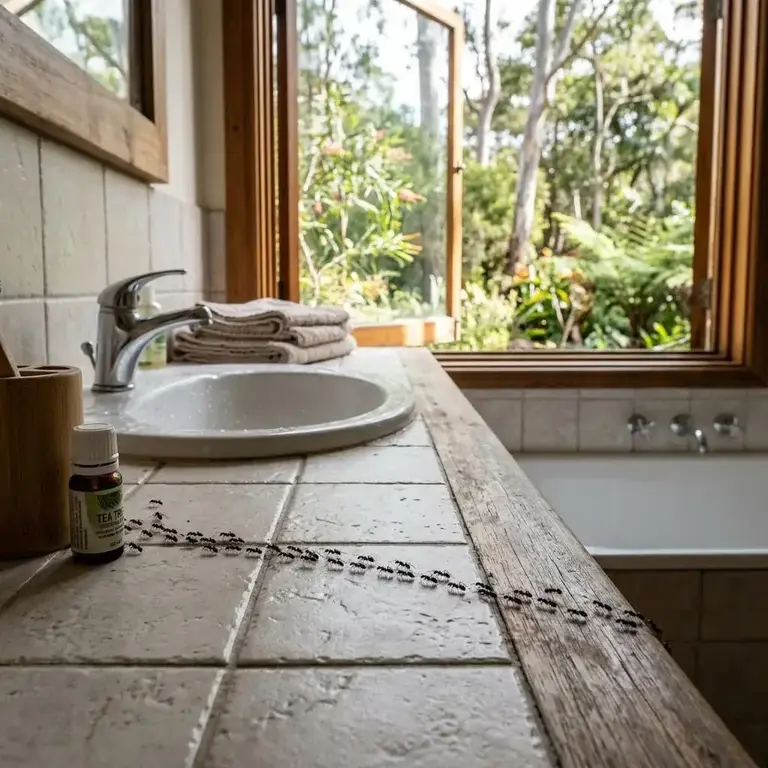
Finding a trail of ants in the bathroom is one of the most common pest complaints across Australia, and it’s almost always about water, not food. Moisture from showers, dripping taps and condensation draws species like black house ants and Argentine ants indoors, where they quickly set up reliable foraging routes along grout lines and vanity edges.
Ants in the bathroom are ants exploiting a water source — killing the workers you see on the tiles won’t fix it, because the queen keeps producing thousands more. Lasting control means fixing leaks, sealing entry points and treating the nest itself. This guide explains why bathrooms attract ants, which species you’re dealing with, what you can do yourself, and when professional pest control is the smarter call.
- Bathroom ants are usually chasing moisture — damp grout, condensation and slow leaks — not food scraps.
- Black house ants, Argentine ants and coastal brown ants are the most common bathroom invaders in Australia.
- Gel baits outperform surface sprays because workers carry the active ingredient back to the queen and brood.
- Professional ant treatment typically costs $180–$350 AUD for a standard home in 2025-26.
- If ants persist after two to three weeks of baiting, the nest is likely in a wall cavity, under a slab or against the building — call a licensed technician.
Why Ants in the Bathroom Are So Common Across Australia
Ants are drawn to bathrooms because they need water every day to survive, and the average Australian bathroom provides it in abundance. Damp grout, wet silicone, condensation on pipes and the occasional slow leak under the vanity create a permanent drinking station, while toothpaste residue, soap scum and even dead skin cells offer food traces most people overlook.
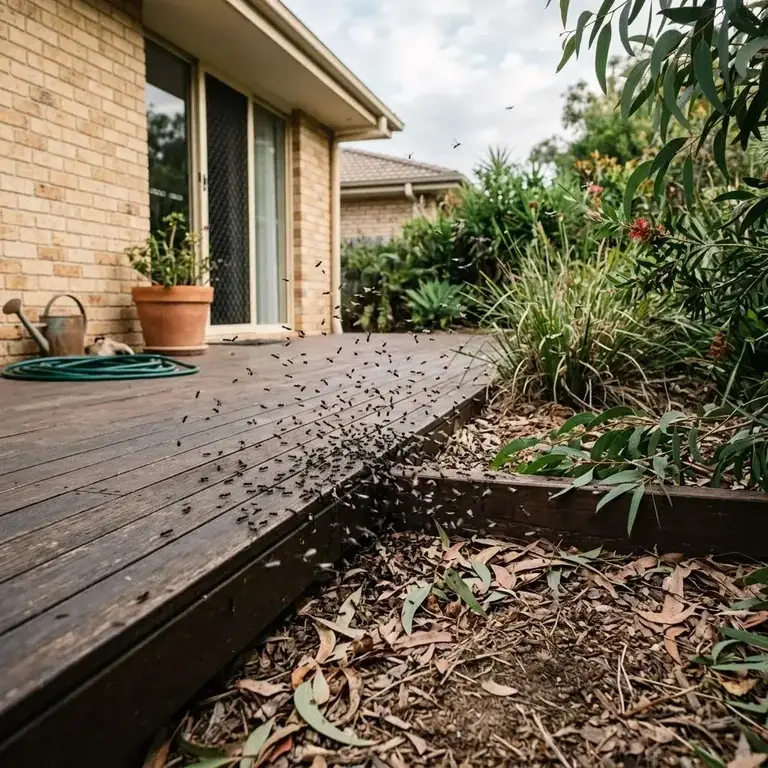
Australian conditions make the problem worse. Activity typically spikes from October through March, when colonies expand in the warmth, and again after heavy rain or during dry spells, when outdoor water sources dry up and ants head inside. Housing style matters too: homes on concrete slabs often get ant entry through weep holes and pipe penetrations, older subfloor homes on stumps give colonies cool, damp nesting space, and Queenslanders with enclosed undercrofts are prime territory around bathroom plumbing. In humid parts of Queensland and northern NSW, bathrooms simply never fully dry out — which is exactly what ants want. For a broader look at which species turn up where, see our guide to common Australian ant species found in homes.
Warning Signs of an Ant Problem in the Bathroom
The clearest warning sign is a visible trail of ants along grout, skirting or the vanity — but several subtler clues tell you a colony is established nearby. Check for the following:
- Regular ant trails — lines of workers travelling between a crack, pipe penetration or window frame and a water source, especially in the morning or evening.
- Ants around drains and plugholes — coastal brown ants and ghost ants frequently emerge from around drain fittings in warm, wet areas.
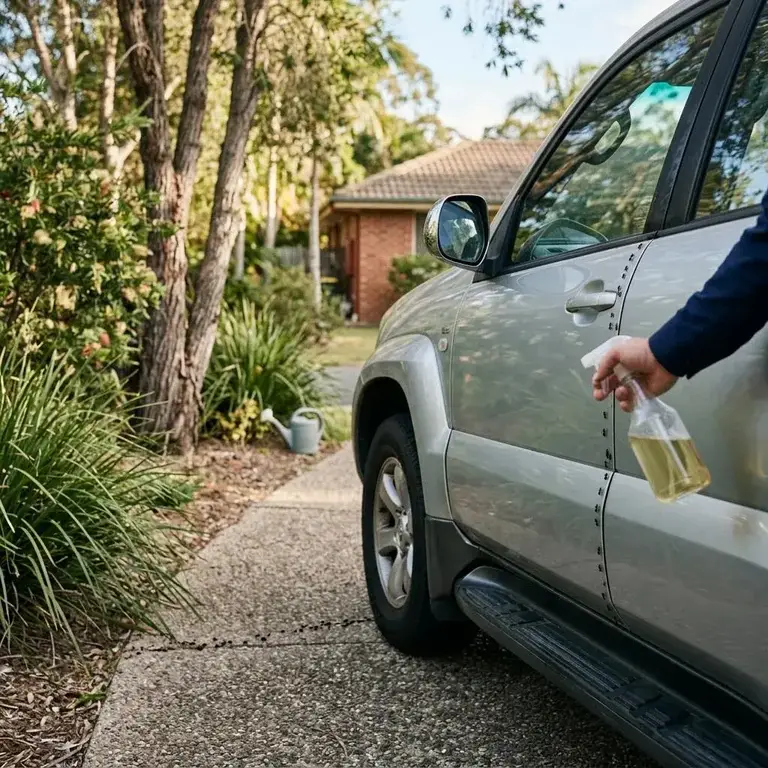
- Ants reappearing after cleaning — if they return within a day or two, a pheromone trail and an active nest are in play.
- Fine soil or debris near skirting boards — a sign of nesting in wall cavities or under the slab edge.
- Winged ants indoors — alates (swarmers) in spring or summer suggest a mature colony in or against the building.
- Ants in multiple rooms — activity spreading to the kitchen or laundry usually means the nest is inside the structure, not the garden.
If the ants are small, shiny black and trailing to sweetness as well as water, you’re most likely dealing with black house ants — our Black House Ants: The Complete Control Guide covers that species in detail.
DIY vs Professional Ant Control
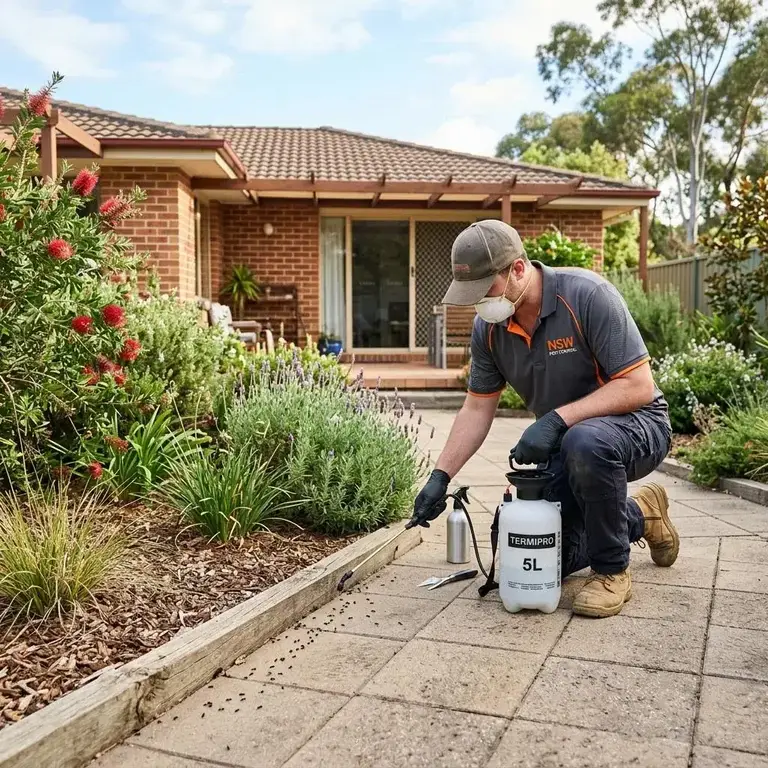
DIY control works well for small, early-stage problems: fix the moisture source, clean away pheromone trails with vinegar or soapy water, and place APVMA-approved gel baits along active trails, well away from children and pets. Baits work because workers carry the poison back to the nest, sharing it with the queen and brood until the colony collapses. Repellent sprays do the opposite — as we explain in Ant Control: Why Sprays Often Make the Problem Worse, with Argentine and pharaoh ants they can trigger “budding”, where the colony splits into several new nests. Always follow the product label — it’s a legal requirement under APVMA rules. When the nest is hidden in a wall, under a slab or in a garden bed against the bathroom wall, a licensed technician with professional-grade, non-repellent products is the reliable option.
| Factor | DIY approach | Professional treatment |
|---|---|---|
| Best for | Small, recent infestations with a visible trail | Recurring, multi-room or hidden-nest infestations |
| Upfront cost | $15–$40 for gel baits and sealant | $180–$350 for a standard treatment |
| Nest elimination | Possible if the bait is accepted and nest is reachable | Targeted — species identified and nest located |
| Risk of making it worse | Repellent sprays can trigger colony budding | Low — non-repellent, APVMA-registered products used correctly |
| Time to result | 1–3 weeks if baiting works | Usually days to two weeks, with follow-up if needed |
Ant Control Costs in Australia (2025-26)
Across the Australian pest control industry, professional ant treatment for a standard home generally sits between $180 and $350 AUD, depending on the species, nest location and property size. Treatments for difficult species like Argentine ants, or jobs requiring subfloor or roof-void access, typically sit at the higher end of the market. The figures below are typical industry-wide ranges — always get a written quote before booking anyone.
| Service | Typical market rate (AUD) | What’s included/notes |
|---|---|---|
| Inspection and species identification | $0–$120 | Often free with treatment booked; confirms species and nest location |
| Internal gel baiting program | $180–$280 | Professional-grade baits placed in wet areas, wall voids and trails |
| External perimeter and nest treatment | $220–$350 | Non-repellent treatment around slab edges, paths and garden beds |
| Severe/Argentine ant infestation | $300–$500+ | Supercolony work, multiple visits, larger properties or subfloor access |
Our Ant Control & Nest Treatment service covers identification, baiting and targeted nest elimination. And if moisture in the bathroom has attracted more than ants — silverfish thrive in the same damp conditions — our Silverfish & Pantry Pest Control service can be bundled into the same visit.
Here’s the good news: Aussie Pest Strike typically comes in well under these typical market rates, without cutting corners on products or thoroughness. For an exact quote tailored to your property and ant problem, give us a call on [aps_phone] — we’ll tell you straight up what it’ll cost.
Seasonal Ant Activity in Australian Bathrooms
Bathroom ant activity peaks in the warmer months from October to March, when colonies expand and forage hardest, with a secondary surge after heavy rain or during dry spells. Winter brings a noticeable lull in southern states, while tropical Queensland sees steady activity year-round.
Jan
Feb
Mar
Apr
May
Jun
Jul
Aug
Sep
Oct
Nov
Dec
Indicative bathroom ant activity across Australia. Activity climbs sharply from September, peaks over summer, and dips through winter — with rain events and dry spells causing short-term spikes in any month.
Nine times out of ten, when we inspect a bathroom ant job, there’s a slow leak under the vanity or a failed silicone joint feeding the whole problem. Fix the water and bait the nest properly, and the ants lose their reason to be there. Spraying the trail just scatters them into the wall and makes our job harder.
Start with the basics this week: repair any leaking taps or flexi-hoses, dry out the shower recess overnight, reseal cracked grout and perished silicone, and wipe trails with vinegar or soapy water. Place an APVMA-approved gel bait along the active trail and give it two to three weeks. If the ants persist or appear in other rooms, book a licensed pest control technician — in every state and territory, technicians must be licensed and use APVMA-registered products, so always ask for credentials.
FAQ
Why do I keep finding ants in the bathroom after cleaning?
Cleaning removes crumbs and soap residue, but bathroom ants are usually after water, not food. A leaky tap, damp grout or condensation will keep drawing them back, and cleaning leaves pheromone trails intact unless you wipe surfaces with vinegar or soapy water. Fix the moisture source and bait the nest to stop them for good.
Are bathroom ants dangerous?
Most bathroom ants are a nuisance rather than a danger. Black house ants and Argentine ants don’t bite or sting seriously, but they can contaminate toothbrushes, towels and benchtops as they travel from drains and bins. Coastal brown ants can give a mild nip. The real issue is how quickly a small colony grows in humid weather.
Do vinegar and bleach actually get rid of bathroom ants?
Vinegar and bleach are useful for wiping surfaces because they erase the pheromone trails ants follow, so you’ll see fewer ants for a day or two. However, they never reach the nest, so the colony survives and sends new workers. Pair surface cleaning with a gel bait near the trail for lasting results.
Tired of ants marching through your bathroom? Aussie Pest Strike offers free inspections Australia-wide, with licensed technicians who identify the species, locate the nest and apply targeted treatments suited to wet areas and family homes. Call Aussie Pest Strike on [aps_phone] today to book your free inspection and get your bathroom back.
Sources & further reading
Found Something
Dangerous?
Don’t touch it. Don’t spray it. Keep kids and pets clear, take a photo from a safe distance, and call us — or book a free inspection and we’ll come to you.
02 7235 0050