Ants in Paversand Driveways:Treatment That Lasts
Ants in Pavers and Driveways — ants in pavers are best controlled by targeting the nest beneath the paving with species-matched baits and non-repellent...
Ants in pavers and driveways are best controlled by targeting the nest beneath the paving with species-matched baits and non-repellent insecticides, then re-sanding joints to block re-entry. That single definition answers the most common question Australian homeowners ask — because surface sprays alone rarely last. The colony stays hidden under the pavers, and a spray ‘n’ walk-away approach simply pushes it deeper or splits it into satellite nests.
In much of Australia, ant colonies become most active from September through April, and heavy summer rain often pushes them to expand or relocate into dry paved areas. Left alone, their tunnelling removes bedding sand, causing pavers to sink, rock and crack — turning a minor nuisance into a trip hazard and a costly re-lay. This guide explains why ants choose your driveway, how to spot the warning signs, what professional pest control actually involves, what it costs in 2025-26, and how to keep your paving ant-free for the long term. For fast results, a licensed technician delivering Ant Control & Nest Treatment can identify the species, treat the source and protect your paving properly.
- Ants nest under pavers because bedding sand is easy to excavate and the slabs above provide warmth and protection — killing the hidden colony, not just surface workers, is the only lasting fix.
- Coastal brown ants are the number one paver pest in Queensland, New South Wales and Western Australia; correct species identification determines which bait will work.
- Repellent DIY sprays usually make things worse by triggering “budding”, where the colony splits into multiple satellite nests.
- Professional treatment combining baits, non-repellent transfer insecticides and joint re-sanding typically costs $180-$550 AUD, far less than re-laying sunken paving.
- Re-sand joints with polymeric sand, fix moisture sources and book a spring inspection to prevent reinfestation.
Why ants in pavers Are Such a Problem Across Australia
Ants nest under pavers and driveways because paved areas offer near-perfect habitat: loose bedding sand that is easy to excavate, warm protective slabs above, and ready-made highways to the surface through the joints. Across Australia, this matters more than many homeowners realise, because our climate and housing styles actively encourage nesting under hardscaping.
From September through April, colonies ramp up breeding and foraging, and heavy summer rain frequently floods garden beds and lawn nests, pushing ants to relocate into the dry, sheltered space beneath driveways, paths and pool surrounds. In Queensland’s humid north and coastal New South Wales, activity can persist almost year-round, while in southern states and inland regions the peak is sharper but no less destructive.
Australian housing adds to the problem. Homes on concrete slabs often have paving laid hard against the slab edge, giving ants a direct route indoors. Older Queenslanders and subfloor homes typically feature long driveways, garden paths and entertaining areas paved decades ago — often with joints that have never been re-sanded. Brick veneer homes on reactive soils are especially vulnerable: as ants remove bedding sand, pavers subside unevenly, and water pooling against the footing creates further issues.
The damage is real. Tunnelling species remove bedding sand grain by grain, and over months or years the pavers above sink, rock and crack. What starts as a few small sand mounds along a joint can end in trip hazards, damaged vehicle tyres and re-laying bills that run into the thousands. Early treatment is always the cheaper path.
Which Ant Species Nest in Australian Paving?
The species most commonly found under Australian pavers are coastal brown ants, black house ants, Argentine ants, meat ants and green-head ants — and correct identification matters because each responds to different baits and chemicals. Treating the wrong way for the wrong species is the main reason DIY efforts fail.
Coastal brown ants, also called big-headed ants (Pheidole megacephala), are the number one paver pest in Queensland, New South Wales and Western Australia. They excavate large volumes of sand, leaving telltale mounds along joints, and their multi-queen colonies spread quickly under driveways and pool surrounds.
Black house ants (Ochetellus glaber) nest under paths and invade kitchens for sweets — our Black House Ants: The Complete Control Guide covers them in detail. Argentine ants, an invasive species established in Victoria, New South Wales and parts of South Australia and WA, form enormous super-colonies that bud when disturbed, making them almost impossible to shift with off-the-shelf sprays. Meat ants and green-head ants also nest in paving across regional and suburban Australia. For a broader rundown, see Common Australian Ant Species Found in Homes.
Warning Signs: How to Tell If Ants Are Nesting Under Your Pavers
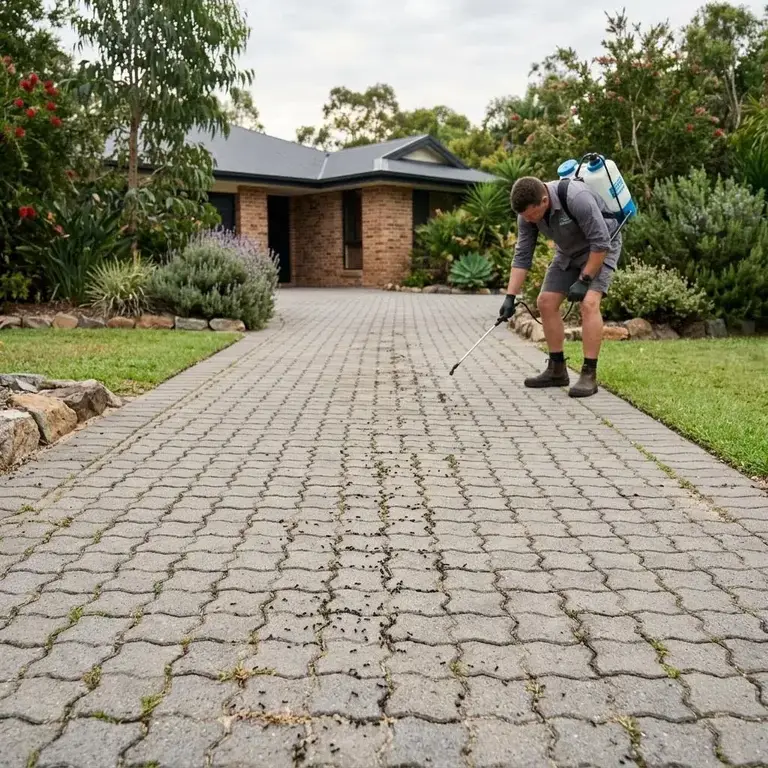
The clearest warning sign of ants under pavers is fine sand mounded along the joints, usually accompanied by steady trails of workers moving in and out of the gaps. Catching these signs early saves you from subsidence and repair bills. Check your paving for the following:
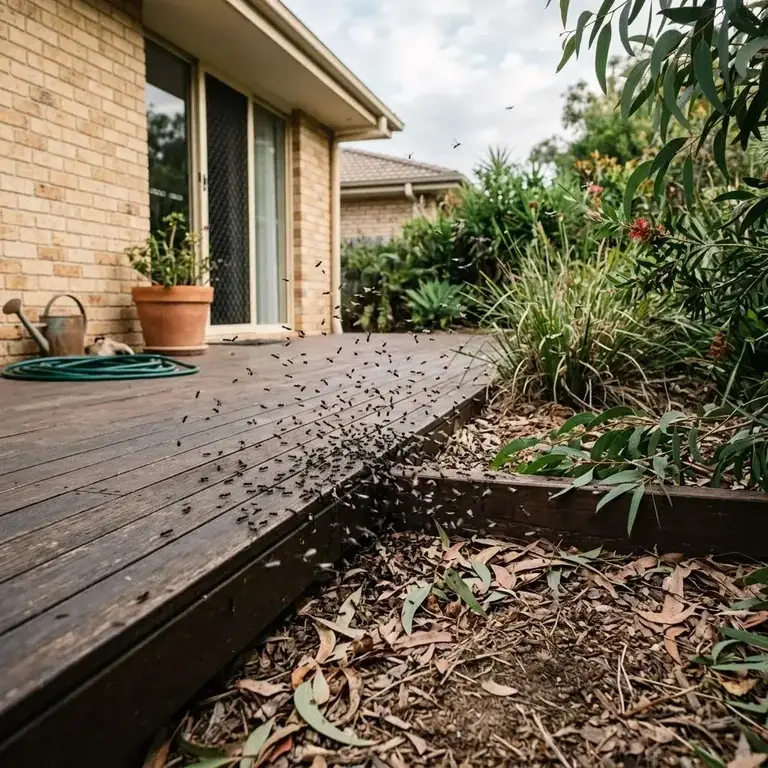
- Sand mounds along joints — small volcanoes of excavated bedding sand, especially after warm nights or rain, are the classic sign of coastal brown ant activity.
- Constant ant trails — organised lines of workers travelling between joints, garden beds, wheelie bins or the kitchen door.
- Sunken or rocking pavers — sections that dip, wobble underfoot or have developed uneven edges indicate sand loss beneath.
- Cracked or shifted edges — driveway borders and path margins often show damage first because tunnelling starts at the perimeter.
- Activity after rain — a sudden burst of ants on paving following summer storms usually means nests have relocated to drier ground under your slabs.
- Ants appearing indoors near paved walls — workers entering weep holes or expansion joints suggest the nest sits directly alongside the house.
DIY vs Professional Ant Treatment: An Honest Comparison
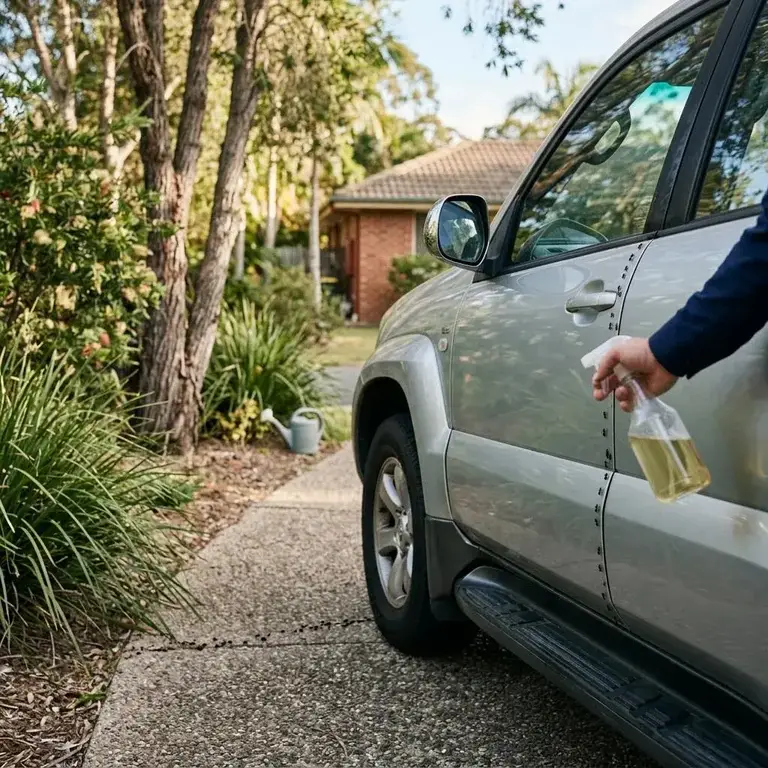
DIY sprays kill the foragers you can see but almost never reach the queens beneath the pavers, which is why professional treatment outlasts it by months or years. Most hardware store products are repellent pyrethroids, and as explained in Ant Control: Why Sprays Often Make the Problem Worse, they drive the colony deeper or cause it to split into satellite nests in a process called budding. Because a single colony under a driveway can hold hundreds of thousands of workers and multiple queens, killing a few thousand surface ants achieves nothing — within weeks the mounds return, often in new spots along the same paved area.
| Factor | DIY sprays and home remedies | Licensed professional treatment |
|---|---|---|
| Target | Surface workers only | Queens, brood and the whole colony |
| Species identification | Guesswork; wrong bait is common | Confirmed on inspection, bait matched to species |
| Risk of budding | High — repellents split the colony | Avoided by using non-repellent products |
| Longevity | Days to weeks before mounds return | Typically 6-12 months or longer with prevention |
| Paver damage addressed | No | Yes — advice on lifting, treating and re-sanding |
| Typical spend over a season | $60-$150 in repeat products | $180-$550 one-off, usually once per year |
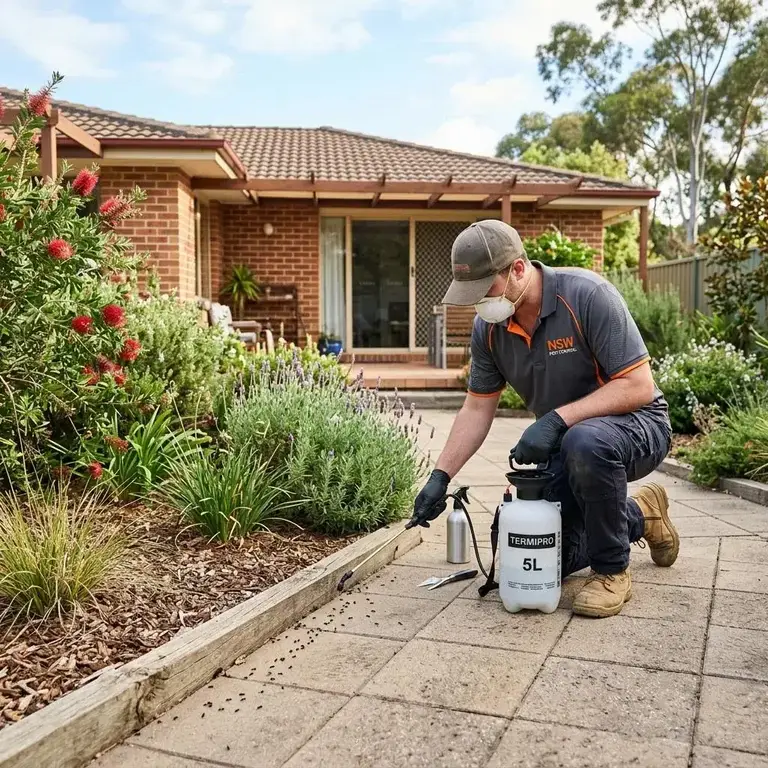
Professional pest control starts with inspection: a licensed technician identifies the species, maps nest locations and checks moisture sources. This determines whether sugar-based or protein-based baits will work, and whether the colony shows budding behaviour that rules out repellent sprays. Treatment then typically combines slow-acting gel or granular baits that workers carry back to the queens, with non-repellent transfer insecticides such as fipronil applied to joints, edges and cracks. All products used by licensed pest controllers must be registered with the Australian Pesticides and Veterinary Medicines Authority (APVMA) and applied at label rates — no reputable operator will claim any chemical is completely risk-free, which is why application should be left to trained, licensed technicians.
Where pavers have subsided, the recommended fix is lifting the affected section, treating the exposed nest, then re-laying with fresh bedding sand and locking joints with polymeric or stabilised sand. While we handle the ants, our team can also flag other issues spotted during inspection, from pantry invaders to Silverfish & Pantry Pest Control needs indoors.
What Does Ant Treatment for Pavers Cost in Australia?
Across the Australian pest control industry, professional ant treatment for pavers and driveways generally sits between $180 and $550 AUD in 2025-26, depending on property size, species, infestation severity and whether pavers need lifting and re-sanding. The figures below are typical industry-wide market rates — not any one company’s pricing — and an exact quote should always be confirmed after inspection.
| Service | Typical market rate (AUD) | What’s included/notes |
|---|---|---|
| Inspection and species identification | $0-$120 | Often waived industry-wide when treatment is booked; includes nest mapping and moisture check |
| Standard paver/driveway ant treatment | $180-$350 | Species-matched baiting plus non-repellent residual to joints and edges |
| Large or severe infestations (e.g. Argentine ant super-colonies) | $350-$550 | Multi-visit baiting program, perimeter treatment, follow-up monitoring |
| Lift, treat and re-lay subsided section | $250-$600+ per section | Exposed nest treatment, fresh bedding sand, polymeric jointing sand |
| Annual spring preventive service | $150-$300 | Pre-season barrier and bait placement before peak breeding |
For context, the going market rate for professionally re-laying a damaged driveway section can run to several thousand dollars, so early treatment at a few hundred dollars is genuinely cost-effective pest control by industry standards.
It’s worth knowing that Aussie Pest Strike typically comes in well under these typical Australian market rates for the same scope of work. For an exact quote tailored to your property, call [aps_phone] and we’ll sort you out.
Seasonal Ant Activity in Australian Paving
Ant activity in Australian paving peaks from late spring through late summer — roughly October to February — and drops to its lowest point in the cooler months of June and July. Heavy summer rain creates secondary spikes as colonies relocate into dry paved areas.
Jan
Feb
Mar
Apr
May
Jun
Jul
Aug
Sep
Oct
Nov
Dec
Indicative activity pattern for ants nesting under pavers in most of Australia: activity builds from September, peaks over the summer breeding and storm season (December-February), and eases through autumn and winter. Tropical northern regions may see elevated activity year-round.
Nine times out of ten, the homeowner has already spent a season spraying the same joints and wondering why the sand keeps coming back. Once we identify the species and get a slow-acting bait into the foraging trails, the colony does the work for us — the workers carry it straight to the queens. The re-sanding afterwards is just as important; lock those joints and you take away the reason they moved in.
Stop spraying and start baiting. Book a professional inspection, have the species identified, and treat with species-matched baits plus a non-repellent residual along joints and edges. Once the colony is eliminated, re-sand joints with polymeric or stabilised sand, repair leaking taps, downpipes and irrigation lines that keep bedding sand damp, trim back garden beds that bridge onto paved areas, and keep pet food, fallen fruit and bins away from driveways and entertaining areas. Then book a professional inspection each spring, before colonies hit peak breeding season.
FAQ
What is the best way to get rid of ants in pavers?
The most reliable method is a combination of species-matched baiting and a non-repellent residual insecticide applied to the joints and nest entrances, followed by re-sanding. This kills the queens and brood rather than just surface workers. For established infestations under driveways, professional treatment is far more effective and longer lasting than repeated DIY spraying.
Can ants actually damage my driveway?
Yes. Species such as the coastal brown ant excavate bedding sand to build galleries, and over time this undermines the pavers above. The result is sunken, rocking or cracked sections that become trip hazards and can cost thousands to re-lay. Treating the infestation early is far cheaper than repairing damaged paving.
When is ant activity worst in Australia?
Ants are most active from early spring through autumn, roughly September to April in most states, with peak activity over summer. Heavy rain during this period often triggers sudden outbreaks on paving as colonies relocate to drier ground. Winter is the quietest period and a good time to re-sand joints and prepare defences.
Ants under pavers will not go away on their own, and every season of tunnelling adds to the repair bill. Aussie Pest Strike’s licensed technicians identify the species, eliminate the colony at its source and help you lock down your paving for the long term — with APVMA-registered products applied at label rates by trained professionals. Call Aussie Pest Strike on [aps_phone] to book your free inspection today and get your driveway back before the summer peak hits.
Sources & further reading
Found Something
Dangerous?
Don’t touch it. Don’t spray it. Keep kids and pets clear, take a photo from a safe distance, and call us — or book a free inspection and we’ll come to you.
02 7235 0050