Pest Control inAged Care:A Sensitive Approach
Pest control in — Pest control aged — aged care pest control needs a sensitive, low-impact approach that protects frail residents from both pests and harsh...
Pest control in aged care facilities across Australia demands a fundamentally different approach from standard commercial work, and operators searching for guidance on aged care pest control often find generic advice that misses the point entirely. Residents in nursing homes, residential aged care and retirement villages are frail, often living with respiratory conditions, reduced mobility or dementia, so heavy-handed spray programs are unsuitable. Whether your facility sits in a g-wing annex or a heritage Queenslander conversion, the principles stay the same: protect residents from both pests and harsh chemicals.
Aged care pest control is a sensitive, low-impact form of pest management that relies on discreet monitoring, targeted baits, exclusion work and careful communication with residents, families and staff — all while satisfying the Aged Care Quality Standards for a safe, clean and comfortable living environment. This guide covers why aged care is different, the methods that work without disruption, realistic 2025-26 costs in AUD, seasonal pest pressure, and how to choose a licensed provider who understands the sector.
- Aged care pest control prioritises monitoring, exclusion and enclosed baits over open sprays to protect frail residents.
- A documented pest management plan is essential evidence for the Aged Care Quality Standards.
- Typical 2025-26 costs range from $220-$450 per routine service, with integrated programs from $1,800-$4,500 per year.
- Discretion, quiet-time scheduling and clear communication protect residents’ dignity as much as the treatment itself.
- Always use licensed technicians for any chemical treatment, with safety data sheets kept on file.
Why aged care pest control matters across Australia
Aged care pest control matters because Australian facilities combine three high-risk elements: vulnerable residents, on-site catering and a home-like setting where comfort and dignity are non-negotiable. A pest sighting in a family home is annoying; in an aged care facility it can cause genuine distress and erode families’ confidence in the standard of care.
Australia’s climate compounds the challenge. Warm, humid conditions in Queensland and northern New South Wales drive year-round cockroach and ant pressure, while cooler southern winters push rodents indoors seeking warmth. Building styles play a role too — older facilities on raised subfloors offer harbourage for rodents and spiders, slab-on-ground brick veneer buildings attract ants and termites, and converted Queenslanders have gaps and voids pests exploit easily. Add communal kitchens, resident gardens, laundry rooms and frequent deliveries, and a facility presents a steady supply of food, water and shelter.
There are also resident-specific factors that rule out conventional treatment:
- Older residents may have respiratory conditions, so airborne product must be minimised.
- Reduced mobility means residents cannot easily leave an area during treatment.
- Dementia care requires calm, low-disruption servicing with no sudden changes to routine.
- Communal dining raises the same food safety concerns as any commercial kitchen.
Shared accommodation settings face similar pressures. Our Apartment Pest Control: A Strata and Unit Owner’s Guide covers how pests travel between connected living spaces — a dynamic just as relevant to retirement villages and co-located aged care wings.
Warning signs of pest activity in an aged care facility
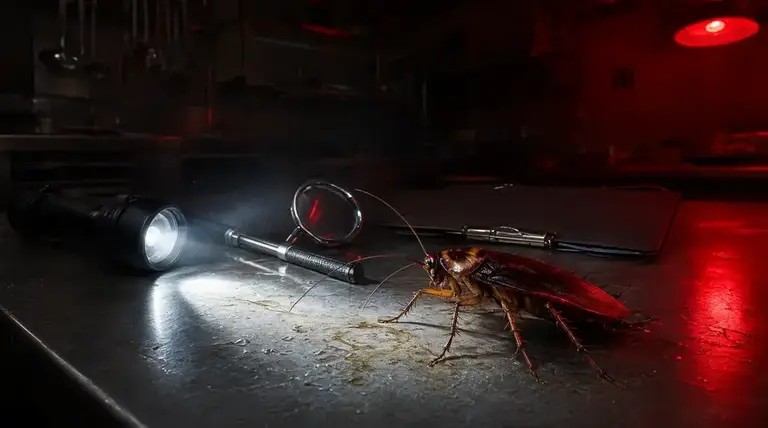
The clearest warning signs of pest activity in aged care are droppings, sightings, damage and resident reports — and each one should trigger a documented response, not a wait-and-see approach. Early detection is the backbone of a low-chemical program, because catching activity early means smaller, more targeted interventions.
- Droppings or smear marks along skirting boards, in store rooms, behind warm appliances or inside pantry cupboards.
- Cockroach sightings at night in kitchens, laundries or bathrooms — German cockroaches cluster near warmth and moisture.
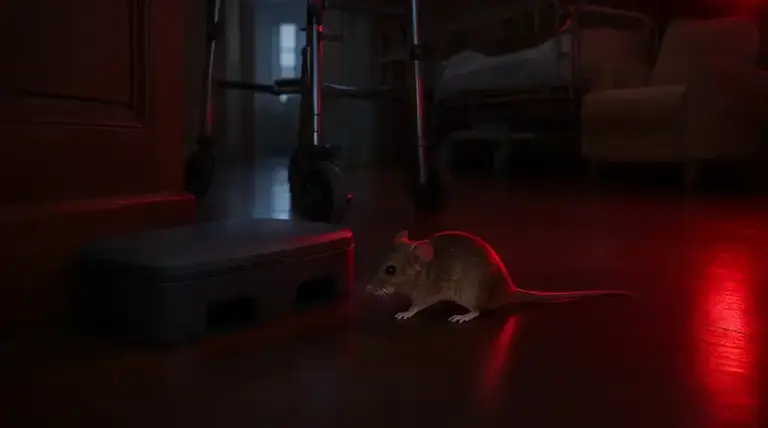
- Gnaw marks on food packaging, cabling or door seals, indicating rodents moving through roof voids or subfloor spaces.
- Ant trails leading to resident rooms, especially where snacks or sugary drinks are kept by bedsides.
- Fly activity around waste areas, dining rooms or uncovered food during meal service.
- Resident or family reports of bites, scratching sounds in walls, or insects in personal belongings.
- Musty or oily odours in enclosed spaces, which can indicate established cockroach or rodent harbourage.
Kitchen and dining areas deserve particular attention. The compliance logic in our guide to Rodent Control for Restaurants and Cafes: Compliance Essentials applies directly to aged care catering operations, where the same food safety expectations hold.
DIY vs professional pest control in aged care
DIY pest control has no meaningful place inside a residential aged care facility, though staff-led prevention habits are valuable. Anything involving pesticides, bait placement or treatment of an active infestation should sit with a licensed technician who understands health-sensitive environments, APVMA-registered products and documentation requirements.
| Factor | Staff-led prevention | Licensed professional program |
|---|---|---|
| Scope | Hygiene, spill cleanup, sealed food storage, reporting sightings | Monitoring, baiting, exclusion, treatment and compliance records |
| Chemical use | None — supermarket sprays are unsuitable around frail residents | APVMA-registered products applied by licensed technicians, with SDS on file |
| Audit readiness | No formal documentation trail | Documented pest management plan, service reports and trend data |
| Disruption risk | Low, but ineffective against established infestations | Scheduled around meals, activities and rest periods |
| Typical cost | Absorbed into cleaning budgets | $220-$450 per routine visit (2025-26 typical range) |
For a broader view of what structured commercial programs look like, see Commercial Pest Control: What Australian Businesses Actually Need — the same framework applies, with added sensitivity for care settings.
Aged care pest control costs in Australia (2025-26)
Across the Australian pest control industry, aged care services typically run between $220 and $450 per routine service visit in 2025-26, with comprehensive annual programs for mid-sized facilities generally sitting between $1,800 and $4,500 depending on size, location and pest pressure. What the market charges varies with the number of buildings, kitchen scale and whether the site needs termite monitoring alongside general pest work.
| Service | Typical market rate (AUD) | What’s included/notes |
|---|---|---|
| Initial facility assessment | $0-$250 | Site inspection, risk mapping, program design; often free with an annual plan |
| Routine monthly or bimonthly service | $220-$450 per visit | Monitoring device checks, enclosed baiting, gels, service report |
| Rodent program (active infestation) | $350-$800 | Tamper-resistant stations, proofing advice, follow-up visits |
| Cockroach treatment (kitchen/servery) | $300-$650 | Gel baits, insect growth regulators, crack-and-crevice work |
| Annual integrated program (mid-sized facility) | $1,800-$4,500 per year | Scheduled visits, documentation, audit-ready records, call-out response |
| Termite inspection and monitoring | $300-$600 per inspection | Annual timber pest inspection; stations quoted separately |
These figures reflect typical Australian market rates, not any one provider’s fixed quote. Regional facilities often attract travel loadings, while metropolitan multi-site operators can generally negotiate portfolio pricing below the ranges shown.
Aussie Pest Strike typically comes in well under these market rates for aged care facilities. Call [aps_phone] for an exact quote tailored to your site.
Seasonal pest activity in Australian aged care facilities
Pest pressure in Australian aged care facilities peaks through the warmer months from October to April, when cockroaches, ants and flies are most active, while rodent pressure climbs in autumn and winter as temperatures drop. Because facilities are heated, catered and occupied year-round, monitoring never fully switches off.
Jan
Feb
Mar
Apr
May
Jun
Jul
Aug
Sep
Oct
Nov
Dec
Indicative combined pest pressure for Australian aged care facilities: insect activity peaks in summer and early autumn, while the April-August band reflects elevated rodent incursions in cooler weather. Northern facilities see flatter, year-round pressure.
Sensitive methods that still deliver results
The most effective aged care pest control programs use integrated pest management: rigorous monitoring, physical exclusion and the least intrusive APVMA-registered treatments, timed around residents’ routines. Prevention carries extra weight here because every avoided chemical intervention means a safer, calmer environment.
| Approach | Why it suits aged care |
|---|---|
| Discreet monitoring devices | Detects activity early without alarming residents or visitors |
| Enclosed baits and gels | Controls pests without open sprays around frail residents |
| Exclusion and proofing | Seals entry points with minimal chemical reliance |
| Scheduled quiet-time servicing | Reduces disruption to meals, activities and rest periods |
Kitchen hygiene, prompt spill cleanup, sealed food storage and well-maintained exteriors remove most of what attracts pests in the first place. When treatment is required — a g-class gel bait in a kitchen void, for example, or a tamper-resistant rodent station along an external wall — it is planned so residents are never disturbed or exposed. Best practice on site includes a documented pest management plan, advance notification of staff and residents where appropriate, safety data sheets and licensed technician details kept on file, and fast, discreet responses to any resident report. That combination is what makes a program genuinely fit for a home where frail people live, and it aligns with the Aged Care Quality Standards auditors assess.
In aged care, the best service visit is the one residents never notice. We plan around medication rounds, meal times and rest periods, and we let the monitoring devices do the talking so treatment stays small and targeted. Discretion isn’t a courtesy in this sector — it’s a clinical consideration.
Engage a licensed pest-control provider with specific aged care experience, put a documented integrated pest management plan in place before your next audit, and schedule a full facility assessment at least annually — more often if your site has a commercial kitchen, older subfloor construction or a history of rodent activity.
Frequently Asked Questions
Why does pest control in aged care facilities need a different approach?
Residents in nursing homes and residential aged care are often frail, living with respiratory conditions, reduced mobility or dementia. Heavy-handed spray programs are unsuitable because airborne product must be minimised, residents cannot easily leave an area during treatment, and dementia care requires calm servicing with no sudden changes to routine. Aged care pest control therefore relies on discreet monitoring, enclosed baits, exclusion work and careful communication rather than open sprays.
What methods are used in sensitive aged care pest control programs?
Effective aged care programs use integrated pest management: discreet monitoring devices that detect activity early without alarming residents, enclosed baits and gels that control pests without open sprays, physical exclusion work to seal entry points, and the least intrusive APVMA-registered treatments timed around residents' routines. Prevention carries extra weight because every avoided chemical intervention means a safer, calmer environment for frail residents.
What are the warning signs of pest activity in an aged care facility?
Key warning signs include droppings or smear marks along skirting boards, store rooms and pantry cupboards; cockroach sightings at night in kitchens, laundries or bathrooms; gnaw marks on food packaging, cabling or door seals; ant trails leading to resident rooms; fly activity around waste areas and dining rooms; resident or family reports of bites or scratching sounds in walls; and musty or oily odours indicating established harbourage. Each sign should trigger a documented response.
How much does aged care pest control cost in Australia in 2025-26?
Costs vary with facility size, location, pest pressure and service frequency. Routine visits are usually priced per treatment, while comprehensive annual integrated programs covering monitoring, prevention and follow-up cost more overall. Facilities typically request itemised quotes covering assessments, rodent management, cockroach treatments and termite inspections so they can compare providers and budget accurately across the financial year.
Why is a documented pest management plan important for aged care compliance?
A documented pest management plan is essential evidence for the Aged Care Quality Standards, which require a safe, clean and comfortable living environment. Professional programs provide service reports, trend data and audit-ready records after each visit, whereas staff-led prevention leaves no formal documentation trail. Licensed technicians also keep safety data sheets on file for any chemical treatments, supporting accountability and regulatory review.
Can aged care staff handle pest control themselves instead of using professionals?
Staff-led prevention habits such as hygiene, spill cleanup, sealed food storage and reporting sightings are valuable, but DIY pest control has no meaningful place inside a residential aged care facility. Anything involving pesticides, bait placement or treatment of an active infestation should sit with a licensed technician who understands health-sensitive environments, APVMA-registered products and documentation requirements. Supermarket sprays are unsuitable around frail residents.
How do seasons affect pest pressure in Australian aged care facilities?
Pest pressure peaks through the warmer months from October to April, when cockroaches, ants and flies are most active, while rodent pressure climbs in autumn and winter as temperatures drop and rodents seek warmth indoors. Because facilities are heated, catered and occupied year-round, monitoring never fully switches off. Northern facilities such as those in Queensland see flatter, year-round pressure from cockroaches and ants.
How do building styles affect pest risks in aged care facilities?
Building style shapes where pests harbour. Older facilities on raised subfloors offer harbourage for rodents and spiders, slab-on-ground brick veneer buildings attract ants and termites, and converted Queenslanders have gaps and voids that pests exploit easily. Communal kitchens, resident gardens, laundry rooms and frequent deliveries add steady supplies of food, water and shelter, so exclusion work must be tailored to each building type.
What information should I provide when booking aged care pest control with Aussie Pest Strike?
When contacting Aussie Pest Strike about aged care pest control, it helps to describe your facility type — nursing home, residential aged care or retirement village — along with the number of buildings, kitchen scale, any current pest sightings or warning signs, and whether termite monitoring is needed. Mentioning resident considerations such as dementia care wings or respiratory sensitivities helps the provider plan discreet, low-disruption servicing around meals, activities and rest periods.
What is the next step after noticing pest signs in an aged care facility?
The practical next step is to arrange an initial facility assessment, which typically involves a site inspection, risk mapping and program design. Document the warning signs you have observed — droppings, sightings, gnaw marks or resident reports — so the technician can prioritise areas such as kitchens, laundries and subfloors. Aussie Pest Strike can assess your site and design a monitoring-based program suited to sensitive care environments, with clear communication for residents, families and staff.
Sources & further reading
Found Something
Dangerous?
Don’t touch it. Don’t spray it. Keep kids and pets clear, take a photo from a safe distance, and call us — or book a free inspection and we’ll come to you.
02 7235 0050