Pest Controlfor Medical andHealthcare Facilities
Pest control for — Pest control medical — healthcare pest control demands the highest standard of any commercial setting because pests in a medical facility...
Pest control for medical and healthcare facilities is a specialist discipline — e.g., hospitals, day surgeries, medical centres, dental practices and pathology labs — because pests in a clinical setting threaten infection control, patient safety and accreditation in a way they never would in an ordinary workplace. Across Australia, healthcare pest control demands the highest standard of any commercial environment, and the margin for error is effectively zero.
The answer is a rigorous integrated pest management (IPM) program built on continuous monitoring, discreet low-toxicity treatments and audit-ready documentation, delivered by licensed technicians who understand clinical environments. This guide explains why the stakes are higher, what a compliant program looks like, what it typically costs in 2025-26, and how Australian conditions shape pest pressure in medical facilities.
- Healthcare pest control operates on zero tolerance: a single cockroach in an operating suite or a rodent in a pharmacy store is a serious incident, not a nuisance.
- Cockroaches, rodents, flies and Pharaoh ants are the highest-risk pests in medical settings — Pharaoh ants can even enter wounds, dressings and equipment.
- Effective programs prioritise continuous monitoring, exclusion and precisely placed low-toxicity baits over broad spraying, with zoned scheduling to avoid disrupting wards.
- Auditors expect a site-specific pest management plan, monitoring trend reports, safety data sheets and licensed technician records.
- Budget roughly $180–$350 per visit for a small clinic and $800–$2,500+ per month for a hospital-scale program (AUD, 2025-26).
Why pest control matters more in Australian healthcare — e.g. climate, buildings and patients
In hospitals, clinics and pathology labs, a pest is not just a nuisance — it is a potential vector in an environment full of immunocompromised patients and sterile requirements. Healthcare pest control is therefore built around zero tolerance and prevention, not reaction.
Australia’s climate intensifies the problem. Warm, humid conditions across Queensland and northern New South Wales drive year-round German cockroach and Pharaoh ant activity, while southern states see rodents push indoors every autumn and winter. Building styles matter too: older hospitals with subfloor voids and ageing service penetrations give rodents easy harbourage, and even modern slab-on-ground medical centres have warm ceiling voids, loading docks and food-preparation areas that attract pests. Unlike a home, a healthcare facility cannot tolerate even a single pest in a sterile or clinical area — a cockroach in an operating suite or a rodent in a pharmacy store is a serious incident.
The core risks break down as follows:
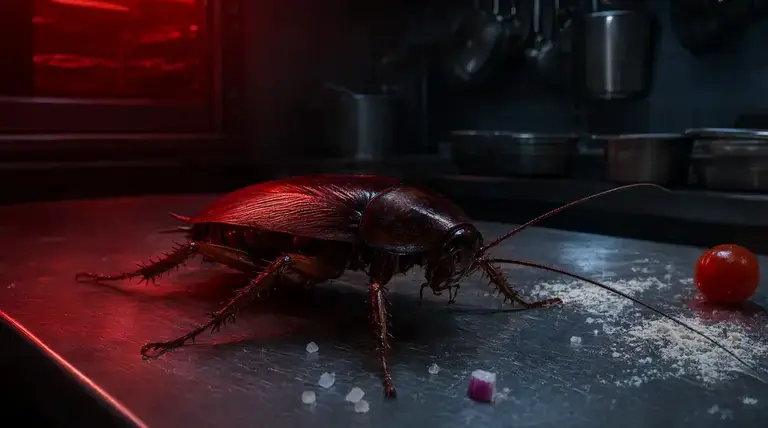
- Cockroaches mechanically carry bacteria across wards, kitchens and treatment rooms.
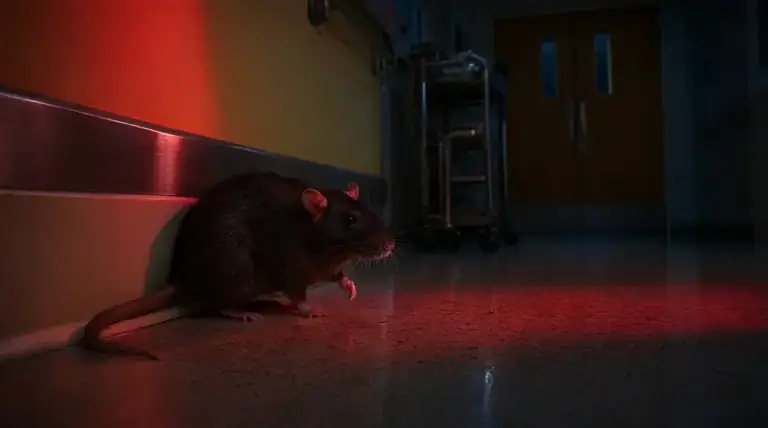
- Rodents damage wiring, contaminate stores and linen, and leave droppings in ceiling voids above clinical areas.
- Flies threaten sterile fields, wound-care areas and food services.
- Pharaoh ants are notorious in hospitals for entering wounds, dressings, IV lines and equipment.
Many of the fundamentals overlap with broader commercial work — our guide to commercial pest control for Australian businesses covers the monitoring-first approach — and hospital catering carries the same food-safety duties described in rodent control for restaurants and cafes. Facilities with residential-style tenancies, such as co-located staff accommodation, can also benefit from the principles in our apartment pest control strata guide.
Warning signs of pest activity in a medical facility
The earliest signs of a pest problem in a healthcare setting are almost always spotted by cleaning, catering or maintenance staff before any technician arrives. Train your team to treat every one of these as a reportable incident.
- Droppings — rodent pellets in stores, plant rooms or behind appliances; cockroach speckling in warm, humid corners of kitchens and sluice rooms.
- Gnaw marks — on cabling, packaging, door seals and stored linen or paper goods.
- Egg cases and shed skins — cockroach oothecae behind fridges, autoclaves and vending machines.
- Grease and smear marks — dark trails along pipework, skirting and ceiling-void entry points.
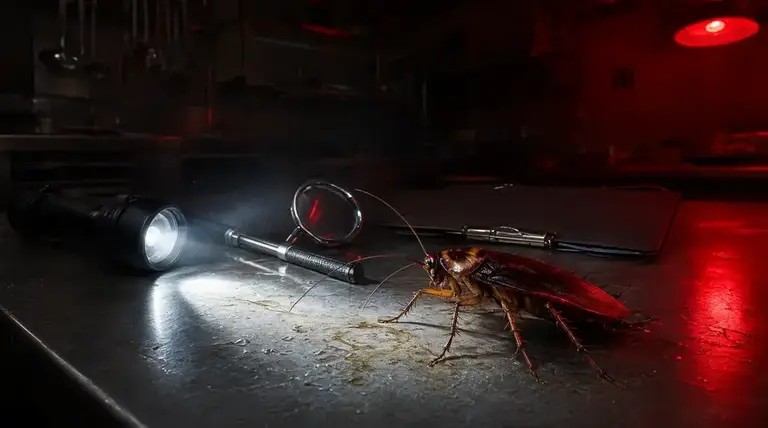
- Live sightings — ants trailing into treatment rooms or dressings trolleys; flies in food service or waste areas; a cockroach seen in daylight, which often signals a larger hidden population.
- Odours — a musty, oily smell in enclosed store rooms can indicate established cockroach or rodent activity.
Loading docks, waste rooms and linen stores are the most common weak points and deserve extra monitoring between scheduled visits.
DIY vs professional pest control in healthcare settings
DIY pest control has no legitimate place in a clinical environment: off-the-shelf sprays can contaminate sterile fields, are unsuitable near patients, and produce none of the documentation auditors require. A licensed professional program uses monitoring and exclusion first, with APVMA-registered products applied precisely and discreetly by trained technicians.
| Factor | DIY / in-house | Licensed professional program |
|---|---|---|
| Detection | Relies on staff noticing visible pests — usually too late | Continuous monitoring stations catch activity before an outbreak |
| Treatment method | Broad aerosol sprays, airborne product near patients | Targeted gel and bait placements; no airborne product in clinical zones |
| Disruption | Uncontrolled, often during operating hours | Zoned scheduling treats areas without disrupting wards |
| Exclusion and hygiene | Ad hoc, no structured plan | Strict exclusion removes entry points and food sources |
| Documentation | None — fails accreditation audits | Trend reports, SDS records and licensed-technician logs |
No treatment can be described as 100% safe or guaranteed; the correct approach is APVMA-registered products, minimal chemical use, and application by licensed technicians only.
Healthcare pest control costs in Australia (2025-26)
Across the Australian market, healthcare pest control typically costs more per visit than standard commercial servicing because of monitoring density, documentation requirements and after-hours scheduling. The figures below are typical industry-wide ranges in AUD — what providers generally charge — and any individual quote will depend on facility size, pest pressure and service frequency.
| Service | Typical market rate (AUD) | What’s included / notes |
|---|---|---|
| Initial inspection and site plan | $150–$450 is the typical Australian market rate | Site survey, risk zones mapped, pest management plan drafted; often credited if you proceed |
| Small clinic / dental practice — scheduled service | The industry generally charges $180–$350 per visit | Monitoring station checks, gel/bait top-ups, service report; monthly or bimonthly |
| Medical centre / day surgery — monthly program | Typical market rates sit at $400–$900 per month | Continuous monitoring, zoned treatments, trend reporting for accreditation |
| Hospital / large multi-building facility | Australian providers typically charge $800–$2,500+ per month | High device density, rapid-response callouts, staff training, full audit documentation |
| Emergency response callout | The going market rate is $250–$600 | Urgent attendance for a sighting in a clinical or sterile area |
Auditors assessing facilities against national safety and quality standards expect a documented, site-specific pest management plan, trend reports from monitoring devices, product safety data sheets, licensed technician records and rapid-response procedures — all of which a proper program provides.
It’s worth knowing that Aussie Pest Strike typically comes in well under these typical Australian market rates while still delivering the full documentation and monitoring a healthcare facility needs. For an exact quote tailored to your site, give the team a call on [aps_phone].
Seasonal pest activity in Australian medical facilities
Pest pressure on Australian healthcare facilities peaks through the warmer months, when cockroaches, ants and flies are most active, and lifts again in late autumn as rodents move indoors. Winter is the quietest period, but internal heating means activity inside a climate-controlled hospital never drops to zero — one reason monitoring must run all year, e.g., even in July.
Jan
Feb
Mar
Apr
May
Jun
Jul
Aug
Sep
Oct
Nov
Dec
Indicative pest-pressure pattern for Australian medical facilities: cockroaches, flies and ants drive the October–March peak, while the April–June shoulder reflects rodents moving indoors ahead of winter. Internal activity persists year-round.
In a hospital, we treat a single cockroach sighting the way other industries treat an infestation — because by the time you see one in a ward, the pressure behind the walls is already established. The facilities that stay clean are the ones where the cleaner reports a gnaw mark at 6am and we’ve actioned it before the day shift starts. Monitoring and staff buy-in beat any chemical, every time.
Put your facility on a continuous-monitoring IPM program with monthly scheduled servicing at minimum, monthly-or-better checks on high-risk zones (kitchens, waste rooms, loading docks, linen stores), and a documented rapid-response procedure for any sighting. Insist on trend reports, safety data sheets and licensed-technician records after every visit — if a provider can’t hand you an audit-ready folder, they’re not a healthcare-grade provider.
Frequently Asked Questions
Why is pest control held to a higher standard in health and healthcare facilities?
In a clinical setting, a pest is a potential vector rather than a nuisance. Healthcare pest control therefore operates on zero tolerance, prioritising prevention, continuous monitoring and infection control over reactive treatment. The practical next step is to note the signs, inspect the relevant area carefully, and seek property-specific advice if the issue continues.
Which pests pose the greatest risk in Australian hospitals and clinics?
Cockroaches mechanically carry bacteria across wards, kitchens and treatment rooms. Rodents damage wiring, contaminate stores and linen, and leave droppings in ceiling voids above clinical areas. Flies threaten sterile fields, wound-care areas and food services. Pharaoh ants are particularly notorious in hospitals because they can enter wounds, dressings, IV lines and equipment.
What does a compliant pest management program for a healthcare facility look like?
A compliant program uses integrated pest management built on continuous monitoring, exclusion and precisely placed low-toxicity baits rather than broad spraying. Treatments use APVMA-registered products applied discreetly by licensed technicians, with zoned scheduling so wards are not disrupted. Auditors expect a site-specific pest management plan, monitoring trend reports, product safety data sheets, licensed technician records and rapid-response procedures for sightings in clinical areas.
Why does DIY pest control have no place in a clinical environment?
Off-the-shelf sprays can contaminate sterile fields and are unsuitable near patients, and DIY approaches produce none of the documentation accreditation auditors require. Detection relies on staff noticing visible pests, which is usually too late, and uncontrolled spraying can spread airborne product through clinical zones. A licensed professional program instead catches activity early through monitoring stations, uses targeted gel and bait placements, and provides the trend reports and records auditors expect.
How do Australian climate and building styles affect pest pressure in health facilities?
Warm, humid conditions across Queensland and northern New South Wales drive year-round German cockroach and Pharaoh ant activity, while southern states see rodents push indoors every autumn and winter. Internal heating means activity inside climate-controlled facilities never drops to zero.
What warning signs of pest activity should healthcare staff report?
Cleaning, catering and maintenance staff should treat as reportable incidents: rodent droppings in stores or plant rooms; cockroach speckling in warm, humid kitchen and sluice-room corners; gnaw marks on cabling, packaging, door seals or stored linen; egg cases and shed skins behind fridges, autoclaves and vending machines; grease smear marks along pipework; ants trailing into treatment rooms or dressings trolleys; flies in food service areas; a cockroach seen in daylight; and musty, oily odours in enclosed store rooms.
Which areas of a health facility need the most monitoring attention?
Loading docks, waste rooms and linen stores are the most common weak points in healthcare facilities and deserve extra monitoring between scheduled visits. These areas combine pest attractants such as food waste, deliveries and stored materials with frequent external access. Kitchens, sluice rooms, plant rooms and ceiling voids above clinical areas also warrant close attention, which is why effective programs maintain high monitoring device density across these risk zones.
How does seasonal pest activity change throughout the year in Australian health facilities?
Pest pressure peaks from October to March, driven by cockroaches, flies and ants during warmer months. An April to June shoulder period reflects rodents moving indoors ahead of winter, particularly in southern states. Winter is the quietest period overall, but internal heating means activity inside a climate-controlled hospital never drops to zero. This is why monitoring must run all year round, even through the quietest winter months.
How would Aussie Pest Strike assess the warning signs described for a health facility?
A technician would treat each reported sign — droppings, gnaw marks, oothecae, smear trails, live sightings or musty odours — as an incident requiring investigation. They would trace activity back to likely sources such as loading docks, waste rooms, linen stores and ceiling voids, check nearby monitoring stations for trends, map risk zones against the site's pest management plan, and recommend targeted low-toxicity treatments plus exclusion work suited to clinical areas.
What is the practical next step for a healthcare facility considering Aussie Pest Strike?
The next step is arranging an initial inspection and site plan, where the technician surveys the facility, maps risk zones such as sterile areas, kitchens, loading docks and waste rooms, and drafts a site-specific pest management plan suitable for accreditation audits.
Sources & further reading
Found Something
Dangerous?
Don’t touch it. Don’t spray it. Keep kids and pets clear, take a photo from a safe distance, and call us — or book a free inspection and we’ll come to you.
02 7235 0050