Autumn Pestsin Australia: TheIndoor Migration
Autumn pests in Australia migrate indoors from March as it cools: rodents, spiders and roaches seek shelter. Get the proofing checklist and a free inspection.
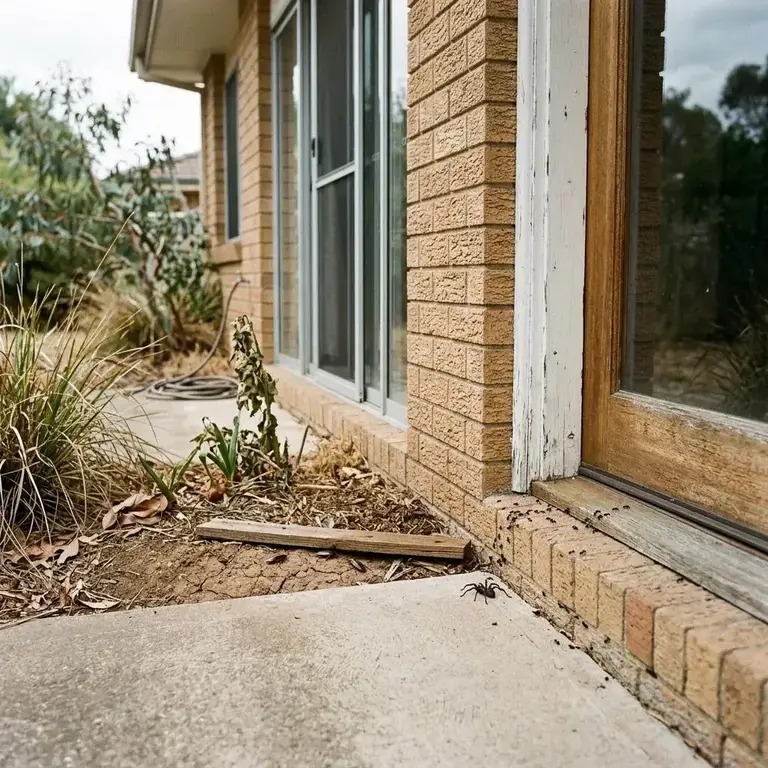
Autumn pests in Australia are defined by one behaviour: migration indoors. As temperatures drop from March through May, rodents, spiders, cockroaches and cluster flies start moving from the garden into the warmth and shelter of your home — whether you live in a freestanding house, a townhouse or a unit (u) block. In plain terms, the autumn indoor migration is the seasonal shift of outdoor pests into buildings as cooling weather removes their food and harbourage, and it is the single most predictable pest event of the Australian year.
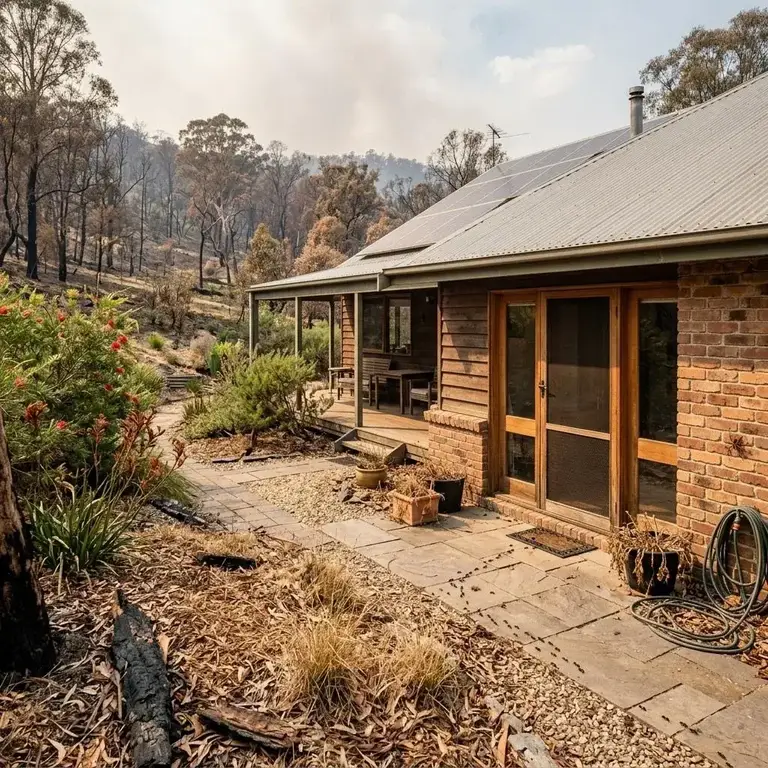
Autumn is the season to seal, exclude and proof before winter locks these visitors inside with you. Whether you’re in a brick veneer in the suburbs, a raised Queenslander, or an apartment or unit (u) in the inner city, the pests behave the same way — only the timing changes by region. This guide covers what moves, why it moves, how to stop it yourself, and when professional pest control is the smarter spend.
- Autumn pest pressure is about intrusion, not breeding — pests are scouting for winter shelter, not multiplying.
- A house mouse needs a gap of only about 6 mm; a rat needs roughly 12 mm. Sealing entry points is the highest-value autumn job.
- The further south you live, the earlier the migration starts — Melbourne, Adelaide and Canberra feel it from March.
- One mouse entering in April can become an established roof-void population by June.
- Proofing in autumn dramatically reduces the pest problems you would otherwise live with all winter.
Why Autumn Pests Trigger the Move Inside Across Australia
Autumn triggers indoor migration because cooling weather removes the outdoor food and warmth pests relied on all summer, forcing them toward the stable temperatures inside buildings. Rodents in particular sense the change early and begin scouting for winter harbourage weeks before the first genuinely cold nights arrive.
Australian housing gives them plenty of options. Homes on stumps or with suspended timber floors have subfloor voids that stay dry and sheltered. Brick veneer walls have cavities, weep holes and service penetrations. Queenslanders have verandas, roof voids and generations of settled gaps around pipework. Even modern slab-on-ground homes have weep holes, garage door gaps and poorly sealed penetrations for air-conditioning lines. Rodents squeeze through gaps as small as the width of a pen — about 6 mm for a mouse, 12 mm for a rat — so almost every home has at least one viable entry point unless it has been deliberately proofed.
Climate drives the timing. In the southern capitals, night temperatures fall sharply from March, and pest pressure builds fast — the same pattern behind winter pest problems in Melbourne, where what moves indoors in autumn stays for the season. Sydney and Perth cool more gradually, giving households a slightly longer proofing window — though anyone who has read about common summer pests in Sydney homes will know the insect pressure simply rolls straight into autumn rodent pressure. In Brisbane and the subtropics, outdoor conditions stay comfortable for longer, so intrusion is milder — but as humidity and pests on the Gold Coast are closely linked, cockroach pressure in warm, damp homes barely eases at all.
Warning Signs Autumn Pests Have Already Moved In
The clearest warning sign is scratching, scurrying or gnawing sounds in the ceiling or walls at night, which almost always means rodents are already established in the roof void. By the time you hear them, they have usually been inside for days or weeks.
- Droppings — small dark pellets in cupboards, along skirtings, in the pantry or on top of the hot water system indicate mice; larger capsule-shaped droppings suggest rats.
- Gnaw marks — on food packaging, timber edges, wiring insulation or plastic pipes, often near entry points.
- Grease rub marks — dark smears along walls, beams and pipe runs where rodents travel repeatedly.
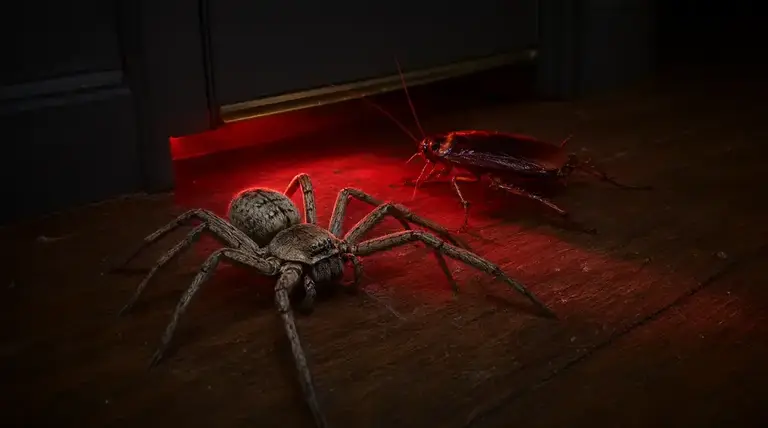
- Spider web build-up — fresh webs appearing quickly in corners, garages, window frames and eaves as spiders relocate indoors chasing insect prey.
- Cockroach activity near warmth — sightings around the back of the fridge, dishwasher, oven or hot water pipes, especially at night.
- Cluster flies on sunny walls — slow-flying insects gathering on sun-warmed external walls before slipping into roof spaces and wall cavities.
- Nesting material — shredded paper, insulation or fabric dragged into roof voids, wall cavities, subfloors or stored boxes in the shed.
- Pet behaviour changes — dogs and cats fixating on a particular wall, cupboard or ceiling area.
DIY Autumn Proofing vs Professional Pest Control
Most autumn proofing is genuinely DIY-friendly: sealing gaps, fitting mesh, clearing gutters and tidying the yard cost little more than time and materials. Where DIY falls short is in identifying every entry point, treating established rodent or cockroach activity, and applying chemical treatments — anything involving rodenticides or residual insecticides should be handled by a licensed technician who works to APVMA-approved label directions, because no chemical treatment can be called completely safe or guaranteed, and misuse around children, pets and wildlife is a real risk.
| Factor | DIY approach | Professional service |
|---|---|---|
| Gap sealing and mesh | Effective for obvious gaps; easy to miss roofline and subfloor entry points | Systematic inspection finds hidden access points, including roof and subfloor |
| Rodent control | Snap traps can catch individuals; unlikely to clear an established population | Tamper-resistant bait stations, monitoring and exclusion plan |
| Cockroach treatment | Supermarket sprays give short-term knockdown only | Gel baits and targeted residual treatments placed by a licensed technician |
| Cost | $20–$80 in materials | Typically $150–$450 depending on service (see table below) |
| Best for | Prevention in a pest-free home | Active signs of pests, or hard-to-access roof/subfloor proofing |
If you go the DIY route, work through the core checklist: seal gaps around pipes, vents, weep holes and door sweeps; fit steel wool or mesh to rodent entry points; clear gutters and remove leaf litter piled against the house; store firewood off the ground and away from walls; and trim branches that give pests a bridge to the roof.
What Autumn Pest Control Costs in Australia (2025–26)
For a standard residential property, the typical Australian market rate for autumn pest control sits between $150 and $600 in 2025–26, depending on the service, property size and how established the problem is. Industry pricing varies by city, access (two-storey rooflines and subfloors attract higher market rates) and whether bait-station servicing is included in the quote.
The table below outlines what the Australian pest control industry generally charges for common autumn services. These are market-wide figures, not the rates of any single provider.
| Service | Typical market rate (AUD) | What’s included/notes |
|---|---|---|
| General pest spray (spiders, cockroaches, flies) | $150–$300 (typical market rate) | Internal and external treatment of a standard 3–4 bedroom home |
| Rodent treatment program | $200–$400 (typical market rate) | Tamper-resistant bait stations, placement, follow-up visit |
| Rodent proofing/exclusion | $250–$600+ (typical market rate) | Sealing entry points, mesh, door sweeps; market rates rise with access difficulty |
| Cockroach gel-bait treatment | $180–$350 (typical market rate) | Targeted baiting of kitchens, bathrooms and appliances |
| Combined autumn package | $300–$550 (typical market rate) | General spray plus rodent stations; common pre-winter bundle across the industry |
Worth knowing: Aussie Pest Strike typically comes in well under these Australian market rates while still delivering a thorough, licensed treatment. For an exact quote tailored to your property, call us on [aps_phone] today.
When Autumn Pest Activity Peaks: Month-by-Month
Indoor migration pressure climbs steadily from March, peaks through April and May, then stays high into winter as the pests that got inside settle in. Summer months show the lowest intrusion pressure because pests have ample food and shelter outdoors — though this pattern flattens in the tropical north.
Jan
Feb
Mar
Apr
May
Jun
Jul
Aug
Sep
Oct
Nov
Dec
Indicative indoor-migration pressure across temperate southern Australia. Intrusion builds from March, peaks April–May, and stays elevated through winter as pests that entered remain inside. Northern regions show a flatter curve year-round.
Every autumn we see the same thing: homeowners call in June once they hear scratching, and by then the rodents have been in the roof for two months. The jobs that go best are the ones booked in March or April, before anything has moved in. An hour of exclusion work in autumn saves a whole winter of baiting and trapping.
Book an autumn inspection in March or early April — before the first cold snap — and prioritise exclusion: seal every gap larger than 6 mm, fit mesh to weep holes and vents, and clear vegetation and stored materials away from walls. If you already have droppings, gnaw marks or ceiling noise, skip DIY and get a licensed technician in for a rodent program and targeted treatment. The pests you exclude now are the ones you won’t live with all winter.
Autumn Pests in Australia: Frequently Asked Questions
Why do pests come inside in autumn?
Pests come inside in autumn because falling temperatures cut off their outdoor food, warmth and shelter, so they migrate toward the stable conditions inside your home. Rodents are the most determined, actively scouting for winter nesting sites in roof voids, wall cavities and subfloors, while spiders, cockroaches and cluster flies follow for warmth and prey.
What is the most important autumn pest job?
Sealing entry points is the single most valuable autumn pest job because it physically stops rodents and insects from getting in before winter. Even a 6 mm gap — about the width of a pen — is enough for a house mouse to enter, and a rat needs only around 12 mm. Mesh, steel wool, door sweeps and sealed pipe penetrations do the heavy lifting.
Do I still need pest control in autumn if summer was quiet?
Yes. Autumn pest pressure is about intrusion rather than breeding, so a quiet summer does nothing to stop rodents and insects seeking winter shelter in your home. Proofing and a preventative treatment now are far cheaper and easier than removing an established rodent population from your roof void in July.
Don’t wait for the first cold snap — by the time you hear scratching in the ceiling, the migration is already done. Aussie Pest Strike’s licensed technicians offer a free on-site inspection and a tailored autumn proofing plan, from gap sealing and mesh work to rodent bait-station programs and targeted treatments, anywhere in Australia. Call Aussie Pest Strike on [aps_phone] today to lock pests out before winter locks them in.
Sources & further reading
Found Something
Dangerous?
Don’t touch it. Don’t spray it. Keep kids and pets clear, take a photo from a safe distance, and call us — or book a free inspection and we’ll come to you.
02 7235 0050