Pest Control forNew Builds: WhatAustralian Owners Miss
Pest control for — Pest control new — a brand-new home is not automatically pest-proof: new build pest control gaps lapsed barrier warranties, disturbed...
A new build pest control plan is the organised approach Australian homeowners take to protect a recently constructed home from termites and general pests by maintaining the builder’s termite management system, booking regular inspections and avoiding landscaping that bridges barriers. Right across Australia, from new estates in Melbourne’s growth corridors to fresh subdivisions in Brisbane, Sydney and Perth, owners are discovering the hard way that a brand-new home is not automatically pest-proof.
The good news is that owners who understand what their builder did — and didn’t — install can protect their investment cheaply. Lapsed barrier warranties, disturbed soil and landscaping that traps moisture are the three big culprits, and all three are preventable with a little knowledge and a simple annual routine.
- Most new Australian homes have a termite management system installed to satisfy the National Construction Code and AS 3660.1 — but it is not permanent protection.
- Landscaping that covers or bridges the slab edge is the single most common way owners void their termite protection.
- Your durable notice (usually near the meter box) tells you what was installed and when it needs renewal — photograph it and diarise the date.
- The first 12 months are peak colonisation time for ants, spiders and cockroaches on newly cleared estates.
- Annual professional inspections are usually a warranty condition and are your cheapest early-warning system.
Why new build pest control matters across Australia
New build pest control matters because Australia’s climate and construction styles make even brand-new homes attractive to termites and general pests within the first few years. Much of the country sits in high termite-pressure zones, and the warm, wet conditions along the eastern seaboard and across the Top End accelerate pest activity around freshly built homes.
Construction style plays a role too. Most modern Australian homes are built on concrete slabs, which means termite management relies on a treated zone or physical barrier around the slab edge and at pipe penetrations. Brick veneer homes on slabs still have timber frames, and rendered finishes can conceal the slab edge entirely. Queenslanders and homes with subfloors present different risks, but the principle is the same: the barrier only works if it stays intact, visible and unbridged.
Estates carved out of former farmland or bushland — common across Australia’s fast-growing outer suburbs — displace existing pest populations. Termite colonies, ant nests and spider habitat are bulldozed, and the survivors look for the nearest shelter, which is usually the newest home on the block. Compare this with pest control in older Australian homes, where the risks come from decades of wear, and you’ll see new builds have their own distinct vulnerability profile.
New build pest control: the assumption that costs owners money
The most expensive assumption in new build pest control is that the builder’s termite management system protects the home forever — it doesn’t. Most new Australian homes are handed over with a system installed to satisfy the National Construction Code, which references Australian Standard AS 3660.1 for new construction, but chemical components have finite service lives and physical barriers can be breached.
The required durable notice, usually a small metal or plastic plate fixed near the meter box or under the kitchen sink, states exactly what was installed and when it needs attention. Most owners never read it. Across the Australian market, builders typically install one of three systems:
- A physical barrier (stainless mesh or graded stone) under and around the slab,
- A chemical soil treatment (termiticide) applied before the slab pour, or
- A combination system with perimeter reticulation.
Each has a different maintenance profile, which is why reading that durable notice — recording the treatment type, chemical used, installation date and recommended re-treatment interval — is the foundation of sensible new build pest control. Photograph it, store the image with your build documents and set a calendar reminder for the renewal date. In the typical Australian market, re-treatments and barrier inspections are commonly priced in the hundreds of dollars, with full chemical soil re-treatments often quoted by the industry at rates well into four figures depending on the size of the home.
Aussie Pest Strike typically comes in well under these typical Australian market rates, so call us on [aps_phone] for an exact quote tailored to your home.
Warning signs your new build’s protection has already failed
The clearest warning signs are bridged barriers, moisture near the slab and early pest activity indoors — all of which can appear within the first year of moving in. Run this checklist around your property every few months:
- Garden beds against the slab edge — soil, pavers or mulch piled above the slab edge bridges the barrier and hides mud tubes.
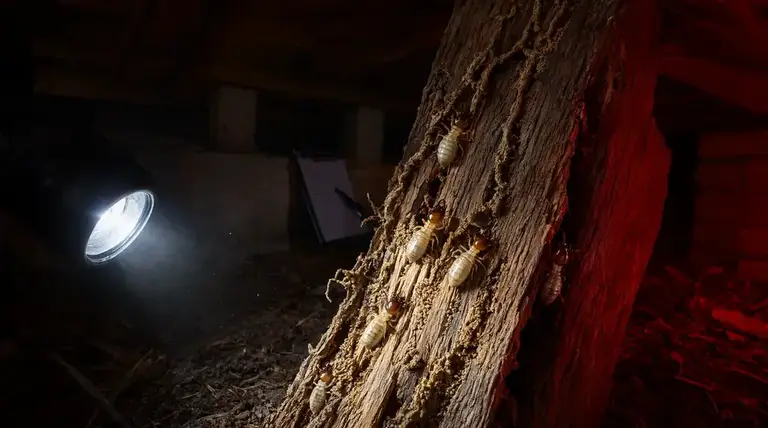
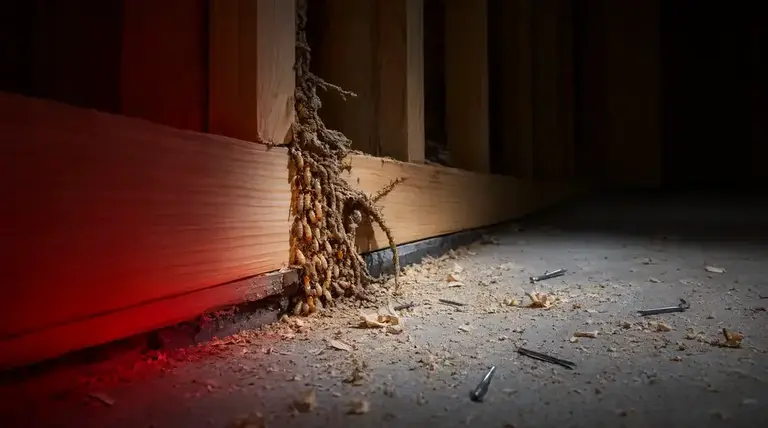
- Mud tubes or leads — pencil-width earthen tubes on the slab edge, weep holes or piers signal active termites crossing the treated zone.
- Timber or mulch stored nearby — stacked firewood, form-work offcuts or thick mulch beds attract and feed termites.
- Condensate and downpipe pooling — water directed at the foundation creates the moisture termites and cockroaches need.
- Ant trails, webs and droppings — recurring ants at doorways, spider webs under eaves and cockroach droppings in the garage show general pests are colonising.
- A lapsed durable notice date — if the re-treatment interval has passed, your chemical protection may no longer be effective.
DIY checks vs professional pest control
Homeowners can handle the visual housekeeping — keeping the slab edge exposed, managing moisture and watching for mud tubes — but barrier assessment, chemical treatment and warranty-compliant inspections should be left to licensed technicians. Chemical termiticides must be applied by licensed professionals in line with APVMA-registered label directions, and no treatment should be described as a permanent or guaranteed fix.
| Task | DIY | Professional |
|---|---|---|
| Keeping 75 mm of slab edge exposed | Yes — simple landscaping habit | Not required |
| Visual checks for mud tubes | Yes — monthly walk-around | Annual detailed inspection |
| Termite inspection (warranty-compliant) | No | Yes — licensed inspector, written report |
| Chemical barrier renewal / reticulation refill | No — APVMA label requires licensed applicator | Yes — licensed technician only |
| General pest perimeter treatment | Surface sprays offer short relief | Targeted, longer-lasting treatment |
If you’re assessing an inspector’s thoroughness, our Pre-Purchase Pest Inspection: The Complete Buyer’s Checklist shows exactly what a proper inspection covers — the same principles apply to a new home’s first year. The Pre-Purchase Termite Inspection: What Every Buyer Must Know guide is equally useful if you’re buying a near-new home from its first owner.
What new build pest control costs in Australia
Pest control for a new build typically costs a few hundred dollars a year for inspections and general treatments, with larger one-off costs when chemical barriers fall due for renewal. The table below shows realistic 2025–26 industry ranges across Australia — actual quotes vary with home size, construction type and state.
| Service | Typical cost (AUD) | What’s included/notes |
|---|---|---|
| Annual termite inspection | $250–$400 | Full inspection to AS 3660.2, written report; usually a warranty condition |
| General pest treatment (ants, spiders, cockroaches) | $180–$350 | Internal/external perimeter spray, weep-hole and entry-point treatment |
| Chemical barrier renewal | $1,500–$3,500 | Typically due every 5–8 years; price depends on perimeter length |
| Reticulation system refill | $800–$1,800 | Recharging existing pipe system; cheaper than full re-trenching |
| Combined building & pest inspection (near-new purchase) | $400–$650 | Structural defects plus timber pest inspection in one visit |
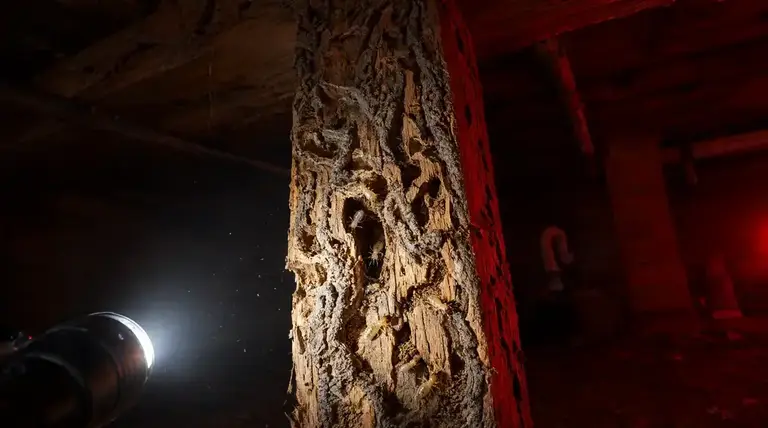
For most owners, the annual inspection plus a general pest treatment every year or two is all that’s needed in the first five years — a modest outlay against the cost of repairing termite damage, which home insurance in Australia generally does not cover.
Seasonal pest activity around new Australian homes
Pest pressure around new builds follows Australia’s seasons: termite swarmers and ants peak in the warm, humid months from October to March, while rodents and cockroaches push indoors through autumn and winter. Use the chart below to time your inspections and treatments.
Jan
Feb
Mar
Apr
May
Jun
Jul
Aug
Sep
Oct
Nov
Dec
Typical relative pest pressure around Australian homes: termite swarms and ant activity peak in late spring and summer, ease through winter, then rebuild from September. Northern regions stay higher year-round.
Booking your annual Termite Inspections & Reports in early spring puts a licensed set of eyes over the property just before peak swarming season — ideal timing to catch bridging or moisture issues before termites exploit them.
In my experience, the new homes that get into trouble are the ones where the garden went in before anyone read the durable notice. Nine times out of ten, the first inspection finds mulch over the slab edge or a condensate pipe dripping at the footing — easy fixes if you catch them in year one, expensive ones if you don’t.
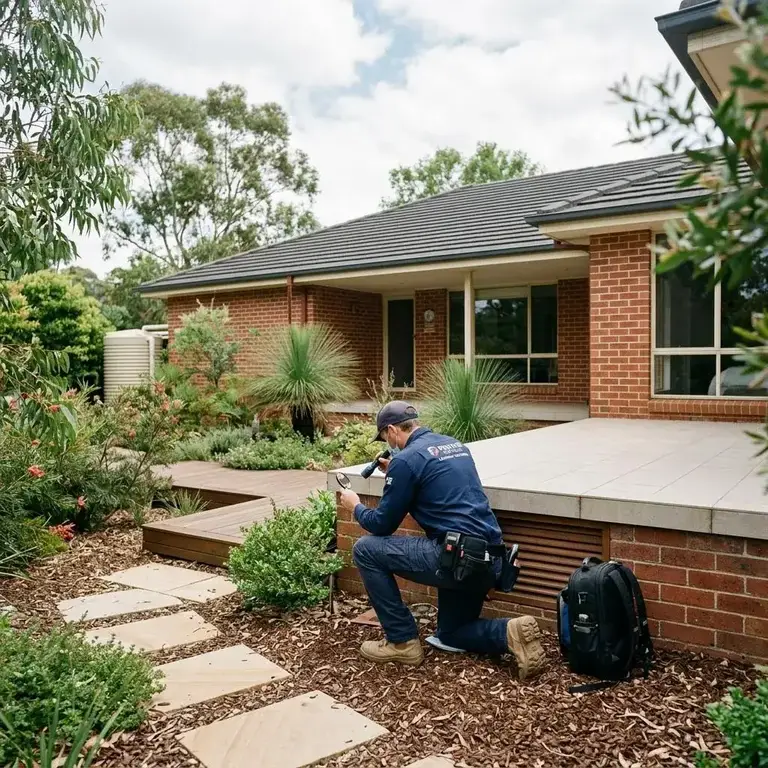
Within 12 months of moving in, book a professional termite and general pest inspection — even while you’re under warranty. Read your durable notice, diarise the renewal date, keep 75 mm of slab edge exposed, and direct all downpipes and air-conditioning condensate away from the foundation. If you’re buying a near-new home from its first owner, order a Pre-Purchase Building & Pest Inspection so you inherit the documentation, not the problems.
Frequently Asked Questions
Does a new build come with permanent termite protection?
No. Most new Australian homes are handed over with a termite management system installed to satisfy the National Construction Code and AS 3660.1, but this is not permanent protection. Chemical components have finite service lives and physical barriers can be breached. The durable notice near your meter box states what was installed and when it needs attention, so photograph it and diarise the renewal date.
What is the durable notice and where do I find it?
The durable notice is a small metal or plastic plate usually fixed near the meter box or under the kitchen sink. It records the treatment type, chemical used, installation date and recommended re-treatment interval for your home's termite management system. Most owners never read it. Photograph it, store the image with your build documents and set a calendar reminder for the renewal date.
What termite management systems do builders typically install in new homes?
Builders typically install one of three systems: a physical barrier such as stainless mesh or graded stone under and around the slab; a chemical soil treatment applied before the slab pour; or a combination system with perimeter reticulation. Each has a different maintenance profile, which is why reading the durable notice to understand what was installed is the foundation of sensible new build pest control.
How can landscaping void my new home's termite protection?
Landscaping that covers or bridges the slab edge is the single most common way owners void their termite protection. Soil, pavers or mulch piled above the slab edge bridges the barrier and hides mud tubes. Keep around 75 mm of slab edge exposed as a simple landscaping habit, avoid thick mulch beds against the house, and store firewood and timber offcuts well away from the foundation.
What warning signs suggest my new build's termite protection has failed?
Run a checklist every few months: garden beds bridging the slab edge, pencil-width mud tubes on the slab edge, weep holes or piers, timber or mulch stored nearby, condensate or downpipe water pooling at the foundation, recurring ant trails, spider webs under eaves, cockroach droppings in the garage, and a lapsed durable notice date indicating chemical protection may no longer be effective.
Why are newly built homes attractive to pests in the first year?
Estates carved out of former farmland or bushland displace existing pest populations. Termite colonies, ant nests and spider habitat are bulldozed, and survivors look for the nearest shelter, which is often the newest home on the block. The first 12 months are peak colonisation time for ants, spiders and cockroaches on newly cleared estates, so early monitoring matters.
Which pest control tasks can I handle myself versus leave to professionals?
Homeowners can keep the slab edge exposed, manage moisture and watch monthly for mud tubes. The practical next step is to note the signs, inspect the relevant area carefully, and seek property-specific advice if the issue continues.
When should I book my first termite inspection after moving into a new build?
Booking an annual termite inspection in early spring puts a licensed set of eyes over the property just before peak swarming season from October to March. This timing helps catch bridging or moisture issues before termite activity peaks.
When should I ask Aussie Pest Strike for an on-site assessment of my new build?
An on-site assessment is useful if you have found mud tubes, bridged landscaping or moisture pooling at the slab, if your durable notice date has lapsed, or if you simply want confirmation of what system your builder installed and when it falls due. Aussie Pest Strike can inspect the barrier, identify early colonisation by ants, spiders or cockroaches, and recommend a maintenance routine suited to your home's construction type.
What is a practical next step for protecting my new build with Aussie Pest Strike?
A practical next step is arranging an annual termite inspection paired with a general pest treatment covering ants, spiders and cockroaches, timed before peak swarming season. Aussie Pest Strike can review your durable notice details, check that the slab edge remains exposed and unbridged, and set up a simple yearly routine so barrier renewals and reticulation refills never lapse unnoticed.
Sources & further reading
Found Something
Dangerous?
Don’t touch it. Don’t spray it. Keep kids and pets clear, take a photo from a safe distance, and call us — or book a free inspection and we’ll come to you.
02 7235 0050