Pest Inspection Costs:Who Pays,Buyer or Seller?
In most Australian property sales, the buyer pays for pest inspection costs as part of their pre-purchase due diligence, though some sellers commission a...
Pest inspection costs are one of the first questions buyers and sellers ask when a property changes hands in Australia, and the short answer is this: in most transactions, the buyer pays for the pest inspection as part of their pre-purchase due diligence, though sellers increasingly commission their own reports before listing. A pest inspection cost, put simply, is the fee charged by a licensed inspector to visually assess a property for termites, timber borers, wood decay and the conditions that attract them — typically $150 to $350 standalone, or $400 to $700 bundled with a building inspection.
Who actually foots the bill isn’t set in law. It comes down to convention, contract conditions and, in the ACT, mandatory disclosure rules. This guide breaks down realistic 2025-26 pricing, what an inspection covers, when each party pays, and how to time your booking around Australia’s termite seasons so you’re not caught out.
- The buyer usually pays for the pest inspection, arranging it under a “subject to building and pest” contract clause — or before auction day if bidding unconditionally.
- Standalone timber pest inspections typically cost $150-$350; combined building and pest packages run $400-$700 depending on size, location and construction type.
- Sellers sometimes pay for a pre-sale inspection to support their asking price, and in the ACT a timber pest report is mandatory sale documentation.
- Always confirm your inspector is licensed, insured, and reports to Australian Standard AS 4349.3 (QBCC-licensed in Queensland).
- Spring and summer are peak season — book early, especially in Queensland, northern NSW and the NT where termite pressure is year-round.
Why Pest Inspection Costs Matter So Much in Australia
Australia has some of the most aggressive termite pressure in the world, and the typical Australian market rate for an inspection — generally sitting somewhere between $150 and $400 across the industry — is cheap insurance against repair bills that regularly run into the tens of thousands. Termite damage is almost never covered by standard home insurance, which makes the pre-purchase inspection your only real line of defence before you sign.
The risk profile shifts with construction and climate, and so does what the industry generally charges. Older Queenslanders on stumps, weatherboard cottages and brick veneer homes with timber framing all give subterranean termites concealed entry points, while slab-on-ground homes can still be attacked through plumbing penetrations and weep holes. Larger or higher-risk homes often attract inspection fees at the upper end of the typical $150–$400 market range, with combined building and pest inspections commonly quoted industry-wide at $400 to $700. Our guide to pest control in older Australian homes explains why pre-1990s housing stock carries the highest risk, and even owners of recently completed properties should read up on what new-build owners commonly miss — a physical barrier installed at construction doesn’t guarantee protection if it’s breached or poorly maintained.
Warm, humid conditions across Queensland, northern New South Wales and the Northern Territory let colonies thrive all year, but Melbourne, Adelaide and Perth all have active termite zones too. No Australian buyer can reasonably skip the check, whatever the going market rate happens to be in their state.
Those figures reflect typical Australian market rates — what the industry generally charges. Aussie Pest Strike typically comes in well under these rates, so call us on [aps_phone] for an exact quote tailored to your property.
Warning Signs an Inspector Looks For
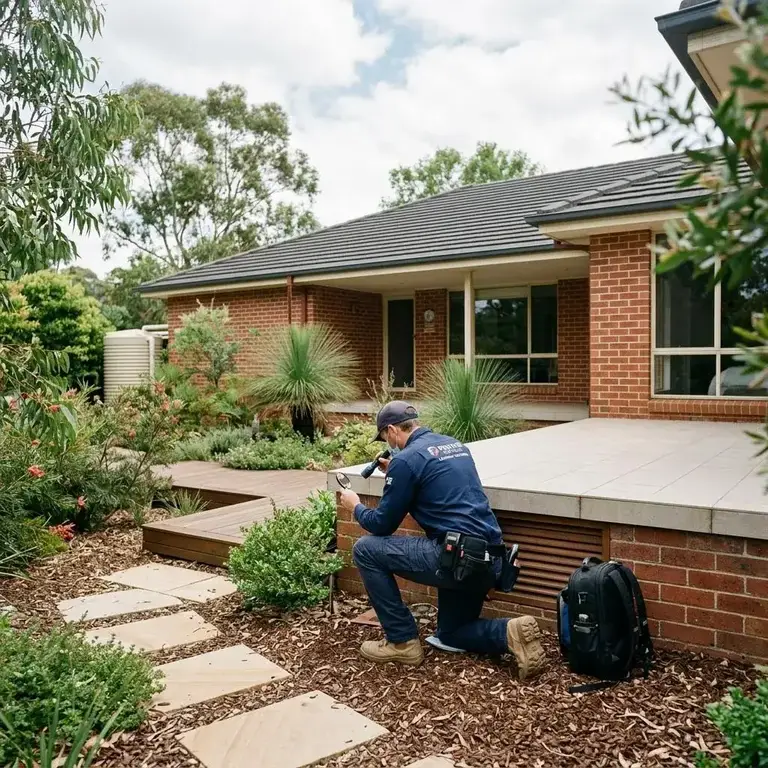
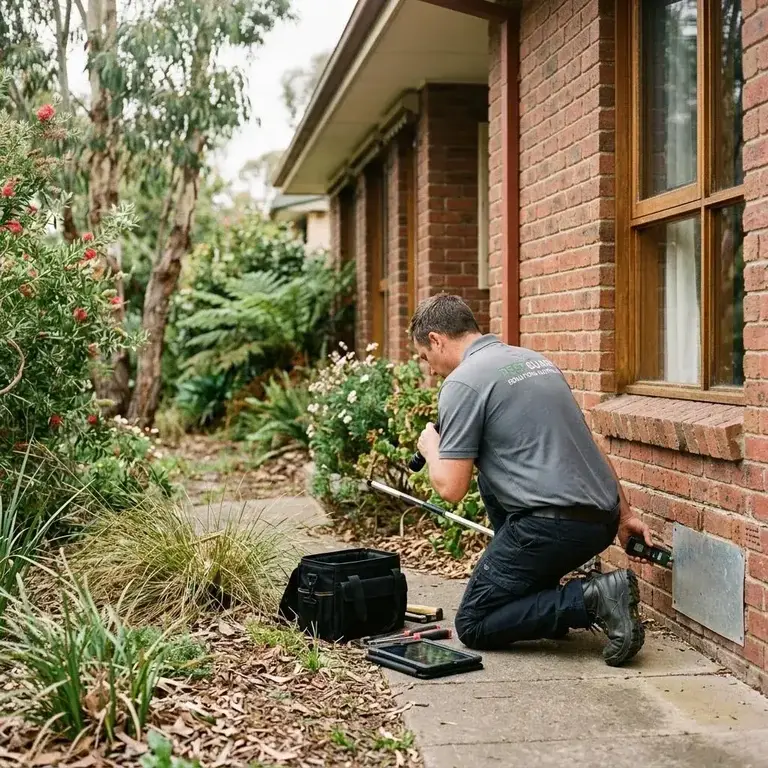
A timber pest inspection is a visual assessment of all reasonably accessible areas — interior, roof void, subfloor, exterior, garages, sheds, fences and trees within the property boundaries. Here is the checklist a licensed inspector works through:
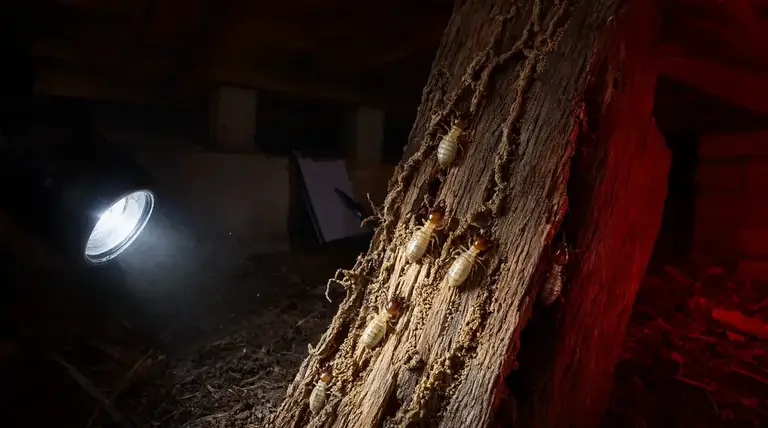
- Mud leads and shelter tubes — tell-tale earthen tunnels termites build over brickwork, piers and slab edges to reach timber while staying hidden.
- Subterranean termite activity — including Coptotermes acinaciformis, the most destructive species across mainland Australia, and the giant northern termite Mastotermes darwiniensis in the Top End.
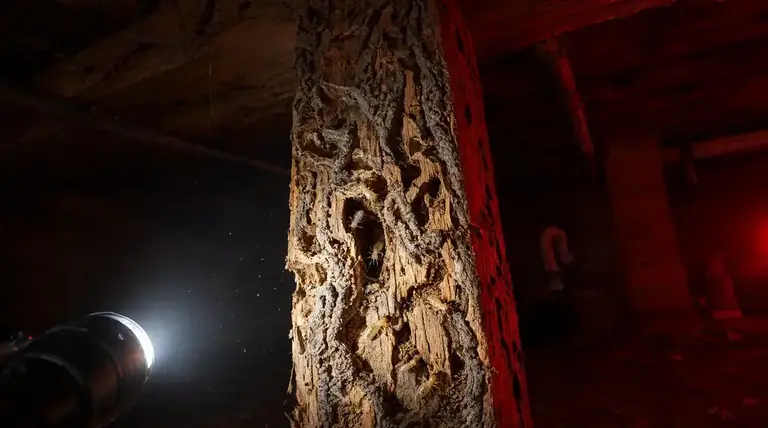
- Timber borer damage — fine frass and exit holes from powderpost beetle or Queensland pine beetle in seasoned floors and framing.
- Wood decay fungi — rot from persistent moisture in wet areas, subfloors, decking and external timbers.
- Conducive conditions — leaking plumbing, poor drainage, garden beds against walls, and timber in direct ground contact.
- Past activity and treatments — old damage, evidence of previous treatment, and whether a termite management system exists under AS 3660.
For a deeper buyer-focused walkthrough, see our pre-purchase termite inspection guide on what every buyer must know.
DIY Checks vs Professional Pest Inspection
You can spot obvious red flags yourself during an open home, but only a licensed inspector with moisture meters, sounding tools and thermal imaging can give you a report that stands up in contract negotiations. DIY checks are a useful first pass — not a substitute.
| Factor | DIY walk-through | Professional inspection |
|---|---|---|
| Cost | Free | $150-$700 depending on scope |
| Access | Ground level only | Roof void, subfloor, outbuildings |
| Detection tools | Eyes and a torch | Moisture meter, termatrac, thermal imaging |
| Written report | None | AS 4349.3-compliant, usable in negotiations |
| Contract/legal weight | None | Satisfies contract clauses and lender requests |
If treatment is ever needed, remember that chemical termite management should only be carried out by licensed pest control technicians using APVMA-registered products — never attempt soil treatments yourself.
Pest Inspection Costs Across Australia: 2025-26 Pricing
Typical pest inspection costs in Australia range from $150-$350 for a standalone timber pest inspection and $400-$700 for a combined building and pest package. Pricing varies with the home’s size, the state you’re in, and whether you bundle services.
| Service | Typical cost (AUD) | What’s included/notes |
|---|---|---|
| Standalone timber pest inspection | $150-$350 | Visual assessment to AS 4349.3 with written report; standard 3-bed metro home at lower end |
| Combined building & pest inspection | $400-$700 | Structural plus timber pest report in one visit; usually cheaper than two separate bookings |
| Large homes, acreage, subfloors | Upper end of range + | More timber and access time; extensive decking adds to the assessment |
| Regional/rural travel surcharge | Varies | Travel loading may apply outside metro areas |
Always confirm the quoted price includes GST and a written report, and that your inspector is licensed and insured — in Queensland, that means the appropriate QBCC licence. Booking a combined pre-purchase building and pest inspection with one provider is usually the best value. For standalone assessments, our termite inspections and reports service covers all accessible areas with fast turnaround.
Who Pays: The Buyer or the Seller?
There’s no law dictating who pays for a pest inspection in most of Australia — it comes down to convention and negotiation between the parties. Here’s how it typically plays out.
When the buyer pays: In the vast majority of transactions, the buyer arranges and pays. Most contracts in New South Wales, Victoria and Queensland are signed “subject to a building and pest inspection”, giving the buyer a window — often seven to fourteen days — to complete the checks. At auction, which is common in Sydney and Melbourne, the sale is unconditional, so you’ll need to organise and pay for the inspection before auction day.
When the seller pays: Sellers increasingly commission a pre-sale pest inspection to identify problems before listing. This avoids nasty surprises during negotiations, supports the asking price and can speed up the sale. Some vendors hand the report to prospective buyers as a gesture of transparency. In the ACT, a timber pest report is part of the mandatory documentation sellers must supply when listing a residential property — the one jurisdiction where the seller’s obligation is written into the process.
Seasonal Activity and When to Book
Termite activity — and demand for inspectors — peaks in spring and summer across Australia, particularly after rain when termite alates swarm. That coincides with the peak selling season, so book early to avoid delays in your contract window.
Jan
Feb
Mar
Apr
May
Jun
Jul
Aug
Sep
Oct
Nov
Dec
Indicative termite activity and inspection demand across a typical Australian year. Activity climbs sharply from September, peaking through late spring and summer when alates swarm after rain, and eases over the cooler southern winter — though in tropical Queensland and the NT, pressure stays high year-round.
“The buyers who get burnt are the ones who skip the inspection to save a few hundred dollars, or book it after they’ve already gone unconditional at auction. I’ve inspected homes where fresh mud leads were hidden behind stored boxes in the garage — you only find that if you know where to look. Spend the money before you sign, not after.”
Buyers: book a combined building and pest inspection as soon as your offer is accepted — or before auction day if you’re bidding unconditionally — and confirm the report complies with AS 4349.3. Sellers: consider a pre-sale inspection to support your asking price and avoid renegotiation. Either way, use a licensed, insured inspector, and if treatment is recommended, engage a licensed pest control technician for any chemical work.
Frequently Asked Questions
Who pays for a pest inspection when buying or selling a house in Australia?
In most Australian transactions, the buyer pays for the pest inspection as part of their pre-purchase due diligence, usually under a subject to building and pest clause. Sellers sometimes pay for their own pre-sale inspection to support the asking price and avoid surprises during negotiations. There is no law dictating who pays in most states — it comes down to convention and negotiation between the parties.
How much does a pest inspection cost in Australia in 2025-26?
A standalone timber pest inspection for a typical three-bedroom metro home generally falls in the low-to-mid hundreds, while a combined building and pest package costs noticeably more but covers both reports. The final figure depends on the property's size, construction and access — larger homes, acreage blocks, extensive subfloors or decking push the price toward the upper end, and regional bookings can attract a travel surcharge.
Is it cheaper to bundle a building and pest inspection together?
Yes, bundling is usually the more economical option. A combined building and pest inspection typically costs less than booking the two inspections separately, because one visit covers both assessments. It also saves time, which matters when your contract window for due diligence is often only seven to fourteen days long, giving you both reports sooner from a single booking.
Do sellers have to provide a pest report anywhere in Australia?
In the ACT, a timber pest report is part of the mandatory documentation sellers must supply when listing a residential property. It is the one jurisdiction where the seller's obligation to provide this report is written into the sale process. Elsewhere in Australia, providing a pest report is voluntary, though some vendors commission one before listing.
What does a timber pest inspection cover?
A timber pest inspection is a visual assessment of all reasonably accessible areas, including the interior, roof void, subfloor, exterior, garages, sheds, fences and trees within property boundaries. The inspector looks for mud leads, termite activity, timber borer damage, wood decay fungi, conducive conditions such as leaking plumbing or garden beds against walls, and evidence of past treatments or management systems.
Can I do my own pest check instead of paying for an inspection?
A DIY walk-through during an open home can spot obvious red flags, but it is not a substitute for a professional inspection. Only a licensed inspector with moisture meters, sounding tools and thermal imaging can access roof voids and subfloors and produce an AS 4349.3-compliant written report that carries weight in contract negotiations and satisfies lender requests.
When should I book a pest inspection around termite season?
Termite activity and inspector demand peak in spring and summer, particularly after rain when alates swarm, which coincides with the peak selling season. Book early to avoid delays within your contract window. In tropical Queensland, northern New South Wales and the Northern Territory, termite pressure stays high year-round, so timing matters less than booking promptly.
What should I confirm before hiring a pest inspector?
Always confirm your inspector is licensed and insured, and that they report to Australian Standard AS 4349.3. In Queensland, the appropriate licence is issued through the QBCC. Also confirm the quoted price includes GST and a written report, so you know exactly what you will receive and that the document can be used in negotiations.
How can Aussie Pest Strike help me plan my pre-purchase pest inspection?
If you are buying and need a timber pest inspection arranged within your contract window, Aussie Pest Strike can talk you through what the assessment covers, how long it typically takes, and what details about your prospective property will shape the scope of the inspection. Contacting them early helps you line up the booking around your cooling-off period rather than scrambling at the deadline.
Should I get a pre-sale pest inspection before listing my home?
Many sellers now commission a pre-sale inspection to identify problems before listing, support their asking price and speed up the sale. Aussie Pest Strike can assess your property's accessible areas and explain what the findings mean for your sale preparations, giving you the chance to address issues on your own terms instead of discovering them mid-negotiation with a buyer.
Sources & further reading
Found Something
Dangerous?
Don’t touch it. Don’t spray it. Keep kids and pets clear, take a photo from a safe distance, and call us — or book a free inspection and we’ll come to you.
02 7235 0050