What HappensDuring a ProfessionalPest Inspection
What happens during — during a professional pest inspection, a licensed technician systematically examines the interior, roof void, subfloor, exterior and...
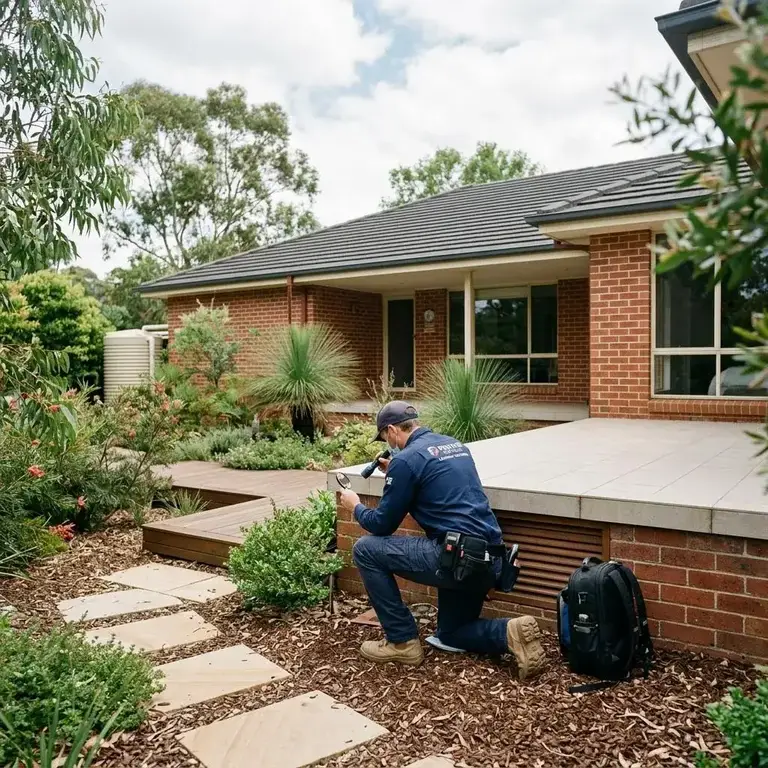
When you book a professional pest inspection, a licensed technician systematically examines the interior, roof void, subfloor, exterior and grounds of your property for evidence of termites, rodents, cockroaches, spiders and other pests — every stage, from briefing to report, covered in a clear sequence (a to e). The whole pest inspection process typically takes 45–90 minutes for an average Australian home, and you receive a written report documenting everything found.
A professional pest inspection is a structured, instrument-assisted assessment of a property by a licensed pest technician to detect active pests, past damage and conditions that attract them. Knowing what happens during that visit removes the mystery, helps you prepare your home, and makes it far easier to judge whether you’re getting a thorough job or a rushed tick-and-flick.
- Identify early — regular professional inspections catch termite and pest problems before they spread into structural damage.
- Expect 45–90 minutes on site for an average home, covering interior, roof void, subfloor, exterior and grounds.
- Instruments matter — moisture meters, thermal cameras and sounding dongers reveal what the eye can’t.
- Act on the source — a good report treats the cause (moisture, timber-to-ground contact), not just the visible pests.
- Book a licensed inspection — a professional confirms what DIY checks miss, and anything not accessed is honestly recorded as “not inspected”.
Why Professional Pest Inspections Matter Across Australia
Australia has some of the most termite-prone housing stock in the world, and a professional pest inspection is the single most reliable way to catch activity before it becomes a five-figure repair bill. Subterranean termites such as Coptotermes and Schedorhinotermes are active in every mainland state, and industry estimates consistently put the share of Australian homes attacked by termites at some point at around one in three.
Climate and construction style shape the risk. Queenslanders on stumps have exposed subfloors where termite leads climb piers; brick-veneer homes on concrete slabs can be bridged by garden beds and mulch; and older weatherboard homes often have damp, poorly ventilated subfloors — a reason pest control in older Australian homes demands extra attention. Even new homes aren’t exempt: plenty of owners discover that pest control for new builds is just as important, because physical barriers get breached by landscaping, renovations and stored timber within the first few years.
Warning Signs You Need a Pest Inspection
Book an inspection promptly if you notice any of the following — these are the same red flags technicians see before uncovering active infestations.
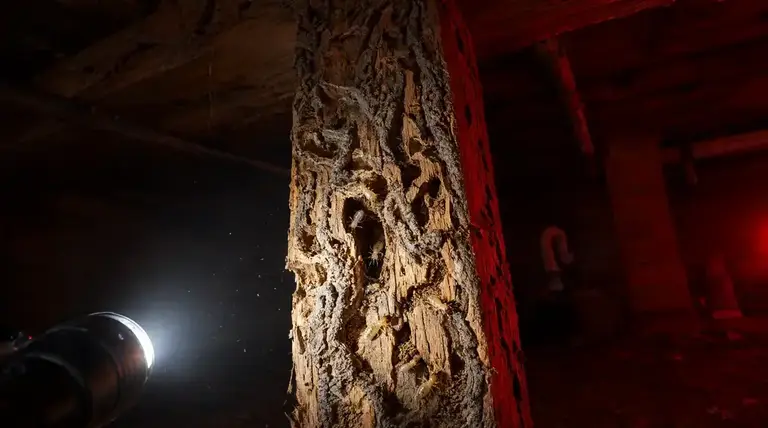
- Hollow-sounding timber — skirtings, door frames or floorboards that sound papery when tapped often hide termite workings.
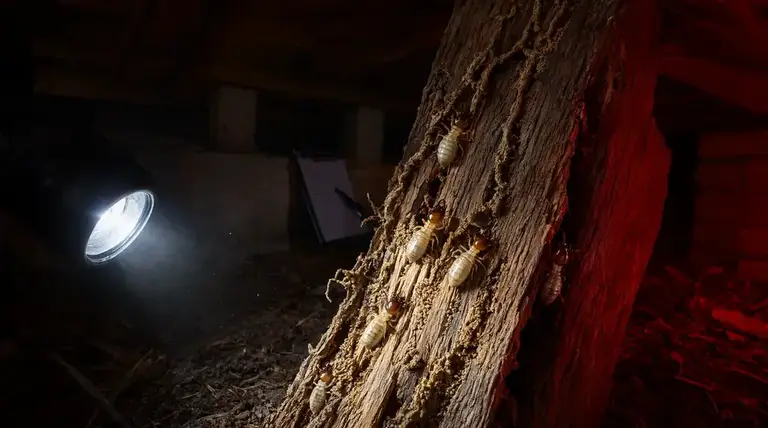
- Mud tubes or leads — earthen tunnels on foundations, piers or walls are highways for subterranean termites.
- Noises in the roof or walls — scratching and scurrying at night usually means rats, mice or possums in the roof void.
- Droppings and smear marks — rodent droppings along walls or dark grease marks at entry points signal established activity.
- Ant trails and cockroach sightings — persistent trails or daytime cockroaches suggest a much larger hidden population.
- Sagging floors or cornices — structural timber damage from termites or wood rot demands urgent professional assessment.
- Blistered or rippled paint — moisture and termite activity behind wall linings often shows as bubbling paintwork.
Step-by-Step: The Professional Pest Inspection Process (A to e)
A professional pest inspection follows four stages: a pre-inspection briefing, a systematic walk-through, instrument-based testing, and a written report delivered within 24–48 hours. Each stage builds on the last so nothing is missed.
Step one — the pre-inspection briefing. Before the inspection begins, the technician asks about your concerns — noises in the roof, ant trails, past termite history — and confirms which areas are accessible. This context shapes where they focus. A good inspector arrives with a torch, moisture meter, sounding donger (a small mallet for tapping timber), and often a thermal camera or Termatrac movement detector.
Step two — the systematic walk-through. The pest inspection process follows a logical circuit so nothing is missed:
| Area | What the inspector looks for |
|---|---|
| Interior | Blistered skirting, sagging cornices, live termite workings behind wall linings |
| Roof void | Mud galleries on rafters, rodent droppings, wasp nests, moisture staining |
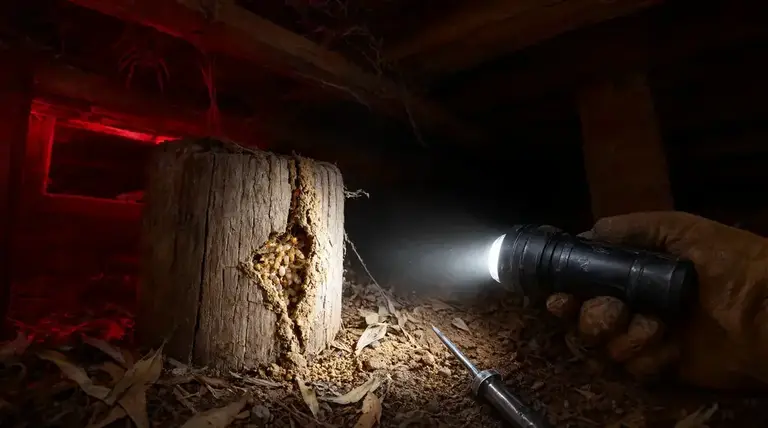
| Subfloor | Termite leads up piers, timber-to-ground contact, ventilation and dampness |
| Exterior | Weep holes, cracks, garden beds bridging the slab edge |
| Grounds | Stumps, fences, mulch and trees within roughly 50 m harbouring colonies |
Step three — testing and detection. Tapping timber that sounds hollow, reading moisture levels above 20% in structural pine, and scanning for the 2–3°C temperature difference termites create are how professionals confirm suspicions. Live subterranean termites such as Schedorhinotermes avoid light, so the technician works carefully to avoid disturbing a colony before treatment is planned.
Step four — the written report. Within 24–48 hours you receive a report listing pests found, conducive conditions, areas not accessed, and recommendations. If termites are found, the report links into detailed termite inspections and reports with a treatment plan rather than guesswork. For buyers, this dovetails with full pre-purchase building and pest inspections before contracts go unconditional.
DIY Checks vs a Professional Pest Inspection
DIY checks are a useful habit between professional visits, but they can’t replace one: a licensed technician carries detection instruments, knows species behaviour, and is trained to access roof voids and subfloors safely. Use your own walk-arounds to spot obvious warning signs — then call in a professional for anything suspicious.
| Factor | DIY check | Professional inspection |
|---|---|---|
| Detection tools | Torch and eyesight only | Moisture meter, thermal camera, Termatrac, sounding donger |
| Access | Ground level; roof void and subfloor often unsafe to enter | Trained and insured to enter roof voids and subfloors |
| Hidden activity | Easily missed behind linings | Detects heat, moisture and movement through walls |
| Documentation | None | Written report within 24–48 hours, suitable for buyers and insurers |
| Treatment pathway | Off-the-shelf sprays, often scatter pests | Targeted plan; chemical treatments applied by licensed technicians under APVMA-registered products |
A common misconception is that inspectors simply “look around”. In reality the professional pest inspection relies on instruments that reveal what the eye can’t: a moisture meter flags damp timber before decay is visible; a thermal camera detects the subtle heat signature of an active colony behind plasterboard; and sounding reveals hollowing that looks perfectly solid from outside. Just as important is what an honest inspector won’t do — guess. If a wall cavity or section of subfloor can’t be safely accessed, it’s recorded as “not inspected” rather than assumed clear. That transparency separates a genuine assessment from a rushed tick-and-flick.
How Much Does a Pest Inspection Cost in Australia?
In 2025-26, the typical Australian market rate for a standard residential pest inspection sits between $180 and $350, with combined building and pest inspections generally running higher across the industry. What the market charges varies with property size, construction type and access to the roof void and subfloor.
| Service | Typical market rate (AUD) | What’s included/notes |
|---|---|---|
| Standard pest inspection (house) | $180 – $350 (typical market rate) | Interior, roof void, subfloor, exterior, grounds; written report in 24–48 hrs |
| Unit or apartment inspection | $120 – $220 (typical market rate) | Interior focus; common areas subject to strata access |
| Pre-purchase building & pest inspection | $400 – $700 (typical market rate) | Combined structural and pest assessment before purchase — see our pre-purchase termite inspection guide |
| Thermal imaging / Termatrac add-on | $80 – $150 (typical market rate) | Enhanced detection for concealed termite activity |
| Annual termite inspection (monitoring) | $200 – $380 (typical market rate) | Recommended yearly in high-risk regions |
These figures reflect what the Australian pest control industry generally charges. Aussie Pest Strike typically comes in well under these market rates, so give us a call on [aps_phone] for an exact quote tailored to your property.
Seasonal Pest and Termite Activity Across the Year
Pest pressure in Australia peaks through the warmer months, with termite swarms typically occurring from late spring into summer and rodent activity spiking in autumn as temperatures drop. Inspections are valuable year-round, but booking before summer gives you the best chance of intercepting swarmers.
Jan
Feb
Mar
Apr
May
Jun
Jul
Aug
Sep
Oct
Nov
Dec
Indicative relative pest activity in southern Australia: termites, ants and cockroaches peak November–February, while rodents surge in autumn and winter as they move indoors. Northern regions see strong activity year-round.
Most of the serious termite damage we find could have been picked up twelve months earlier with a routine inspection. The homes that cop the big repair bills are usually the ones that skipped a few years. If we tell you an area wasn’t accessible, that’s not a limitation of the report — it’s the part you should act on first.
Book a licensed professional pest inspection at least once a year — twice if your home has a subfloor, a history of termites, or sits in a high-risk region. If you’re buying, never exchange contracts without a combined building and pest inspection. Clear access to the roof void, subfloor and weep holes before the visit so the technician can inspect every zone properly.
Frequently Asked Questions
How long does a professional pest inspection take?
For an average Australian home, a professional pest inspection typically takes 45 to 90 minutes on site. The duration depends on the property's size, construction type and how accessible the roof void and subfloor are. The visit covers the interior, roof void, subfloor, exterior and grounds, followed by a written report delivered within 24 to 48 hours.
What areas of my home does an inspector examine?
A technician follows a systematic circuit covering five zones: the interior (blistered skirtings, sagging cornices, live termite workings), the roof void (mud galleries, rodent droppings, wasp nests), the subfloor (termite leads up piers, timber-to-ground contact, dampness), the exterior (weep holes, cracks, garden beds bridging the slab edge) and the grounds, including stumps, fences, mulch and trees within roughly 50 metres that may harbour colonies.
What tools do pest inspectors use during an inspection?
Inspectors arrive with a torch, moisture meter, sounding donger for tapping timber, and often a thermal camera or Termatrac movement detector. A moisture meter flags damp timber before decay is visible, thermal cameras detect the subtle heat signature of an active colony behind plasterboard, and sounding reveals hollowing in timber that looks perfectly solid from outside. These instruments reveal what the eye alone cannot.
When will I receive the inspection report and what does it include?
You receive a written report within 24 to 48 hours of the inspection. It lists any pests found, conducive conditions such as moisture problems or timber-to-ground contact, areas that could not be safely accessed (recorded honestly as not inspected), and recommendations. If termites are found, the report links into a detailed treatment plan rather than guesswork, and it is suitable documentation for buyers.
Why are Australian homes so prone to termites?
Australia has some of the most termite-prone housing stock in the world, with industry estimates suggesting around one in three homes is attacked by termites at some point. Subterranean species such as Coptotermes and Schedorhinotermes are active in every mainland state. Construction style matters too: Queenslanders on stumps have exposed subfloors, brick-veneer slabs can be bridged by garden beds, and older weatherboard homes often have damp subfloors.
Do new homes still need pest inspections?
Yes. Even newly built homes are not exempt from pest risk. Physical barriers installed during construction can be breached by landscaping, renovations and stored timber within the first few years. Garden beds or mulch bridging a slab edge can give termites a route past barriers, so regular inspections remain important even when a home is only a few years old.
What happens if part of my home cannot be accessed during the inspection?
An honest inspector will not guess about areas they cannot reach. If a wall cavity or section of subfloor cannot be safely accessed, it is recorded as not inspected rather than assumed clear. This transparency separates a genuine assessment from a rushed tick-and-flick, and it tells you exactly which parts of the property still carry uncertainty so you can plan follow-up access.
When is the best time of year to book a pest inspection?
Inspections are valuable year-round, but pest pressure peaks through the warmer months. Termite swarms typically occur from late spring into summer, while rodent activity spikes in autumn as temperatures drop. Booking before summer gives you the best chance of intercepting swarmers before colonies establish, and annual inspections are recommended in high-risk regions.
How would Aussie Pest Strike assess warning signs like hollow timber or mud tubes?
Aussie Pest Strike technicians respond to signs like hollow-sounding skirtings, mud tubes or blistered paint by tapping suspect timber with a sounding donger, reading moisture levels in structural pine, and using thermal imaging or Termatrac to detect movement behind wall linings. They work carefully around live subterranean termites to avoid disturbing the colony, then document findings and conducive conditions in a written report with a targeted treatment plan.
What should I do after receiving my Aussie Pest Strike inspection report?
Once your written report arrives within 24 to 48 hours, review the pests found, conducive conditions and any areas recorded as not inspected. Address the causes identified, such as fixing moisture problems or removing timber-to-ground contact, rather than just the visible pests. If termites were detected, discuss the recommended treatment plan with Aussie Pest Strike, and keep the report on file as documentation for future reference.
Sources & further reading
Found Something
Dangerous?
Don’t touch it. Don’t spray it. Keep kids and pets clear, take a photo from a safe distance, and call us — or book a free inspection and we’ll come to you.
02 7235 0050