Bathroom Pests:What Lives Thereand Why
Bathroom pests what — bathroom pests are drawn by the one thing every bathroom has in abundance: moisture. Silverfish, drain flies, cockroaches, house...
Bathroom pests are insects and other small creatures — silverfish, drain flies, cockroaches, spiders and slaters — that colonise bathrooms because of the constant moisture, warmth and organic film these rooms provide. If you are seeing a bug in the bathroom more than once, it is rarely a random visitor; it is a signal that something in the room — a slow drain, a damp wall, a leaking tap — is sustaining it. The good news is that bathrooms are one of the easiest rooms in an Australian home to pest-proof once you understand what is drawing them in.
This guide covers the five pests Australians most commonly find in bathrooms, what each one tells you about the room’s condition, how to fix the underlying causes yourself, and when it makes sense to bring in a licensed pest control technician. Whether you live in a humid Queenslander in Cairns or a brick veneer unit in Melbourne, the principles are the same: remove the moisture, seal the entry points, and most bathroom pests lose their reason to stay.
- Silverfish, drain flies, cockroaches, house spiders and slaters are the five most common bathroom pests in Australian homes — all are moisture-driven.
- A silverfish sighting usually means humidity is sitting above 75%; drain flies mean organic sludge has built up inside a drain.
- Ventilation is the single most powerful fix: run the exhaust fan for 15–20 minutes after every shower.
- DIY works for most bathroom pests, but recurring cockroaches often need professional treatment (typically $180–$350 AUD).
- Persistent pests despite good hygiene usually point to a hidden leak or wall-cavity harbourage worth a professional inspection.
Why a Bathroom Is a Pest Magnet in Australian Homes
A bathroom attracts pests because it combines the three things almost every pest needs: constant moisture, steady warmth and accessible food film. No other room in the house offers all three, every single day, in such a small space.
Australia’s climate amplifies the problem. In Brisbane, Darwin and coastal Queensland, summer humidity regularly sits above 70% outdoors, so a poorly ventilated bathroom never truly dries out between showers. In southern states, the pattern reverses: winter condensation on cold tiles and ceilings in Melbourne, Hobart and Canberra homes keeps grout and silicone damp for hours, which is all silverfish and mould need.
Housing style matters too. Older Queenslanders and weatherboard homes on stumps have subfloor voids where moisture and slaters build up, then migrate upward through gaps around pipe penetrations. Slab-on-ground brick veneer homes — the bulk of new Australian builds — rely entirely on exhaust fans and window ventilation, and many were fitted with underpowered fans that vent into the roof cavity rather than outside. Apartments add another layer: shared plumbing stacks mean cockroaches and drain flies can travel between units through floor wastes and overflow pipes. If you are moving into a new place, our moving house pest checklist walks you through what to inspect in bathrooms before you unpack.
Warning Signs: How to Tell Which Bathroom Pest You Have
Each common bathroom pest leaves distinctive evidence, so identifying the sign usually identifies the pest. Work through this checklist the next time you spot something moving in the bathroom.
- Teardrop-shaped, silvery insects (10–12 mm) near skirtings or in cupboards: silverfish. They need humidity above 75% and feed on cellulose — toilet paper, cardboard and the starch in wall linings. They are the clearest sign a bathroom is holding too much moisture.
- Tiny fuzzy, moth-like flies (2–5 mm) resting on walls near drains: drain flies. They breed in the gelatinous film inside seldom-used drains and overflow pipes, so seeing them means organic sludge has built up.
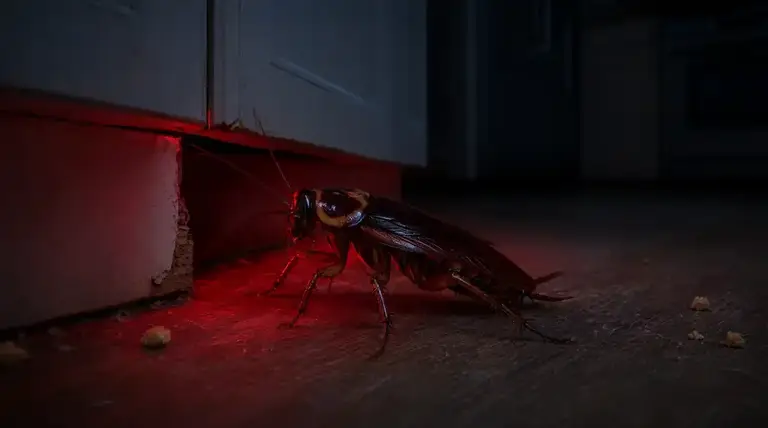
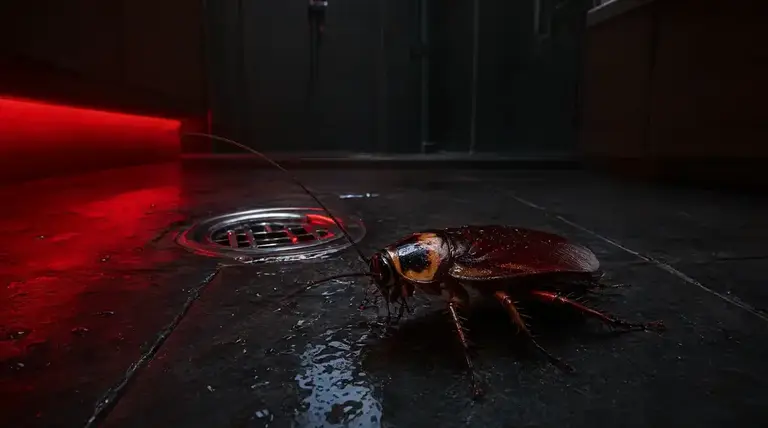
- Fast-moving brown roaches at night, especially around the vanity or floor waste: cockroaches. German and Australian cockroaches travel between bathroom and kitchen through shared pipework, and roaches appearing in floor wastes often trace back to drains being used as entry points.
- Webs in ceiling corners and window frames: black house spiders, which set up where small flying insects gather near lights. They are not dangerous, but they indicate a steady supply of other insects.
- Segmented grey “pill bugs” near the door or shower base: slaters (woodlice). These are crustaceans, not insects, and they wander in from damp garden edges through gaps under doors — a clear signal of excess moisture at the threshold.
- Droppings, smear marks or a musty odour in vanity cupboards: established cockroach harbourage, which usually means the problem extends beyond the bathroom.
DIY vs Professional Pest Control: What Actually Works
Most bathroom pests respond well to DIY because the root cause is environmental rather than a deep infestation — fix the moisture and the food source, and the population collapses. Professional treatment becomes worthwhile when cockroaches are established in wall cavities, when pests persist despite good hygiene, or when a hidden leak is suspected.
| Factor | DIY approach | Professional treatment |
|---|---|---|
| Best for | Silverfish, drain flies, spiders, slaters | Recurring cockroaches, hidden harbourages |
| Typical cost | $10–$60 AUD (cleaners, silicone, drain covers) | $150–$350 AUD per visit |
| Speed of result | 1–4 weeks as conditions change | Days, with residual protection |
| Key actions | Ventilation, drain flushing, sealing gaps | Gel baits, residual sprays, cavity dusting, leak detection |
| Chemical safety | Follow APVMA label directions exactly | Applied by a licensed technician |
The DIY fundamentals are straightforward. Run the exhaust fan during showers and for at least 15–20 minutes afterwards to bring humidity back below the 70–75% range that silverfish and mould depend on. Fix dripping taps and clear slow floor wastes promptly. Pour a kettle of hot water plus a drain cleaner through unused drains monthly to kill fly larvae, seal gaps around pipe penetrations with silicone, fit drain covers, and keep a plug or trap in overflow drains to block sewer roaches. Any chemical product should be used strictly per its APVMA-registered label, and anything beyond surface sprays is best left to a licensed pest control technician.
What Does Bathroom Pest Control Cost in Australia?
Across the Australian pest control industry, bathroom treatment generally goes for between $150 and $450 AUD depending on the pest, the property size and whether the bathroom is treated alone or as part of a whole-home service. The figures below reflect typical 2025–26 market rates charged by operators across metro and regional areas — they’re a guide to what the industry generally charges, not a quote from any one company.
| Service | Typical market rate (AUD) | What’s included/notes |
|---|---|---|
| General pest spray (bathroom + wet areas) | $150–$250 | Residual treatment for silverfish, spiders, slaters; internal perimeter |
| Cockroach treatment | $180–$350 | Gel baits, cavity dusting, crack-and-crevice work; may need a follow-up |
| Drain fly investigation and treatment | $120–$220 | Drain inspection, breeding-site identification, treatment advice |
| Full internal/external home treatment | $250–$450 | Whole-home coverage; better value if pests appear in multiple rooms |
| Inspection only (leak/harbourage detection) | $0–$150 | Moisture readings, cavity checks; often credited toward treatment |
If you rent, you may not need to pay at all. Pre-existing infestations are generally the owner’s responsibility — our guides to your pest control rights as a tenant and landlord pest control obligations in Australia explain who pays and how to raise it with your property manager.
Keep in mind those are broad market rates — Aussie Pest Strike typically comes in well under the figures above, without cutting corners on treatment quality. For an exact quote tailored to your place, give us a call on [aps_phone].
Seasonal Activity: When Bathroom Pests Peak in Australia
Bathroom pest activity in Australia peaks from October through March, when heat and humidity accelerate breeding, but bathrooms stay active year-round because heated, enclosed rooms buffer pests against winter. The chart below shows typical relative activity across the year for a mixed bathroom pest population.
Jan
Feb
Mar
Apr
May
Jun
Jul
Aug
Sep
Oct
Nov
Dec
Activity peaks in the humid summer months (November–February) when silverfish, drain flies and cockroaches breed fastest, then dips in winter — though southern homes see a secondary bump from condensation in June–August, which is why activity never drops to zero.
Nine times out of ten, when we inspect a bathroom with a recurring pest problem, the spray can under the sink is empty but the exhaust fan has never been used. Chemicals knock numbers down for a week; dropping the humidity below 70% removes the reason the pests moved in at all. Fix the environment first, then treat what is left.
Start with ventilation and drains: run the exhaust fan for 15–20 minutes after every shower, flush unused drains monthly, and seal gaps around pipe penetrations. If pests are still present after four weeks of consistent effort — particularly cockroaches — book a licensed technician, because the harbourage is almost certainly hidden in a wall cavity or behind the vanity and will not respond to surface sprays alone.
Frequently Asked Questions
Why do pests keep appearing in my bathroom?
Bathrooms combine the three things most pests need: constant moisture, steady warmth and an accessible food film. A bug seen more than once is rarely a random visitor — it usually signals a slow drain, damp wall or leaking tap sustaining it. Remove the moisture, seal the entry points, and most bathroom pests lose their reason to stay.
What are the five most common bathroom pests in Australian homes?
The five most common are silverfish, drain flies, cockroaches, black house spiders and slaters. All are moisture-driven. Silverfish signal humidity above 75%, drain flies indicate organic sludge inside drains, cockroaches often travel through shared pipework, spiders follow other insects, and slaters wander in from damp garden edges through gaps under doors.
How do I tell which pest is in my bathroom?
Each pest leaves distinctive evidence. Teardrop-shaped silvery insects near skirtings point to silverfish; tiny fuzzy moth-like flies resting on walls near drains are drain flies; fast-moving brown roaches at night around the vanity or floor waste are cockroaches; webs in ceiling corners indicate house spiders; segmented grey pill bugs near the door or shower base are slaters.
What does seeing silverfish in the bathroom mean?
Silverfish need humidity above 75% to thrive, so a sighting is the clearest sign your bathroom is holding too much moisture. They feed on cellulose — toilet paper, cardboard and the starch in wall linings — so they gather near skirtings and cupboards. Improving ventilation to bring humidity below about 70–75% removes what sustains them.
Why do I have tiny moth-like flies around my bathroom drain?
Those are drain flies, which breed in the gelatinous film inside seldom-used drains and overflow pipes. Seeing them means organic sludge has built up inside the drain. Pouring a kettle of hot water plus a suitable drain cleaner through unused drains monthly kills larvae, and keeping plugs or traps in overflow drains helps block re-entry.
Does ventilation really make that much difference to bathroom pests?
Yes — ventilation is the single most powerful fix. Run the exhaust fan during showers and for at least 15–20 minutes afterwards to bring humidity back below the 70–75% range that silverfish and mould depend on. Many underpowered fans vent into the roof cavity rather than outside, so check yours actually extracts air from the room.
When should I call a professional instead of handling bathroom pests myself?
DIY works well for silverfish, drain flies, spiders and slaters because the root cause is environmental. Professional treatment becomes worthwhile when cockroaches are established in wall cavities, when pests persist despite good hygiene, or when a hidden leak is suspected. Recurring cockroaches often need gel baits, cavity dusting and crack-and-crevice work by a licensed technician.
Do bathroom pest problems change with the seasons in Australia?
Activity peaks from October through March, when heat and humidity accelerate breeding of silverfish, drain flies and cockroaches. It dips in winter but never reaches zero: southern homes see a secondary bump from condensation on cold tiles and ceilings between June and August, while heated bathrooms buffer pests against colder months year-round.
What does an Aussie Pest Strike inspection of a problem bathroom involve?
An inspection focuses on finding why pests are there rather than just spraying. That means checking drains for organic build-up, taking moisture readings, looking for hidden leaks, examining gaps around pipe penetrations and floor wastes, and checking whether the exhaust fan actually vents outside. The findings determine whether DIY fixes will suffice or professional treatment is needed.
I have fixed my ventilation but still see roaches — what should I do next with Aussie Pest Strike?
If cockroaches keep returning despite good hygiene and better ventilation, they may be harbouring in wall cavities or travelling through shared pipework, especially in apartments. Contact Aussie Pest Strike to arrange an inspection and a targeted treatment plan using gel baits, residual sprays and cavity dusting where appropriate, along with advice on sealing entry points.
Sources & further reading
Found Something
Dangerous?
Don’t touch it. Don’t spray it. Keep kids and pets clear, take a photo from a safe distance, and call us — or book a free inspection and we’ll come to you.
02 7235 0050