Kitchen Pests:The CompleteControl Guide
Kitchen pests the — kitchen pests concentrate wherever food, water and warmth meet making the kitchen the highest-risk room in any Australian home....
Kitchen pests concentrate wherever food, water and warmth meet, which makes the kitchen the highest-risk room in any Australian home. If you have spotted a cockroach darting behind the fridge, an ant trail across the benchtop or droppings in a drawer, you are looking at a problem that will not fix itself — and this guide explains exactly how to shut it down.
Kitchen pest control is the systematic removal and exclusion of insects and rodents that feed, breed and shelter in food-preparation areas, using hygiene, proofing and targeted treatments rather than surface sprays alone. Cockroaches, ants, mice, pantry moths, fruit flies and silverfish are the usual offenders across Australia, and the reliable fix is removing their access to food and water rather than chasing each one with a can of spray.
- German cockroaches are the worst kitchen invader — one female can produce up to 30,000 offspring a year, so small sightings escalate fast.
- Hygiene and exclusion beat spraying: targeted gel baits carried back to the nest outperform surface sprays every time.
- Mice need only a 6 mm gap to enter — sealing pipe and skirting gaps is non-negotiable.
- Pantry moths and weevils often arrive inside packaged flour and rice; airtight containers stop them spreading.
- Persistent activity despite good cleaning usually means a hidden nest or entry point — a licensed technician can find and treat the source.
Why Kitchen Pests Thrive in Australian Homes
Australian kitchens attract pests year-round because our climate delivers the warmth and humidity cockroaches, ants and pantry insects need to breed continuously, and our housing stock gives them plenty of ways in. The pattern shifts by region, but no state or territory is immune.
In Queensland and northern New South Wales, high humidity keeps German cockroaches and silverfish active almost every month of the year, and raised Queenslander homes with open subfloors give rodents and ants easy access up through floor gaps and wall cavities. In southern capitals like Melbourne and Adelaide, pests surge indoors through autumn and winter as they chase warmth — the backs of fridges and dishwashers, which stay warm 24/7, become prime cockroach breeding sites. Brick-veneer homes on concrete slabs, common across Perth and outer suburban Australia, still have weep holes, pipe penetrations and expansion joints that let ants and mice straight in.
The kitchen concentrates the four things every pest needs:
- Food residue: crumbs, grease behind appliances and unsealed pantry goods.
- Water: leaking taps, condensation trays under fridges and damp sponges.
- Warmth and shelter: appliance motors and enclosed kickboard cavities.
- Rubbish: uncovered bins and recycling feed flies and ants.
Renters face an extra layer of complexity. If you have just moved into a place with an existing infestation, our Moving House? The Pest Checklist Nobody Gives You is worth reading before you unpack a single box. Ongoing infestations in a rental are often the owner’s responsibility — see Pest Control in Rentals: Your Rights as a Tenant and, for the other side of the ledger, Landlord Pest Control Obligations in Australia.
The Main Kitchen Pests in Australia
Six pest groups account for the overwhelming majority of Australian kitchen callouts, and each has a different weak point you can exploit. Knowing which one you are dealing with determines the right fix.
Cockroaches
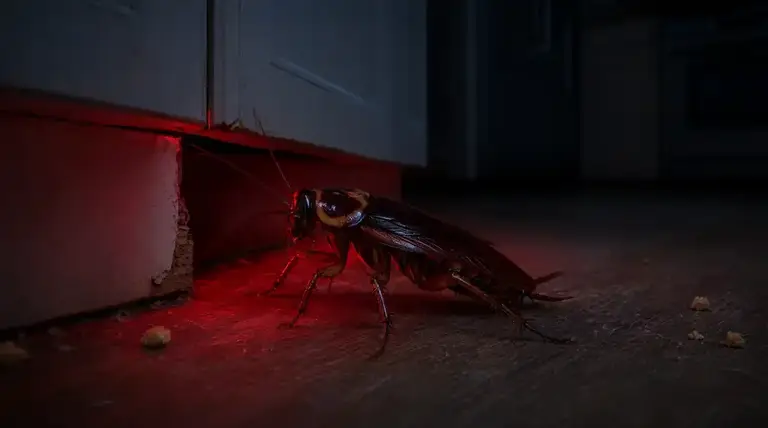
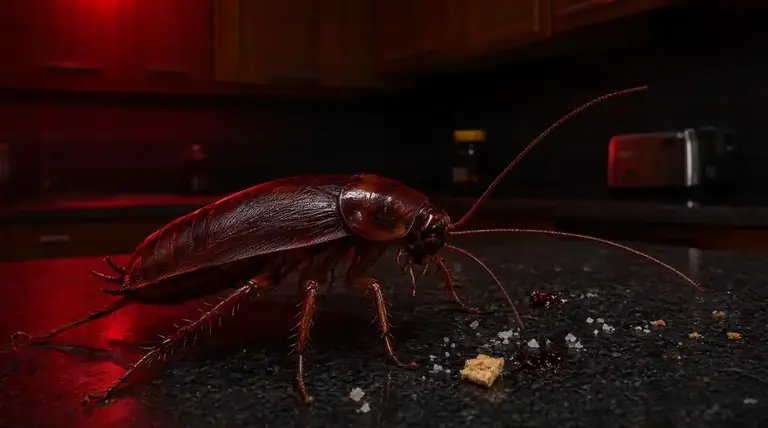
German cockroaches (12–15 mm) are the worst kitchen invader, hiding behind fridges, dishwashers and kickboards where it is warm. A single female can produce up to 30,000 offspring a year, so a small sighting can escalate into a full infestation within weeks. For a deep dive, see our kitchen cockroach prevention guide.
Ants
Black house ants and sugar ants follow scent trails to any crumb or spill. Our guide to removing sugar ants from the kitchen explains why wiping the trail matters as much as baiting — kill the trail and the colony loses its map to your kitchen.
Mice
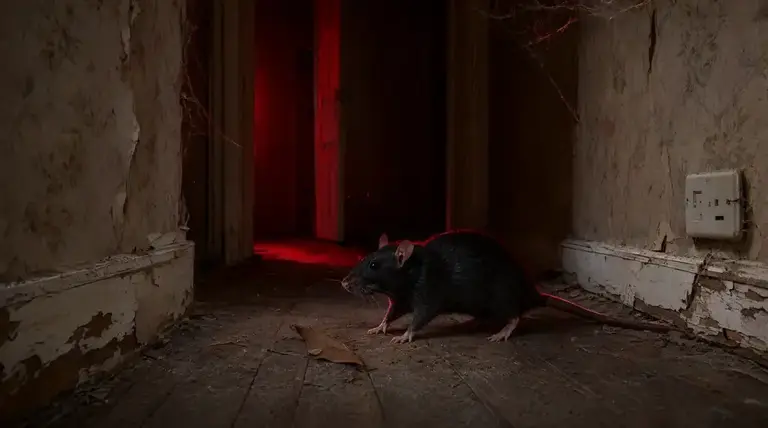
Mice need only a 6 mm gap to enter and are drawn to open packets and pet food. Scratching at night or droppings in drawers means act quickly — our fast-action mice-in-the-kitchen guide walks through the first steps.
Pantry Pests and Fruit Flies
Pantry moths and weevils arrive inside packaged flour, rice and grains, while fruit flies breed on ripening produce and in bins. Indian meal moth larvae leave tell-tale webbing in dry goods, and rice weevils (around 2–3 mm) can be present in a bag when you buy it, hatching in your pantry weeks later.
Silverfish
Silverfish are moisture-loving pests that hide behind kitchen kickboards, inside cupboards and around bathrooms, feeding on starch, flour dust, paper glue and cardboard packaging. Reduce them by fixing leaks, improving ventilation, sealing cracks, storing dry food in airtight containers and vacuuming skirting boards, shelf corners and dark storage areas regularly.
Warning Signs You Have a Kitchen Pest Problem
The earliest signs of kitchen pests are subtle — droppings, smear marks and odd smells appear long before you see an insect in daylight. Check these indicators monthly, especially behind and under appliances.
- Droppings: pepper-like cockroach specks in drawer corners, or rice-sized mouse pellets along skirtings and inside cupboards.
- Smear marks: dark, greasy streaks along walls, kickboards and pipe entries where cockroaches travel repeatedly.
- Egg cases and webbing: brown cockroach oothecae behind appliances, or silky webbing in flour and cereal from pantry moth larvae.
- Ant trails: a visible line of ants between a benchtop and a crack, window or door frame.
- Night activity: cockroaches scattering when you switch the light on, or scratching in walls and ceilings after dark.
- Damage: gnawed packaging, holes chewed in cereal boxes, or greasy rub marks along mouse runways.
- Odour: a musty, oily smell in enclosed cupboards indicates an established cockroach population.
DIY vs Professional Kitchen Pest Control
DIY measures handle prevention and light, early-stage activity well, but established infestations — particularly German cockroaches and mice — typically need a licensed pest control technician with commercial-grade baits and the experience to find hidden harbourages. The honest comparison:
| Factor | DIY | Professional |
|---|---|---|
| Best for | Prevention, ants, fruit flies, pantry moths | German cockroaches, mice, recurring infestations |
| Typical spend | $20–$80 in baits, traps and containers | $180–$450 depending on pest and property |
| Reaches the nest? | Sometimes — gel baits can, sprays rarely | Yes — harbourages located and treated directly |
| Chemical use | Supermarket products, limited strength | APVMA-registered products applied by licensed technicians |
| Follow-up | On you | Often includes a service warranty period |
Why spraying alone fails: a surface spray treats the visible few while the nest survives out of reach behind appliances or in wall cavities. Cockroaches and ants are best controlled with targeted gel baits carried back to the colony, combined with hygiene and exclusion. This is why a one-off spray so often leads to pests returning within weeks. Any chemical treatment beyond basic supermarket products should be handled by a licensed technician, applied in line with APVMA label directions.
How Much Does Kitchen Pest Control Cost in Australia?
Across the Australian pest control industry, professional kitchen pest control generally runs between $150 and $450 in 2025-26, depending on the pest, property size and whether follow-up visits are needed. These are typical market rates charged by operators around the country — here’s what the industry generally charges:
| Service | Typical market rate (AUD) | What’s included / notes |
|---|---|---|
| General pest spray (kitchen + internal) | $150–$280 | Cockroaches, ants, silverfish; standard house |
| German cockroach treatment | $250–$450 | Gel baiting program; usually 2 visits |
| Rodent control (mice) | $200–$350 | Bait stations, entry-point advice, follow-up |
| Ant treatment | $150–$250 | Internal/external baiting and perimeter treatment |
| Annual pest plan | $300–$600 | Scheduled treatments across the year |
Market rates vary with property size, access (subfloor and roof void work adds time) and how established the infestation is. Across the industry, severe German cockroach jobs in large homes sit at the top of the range.
It’s worth knowing that Aussie Pest Strike typically comes in well under these typical Australian market rates, so the figures above are a conservative benchmark rather than what you’ll actually pay. For an exact quote tailored to your property and pest problem, give us a call on [aps_phone] — we’ll sort you out quickly and affordably.
Seasonal Kitchen Pest Activity in Australia
Kitchen pest activity peaks through the warmer months from October to March, when insects breed fastest, and dips — but never stops — over winter. Rodents run on the opposite cycle, moving indoors as temperatures drop, so your kitchen is under pressure in every season.
Jan
Feb
Mar
Apr
May
Jun
Jul
Aug
Sep
Oct
Nov
Dec
Indicative combined kitchen pest activity across Australia. Insect activity (cockroaches, ants, flies, pantry moths) peaks Dec–Feb; rodent pressure inside homes lifts through the cooler months, keeping overall winter activity around the halfway mark.
Your proofing checklist, mapped to what each action stops:
| Action | Stops |
|---|---|
| Store flour, rice and grains in airtight containers | Pantry moths, weevils |
| Wipe benches and sweep floors nightly | Ants, cockroaches |
| Clean behind and under appliances monthly | Cockroaches |
| Fix leaks and dry sinks overnight | Cockroaches, mice |
| Use a sealed bin and empty it daily in summer | Flies, ants |
| Seal gaps around pipes and skirtings | Mice, cockroaches |
Nine times out of ten, when a customer says they’ve tried everything, they’ve sprayed the benchtops and ignored the gap behind the dishwasher. The kitchen tells you where the problem lives — droppings, smear marks, warm motors. Find the harbourage, treat it with the right bait, seal the entry point, and the problem actually ends instead of coming back in three weeks.
Start with the proofing checklist above — airtight containers, nightly wipe-downs, sealed gaps — because it removes the reason pests are there. If you are seeing German cockroaches, mice, or any activity that persists after two to three weeks of solid hygiene, book a licensed technician. Established infestations almost always trace back to a hidden nest or entry point that DIY products will not reach.
Frequently Asked Questions
Which pests are the most common kitchen invaders in Australian homes?
The main offenders are German cockroaches, black house ants and sugar ants, mice, pantry moths, rice weevils, fruit flies and silverfish. Cockroaches hide behind fridges, dishwashers and kickboards where it is warm; ants follow scent trails to crumbs; mice squeeze through 6 mm gaps; pantry pests arrive inside packaged flour, rice and grains; and silverfish favour damp, dark storage areas.
Why do German cockroaches escalate so quickly in a kitchen?
German cockroaches are the worst kitchen invader because a single female can produce up to 30,000 offspring a year. They shelter behind fridges, dishwashers and kickboards where warmth is constant, so a small sighting can become a full infestation within weeks. Early signs include pepper-like droppings in drawer corners, smear marks along kickboards and night activity when lights are switched on.
How do I stop pantry moths and weevils spreading through my dry goods?
Pantry moths and rice weevils often arrive inside packaged flour, rice and grains rather than entering from outside. Indian meal moth larvae leave silky webbing in dry goods, while weevils around 2–3 mm can hatch in your pantry weeks after purchase. Storing all dry food in airtight containers stops them spreading between packets, and discarding infested items removes the breeding source.
What hygiene steps make the biggest difference against kitchen pests?
Kitchens concentrate four things every pest needs: food residue such as crumbs and grease behind appliances, water from leaking taps and fridge condensation trays, warmth and shelter around appliance motors and kickboards, and rubbish from uncovered bins. Cleaning spills promptly, wiping ant scent trails, sealing pantry goods, fixing leaks and covering bins removes the food and water access that sustains infestations.
Why does spraying alone fail to fix a kitchen pest problem?
A surface spray only kills the visible few insects while the nest survives out of reach behind appliances or in wall cavities. Cockroaches and ants are best controlled with targeted gel baits that workers carry back to the colony, combined with hygiene and exclusion work. This is why a one-off spray so often leads to pests returning within weeks.
How can I safely store food to make my kitchen less attractive to pests?
DIY measures handle prevention, ants, fruit flies and light pantry moth activity well, but established infestations — particularly German cockroaches and mice — typically need a licensed technician with commercial-grade baits and the experience to locate hidden harbourages. Persistent activity despite good cleaning usually means a hidden nest or entry point that a professional can find and treat directly.
How do I keep mice out of my kitchen?
Mice need only a 6 mm gap to enter, so sealing pipe penetrations and skirting gaps is essential. They are drawn to open packets and pet food, so store food securely. Scratching at night or rice-sized droppings along skirtings and inside cupboards mean you should act quickly, as established mouse problems generally need professional baiting and entry-point advice.
Does kitchen pest activity change with the seasons in Australia?
Yes. Insect activity peaks through the warmer months from October to March when cockroaches, ants and pantry pests breed fastest, though it never fully stops over winter. Rodents run on the opposite cycle, moving indoors as temperatures drop. In southern capitals like Melbourne and Adelaide, pests surge indoors through autumn and winter chasing warmth behind fridges and dishwashers.
Is a property-specific inspection worthwhile for a recurring kitchen pest problem?
Yes, particularly for persistent German cockroach or mouse activity that survives good cleaning. A property-specific inspection lets Aussie Pest Strike identify the hidden nest, harbourage or entry point driving the problem — whether that is behind appliances, in kickboard cavities or at pipe penetrations — so treatment targets the source rather than just the visible insects, giving you a clearer picture of what your kitchen actually needs.
What is the best next step if I have spotted signs of kitchen pests?
Start by confirming which pest you are dealing with using the warning signs — droppings, smear marks, egg cases, ant trails or gnawed packaging — then tighten hygiene and seal obvious gaps. If activity persists or points to German cockroaches or mice, contact Aussie Pest Strike for advice tailored to your property and pest problem, so treatment can target the source rather than the symptoms.
Sources & further reading
Found Something
Dangerous?
Don’t touch it. Don’t spray it. Keep kids and pets clear, take a photo from a safe distance, and call us — or book a free inspection and we’ll come to you.
02 7235 0050