Sugar Ants inthe Kitchen:Complete Removal Guide
Sugar ants in the kitchen? This removal guide shows how to cut food sources, follow trails and bait the colony instead of spraying foragers.
Sugar ants invade kitchens because they are drawn to sweet residues, spills and open food — and the fastest way to remove them for good is to eliminate the food source, follow the trail back to the entry point, and bait the colony rather than spraying the foragers. If you’re searching u for answers on ants in your kitchen, you’re not alone: it’s one of the most common pest problems in Australian homes, from Brisbane Queenslanders to Melbourne brick veneer and Perth slab homes. Kill the scouts you see and thousands more simply take their place.
Sugar ants are small to medium ants — commonly banded sugar ants (Camponotus consobrinus) and small black house ants — that forage into Australian kitchens seeking sugary and protein-rich foods, and they are best controlled by baiting the nest rather than spraying visible workers. This guide walks you through exactly how to do that, when DIY is enough, and when it’s time to bring in a licensed pest control technician.
- Spraying visible ant trails kills foragers only; the queen and brood survive and the colony often splits.
- Slow-acting bait carried back to the nest is what actually collapses a sugar ant colony.
- Remove competing food sources first — baits work far better in a clean kitchen.
- Australian ant pressure spikes after summer rain when flooded nests relocate indoors.
- Recurring trails, multiple entry points or nests in wall voids need professional treatment.
Why Sugar Ants Are Such a Problem in Australian Kitchens
Sugar ants thrive in Australian kitchens because our warm climate, long summers and common housing styles give colonies year-round foraging opportunities and countless entry points. In an Australian kitchen through summer, even a thin film of honey, fruit juice or pet food is a feast for foraging workers.
Housing construction plays a big role. Elevated Queenslanders have subfloor voids where colonies nest undisturbed and travel up wall cavities to the kitchen. Brick veneer homes have weep holes and a cavity gap that acts as an ant highway. Slab-on-ground homes see ants entering at plumbing penetrations and expansion joints. Add in summer storms — which flood outdoor nests and drive colonies indoors seeking dry shelter — and it’s easy to see why ant activity surges right when you’re using the kitchen most. Knowing common Australian ant species found in homes helps you understand what you’re dealing with, because different species respond to different baits.
Warning Signs: Is Your Kitchen Under Sugar Ant Attack?
The clearest warning sign of a sugar ant infestation is a visible trail of ants moving in a steady line between a food source and an entry point such as a window frame, pipe gap or skirting board. If you can spot any of the signs below, activity is already established.
- Scout ants on benches — lone ants wandering benches or the stovetop are foragers searching for food; where one goes, a trail follows.
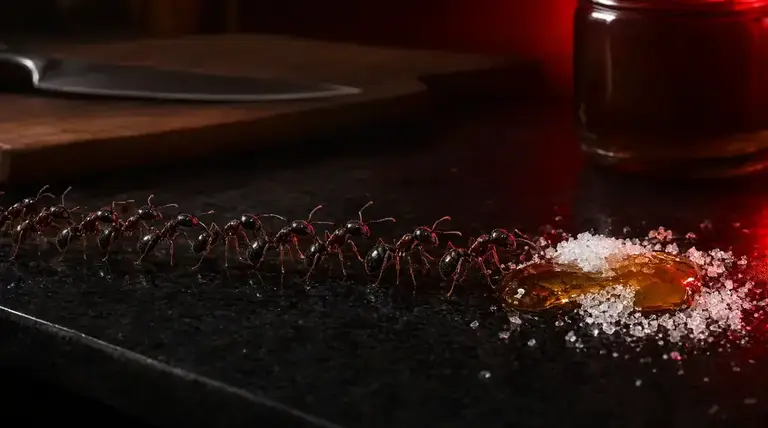
- Visible pheromone trails — a disciplined line of ants along kickboards, splashbacks or the edge of the sink means the colony has locked onto a food source.
- Ants inside cupboards and pantries — workers in the sugar jar, honey bottle or cereal boxes indicate an established foraging route, not a one-off visit.
- Entry points around plumbing — ants emerging from gaps around pipes under the sink, weep holes or window frames reveal the highway to treat.
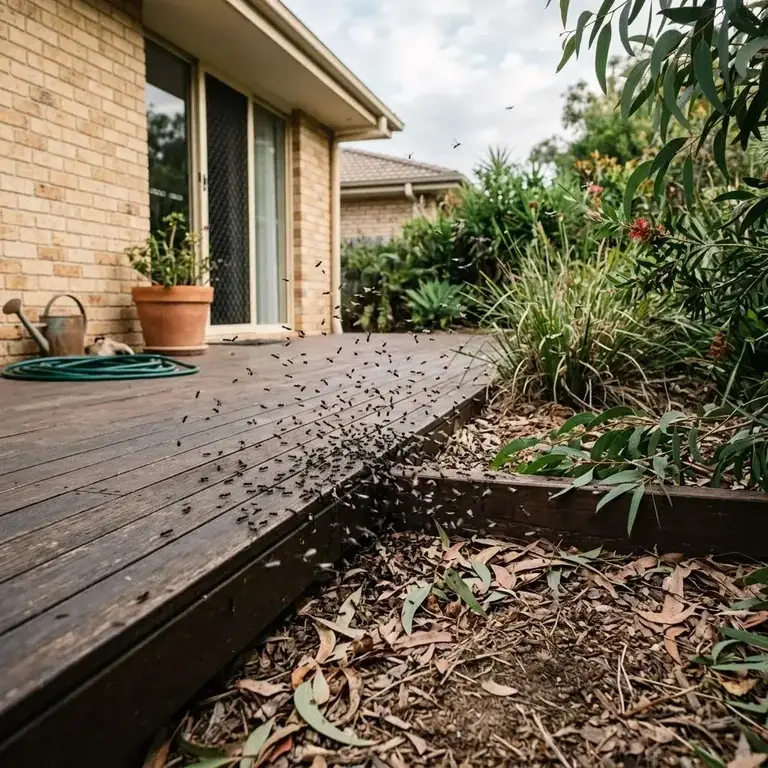
- Activity after rain — a sudden surge indoors after summer storms means an outdoor nest has flooded and relocated toward your walls.
- Pet bowls under siege — ants swarming dog or cat food overnight are a classic sign of a large, hungry colony nearby.
Step 1: Cut Off the Food Supply
The first and most important step in removing sugar ants is eliminating every competing food source, because bait and treatment work far better once nothing else is on offer. Start here before anything else.
- Wipe benches and stovetops with soapy water to erase scent trails.
- Store sugar, honey and cereals in airtight containers.
- Empty and rinse the recycling and bin regularly.
- Sweep crumbs from under the toaster, fridge and kickboards nightly.
Step 2: Follow the Trail
Ants lay a chemical pheromone trail that guides the colony to food, so following the line of workers will lead you straight to the entry point you need to treat. Watch where the ants enter — a gap around a pipe, window frame or skirting — and you have found the highway.
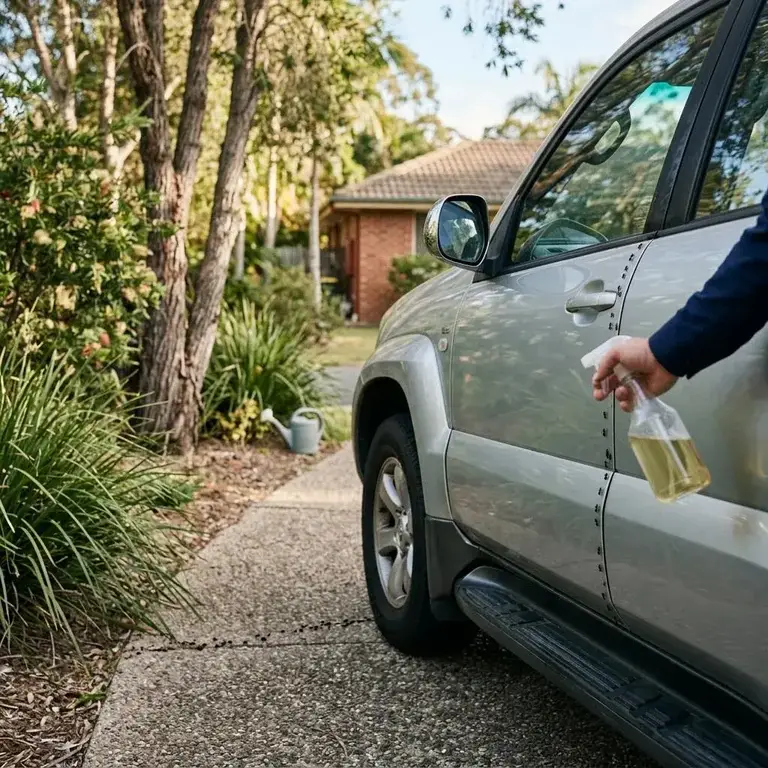
Wiping the trail with soapy water erases the scent and temporarily scatters the foragers, but treat this as intelligence-gathering rather than a fix. The trail will be re-laid within hours if the colony and the food source both remain. Mark the entry points you find — they’re where bait placement and later sealing do the real work.
Step 3: Bait, Don’t Blitz — DIY vs Professional Removal
This is the step most people get wrong. Spraying a visible trail kills a few workers but leaves the queen and brood untouched, so the colony rebuilds within days — and in some species the stress causes the nest to split into multiple colonies, making your problem worse. Our detailed article on why sprays often make ant problems worse explains the science behind this. Good baits are deliberately slow so foragers survive long enough to share the dose across the nest.
| Approach | Result |
|---|---|
| Surface spray on trails | Kills foragers only; colony survives and often splits |
| Slow-acting bait | Workers carry it back and feed the queen, collapsing the colony |
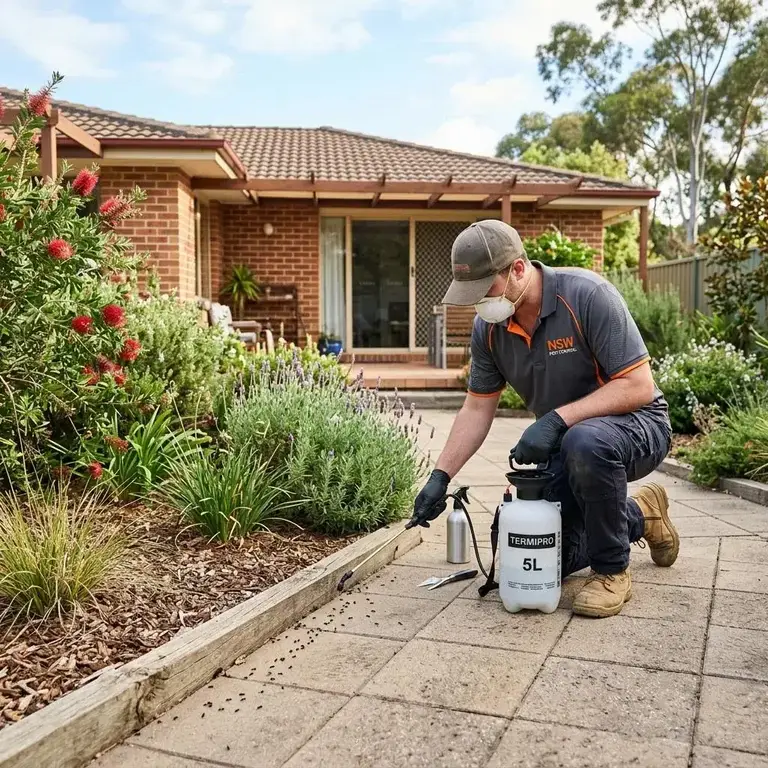
| Professional gel and perimeter treatment | Targets multiple colonies and blocks re-entry |
Why patience pays
Resist the urge to wipe up ants feeding on bait — that traffic is exactly what carries the active ingredient home to the queen and brood. It is also worth alternating bait type if activity persists: some colonies switch preference between sweet and protein-based baits depending on the season and the needs of the brood, so a bait that worked in spring may be ignored by mid-summer.
Sealing the kitchen against re-entry
Once the colony is knocked down, the goal is to stop the next one moving in. Ants enter through the smallest gaps — weep holes, gaps around plumbing under the sink, and cracks where the splashback meets the bench. A bead of sealant on those gaps, weather strips on doors, and keeping a dry, crumb-free kitchen removes both the highway and the reward. Timing your prevention before the wet season pays off.
How Much Does Sugar Ant Removal Cost in Australia?
Across the Australian pest control industry, professional sugar ant treatment typically costs between $180 and $450, depending on the size of the property, the number of colonies and whether internal baiting or external perimeter treatment is required. The figures below are typical market rates charged by licensed operators across Australia in 2025–26.
| Service | Typical market rate (AUD) | What’s included/notes |
|---|---|---|
| Inspection and quote | $0–$99 | Species identification, nest location, entry-point assessment; many operators credit or waive this fee if treatment goes ahead |
| Internal gel baiting (kitchen-focused) | $180–$280 | Professional-grade gel baits placed at trails, entry points and harbourages; across the industry, a follow-up visit is often included |
| External perimeter treatment | $220–$350 | Barrier treatment around slab edge, weep holes, paths and garden beds to block re-entry |
| Full internal + external ant program | $300–$450 | Combined baiting, perimeter treatment and dusting of wall voids or subfloor where nests are located |
Whoever you engage, all chemical treatments should be carried out by a licensed pest control technician using APVMA-registered products applied to label directions. Where ants appear alongside other stored-food invaders, our Silverfish & Pantry Pest Control service can be combined in the same visit.
One thing worth knowing before you book: Aussie Pest Strike typically comes in well under these market rates, without cutting corners on product quality or thoroughness. For an exact, no-obligation quote for your property, call us on [aps_phone] today.
Seasonal Sugar Ant Activity in Australia
Sugar ant activity in Australia peaks from late spring through autumn, with the heaviest pressure during the warm, wet months of December to March when colonies are breeding fast and summer storms flood outdoor nests. Activity dips through winter but rarely stops completely in northern regions.
Jan
Feb
Mar
Apr
May
Jun
Jul
Aug
Sep
Oct
Nov
Dec
Typical indoor sugar ant activity across Australia by month. Pressure builds from September, peaks over the storm season (December–March) as flooded nests relocate indoors, and eases through the cooler months — though Queensland and northern NSW see activity year-round.
Nine times out of ten, the ants you see on the bench are less than five per cent of the colony. If u spray the trail, you’ve killed the messengers and left the nest intact. Put a slow bait on their highway, let them carry it home, and the problem solves itself from the inside out.
Clean the kitchen thoroughly, bait the trails with a slow-acting product and give it up to two weeks. If trails keep returning, you’re finding multiple entry points, or you suspect nests in wall voids or the subfloor, book professional Ant Control & Nest Treatment. Correctly identifying whether you have black house ants or another species guides the bait choice, and knowing why sprays backfire saves you weeks of frustration.
Frequently Asked Questions
Why do sugar ants keep coming into my kitchen?
Sugar ants invade kitchens because they are drawn to sweet residues, spills and open food. Even a thin film of honey, fruit juice or pet food is a feast for foraging workers. Warm Australian conditions and common housing styles give colonies year-round foraging opportunities and countless entry points, so once a trail is established the colony keeps sending workers back to the same source.
Why do sugar ants follow the same trails into my kitchen again and again?
Spraying a visible trail kills only the foraging workers you can see. The queen and brood survive untouched, so the colony rebuilds within days — and in some species the stress causes the nest to split into multiple colonies, making your problem worse. The ants on your bench are typically less than five per cent of the colony, so killing them leaves the nest fully intact.
How do I get rid of sugar ants in my kitchen?
The fastest way to remove sugar ants for good is to eliminate every competing food source first, follow the pheromone trail back to the entry point, and place slow-acting bait along that highway rather than spraying foragers. Workers carry the bait back and feed the queen and brood, collapsing the colony from the inside out. Once activity stops, seal gaps and keep the kitchen crumb-free.
What are the warning signs of a sugar ant infestation?
Key signs include lone scout ants wandering benches or the stovetop, disciplined pheromone trails along kickboards or splashbacks, ants inside cupboards and pantries such as the sugar jar or cereal boxes, ants emerging around pipes under the sink, a sudden surge indoors after summer storms, and swarms overnight at pet bowls. Any of these means activity is already established.
Why should I clean the kitchen before putting down ant bait?
Baits work far better once nothing else is on offer. If competing food sources remain — spills, crumbs, open sugar or pet food — foragers may ignore the bait entirely. Wipe benches with soapy water to erase scent trails, store sweets and cereals in airtight containers, rinse bins and recycling, and sweep under appliances nightly before placing any bait.
Should I wipe up ants feeding on the bait?
No. Resist the urge to wipe up ants feeding on bait, because that traffic is exactly what carries the active ingredient home to the queen and brood. Good baits are deliberately slow-acting so foragers survive long enough to share the dose across the nest. Disturbing feeding ants interrupts this transfer and prevents the colony from collapsing.
Why did my ant bait stop working?
Some colonies switch preference between sweet and protein-based baits depending on the season and the needs of the brood, so a bait that worked in spring may be ignored by mid-summer. If activity persists, alternate bait type. Also check that competing food sources have been removed, because foragers will choose an easier meal over your bait.
When should I call a professional for sugar ants?
Recurring trails, multiple entry points, or nests located in wall voids, subfloors or cavities need professional treatment. Licensed technicians use professional-grade gel baits at trails and harbourages, external perimeter treatments around slab edges and weep holes, and dusting of wall voids where nests are found. All chemical treatments should use APVMA-registered products applied to label directions.
How can Aussie Pest Strike help me plan next steps for sugar ants in my kitchen?
Aussie Pest Strike can assess your situation against the steps in this guide: confirming which ant species you have, locating entry points and nests, and recommending whether internal gel baiting, external perimeter treatment or a combined program suits your home. Because housing style matters — Queenslanders, brick veneer and slab homes all offer different ant highways — a tailored plan targets the routes specific to your property.
How can Aussie Pest Strike help with Sugar Ants in the Kitchen: Complete Removal Guide?
Before treatment, complete the preparation steps from this guide: wipe benches and stovetops with soapy water to erase scent trails, store sugar, honey and cereals in airtight containers, empty and rinse bins and recycling, and sweep crumbs from under the toaster, fridge and kickboards. A clean kitchen makes baiting far more effective, and marking the entry points you have spotted helps the technician target those gaps.
Sources & further reading
Found Something
Dangerous?
Don’t touch it. Don’t spray it. Keep kids and pets clear, take a photo from a safe distance, and call us — or book a free inspection and we’ll come to you.
02 7235 0050