Why Ants FollowTrails (And Howto Break Them)
Ant trails are pheromone highways between nest and food. Learn why ants follow them and how to break the trail with cleaning, baiting and sealing.
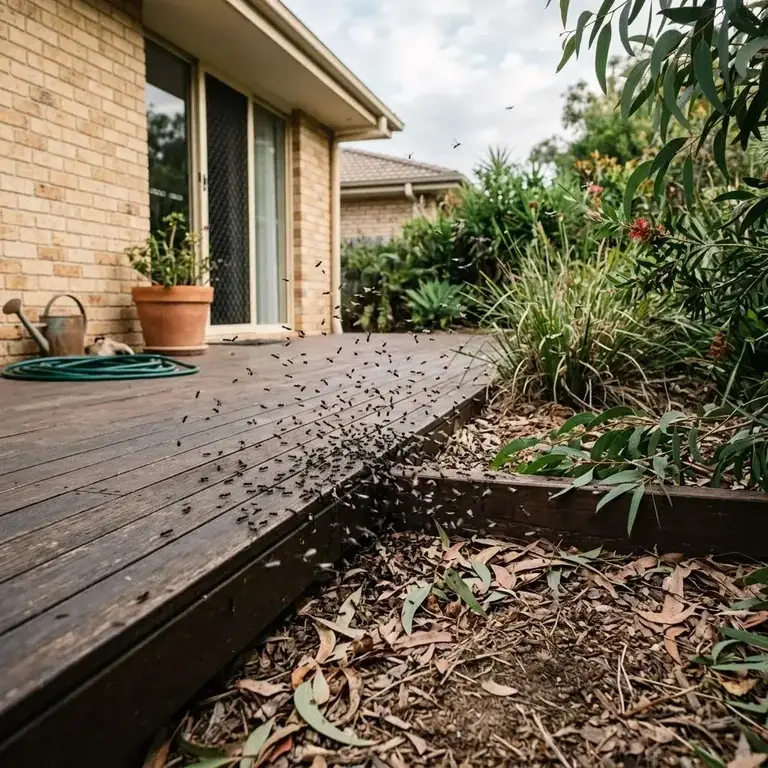
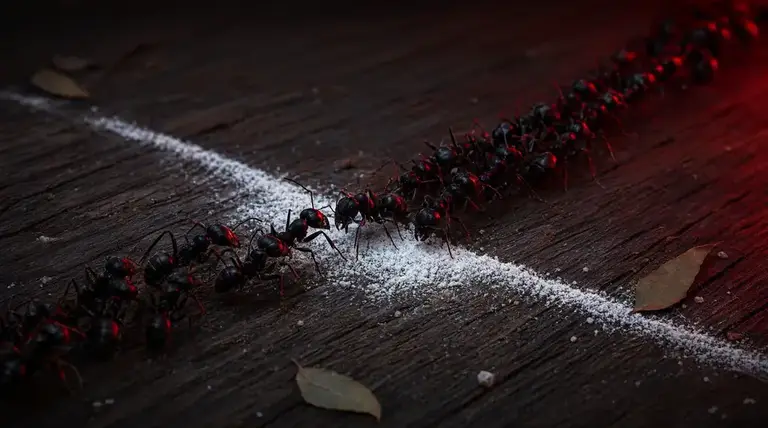
Ants follow trails because foragers lay down chemical pheromones that mark the route between the nest and a food source, and every other ant instinctively follows the strongest scent — whether that path runs along a skirting board or across your kitchen benchtop. Understanding the science of ant trails — the chemistry of how the scent is laid, reinforced and followed — is the key to breaking the marching line for good, and it applies to homes right across Australia, from coastal Queenslanders to brick veneer suburbs.
Break the trail by erasing the pheromone with soapy water and removing the food that reinforces it, and the column quickly falls apart. But if the colony itself is left untouched, foragers simply scout a new route. This guide explains the chemistry behind the line, how to read what a trail tells you about the colony, and when DIY pest control is enough versus when a licensed technician should step in.
- Ant trails are chemical: scouts deposit pheromones from glands on the abdomen, and heavy traffic reinforces the scent.
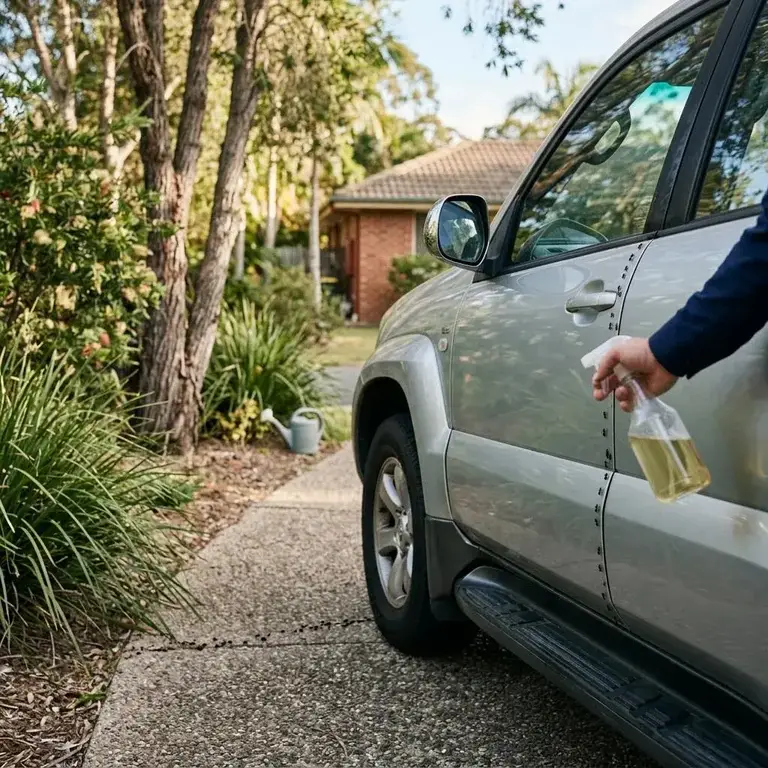
- Wiping a trail with warm soapy water erases the pheromone and disorients foragers — far more effective than squashing ants.
- Removing the food source stops reinforcement; sealing entry points cuts the physical highway into the home.
- Sprays often backfire by triggering colony “budding”; slow-acting baits use the trail itself as the delivery system.
- Australian ant activity peaks December to February, and trails after summer rain usually mean a flooded-out colony scouting indoors.
Why ant trails are such a common problem in Australian homes
Australia’s warm climate and indoor-outdoor housing styles give ants ideal conditions to forage and establish trails almost year-round. Warm weather drives high colony activity, and a single crumb can go from one exploring ant to a solid column within an hour on a summer day.
Housing style matters too. Homes on concrete slabs often see trails entering at weep holes, slab edges and plumbing penetrations, while older subfloor homes and raised Queenslanders give colonies sheltered voids to nest in directly beneath the kitchen. Brick veneer construction leaves a cavity between the frame and the brickwork that species like the black house ant happily occupy. Once a route through the wall cavity is established, the trail persists because it is sheltered from weather and cleaning. Our guide to common Australian ant species found in homes can help you identify which species is marching through your kitchen, and our black house ants control guide covers the most frequent offender in detail.
Warning signs: how to read the “n” of an ant trail
The character of a trail is a useful diagnostic of colony size, location and intent. A trail that reforms within minutes of being wiped points to a large, active colony nearby; a faint wandering line of scouts means the colony is still exploring — the ideal moment to act.
- A bold, fast-reforming line — indicates a large colony with plenty of foragers to spare; expect the nest to be close by or inside the structure.
- A faint, wandering trail of single scouts — the colony has not committed to your kitchen yet; wipe and clean now before the route is reinforced.
- Trails appearing only after summer rain — a colony has likely been flooded out of the garden and is scouting indoors for dry ground.
- Lines running along skirting, benchtops and pipe runs — ants favour sheltered routes, which also tells you where to place baits.
- Trails near the pantry or pet food — a reliable food source keeps foragers returning and the scent reinforced; if you also notice damaged packaging or other stored-food pests, our Silverfish & Pantry Pest Control service addresses the whole picture.
DIY vs professional ant control: which approach wins?
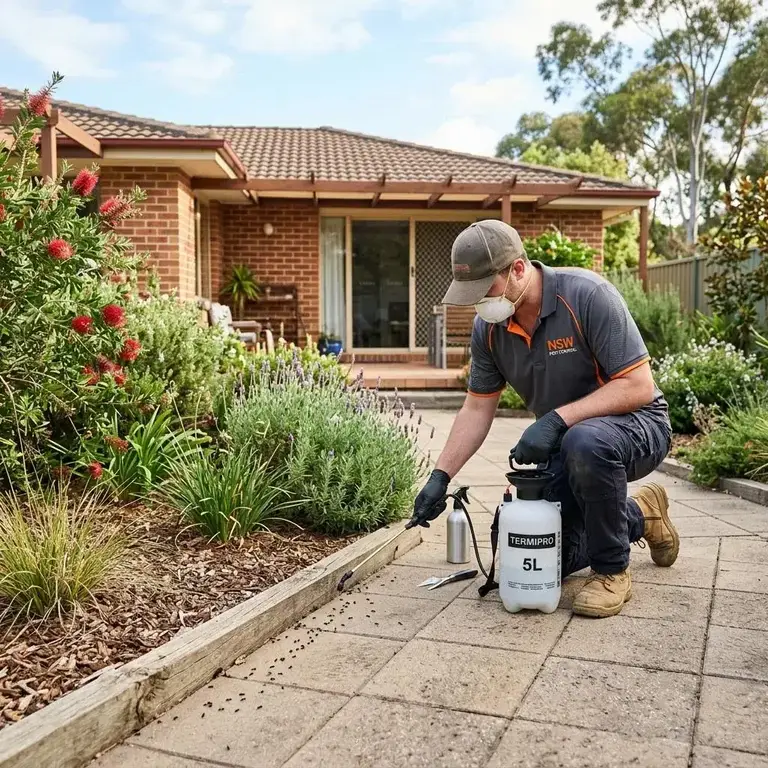
Because the trail is chemical, the DIY fix is to destroy the chemistry and remove the reward — more effective and longer-lasting than killing the ants you can see. Professional treatment becomes worthwhile when trails reform quickly, multiple entry points exist, or the nest is hidden in a wall cavity or subfloor.
| Method | Effect on the trail |
|---|---|
| Wipe with warm soapy water | Erases the pheromone; ants lose the route |
| Remove the food source | Stops foragers reinforcing the scent |
| Seal the entry point | Cuts the physical highway into the home |
| Slow-acting bait on the trail | Foragers carry the dose back to the colony |
| Professional nest treatment | Targets queen and colony at the source, including hidden nests |
A residual spray kills the visible foragers but does nothing to the queen, and disturbed colonies can respond by “budding” into several new nests. That is a key reason sprays often make ant problems worse. Baiting works with the ants’ trail behaviour instead of against it, turning their own supply line into the delivery system. Where baits and hygiene fail, a licensed technician can trace the line back to the nest and apply APVMA-compliant treatments safely — see our Ant Control & Nest Treatment service for how that works.
What does ant trail and nest treatment cost in Australia?
Across the Australian pest control industry, the going market rate for professional ant treatment generally sits between $150 and $450 (AUD), depending on property size, species and whether the nest is accessible. These are industry-wide figures — what licensed operators around the country typically charge — not a quote from any single provider. Below are the typical 2025–26 Australian market ranges.
| Service | Typical market rate (AUD) | What’s included/notes |
|---|---|---|
| Standard internal ant treatment | $150–$250 | Gel baiting and targeted treatment of trails and entry points in a standard home |
| Internal + external perimeter treatment | $220–$350 | Adds external barrier, garden nest location and entry-point treatment |
| Nest location and direct nest treatment | $250–$450 | Tracing trails to wall cavity, subfloor or slab-edge nests; larger or multi-nest properties at the higher end |
Where a job lands within those market ranges varies with home construction (subfloor access on a Queenslander versus a slab home), infestation size and region. Whatever the going rate, any chemical application should be carried out by a licensed technician using APVMA-registered products.
One thing worth knowing: Aussie Pest Strike typically comes in well under these industry market rates for the same scope of work, so treat the figures above as the broader market ceiling rather than what you’d pay us. For an exact quote tailored to your property, give us a call on [aps_phone].
Seasonal ant trail activity across Australia
Ant trail activity in Australian homes peaks from December to February, when warmth and summer storms drive colonies to forage hard and, after heavy rain, to relocate indoors. Activity dips through winter but rarely stops entirely in northern regions.
Jan
Feb
Mar
Apr
May
Jun
Jul
Aug
Sep
Oct
Nov
Dec
Indicative indoor ant trail activity across Australia: the December–February peak reflects summer heat and rain flooding garden nests, while southern states see the steepest winter drop.
Most people grab a spray can the moment they see a line of ants, and nine times out of ten they’re back within a fortnight — often in more than one spot. Follow the trail first. It tells you where they’re coming in, what they’re eating and how big the colony is. Erase the scent, bait the route, and the colony does the work for you.
Wipe every visible trail with warm soapy water, remove the food source and seal obvious entry points today. If trails reform within hours, appear in multiple rooms, or return after rain, book a licensed technician for Ant Control & Nest Treatment — the colony needs to be treated at the source, not just the line on your benchtop.
Frequently Asked Questions
Why do ants follow trails in a line?
Ants follow trails because scout ants lay down chemical pheromones from glands on their abdomen, marking the route between the nest and a food source. Other ants instinctively follow the strongest scent, and every ant that travels the route reinforces it. That is why a single exploring ant can become a solid column within an hour on a warm Australian summer day.
How do I break an ant trail inside my home?
Wipe the entire visible trail with warm soapy water to erase the pheromone and disorient the foragers, then remove whatever food is attracting them. Squashing ants does little because the scent remains and guides others along the same path. Sealing entry points also cuts the physical highway into the home and stops new foragers re-establishing the route.
Why do ant trails keep coming back after I spray them?
Residual sprays kill only the visible foragers and leave the queen untouched, so the colony keeps producing new workers. Worse, disturbed colonies can respond by budding into several new nests, which often makes the problem spread. Because the trail itself is chemical, any surviving scent continues to guide ants back unless it is wiped away with soapy water.
What does the look of an ant trail tell me about the colony?
A bold trail that reforms within minutes of being wiped points to a large, active colony with plenty of foragers, likely nesting close by or inside the structure. A faint, wandering line of single scouts means the colony has not committed yet, which is the ideal moment to clean. Trails appearing after summer rain usually mean a flooded garden colony scouting indoors.
Where do ants usually enter homes in Australia?
It depends on construction. Homes on concrete slabs typically see trails entering at weep holes, slab edges and plumbing penetrations. Older subfloor homes and raised Queenslanders give colonies sheltered voids beneath the kitchen to nest in, while brick veneer homes have a cavity between frame and brickwork that species like the black house ant occupy, with trails persisting because they are sheltered from weather and cleaning.
Do ant baits work better than sprays?
Yes, because baits work with the ants' trail behaviour instead of against it. Slow-acting bait placed on the trail is picked up by foragers and carried back to the colony, turning their own supply line into the delivery system. Sprays, by contrast, kill visible ants but not the queen, and can trigger budding into multiple new nests, often making infestations worse.
What time of day do ant trails tend to be busiest?
Indoor ant trail activity peaks from December to February, when summer heat drives colonies to forage hard and heavy rain floods garden nests, pushing ants indoors in search of dry ground. Activity dips through winter but rarely stops entirely in northern regions. Trails appearing after summer rain are a strong sign a colony has been flooded out of the garden.
When should I call a professional instead of treating ants myself?
DIY steps such as wiping trails with soapy water, removing food and sealing entry points work well when the colony is still exploring. Professional treatment becomes worthwhile when trails reform quickly, appear in multiple rooms or entry points, or the nest is hidden in a wall cavity, subfloor or slab edge. A licensed technician can trace the line back to the nest and treat the colony at its source.
How would Aussie Pest Strike assess the ant trails in my home?
A technician would read what each trail tells them before treating anything. A bold line that reforms quickly suggests a large colony nesting close by or within the structure, while faint wandering scouts mean the colony has not committed yet. They would trace sheltered routes along skirting boards, benchtops and pipe runs back toward entry points such as weep holes, slab edges or wall cavities, then locate the nest and apply APVMA-compliant treatments at the source rather than just the visible line.
What should I do today if I spot an ant trail on my benchtop?
Start immediately: wipe every visible trail with warm soapy water to erase the pheromone, remove the food source attracting the foragers, and seal obvious entry points. Then watch the route over the next day or two. If the trail reforms within hours, appears in multiple rooms, or returns after rain, the colony itself needs treatment at the source, and contacting Aussie Pest Strike for Ant Control & Nest Treatment is the practical next step.
Sources & further reading
Found Something
Dangerous?
Don’t touch it. Don’t spray it. Keep kids and pets clear, take a photo from a safe distance, and call us — or book a free inspection and we’ll come to you.
02 7235 0050