Ants in Walls:Finding andTreating Hidden Nests
Ants in walls hide their nest in the cavity, so sprays fail. Learn how to track and bait hidden ant nests. Book a free inspection with Aussie Pest Strike.
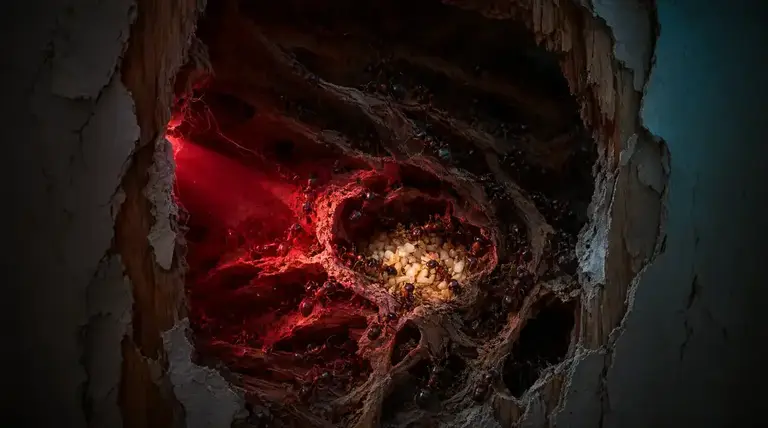
If you have ants in walls, the nest is almost always hidden inside a wall cavity, subfloor or roof void, and spraying the trails you can see will not reach it. The colony keeps producing workers — in pest control terms, the foragers (n) you spot on the benchtop are only a fraction of what is living behind the plaster — so lasting control means locating the nest and treating it with a transferable bait or dust. This guide shows you how to track ants in walls back to their source and stop the colony for good.
Ants in walls are a hidden-nest problem, not a surface problem: the visible trail is a symptom, and the nest itself must be located and treated directly or with a bait the workers carry home. Whether you own a brick veneer in Melbourne, a weatherboard Queenslander in Brisbane or a slab-on-ground home in Perth, the principles below apply Australia-wide.
- Ants in walls almost always mean a nest in a wall cavity, subfloor or roof void — the trails you see are only the foragers.
- Repellent surface sprays make the problem worse by triggering “budding”, where the colony splits and relocates deeper.
- Baits and insecticidal dusts work because workers transfer the active ingredient back to the queen.
- Colonies typically take one to three weeks to collapse with proper baiting — patience is part of the process.
- A licensed technician can inject dust into cavities through small access points without damaging the wall lining.
Why ants nest inside walls across Australia
Wall cavities give Australian ants exactly what they want: stable temperature, darkness and protection from predators. Species such as black house ants (Ochetellus) and coastal brown ants (Pheidole megacephala) readily move indoors, especially during a hot summer between December and February when outdoor nests overheat and shift to cooler voids. Our guide to common Australian ant species found in homes explains which species you are most likely dealing with.
Housing style matters. Brick veneer homes offer weep holes and cracked mortar joints as ready-made entry points, while older Queenslanders have generous subfloor and wall voids that stay humid through the wet season. Slab-on-ground construction reduces subfloor access but still leaves gaps around plumbing penetrations. In every case, moisture is the magnet: a slow leak inside a wall softens timber and creates ideal nesting conditions. If you find damp-related ant activity, it is worth checking for other moisture-loving invaders too — our silverfish and pantry pest control page covers those cohabiting pests.
Common entry and nesting points include:
- Gaps around window and door frames, often less than 2 mm wide
- Weep holes in brick veneer and cracked mortar joints
- Around plumbing and electrical penetrations under sinks
- Damp or water-damaged wall linings, which soften timber for nesting
Warning signs of ants nesting n the wall
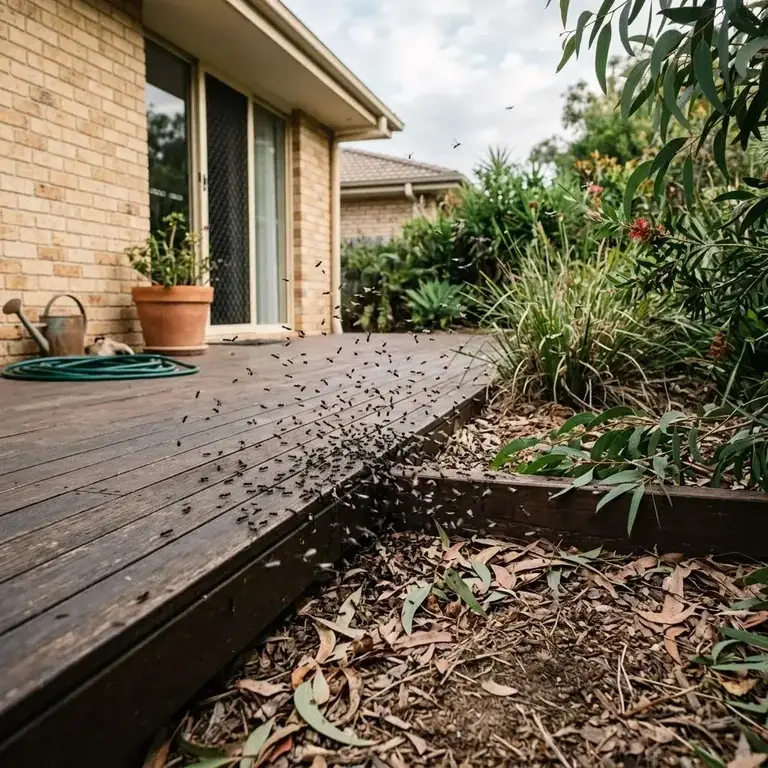
The clearest sign of a nest inside the wall is a trail that vanishes into the same crack or gap day and night, regardless of whether food is present. Foraging ants that are just passing through appear near food and disappear once it is removed; a resident colony keeps moving. Watch and listen for the following.
- Persistent trails into one point — workers entering the same skirting gap, power point or wall crack around the clock.
- Fine debris or frass — small piles of soil-like material or plaster dust pushed out of the cavity near the entry.
- Discarded wings — shed wings from alates (reproductives) near windowsills or the entry point, often in spring.
- Faint rustling at night — a soft crackling sound in the wall when the house is quiet, when ants are most active.
- Seasonal surges — sudden indoor activity after heatwaves or heavy rain, when outdoor nests flood or overheat.
- Multiple rooms affected — trails appearing in adjoining rooms suggests the colony has spread along the cavity.
How to find the hidden nest
Tracking beats guessing. Ants lay a chemical pheromone trail between the nest and food, so following that line is the fastest way in — and it costs nothing but half an hour of patience. Here is the simple method professionals use as a starting point.
- Place a dab of honey or a protein crumb near active trails and wait 20-30 minutes.
- Watch which direction loaded workers travel; they head back to the nest.
- Follow the trail to a skirting board, power point or wall crack.
- Tap along the wall at night when ants are most active and listen for movement.
If the trail disappears into a spot you cannot open, mark it with painter’s tape and note the time of peak activity — that information is gold for a technician, and it tells you whether baiting at the entry point is viable.
DIY vs professional treatment for ants in walls
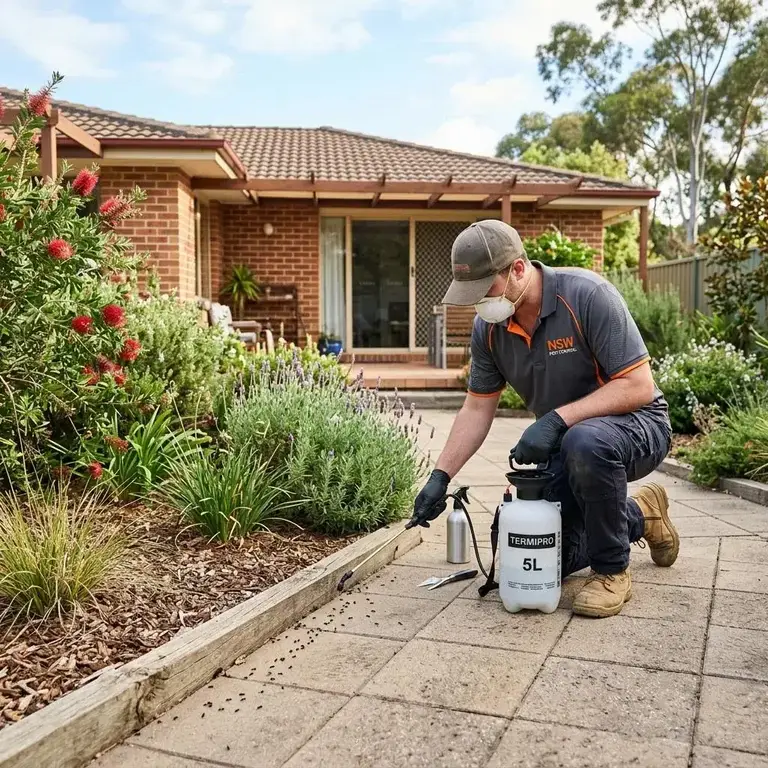
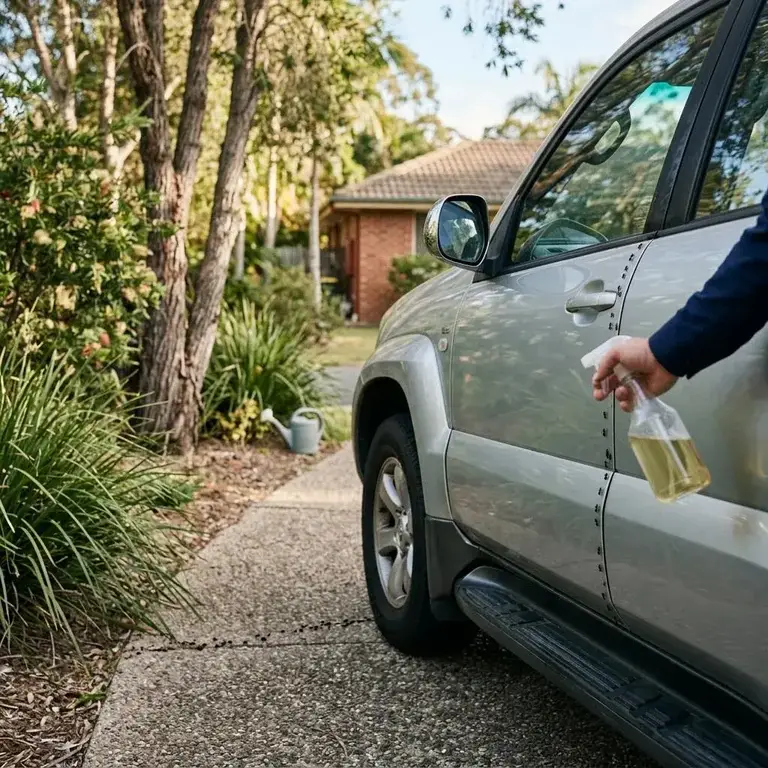
The mistake almost everyone makes is reaching for a surface spray. Repellent sprays kill visible foragers but trigger the colony to split and relocate deeper — a stress response called budding. Understanding why ant sprays often make the problem worse saves weeks of frustration. DIY baiting can work for accessible, single-trail problems, but nests deep in cavities usually need professional gear and product matching.
| Factor | DIY approach | Professional treatment |
|---|---|---|
| Nest location | Tracking by trail; limited to visible entry points | Systematic inspection of voids, subfloor and roof |
| Products | Retail baits; hardware-store sprays (often repellent) | Non-repellent transfer products, cavity dusts, matched baits |
| Species matching | Guesswork on sugar vs protein preference | Bait matched to species and seasonal preference |
| Deep cavity access | Not practical without opening the wall | Dust injected through small access points, no lining damage |
| Risk of budding | High if repellent sprays are used | Low — non-repellent methods avoid stressing the colony |
What actually works, in order of reach: gel or liquid bait (workers carry it back and feed the queen — best for hidden nests), insecticidal dust blown into wall cavities and weep holes (best for voids you can access), and a non-repellent perimeter treatment that ants transfer before they die (best for preventing re-entry). Baiting is slow but thorough; colonies can take one to three weeks to collapse. For common sugar-feeders, see our complete guide to black house ant control. If the nest sits deep in a cavity you cannot open, a licensed technician providing ant control and nest treatment can inject dust through small access points without damaging the lining. Any chemical treatment should be applied by, or on the advice of, a licensed pest control technician in line with APVMA-registered label directions.
How much does ant nest treatment cost in Australia?
Across the Australian pest control industry, professional ant treatment for wall nests typically sits between $180 and $450 AUD in 2025-26. That’s the general market rate — what most operators charge — and it varies with access, the number of colonies and your location. Simple single-nest baiting sits at the lower end of the market; multi-cavity dusting plus a perimeter treatment sits higher. The figures below are typical industry-wide ranges, not a quote from any single company.
| Service | Typical cost (AUD) | What’s included/notes |
|---|---|---|
| Inspection and quote | $0 – $90 | Often free with treatment booked; identifies species and entry points |
| Internal baiting program | $180 – $280 | Gel/liquid baits placed at trails and entry points; 1-3 week colony collapse |
| Wall cavity dusting | $250 – $400 | Dust injected via weep holes or small access points into voids |
| Non-repellent perimeter barrier | $200 – $350 | External treatment to prevent re-entry; often bundled with internal work |
| Follow-up visit | $90 – $150 | Re-baiting or re-dusting if activity persists after 2-3 weeks |
Beware of quotes that lead with a cheap “spray and go”. If the price seems too good, ask exactly what product and method is being used — a repellent surface spray is the one approach known to make wall nests worse.
Those figures above reflect typical Australian market rates — and Aussie Pest Strike typically comes in well under them. For an exact quote tailored to your property, call [aps_phone].
Seasonal ant activity in Australian homes
Indoor ant activity peaks from late spring through summer and into early autumn, when outdoor nests overheat or flood and colonies push into cooler wall voids. Activity dips over winter in southern states but stays meaningful year-round in Queensland and northern NSW. The chart below shows typical relative activity by month.
Jan
Feb
Mar
Apr
May
Jun
Jul
Aug
Sep
Oct
Nov
Dec
Typical indoor ant activity across Australia: peak movement into wall voids occurs December–February during heatwaves, with a secondary spring surge as colonies expand. Tropical regions see a flatter, year-round pattern.
Nine times out of ten, the homeowner has already sprayed the trail before we arrive — and the colony has budded into two or three new nests deeper in the wall. If you take one thing from this: bait the trail you can see and let the workers do the work for you. Killing foragers on contact feels productive, but the queen never notices.
Track the trail to its entry point, bait there with a sugar or protein bait matched to the species, and avoid all repellent sprays. If activity continues past two weeks, or the nest sits deep in a cavity, book a licensed technician to dust the void and apply a non-repellent perimeter — it is faster and cheaper than months of failed DIY.
Frequently Asked Questions
Why do ants nest inside wall cavities?
Wall cavities offer stable temperature, darkness and protection from predators, which is exactly what ants want in a nesting site. Species such as black house ants and coastal brown ants move indoors readily, especially during hot summer months between December and February when outdoor nests overheat. Moisture is a strong magnet too — a slow leak inside a wall softens timber and creates ideal conditions for a colony to establish.
What are the warning signs of an ant nest inside a wall?
The clearest sign is a persistent trail that vanishes into the same crack or gap day and night, regardless of whether food is present. Other indicators include fine debris or plaster dust pushed out of the cavity near the entry point, discarded wings from alates near windowsills in spring, faint rustling sounds in the wall at night, sudden indoor surges after heatwaves or heavy rain, and trails appearing across multiple adjoining rooms.
How can I track ants back to their hidden nest?
Ants lay a chemical pheromone trail between the nest and food, so following that line is the fastest method. Place a dab of honey or a protein crumb near active trails and wait twenty to thirty minutes, then watch which direction loaded workers travel as they head home. Follow the trail to a skirting board, power point or wall crack, tap along the wall at night to listen for movement, and mark inaccessible entry points with painter's tape.
Where do ants enter walls in Australian homes?
Common entry points include gaps around window and door frames often less than two millimetres wide, weep holes and cracked mortar joints in brick veneer homes, spaces around plumbing and electrical penetrations under sinks, and damp or water-damaged wall linings where softened timber makes nesting easier. Older Queenslanders have generous subfloor and wall voids, while slab-on-ground homes still leave gaps around plumbing penetrations for ants to exploit.
Why do repellent surface sprays make wall nests worse?
Repellent sprays kill only the visible foragers while triggering a stress response called budding, where the colony splits and relocates deeper into the wall — often into two or three new nests. This is why nine times out of ten a homeowner has already sprayed the trail before a technician arrives and made the problem harder to treat. Non-repellent baits avoid stressing the colony and let workers carry the active ingredient back instead.
How long does it take for a wall nest to collapse after baiting?
Baiting is slow but thorough because workers must carry the bait back and feed it to the queen and the rest of the colony. Colonies typically take one to three weeks to collapse with proper baiting, so patience is part of the process. If activity persists beyond that window, a follow-up visit for re-baiting or re-dusting may be needed, which is why noting peak activity times helps a technician assess progress.
What treatment methods actually work for ants in walls?
In order of reach: gel or liquid bait placed at trails so workers carry it back to the queen, which suits hidden nests; insecticidal dust blown into wall cavities and weep holes, which suits accessible voids; and non-repellent perimeter treatments that ants transfer before dying, which help prevent re-entry. Any chemical treatment should be applied by, or on the advice of, a licensed pest control technician in line with APVMA-registered label directions.
Can a wall-nesting ant colony move to another part of the house if disturbed?
DIY baiting can work for accessible, single-trail problems, but nests deep inside cavities usually need professional gear and product matching. A licensed technician can systematically inspect voids, subfloor and roof, match bait to the species and its seasonal sugar or protein preference, and inject dust through small access points without damaging the wall lining. If trails appear in multiple rooms or persist after DIY baiting, professional treatment is the practical next step.
For Ants in Walls: Finding and Treating Hidden Nests, when is it worth asking Aussie Pest Strike for an on-site assessment?
An on-site assessment is most useful when trails vanish into entry points you cannot open, when activity has spread across multiple rooms suggesting the colony has moved along the cavity, or when DIY baiting has not collapsed the nest within a few weeks. Aussie Pest Strike can identify the species, locate likely nesting spots and note peak activity times, then recommend whether internal baiting, cavity dusting or a perimeter barrier suits your situation.
How should I prepare before contacting Aussie Pest Strike about ants in my walls?
Before contacting Aussie Pest Strike, resist spraying any visible trails with repellent products, since budding can split the colony deeper into the wall. Instead, mark suspected entry points with painter's tape, note the times of day activity peaks, and record whether trails follow food sources or persist around the clock. This simple tracking information helps the technician match the right bait or dusting approach to your specific nest location.
Sources & further reading
Found Something
Dangerous?
Don’t touch it. Don’t spray it. Keep kids and pets clear, take a photo from a safe distance, and call us — or book a free inspection and we’ll come to you.
02 7235 0050