Green-Head Ants:The PainfulGarden Native
Green-head ants the — green-head ants ( Rhytidoponera metallica ) are a small native Australian ant, around 5 7 mm long, with a distinctive metallic...
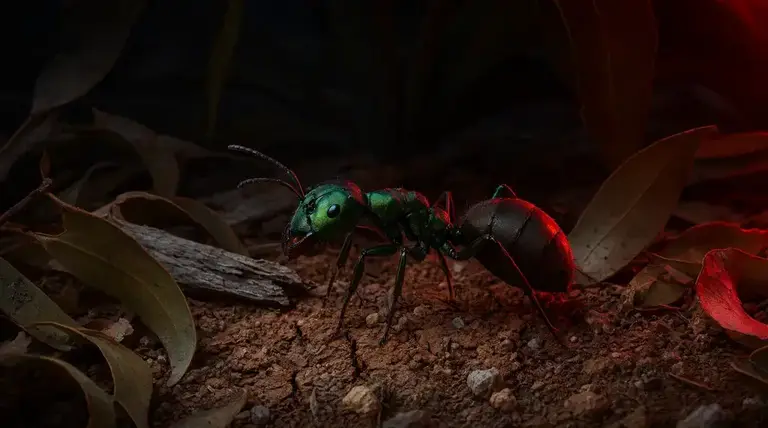
The green head ant (Rhytidoponera metallica) is a small native Australian ant, roughly 5–7 mm long, with a metallic green-purple sheen and a sting that punches well above its size. Rated “r” for painful by many a barefoot gardener, this ground-dwelling forager nests in lawns, mulched garden beds and along paths right across Australia, and its sting is one of the most common causes of painful reactions in backyards during the warmer months.
Despite the name, the whole body carries an iridescent sheen that shifts from green to bronze and purple in the right light. Colonies are relatively small compared with sugar ants, but multiple nests can dot a single lawn — which is exactly why people so often get stung barefoot in summer without ever seeing the colony that got them.
- Green-head ants are a 5–7 mm native Australian ant with a metallic green-purple body and a venom-injecting sting — they sting rather than bite.
- Nests appear as small, easily missed soil openings in lawns and garden beds; several nests can share a single lawn.
- Peak activity runs from December to February, when barefoot stings are most common.
- Most stings cause local pain and swelling, but sensitised people can suffer anaphylaxis — treat breathing difficulty or facial swelling as an emergency and call 000.
- Targeted professional nest treatment is safer and more effective than repeated DIY spraying in family areas.
Why the green head ant Is a Genuine Backyard Hazard in Australia
Green-head ants matter because they combine a hidden nesting habit with a painful sting in precisely the places Australian families spend summer — lawns, garden beds and the edges of paved entertaining areas. They are widespread from Queensland and New South Wales through to Victoria, South Australia and Western Australia.
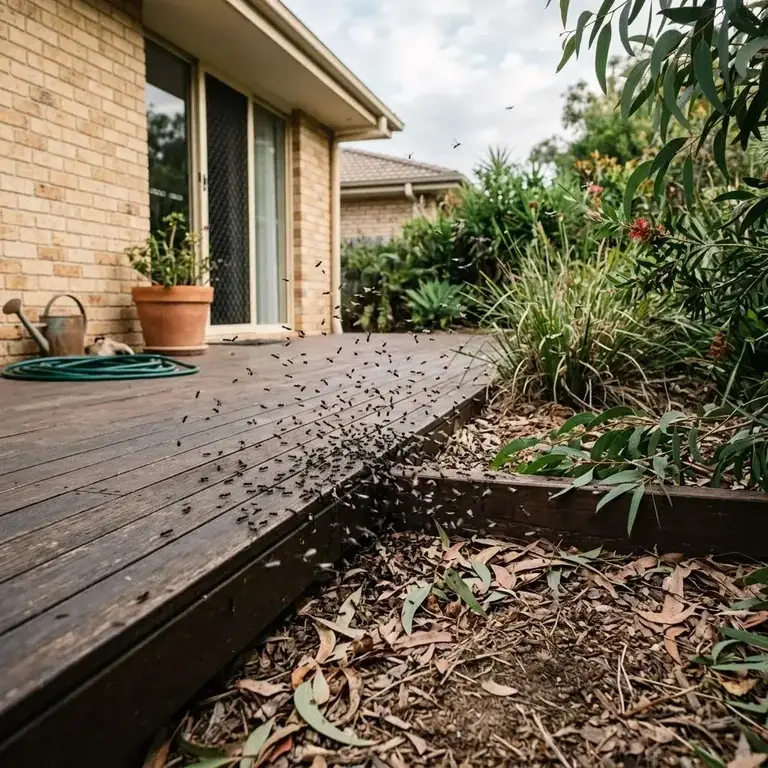
Australian housing makes the problem worse. Homes on concrete slabs with lawn running right to the paving edge give these ants ideal open, sunny nesting ground within a metre of the back door. Queenslanders and older homes with subfloors often sit among established gardens with deep mulch layers — prime habitat. Unlike species that build obvious mounds, green-head ant nest entrances are often just small holes between grass blades or along the edge of paving. That low profile is part of why people are caught out: the first sign of a colony is frequently the sting itself rather than any visible nest.
It is also worth remembering that green-head ants are a native species playing a genuine role in the garden ecosystem, so blanket spraying is neither necessary nor wise. The goal is targeted management of nests in high-traffic areas, not eradication of every ant on the block.
Warning Signs: How to Recognise Green-Head Ant Activity
The clearest signs of green-head ants are slow-moving metallic ants foraging on open ground, small soil nest openings in the lawn, and stings sustained while walking barefoot on grass. Use this checklist to confirm what you are dealing with before you act.
- Metallic sheen: ants 5–7 mm long with a hard, shiny body that flashes green, bronze or purple in sunlight.
- Deliberate movement: slow, purposeful foraging rather than the fast trailing behaviour of black house ants or sugar ants.
- Small nest openings: discreet holes in lawns, mulched beds or along paving edges, with no obvious mound.
- Multiple nests: several entrances scattered across one lawn — treating a single hole rarely resolves the wider problem.
- Warm-weather surge: noticeably more activity from late spring, peaking December to February.
- Barefoot stings: sharp, immediate pain when walking or kneeling on grass, especially in the late afternoon when foragers are most active.
If you are unsure whether you are looking at green-head ants or another species, our guide to common Australian ant species found in homes will help with identification, and the black house ants control guide covers the most common lookalike found trailing into kitchens.
The Sting: What Happens and How to Respond
Green-head ants sting rather than bite, injecting venom that causes immediate sharp pain, redness and localised swelling. Like bee and jack jumper stings, they can trigger anaphylaxis in sensitised people, so reactions should always be taken seriously.
| Situation | Response |
|---|---|
| Typical sting | Wash the area, apply a cold pack, take an antihistamine if needed |
| Multiple stings | Monitor closely for spreading swelling or worsening symptoms |
| Allergic reaction | Call 000 immediately and use a prescribed adrenaline injector if available |
Because green head ant nests sit in lawns where children play barefoot and pets roam, prevention matters as much as first aid. Keeping grass mown, reducing thick mulch layers and wearing shoes on the lawn — especially late in the day — are the simplest ways to avoid the most common stings.
DIY vs Professional Green-Head Ant Control
Basic lawn hygiene and habitat reduction are sensible DIY steps, but treating established nests — particularly multiple nests across a family lawn — is best left to licensed technicians with the right products and application methods. Here is how the two approaches compare.
| Factor | DIY approach | Professional treatment |
|---|---|---|
| Cost | $20–$60 for hardware-store products | $150–$350 for targeted nest treatment |
| Effectiveness | Often treats one visible entrance and misses the other nests | Full property inspection locates all active nests |
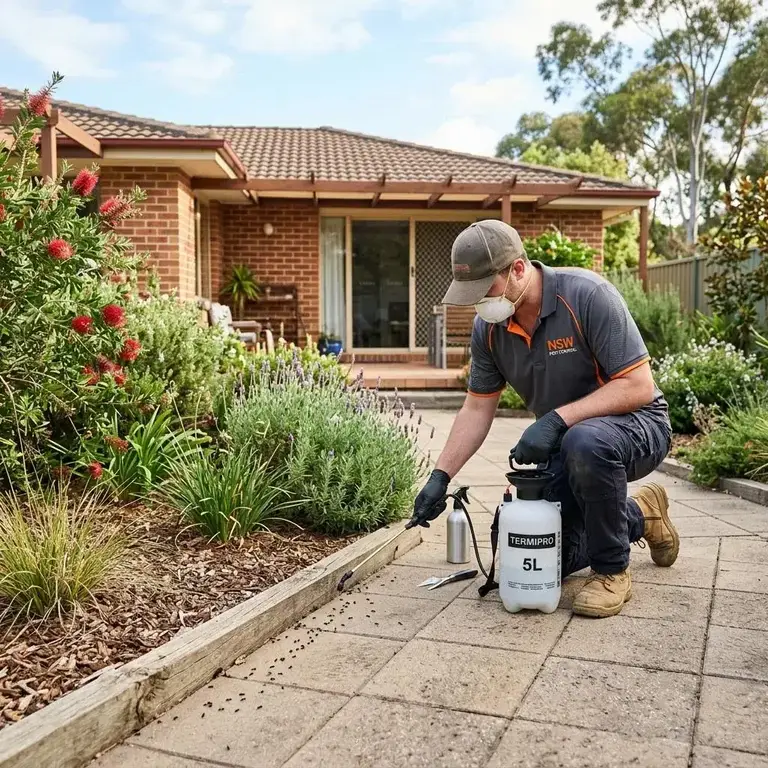
| Safety | Risk of over-application near kids, pets and gardens | APVMA-registered products applied by licensed technicians |
| Best for | Prevention — mowing, mulch reduction, footwear habits | Active nests in play areas, recurring stings, multi-nest lawns |
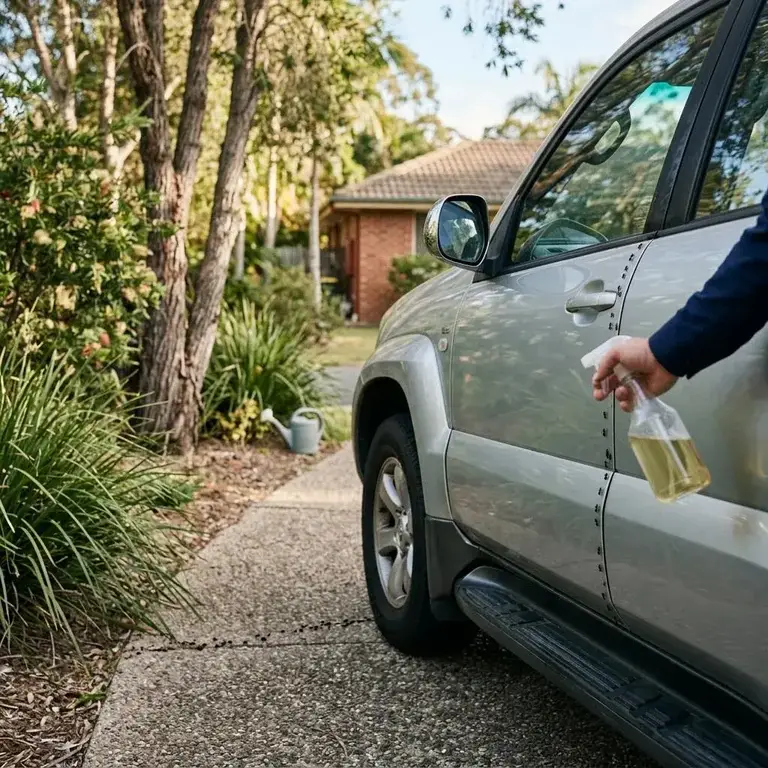
It is worth understanding why indiscriminate spraying backfires — our article on why ant sprays often make the problem worse explains how surface sprays can scatter colonies and create new nests. For broader ant issues around the home, our Ant Control & Nest Treatment service covers identification, targeted nest treatment and prevention advice in one visit.
Green-Head Ant Treatment Costs in Australia (2025–26)
Across Australia, professional treatment for green-head ants generally costs between $150 and $450, depending on lawn size, the number of nests and whether a follow-up visit is required. The table below shows typical industry market rates — what Australian pest control operators generally charge. Actual quotes vary by property and region.
| Service | Typical market rate (AUD) | What’s included/notes |
|---|---|---|
| Inspection and identification | Free – $120 | Confirms species and maps all active nests; some operators waive the fee if treatment goes ahead |
| Targeted nest treatment (standard block) | $150 – $280 | Direct treatment of located nests in lawns and garden beds |
| Larger properties or multiple-nest lawns | $280 – $450 | Acreage, extensive garden beds or heavy infestations |
| Follow-up visit | $90 – $150 | Recommended where stinging activity persists in play areas |
Keep in mind that green-head ants share lawn habitat with pests like coastal brown ants, and an inspection often turns up other issues worth bundling into one visit — from trailing ants indoors to pantry invaders covered by our Silverfish & Pantry Pest Control service.
Here’s the good news: Aussie Pest Strike typically comes in well under these market rates, without cutting corners on treatment. For an exact quote tailored to your property, give us a call on [aps_phone] — we’ll map the nests, confirm the species and lock in a price before any work starts.
Seasonal Activity: When Green-Head Ants Are Most Active
Green-head ants are most active in the warm months, with foraging and sting reports peaking from December to February across most of Australia. Activity drops sharply through the cooler months, particularly in southern states.
Jan
Feb
Mar
Apr
May
Jun
Jul
Aug
Sep
Oct
Nov
Dec
Typical activity pattern: green-head ants build from late spring, peak across December to February when barefoot stings are most common, and ease off through autumn and winter — especially in Victoria, South Australia and Tasmania. In subtropical Queensland, activity stays noticeable for more of the year.
Nine times out of ten, the customer has already hit the one nest entrance they could see with a spray can — and the lawn still has three or four more colonies they never noticed. With green-head ants, finding every nest first is the whole job; treatment after that is straightforward. Do it properly once and the family can use the lawn again that same summer.
If stings are happening in areas where kids or pets use the lawn, book a professional inspection rather than reaching for a surface spray. A licensed technician will map every active nest, treat them with targeted, APVMA-registered products and advise on mowing and mulch changes that make the lawn less attractive next season. Between visits, keep grass short, thin out deep mulch and make shoes-on-the-lawn the household rule through summer.
Frequently Asked Questions
What does a green head ant look like?
Green-head ants are small native Australian ants, roughly 5–7 mm long, with a hard body carrying a metallic sheen that shifts between green, bronze and purple in the right light. Despite the name, the whole body is iridescent rather than just the head. They move slowly and deliberately while foraging on open ground, unlike the fast trailing behaviour of black house ants or sugar ants.
Do green-head ants bite or sting?
Green-head ants sting rather than bite. They inject venom that causes immediate sharp pain, redness and localised swelling. Like bee and jack jumper stings, their stings can trigger anaphylaxis in sensitised people, so any reaction should be taken seriously. If someone experiences breathing difficulty or facial swelling after a sting, treat it as an emergency and call 000 immediately.
Where do green-head ants nest?
Green-head ants nest directly in the ground, favouring lawns, mulched garden beds and the edges of paved areas. Their nest entrances are often just small holes between grass blades or along paving edges, with no obvious mound, which makes them easy to miss. Several separate nests can share a single lawn, which is why treating one visible entrance rarely resolves the problem.
When are green-head ants most active?
Green-head ant activity builds from late spring and peaks from December to February across most of Australia, when barefoot stings are most common. Foragers are especially active in the late afternoon. Activity drops sharply through autumn and winter, particularly in southern states such as Victoria, South Australia and Tasmania, though in subtropical Queensland activity stays noticeable for more of the year.
How should I treat a green-head ant sting?
For a typical sting, wash the area, apply a cold pack and take an antihistamine if needed. With multiple stings, monitor closely for spreading swelling or worsening symptoms. Signs of an allergic reaction, such as breathing difficulty or facial swelling, require calling 000 immediately and using a prescribed adrenaline injector if one is available. Sensitised people should always take these stings seriously.
How can I prevent green-head ant stings in my garden?
Simple habits make a real difference: keep grass mown short, reduce thick mulch layers that provide nesting habitat, and wear shoes on the lawn, especially late in the day when foragers are most active. Because nests sit where children play barefoot and pets roam, prevention matters as much as first aid. These steps reduce encounters without needing to spray every ant on the block.
Why doesn't DIY spraying fix a green-head ant problem?
Surface sprays usually treat only the one visible nest entrance, while several other colonies remain hidden across the same lawn. Indiscriminate spraying can also scatter colonies and create new nests. Green-head ants are native insects playing a role in the garden ecosystem, so blanket spraying is neither necessary nor wise — targeted treatment of nests in high-traffic areas is the better goal.
Are green-head ants found all over Australia?
Yes, green-head ants are widespread across Australia, occurring from Queensland and New South Wales through to Victoria, South Australia and Western Australia. Australian housing styles often make the problem worse: slab homes with lawn running to the paving edge offer sunny nesting ground within a metre of the back door, while older homes with subfloors sit among deep mulch layers that are prime habitat.
How can Aussie Pest Strike tell green-head ants apart from other lawn ants?
Several ant species share lawn habitat, including coastal brown ants, and misidentification leads to wasted treatment. An Aussie Pest Strike technician will confirm whether you are dealing with green-head ants by checking for their metallic green-purple sheen, slow deliberate foraging and discreet soil nest openings. The inspection also maps every active nest and can turn up other issues worth addressing in the same visit.
What happens during a professional green-head ant inspection?
Aussie Pest Strike starts with a full property inspection to locate every active green-head ant nest, not just the visible entrances. Nests are then treated with targeted, APVMA-registered products applied by licensed technicians, and you receive advice on mowing, mulch reduction and footwear habits that make the lawn less attractive next season. This approach is safer around kids and pets than repeated DIY spraying.
Sources & further reading
Found Something
Dangerous?
Don’t touch it. Don’t spray it. Keep kids and pets clear, take a photo from a safe distance, and call us — or book a free inspection and we’ll come to you.
02 7235 0050