What’s Livingin YourRoof Void?
What's living in — Whats living roof — the most common roof void pests in Australian homes are rats, possums, birds, wasps and, in warmer regions, termites...
If you’ve heard scratching, thumping or rustling above your ceiling at 2 o’clock in the morning, you’re not alone — roof void pests are a headache for homeowners right across Australia. The most common occupants are black rats, brushtail possums, birds, wasps and, in warmer regions, termites, all drawn to the dark, sheltered, insulated space above your ceiling.
A roof void infestation is any pest species living, nesting or travelling through the cavity between your ceiling and your roofline — and because that space is out of sight, problems often go unnoticed until you hear noise or spot damage. Knowing what’s living up there, and how to tell the suspects apart, is the first step to eviction. This guide walks you through identification, risks, costs, seasonal patterns and when to call in professional pest control.
- Fast, light scratching at night usually means rats or mice; heavy thumping at dusk and dawn points to a possum.
- Possums are protected under state wildlife law in every state and territory — they must be excluded humanely, never harmed.
- Rodents gnawing wiring in the roof void is a recognised cause of house fires, so noises overhead shouldn’t be ignored.
- Removal is only half the job — sealing entry points under eaves, broken tiles and vents stops re-infestation.
- A professional roof-void inspection in Australia typically costs $150–$300 AUD and identifies the species, entry points and damage in one visit.
Why roof void pests infest Australian homes around the clock
Australian roof voids are near-perfect pest habitat: warm, dry, dark, insulated and rarely disturbed. Our climate means there’s no deep winter dormancy to knock populations back, so activity can run year-round, with peaks shifting by region and season.
Housing style plays a big role too. Older Queenslanders on stumps often have generous subfloor access that lets rodents climb wall cavities straight into the ceiling. Brick veneer homes — common in southern capitals — have weep holes and wall cavities that double as vertical highways for rats. Tile roofs develop cracks and lifted tiles over time, and corrugated iron roofs often have gaps at the ridge and under eaves. Add fruit trees or overhanging branches touching the roofline, and you’ve built a possum and rat expressway.
In warmer northern regions, subterranean termites can even track up wall cavities into roof timbers, which is why roof-void inspections form part of any thorough termite check. Whether you’re in a Sydney semi, a Melbourne weatherboard or a Brisbane Queenslander, the roof void deserves the same attention as the rest of the house — a point we hammer home in our Moving House? The Pest Checklist Nobody Gives You guide, because buyers almost never look up.
Warning Signs: What’s Living in Your Roof Void?
The fastest way to identify a roof void pest is to match the sound, timing and physical evidence to the species. Use this checklist before you climb anywhere near the manhole.
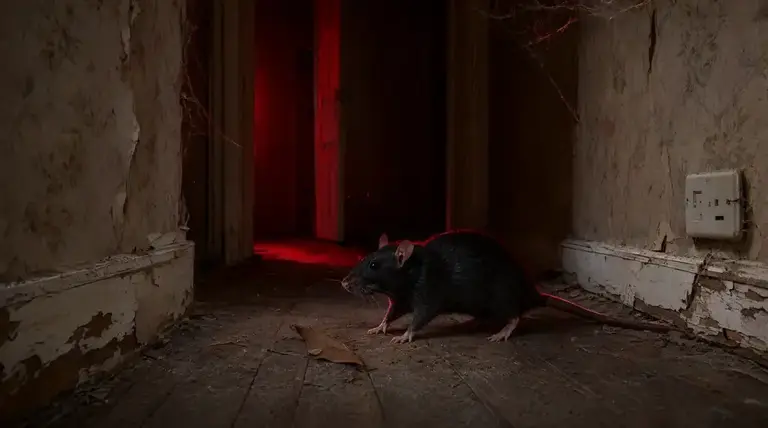
- Fast scratching or scampering at night: classic rats or mice. Black rats (Rattus rattus), also called roof rats, are agile climbers that nest in ceilings and run along roof timbers after dark. Look for 12–18 mm droppings and chewed wiring. Our guide to roof rat behaviour and control covers their habits in detail.
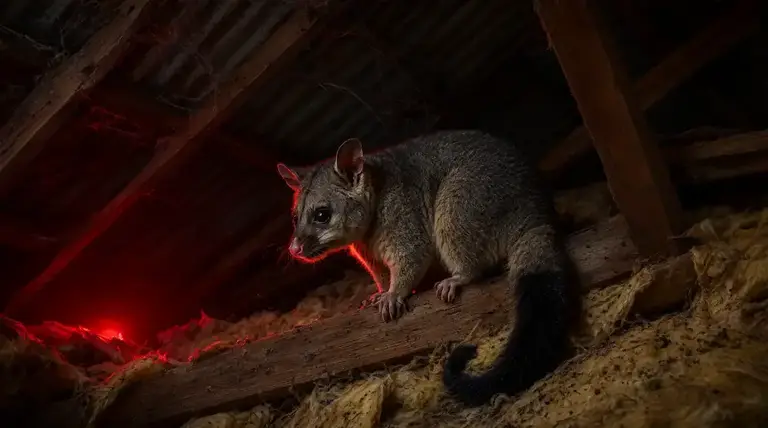
- Heavy thumping or walking at dusk and dawn: almost always a brushtail possum. They’re heavier and slower than rodents, so the noise sounds like footsteps rather than scratching. Check the signs of a possum infestation to confirm.
- Chirping, cooing or rustling during the day: pigeons or starlings nesting under broken tiles. Watch for bird mites migrating down into living areas through ceiling gaps.
- Buzzing near eaves or gable ends: European or paper wasps building nests. Never disturb a nest during the day.
- Mud tubes on timbers or hollow-sounding wood: termites. Stop investigating and book a termite inspection immediately.
- Droppings, urine stains or a musky smell: droppings, urine and nesting material contaminate insulation and ceiling cavities, and the smell often reaches living areas before you see anything.
- Flickering lights or unexplained power faults: rodents gnawing wiring insulation — a recognised cause of house fires.
Distinguishing the footsteps matters because the legal and practical response differs completely by species. Our comparison of rodents in the roof void versus larger animals helps narrow it down before you spend a dollar.
DIY vs Professional Roof Void Pest Control
You can gather evidence yourself — listening, noting times, checking for droppings at the manhole edge and other signs of roof void pests — but actual entry into the roof cavity and any treatment is best left to licensed technicians. Trying to inspect it yourself carries real risks: unstable footing between joists, dust and insulation irritants, and the very real chance of disturbing a wasp nest in a confined space. Chemical treatments should only ever be applied by licensed technicians using APVMA-registered products.
| Factor | DIY approach | Professional approach |
|---|---|---|
| Identification | Guesswork from sounds; easy to confuse rats and possums | Species confirmed from droppings, tracks, nests and entry points |
| Legality | Risk of breaching wildlife laws if a possum is harmed or relocated incorrectly | Humane exclusion within state wildlife rules; bird nests removed only after young have fledged |
| Safety | Falls through ceilings, wasp stings, insulation exposure | Trained, insured technicians with correct PPE and equipment |
| Long-term result | Entry points often missed; re-infestation within weeks | Removal plus proofing — gaps under eaves sealed, broken tiles replaced, vents screened |
If you’re renting, don’t just live with the noise — our guide to Pest Control in Rentals: Your Rights as a Tenant explains who pays and when. Landlords, meanwhile, have clear responsibilities covered in Landlord Pest Control Obligations in Australia.
Roof Void Pest Control Costs in Australia (2025–26)
Costs vary by species, access and how much proofing is needed, but across the Australian market most homeowners pay between $150 and $900 AUD all up. Possum work sits at the higher end because of legal handling requirements, while straightforward rodent programs are usually the most affordable.
| Service | Typical market rate (AUD) | What’s included/notes |
|---|---|---|
| Roof void inspection | $150–$300 | Species identification, entry point mapping, damage assessment, written quote |
| Rodent treatment program | $250–$450 | Trapping or baiting, follow-up visit, roof void clean-up advice |
| Possum removal and exclusion | $350–$800 | Humane trapping or one-way flap, release within legal distance, entry sealed |
| Wasp nest treatment | $180–$350 | Dusk treatment by licensed technician, nest removal where accessible |
| Bird nest removal and proofing | $250–$600 | Removal after young fledge, mite treatment, tile and vent repairs |
| Entry-point proofing (standalone) | $300–$900 | Sealing eaves gaps, replacing broken tiles, screening vents |
These are typical industry-wide market rates, not fixed quotes — a single-storey brick veneer with easy roof access will sit at the lower end, while a steep two-storey Queenslander will cost more. Always get the inspection first so the quote reflects the actual species and entry points, not a guess made over the phone at 9 o’clock at night.
Here’s the good news: Aussie Pest Strike typically comes in well under these general market rates, because we specialise in roof void work and keep our overheads lean. For an exact quote on your property, give us a call on [aps_phone] and we’ll tell you straight.
Seasonal Roof Void Activity Across Australia
Roof void pest activity peaks in autumn and early winter, when rodents and possums push indoors for warmth, and again in spring, when birds and wasps nest. Summer stays moderately active in the cooler southern states, while northern regions see fairly consistent pressure year-round thanks to the warm climate.
Jan
Feb
Mar
Apr
May
Jun
Jul
Aug
Sep
Oct
Nov
Dec
Indicative roof void pest activity in Australia: rodents and possums peak in autumn–winter (April–July) as they seek warmth, with a secondary spring rise (September–October) from nesting birds and wasps.
Nine times out of ten, the homeowner reckons it’s a possum and it turns out to be roof rats — the sound test at dusk o’ evening usually settles it. The biggest mistake we see is baiting or blocking holes before confirming the species, because if you seal a possum in, you’ve got a welfare problem and a much smellier one a week later. Identify first, remove second, proof third — in that order, every time.
Don’t climb into the roof void yourself. Note the sounds and times, check for droppings from the manhole edge, then book a professional inspection. Insist on a quote that covers removal and proofing — sealing gaps under eaves, replacing broken tiles and screening vents — because removal alone just leaves the vacancy sign on for next season’s occupant.
Frequently Asked Questions
What pests commonly live in Australian roof voids?
The most common roof void occupants in Australia are black rats (also called roof rats), brushtail possums, birds such as pigeons and starlings, European or paper wasps, and, in warmer northern regions, termites that track up wall cavities into roof timbers. All are drawn to the dark, warm, insulated space between your ceiling and roofline, where they can nest and travel largely undisturbed.
How do I tell whether the noise in my ceiling is a rat or a possum?
Timing and weight of sound are the key clues. Fast, light scratching or scampering at night usually means rats or mice, which run along roof timbers after dark. Heavy thumping that sounds like footsteps, occurring mainly at dusk and dawn, almost always points to a brushtail possum. Checking for droppings near the manhole edge can help confirm which species is present.
Are possums protected when they are living in my roof?
Yes. Brushtail possums are protected under state wildlife law in every state and territory, so they must be excluded humanely and never harmed. Professional removal typically involves humane trapping or a one-way flap, with release within legal distance requirements. This is why you should never block entry holes before confirming the species, as sealing a possum inside creates a serious welfare problem.
Why is rodent activity in the roof void dangerous beyond just noise?
Rodents gnawing wiring insulation in the roof void is a recognised cause of house fires, so noises overhead should not be ignored. Beyond fire risk, droppings, urine and nesting material contaminate insulation and ceiling cavities, and a musky smell often reaches living areas before any visible damage appears. Flickering lights or unexplained power faults can indicate rodents chewing wiring.
What does a professional roof void inspection involve and cost?
A professional roof void inspection involves a technician entering the space to identify the pest species from droppings, tracks, nests and gnaw marks, locate all entry points along the roofline, and assess any damage to insulation, wiring or timber. You should receive a written report outlining the findings and recommended treatment options. Booking an inspection first ensures the treatment plan targets the actual species and access points rather than relying on guesswork.
Why do pests keep returning to my roof after removal?
Removal is only half the job. If entry points are not sealed, re-infestation often occurs within weeks because the same gaps remain open to the next animal. Effective proofing includes sealing gaps under eaves, replacing broken tiles, screening vents and cutting back overhanging branches or fruit trees touching the roofline. The correct order is identify first, remove second, proof third.
When is pest activity in roof voids highest across Australia?
Activity peaks in autumn and early winter, roughly April to July, when rodents and possums move indoors seeking warmth. A secondary rise occurs in spring, around September and October, driven by nesting birds and wasps. Summer stays moderately active in cooler southern states, while warmer northern regions see fairly consistent pressure year-round because there is no deep winter dormancy.
Is it safe to inspect my own roof void for pests?
Self-inspection carries real risks: unstable footing between joists, dust and insulation irritants, falls through ceilings, and the chance of disturbing a wasp nest in a confined space. You can safely gather evidence by listening, noting times and checking for droppings from the manhole edge, but entering the cavity and applying treatments should be left to licensed technicians using APVMA-registered products.
Can Aussie Pest Strike tell me if I have rats or a possum in my roof?
Yes. Nine times out of ten homeowners assume the noise is a possum when it turns out to be roof rats, so accurate identification matters before any treatment begins. Aussie Pest Strike specialises in roof void work and confirms the species from droppings, tracks, nests and entry points during an inspection, then recommends the right removal approach for whichever animal is actually up there.
What should I do next if I hear noises in my ceiling?
Start by noting the sounds and their timing, and check for droppings from the manhole edge without climbing into the cavity. Then book a professional inspection so the species and entry points are confirmed. When you contact Aussie Pest Strike, ask for a quote covering both removal and proofing — sealing eaves gaps, replacing broken tiles and screening vents — so the vacancy sign is not left out for next season's occupant.
Sources & further reading
Found Something
Dangerous?
Don’t touch it. Don’t spray it. Keep kids and pets clear, take a photo from a safe distance, and call us — or book a free inspection and we’ll come to you.
02 7235 0050