Rodents in theRoof Void:Signs and Solutions
Rodents in the — Rodents — rats in the roof void announce themselves through scratching and scurrying noises after dark, dark smear marks along rafters, and...
Scratching overhead after dark is one of the most common calls a licensed pest-control technician receives across Australia, and in many homes the culprit is rats in roof spaces rather than birds or possums. Usually the roof rat (Rattus rattus) is involved, announcing itself through fast scurrying at dusk, dark smear marks along rafters, and spindle-shaped droppings scattered across insulation batts.
Definition: A roof void rodent infestation is the presence of rats or mice nesting, travelling and breeding in the enclosed space between your ceiling and roof covering, most commonly the roof rat in Australian homes. Left alone, a pair that settles in during autumn can multiply into a serious infestation by spring. This guide explains how to confirm what is overhead, what it will cost to fix, and when to call in professional help.
- Roof rats are most active in the two hours after dusk and before dawn — fast, light scurrying points to rats; heavy thumps usually mean a protected possum.
- A single female roof rat can produce five to six litters a year with up to eight young each, so early action matters.
- Baiting alone in a roof void is risky: poisoned rats often die in inaccessible cavities and cause lingering odour.
- Effective control combines proofing (sealing gaps down to 6 mm), trapping and targeted baiting in secured stations.
- Professional rodent control in Australia typically costs between $250 and $900 AUD depending on the size of the job.
Why rats in roof voids are such a problem in Australian homes
Australian housing gives roof rats exactly what they want: dark, warm, undisturbed roof cavities with easy access from gardens, fences and overhanging trees. The roof rat is an agile climber that nests above ceilings in every state and territory, from coastal Queensland to temperate Victoria.
Housing style plays a big part. Older Queenslanders with open eaves and decorative gables offer multiple entry points, while brick veneer homes on concrete slabs often have small gaps where roof sheeting meets the eave or where pipes penetrate the wall. Homes with subfloor voids can harbour Norway rats below and roof rats above simultaneously. Our warm autumns and mild winters across much of the country also mean roof rats can breed for most of the year rather than shutting down in the cold. If you want a deeper look at the species itself, our guide to roof rats in Australia: behaviour, risks and control covers their habits in detail. For broader context on telling an infestation apart from normal household sounds, see our full checklist of signs of rats or mice in your home.
Warning signs: a checklist for rodents overhead
You will almost always hear roof rodents before you see any physical evidence. Confirm the problem by checking the roof void during daylight with a torch, looking for the signs below.
- Nocturnal noise — fast scurrying, scratching and the sound of small objects being dragged, mostly in the two hours after dusk and before dawn.
- Droppings — spindle-shaped droppings 12 to 18 mm long, clustered on insulation batts or along rafters.
- Smear marks — greasy brown stains where fur rubs against timber and pipe runs along regular routes.
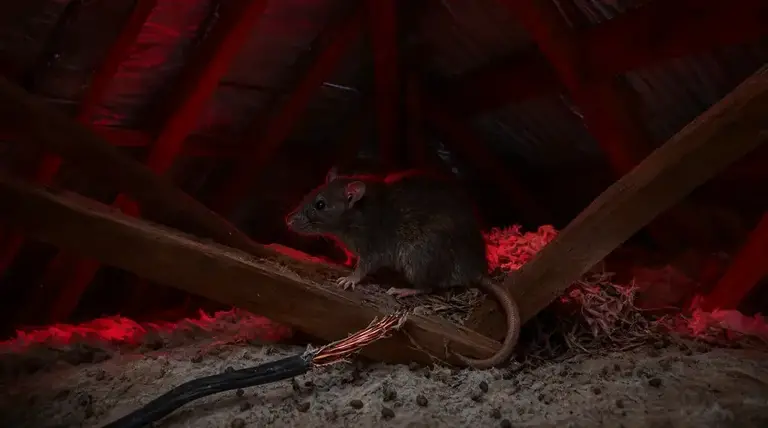
- Gnaw damage — chew marks on electrical cabling, timber, plastic piping and stored boxes.
- Nesting material — shredded insulation and paper pulled together into loose nests.
- Urine odour — a persistent ammonia-like smell from urine build-up, often strongest near downlights.
- Runways — worn tracks through dusty insulation showing regular travel routes between entry points and nesting areas.
One legal note before you act: possums are protected under state wildlife law across Australia and cannot be baited or harmed, whereas rodents can be controlled. Rats make fast, light scurrying sounds and leave small spindles of droppings; possums produce heavy, slow thumps and larger clustered pellets. If there is any doubt, confirm the species first — the wrong treatment wastes money and can break the law.
DIY vs professional rodent control: a realistic comparison
DIY trapping can knock down one or two rats in a small, accessible roof, but it rarely solves the whole problem because entry points stay open and new rats simply move in. Professional pest control combines inspection, proofing, trapping and targeted baiting so the population is removed and kept out.
| Factor | DIY approach | Professional treatment |
|---|---|---|
| Inspection | Torch and guesswork; entry points often missed | Full roof void and perimeter inspection, species confirmed |
| Baiting risk | Loose baits; rats may die in wall cavities causing weeks of odour | Secured, lockable stations placed by a licensed technician |
| Proofing | Rarely done thoroughly; gaps down to 6 mm overlooked | Systematic rodent proofing and exclusion of every entry point |
| Outcome | Temporary relief, reinfestation common | Population removed, entries sealed, follow-up visits included |
| Typical cost | $30–$120 in traps and baits | $250–$900 depending on scope |
For a step-by-step look at how the professionals do it, read Rat Control: How Professionals Actually Eliminate Rats. The short version: seal every entry point down to 6 mm gaps, remove food and nesting draw, trim branches back at least a metre from the roofline, then knock down the rats in roof with traps and secured bait stations. Treat it as a whole-of-roof job, not a single trap in one corner.
What does roof rodent control cost in Australia?
Across the Australian pest control industry, roof rodent treatment generally runs between $250 and $900 AUD in 2025-26, depending on the size of the home, access difficulty and whether proofing is included. The figures below are typical market rates charged across the industry — they are not quotes from any one provider.
| Service | Typical market rate (AUD) | What’s included/notes |
|---|---|---|
| Roof void inspection and report | $0–$180 | Species confirmation, entry-point mapping; the industry often waives this with a treatment booking |
| Standard rodent control and removal program | $250–$450 | Traps and secured bait stations, 1–2 follow-up visits, bait collection |
| Rodent proofing/exclusion works | $300–$900 | Sealing eaves, vents and pipe penetrations; screening whirlybirds |
| Severe infestation (large or multi-level home) | $600–$1,200 | Extended trapping program, multiple visits, full proofing |
| Dead rodent location and removal | $150–$350 | Only needed when carcasses are in accessible cavities |
Chemical treatments should only be applied by licensed technicians using APVMA-registered products in secured, tamper-resistant stations — no rodenticide can be called 100% safe around children, pets or native wildlife, and professional placement is what keeps the risk low.
Here’s the good news: Aussie Pest Strike typically comes in well under these general market rates while still delivering the full licensed, APVMA-compliant service. For an exact quote tailored to your home, give us a call on [aps_phone] today.
Seasonal activity: when roof rodents are worst in Australia
Roof rat pressure peaks from March through July as cooling nights push rodents into warm roof voids, then eases over late spring and summer when outdoor food is plentiful. Breeding can continue year-round in heated roof spaces, which is why autumn is the critical time to act.
Jan
Feb
Mar
Apr
May
Jun
Jul
Aug
Sep
Oct
Nov
Dec
Indicative roof rodent activity across southern and eastern Australia. Activity climbs through autumn as rats seek warm nesting sites, peaks in winter, and tapers off once spring food sources return outdoors. Northern regions see flatter, year-round activity.
Nine times out of ten, the homeowner has already thrown a few baits into the roof before they call us — and half the time that’s created a smell problem in a wall cavity on top of the rat problem. The jobs that stick are the ones where we seal the entries first, then trap. Get the proofing right and the roof stays quiet for good.
Confirm the species first (rat vs possum), then book a professional inspection before winter sets in. The most durable solution is a combined program: exclusion proofing of every gap down to 6 mm, trimming branches a metre back from the roofline, and a trapping-and-baiting knockdown in secured stations by a licensed technician. Avoid loose DIY baits in the roof void — they are the main cause of dead-rat odour jobs we attend.
Frequently Asked Questions
How can I tell if the noise in my roof is rats or a possum?
Rats make fast, light scurrying and scratching sounds, mostly in the two hours after dusk and before dawn, and leave small spindle-shaped droppings 12 to 18 mm long. Possums produce heavy, slow thumps and larger clustered pellets. Because possums are protected under state wildlife law and cannot be baited or harmed, confirm the species before treating.
What signs should I look for in my roof void to confirm rodents?
Check the roof void during daylight with a torch. Look for fast nocturnal noise patterns, spindle-shaped droppings on insulation batts or rafters, greasy brown smear marks along regular routes, gnaw marks on cabling and timber, shredded nesting material, an ammonia-like urine odour often strongest near downlights, and worn runways through dusty insulation between entry points and nests.
Why are roof voids so attractive to rats in Australian homes?
Roof cavities offer dark, warm, undisturbed space with easy access from gardens, fences and overhanging trees. The agile roof rat nests above ceilings in every state and territory. Older Queenslanders with open eaves offer many entry points, while brick veneer homes often have gaps where roof sheeting meets eaves or where pipes penetrate walls. Mild autumns let breeding continue most of the year.
How quickly can a small roof rat problem become a serious infestation?
Very quickly. A single female roof rat can produce five to six litters a year with up to eight young each, and breeding can continue year-round in warm roof spaces. A pair that settles into a roof void during autumn can multiply into a serious infestation by spring, which is why early action matters.
Why is loose DIY baiting in the roof risky?
Loose baits placed in a roof void often kill rats in inaccessible wall or ceiling cavities, leaving carcasses that cause lingering odour for weeks. Baiting alone also leaves entry points open, so new rats simply move in. Effective control combines proofing of gaps down to 6 mm, trapping and targeted baiting in secured stations.
When is rodent activity in roofs worst across Australia?
Roof rat pressure peaks from March through July as cooling nights push rodents into warm roof voids, then eases over late spring and summer when outdoor food is plentiful. Northern regions see flatter, year-round activity. Autumn is the critical time to act because breeding can continue through winter inside heated roof spaces.
What does professional roof rodent control typically cost in Australia?
Professional roof rodent control pricing varies with the extent of the infestation, the size and layout of your home, how difficult the roof void is to access, and whether proofing work is included. Basic trapping and baiting programs are usually the most affordable option, while severe infestations needing extended monitoring, multiple visits, entry-point sealing and sanitation cost more. Most pest controllers offer a quote after inspecting the roof void, so costs can differ significantly between properties.
What steps actually keep rats out of a roof for good?
The durable solution is a combined program: exclusion proofing of every gap down to 6 mm, trimming tree branches back at least a metre from the roofline, removing food and nesting attractants, then knocking down the population with traps and secured bait stations placed by a licensed technician. Treat it as a whole-of-roof job rather than a single trap in one corner.
What happens during an Aussie Pest Strike inspection for rodents in the roof?
Aussie Pest Strike starts by confirming the species, distinguishing rat activity from protected possums before any treatment begins. The inspection covers the full roof void and perimeter, mapping entry points such as eave gaps, vents and pipe penetrations, and checking for droppings, smear marks, runways and nests. Species confirmation and entry-point mapping guide whether proofing, trapping or secured baiting is needed.
What should I do next if I suspect rats overhead but have not used baits yet?
Avoid throwing loose baits into the roof, as they commonly cause dead-rat odour problems in wall cavities on top of the existing infestation. Instead, confirm the species first, then contact Aussie Pest Strike to book a professional inspection before winter sets in. A combined program of proofing, trimming branches back from the roofline and secured trapping delivers the longest-lasting result.
Sources & further reading
Found Something
Dangerous?
Don’t touch it. Don’t spray it. Keep kids and pets clear, take a photo from a safe distance, and call us — or book a free inspection and we’ll come to you.
02 7235 0050