Pet Foodand Rodents: Breakingthe Attraction
Rodents — pet food is one of the most reliable rodent attractants in an Australian home, because a bowl of kibble left out overnight or a bag of dry food in...
For many Australian households, pet food rats are the hidden consequence of a bowl of kibble left out overnight or a bag of dry food stored in the garage: concentrated, easy-access meals that a mouse or rat will return to every single night. Breaking the attraction comes down to how you store, serve and clean up around your animals’ meals.
Pet food and rodent attraction is the cycle created when dry pet food is left accessible to rats and mice, drawing them into homes, garages and yards and sustaining them once they arrive. The good news is that you rarely need to change what you feed your pet — only how the food is handled, stored and cleaned up. This guide covers why pet food is such a magnet, the warning signs to watch for, what you can fix yourself, and when to call in licensed help.
- A house mouse needs only about 3 grams of food a day — spilled kibble alone can sustain it.
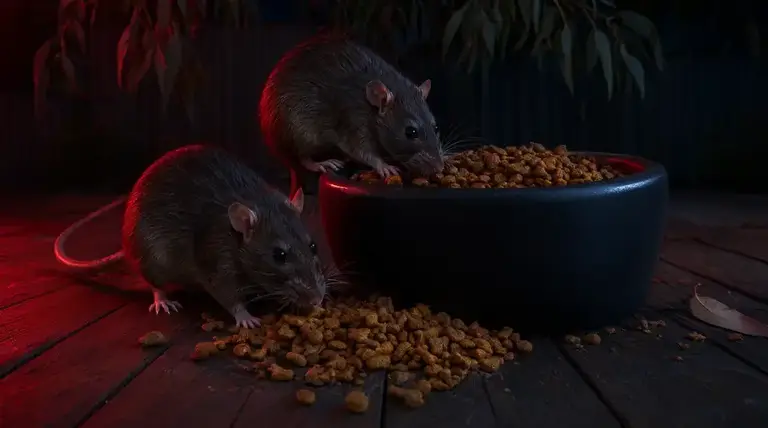
- Free-feeding overnight runs a 24-hour rodent buffet; lift bowls within 20 to 30 minutes.
- Rats gnaw through paper bags and 2 mm plastic in seconds — decant food into sealed metal or heavy plastic containers.
- Chicken coops, aviaries and outdoor feeding stations are common ignition points for yard infestations that move indoors.
- Food control reduces attraction but rarely eliminates an established colony — pair it with professional trapping, baiting and exclusion.
Why pet food rats and rodent problems matter across Australia
Pet food is one of the most reliable rodent attractants in an Australian home because it is calorie-dense, stays palatable for months and is usually stored in chewable packaging. Add our climate and housing styles, and the risk multiplies.
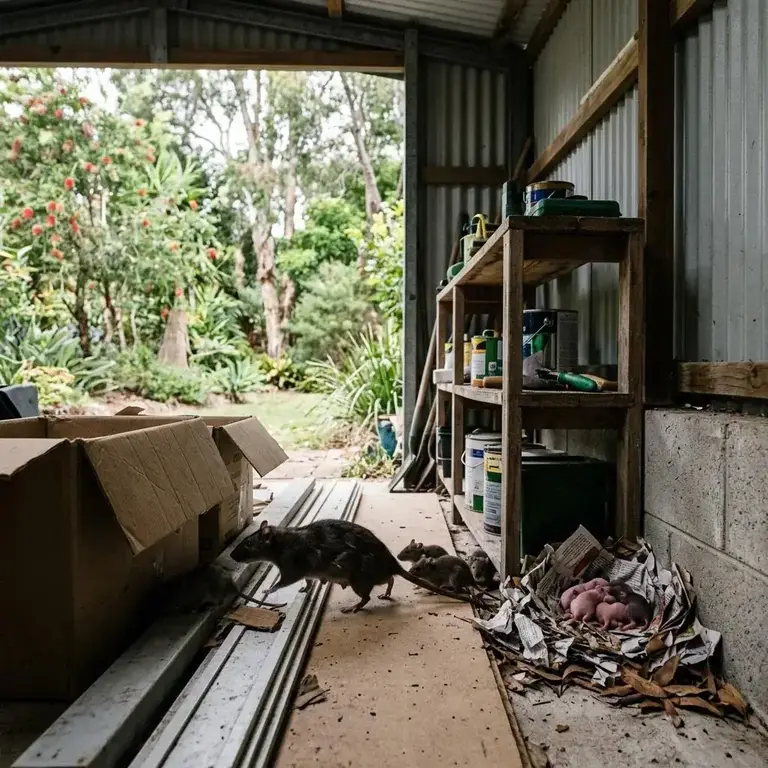
A house mouse (Mus musculus) needs only about 3 grams of food a day and can survive entirely on spilled kibble. Rats have incisors that never stop growing and can gnaw straight through a 2 mm plastic bag or a cardboard box in seconds. A single rat eats roughly 25 to 30 grams of food a night and will cache the excess in a nest, so even a “mostly finished” bowl leaves enough to sustain a growing colony.
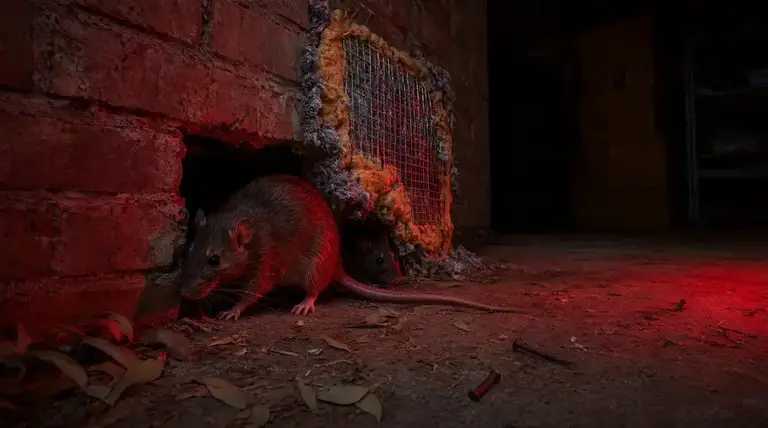
Housing type matters too. Older homes on stumps with a subfloor — including Queenslanders and weatherboard cottages — give rodents sheltered runways from the yard to the laundry or kitchen. Brick veneer homes on slabs have weep holes and pipe penetrations that mice squeeze through with ease. In warmer states, rodent pressure runs nearly year-round, while southern states see a sharp autumn and winter influx as animals seek warmth and food indoors. Roof voids are another common harbourage — see our guide to roof rats in Australia: behaviour, risks and control if you hear scratching overhead.
Warning signs pet food is attracting rodents
The clearest sign is rodent evidence appearing around feeding and storage areas before anywhere else in the home. Work through this checklist:
- Droppings near bowls or storage bags — small, dark pellets around the laundry, garage shelf or feeding corner.
- Gnaw marks on pet food packaging — corner holes in bags or shredded cardboard around the sack.
- Kibble scattered or missing overnight — a bowl that empties faster than your pet’s appetite explains.
- Scratching or scurrying after dark — rodents are nocturnal and most active between dusk and dawn, exactly when the bowl sits untouched.
- Greasy rub marks along walls — dark smears on skirting boards near the feeding area.
- A musky, ammonia-like odour — often strongest in pantries, laundries or under appliances.
- Your pet acting oddly — dogs and cats fixating on cupboards, walls or the garage at night.
If several of these ring true, run through our full checklist of signs of rats or mice in your home and act quickly before numbers build.
DIY food control vs professional pest control
Tightening your feeding and storage routine is something every household can and should do — secure pet food rats would otherwise find, cutting attraction at the source. But hygiene alone rarely removes an established colony, which needs trapping, baiting and physical exclusion by a licensed technician.
| Approach | What it achieves | Limitations |
|---|---|---|
| Sealed containers and set meals (DIY) | Removes the nightly food source; stops new rodents settling in | Won’t shift rodents already nesting in walls, subfloor or roof |
| DIY snap traps | Can knock down one or two mice in light activity | Rats are trap-shy; poor placement wastes weeks |
| Professional rodent control & removal | Locates nests and runways; eliminates the colony with licensed trapping and baiting programs | Higher upfront cost, though usually cheaper than repeated DIY failures |
| Professional rodent proofing & exclusion | Seals entry points so the problem cannot recur | Requires a thorough inspection to find every gap |
The practical routine that underpins all of this is simple: decant dry food into a hard, sealed container of heavy plastic or metal with a clamp lid; feed set meals and lift the bowl within 20 to 30 minutes; sweep or vacuum spilled kibble daily; store bags off the floor and never in an open garage corner; and keep aviary and chicken feed in metal bins, not bags. Don’t forget outdoor animals either — poultry feed left in an open trough overnight is one of the most reliable rat magnets in suburban Australia, and grain-based scratch mix is especially attractive. Feed chickens only what they finish during the day, and store the sack in a sealed metal bin well away from the coop.
What rodent pest control costs in Australia (2025–26)
Across the Australian pest control industry, professional rodent treatment generally ranges from about $200 for a basic mouse job to $800 or more for complex rat infestations with exclusion work. Market rates vary with property size, access and severity, so treat the figures below as a guide to what providers typically charge.
| Service | Typical market rate (AUD) | What’s included/notes |
|---|---|---|
| Inspection and assessment | $0 – $150 | Identifies species, entry points and nesting sites; often credited toward treatment |
| Standard mouse treatment | $200 – $350 | Trapping and/or tamper-resistant bait stations, one follow-up visit |
| Rat treatment program | $300 – $550 | Multi-visit program; see how professionals actually eliminate rats |
| Rodent proofing and exclusion | $400 – $1,200+ | Sealing entry points, subfloor and roof work; priced on findings |
Chemical treatments such as rodenticides should always be placed by licensed technicians in tamper-resistant stations — particularly in homes with pets and children — and no treatment can be described as 100% safe or guaranteed.
These are typical Australian market rates, not our prices. Aussie Pest Strike typically comes in well under these figures, so for an exact quote tailored to your property, give us a call on [aps_phone] today.
Seasonal rodent activity in Australia
Rodent pressure on pet food storage peaks from autumn through winter as animals move indoors seeking warmth, then eases — but never disappears — over spring and summer. Northern regions see steadier year-round activity.
Jan
Feb
Mar
Apr
May
Jun
Jul
Aug
Sep
Oct
Nov
Dec
Typical indoor rodent pressure pattern across southern Australia: activity climbs from March, peaks in the cooler months (May–August) as rodents move inside, and tapers over summer. Queensland and northern NSW experience flatter, year-round pressure.
Nine times out of ten, when we find mice in a laundry or garage, there’s a bag of kibble with a corner chewed out sitting on the floor. Fix the food storage and you’ve done half the job — but if they’re already nesting in the wall, you need traps and bait in the right places, and that’s where a licensed tech earns their keep.
Start tonight: decant all dry pet food into sealed metal or heavy-duty plastic containers, lift bowls after 20 to 30 minutes, and sweep the feeding area daily. Move chicken and aviary feed into metal bins away from coops. If you’ve seen droppings, gnaw marks or heard night-time scratching, book a professional inspection — cutting the pet food and rodent attraction at the source is always cheaper than clearing an established colony later.
Frequently Asked Questions
Why does pet food attract rats and mice so strongly?
Pet food is calorie-dense, stays palatable for months and is usually stored in chewable packaging, making it one of the most reliable rodent attractants in an Australian home. A house mouse needs only about 3 grams of food a day and can survive entirely on spilled kibble, while a single rat eats roughly 25 to 30 grams a night and caches the excess in its nest.
Can rodents chew through standard pet food packaging?
Yes. Rats have incisors that never stop growing and can gnaw straight through a 2 mm plastic bag or a cardboard box in seconds. Paper bags offer no protection at all. This is why decanting dry food into sealed metal or heavy-duty plastic containers with clamp lids is the core storage fix recommended for breaking the attraction.
Should I free-feed my pet or use set meal times?
Set meals are far safer around rodents. Free-feeding overnight effectively runs a 24-hour rodent buffet, because rats and mice are most active between dusk and dawn when the bowl sits untouched. The recommended routine is to feed set meals and lift the bowl within 20 to 30 minutes, then sweep or vacuum any spilled kibble daily.
What are the warning signs that pet food is attracting rodents?
Look for droppings near bowls or storage bags, gnaw marks or corner holes in packaging, kibble scattered or missing overnight, scratching after dark, greasy rub marks along skirting boards near the feeding area, a musky ammonia-like odour, or your pet fixating on cupboards, walls or the garage at night. Evidence appearing around feeding and storage areas first is the clearest indicator.
How should I store chicken and aviary feed to avoid attracting rats?
Poultry feed left in an open trough overnight is one of the most reliable rat magnets in suburban Australia, and grain-based scratch mix is especially attractive. Feed chickens only what they finish during the day, keep aviary and chicken feed in sealed metal bins rather than bags, and store those bins well away from the coop.
Will fixing my pet food storage alone get rid of an established rodent colony?
No. Food control removes the nightly attractant and stops new rodents settling in, but it rarely eliminates rodents already nesting in walls, subfloor or roof voids. An established colony needs professional trapping, baiting and physical exclusion by a licensed technician, ideally paired with your improved storage and feeding routine.
Does housing type affect how rodents reach pet food areas?
Yes. Older homes on stumps with a subfloor, such as Queenslanders and weatherboard cottages, give rodents sheltered runways from the yard to the laundry or kitchen where pet food is often stored. Brick veneer homes on slabs have weep holes and pipe penetrations that mice squeeze through easily, connecting outdoor feeding stations to indoor food sources.
Do I need to change what I feed my pet to deter rodents?
No. You rarely need to change what you feed your pet — only how the food is handled, stored and cleaned up. Decant dry food into hard, sealed containers of heavy plastic or metal, lift bowls within 20 to 30 minutes of serving, sweep spilled kibble daily, and store bags off the floor rather than in an open garage corner.
What should I discuss with an Aussie Pest Strike technician about pet food and rodents?
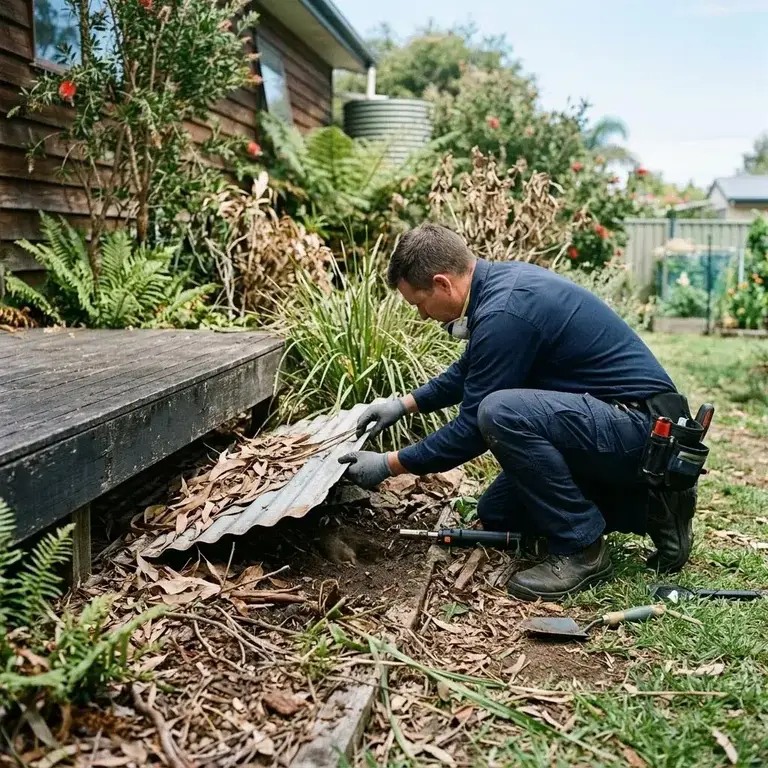
A technician can inspect your feeding and storage areas, identify whether you are dealing with mice or rats, locate nests and runways in places like the subfloor, roof void or garage, and find the entry points rodents are using. Be ready to describe where pet and poultry food is kept, any droppings or gnaw marks you have seen, and when you hear night-time scratching.
What practical steps should I take before booking a rodent inspection with Aussie Pest Strike?
Start tonight by decanting all dry pet food into sealed metal or heavy-duty plastic containers, lifting bowls after 20 to 30 minutes, and sweeping the feeding area daily. Move chicken and aviary feed into metal bins away from coops. If you have already seen droppings, gnaw marks or heard scratching after dark, book a professional inspection rather than waiting.
Sources & further reading
Found Something
Dangerous?
Don’t touch it. Don’t spray it. Keep kids and pets clear, take a photo from a safe distance, and call us — or book a free inspection and we’ll come to you.
02 7235 0050